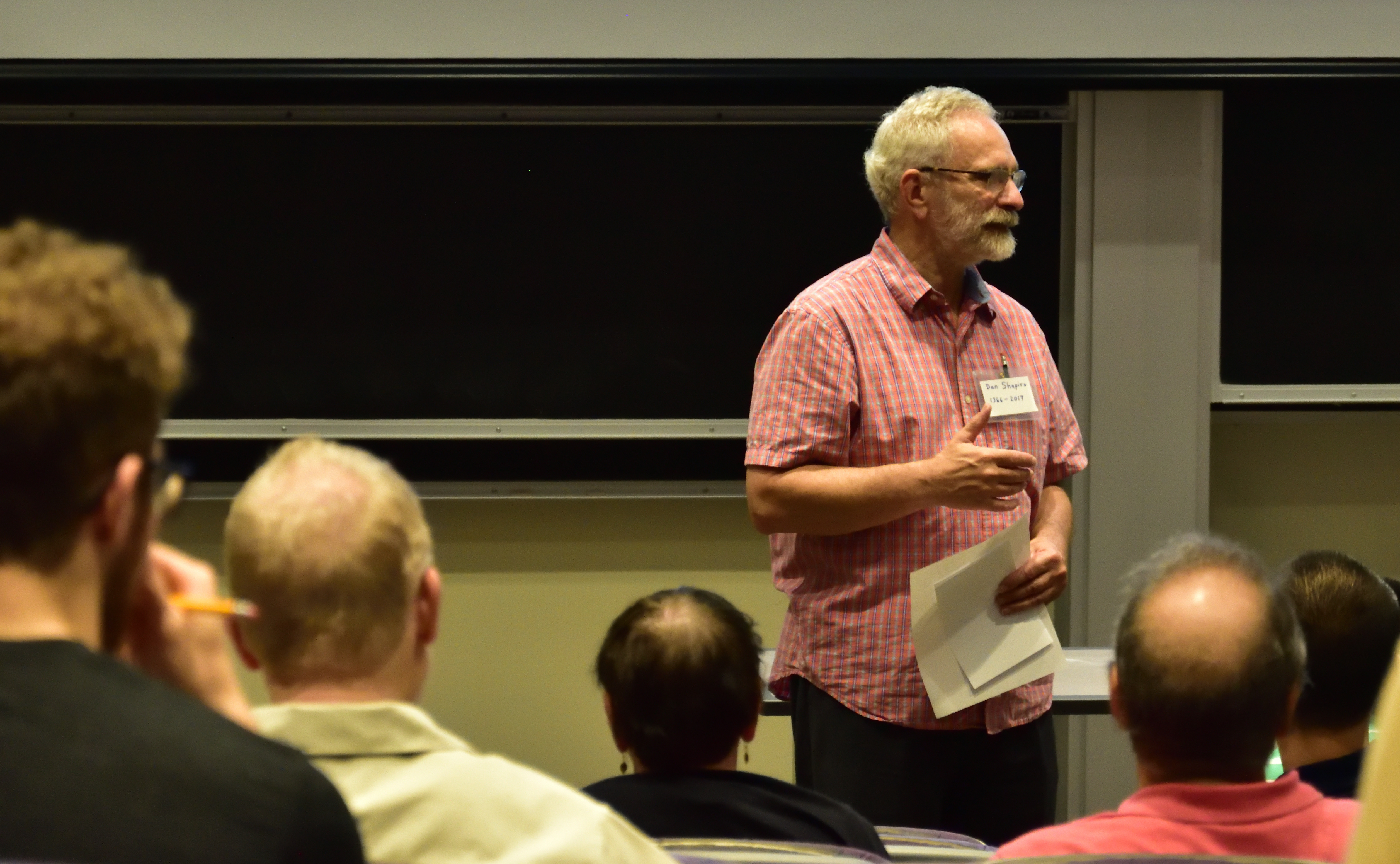
The Ross Mathematics Program is an intensive six-week summer residential initiative designed for high school students who possess a deep passion for mathematics. Founded in 1957, it focuses on number theory through an axiomatic, inquiry-based approach. It challenges participants to transition from computational arithmetic to rigorous mathematical proof, fostering logical thinking and a collaborative community.
The Origins and Philosophy of the Ross Mathematics Program
The Ross Mathematics Program represents one of the oldest and most prestigious summer mathematics opportunities in the United States. Its inception dates back to 1957 at the University of Notre Dame, under the visionary leadership of Dr. Arnold Ross. Dr. Ross believed that the standard secondary school curriculum often failed to challenge mathematically gifted students, focusing too heavily on rote memorization and mechanical calculation rather than the underlying beauty and logic of the discipline.
In 1964, the program moved to The Ohio State University, which remained its primary home for several decades. In the years leading up to 2026, the program has expanded its geographical footprint to include satellite locations, such as Rose-Hulman Institute of Technology and international sites, to accommodate the increasing global demand for high-level mathematical training.
The core philosophy of the program is encapsulated in the motto: "Think deeply about simple things." This mantra encourages students to take fundamental mathematical concepts—specifically the properties of integers—and subject them to rigorous scrutiny. Rather than rushing through a wide variety of topics, Ross participants spend six weeks mastering one field: Number Theory. This depth allows students to experience the authentic process of mathematical discovery, where they must prove every assertion from first principles.
The Academic Core: The Ross Methodology
The Ross Program is distinct from many other "math camps" because of its rejection of traditional lecture-based instruction. While daily lectures are part of the schedule, the primary engine of learning is the Problem Set.
The Axiomatic Discovery Process
Students are introduced to a set of axioms—the basic building blocks of the number system—and are tasked with deriving the entire structure of number theory from them. This is known as the inquiry-based or Moore Method. Students receive a new problem set each day, which they must work through independently or in small peer groups. These sets are not simply exercises; they are a sequence of challenges that lead the student to "discover" major theorems for themselves.
The curriculum typically covers several foundational areas:
- Euclidean Algorithm: Understanding divisibility and the greatest common divisor.
- Modular Arithmetic: Exploring the properties of congruences and residue classes.
- Prime Numbers: Investigating the distribution of primes and the Fundamental Theorem of Arithmetic.
- Quadratic Reciprocity: Mastering one of the "crown jewels" of elementary number theory.
- Gaussian Integers: Extending the concept of integers into the complex plane.
The Role of Counselors
A critical component of the Ross experience is the presence of counselors—undergraduate or graduate students, many of whom are former Ross participants. These counselors provide feedback on the students’ proofs. This feedback is notoriously rigorous; a student may have the correct answer but receive a "Not Quite" or "Rewrite" if their logic is imprecise or if they have made unwarranted assumptions. This iterative process of writing and refining proofs is where the most significant intellectual growth occurs.

Admissions and Selection Criteria for 2026
Gaining admission to the Ross Mathematics Program is a competitive process that identifies students with high potential for abstract reasoning. The program is generally intended for students aged 15 to 18 who have not yet started college.
The Admission Quiz
The most important part of the application is the Ross Admission Quiz. This is a set of several challenging math problems. Unlike standardized tests or math competitions (like the AMC), the Ross quiz is untimed and allows for open-ended exploration. Applicants are encouraged to spend weeks on these problems. The admissions committee is less interested in the final answer and more interested in the clarity of the student’s explanation, the elegance of their logic, and their persistence in tackling unfamiliar territory.
Required Documentation
In addition to the quiz, the 2026 application process requires several standard components to ensure a holistic review:
- School Transcripts: To verify academic standing and prerequisite coursework (typically through Pre-calculus).
- Teacher Recommendations: Specifically from a mathematics teacher who can speak to the student’s curiosity and tenacity.
- Personal Essays: Where the student explains their interest in mathematics and what they hope to gain from a residential community of scholars.
- Standardized Test Scores: While often optional, scores from exams like the SAT or ACT can be submitted to provide additional context.
The application window for the 2026 session typically opens in early January, with a deadline in late March. Decisions are usually released on a rolling basis or in a block in late April.
Program Logistics, Costs, and Financial Accessibility
The Ross Mathematics Program is a residential experience, meaning students live in dormitories on a university campus for the duration of the six weeks. This immersion is vital to the program's success, as it allows for late-night mathematical discussions and the formation of lifelong friendships with like-minded peers.
Estimated Costs for 2026
The cost of the program covers tuition, room, and board. For the 2026 session, the fees are estimated based on previous inflationary trends and institutional costs.
| Item | Estimated Cost (2026) | Notes |
|---|---|---|
| Tuition & Housing | $7,500 – $8,500 | Covers 6 weeks of instruction and dormitory living. |
| Meals | Included | Full meal plan at university dining halls. |
| Books/Materials | $100 – $200 | Most materials are provided; this covers personal supplies. |
| Travel | Varies | Responsibility of the student to reach the host campus. |
Financial Aid and Scholarships
The Ross Program remains committed to the principle that financial need should not be a barrier to participation. Significant financial aid is available, ranging from partial scholarships to full "need-blind" support. The program administrators work with families to ensure that admitted students can attend regardless of their economic situation. International students are also eligible for financial support, though travel grants are more limited.
Interested families must complete a financial aid application concurrently with the student's academic application to be considered for these funds.
Comparing Ross to Other Math Initiatives
Prospective students often consider the Ross Program alongside other elite summer mathematics initiatives. While they all share a goal of enrichment, their methods and focus areas differ.
- PROMYS (Program in Mathematics for Young Scientists): Closely related to the Ross Program (founded by a Ross alumnus), PROMYS also focuses on number theory and inquiry-based learning. It is hosted at Boston University and maintains a similar level of rigor.
- SUMaC (Stanford University Mathematics Camp): This program offers a wider variety of topics, including algebraic topology and symmetry. It is typically shorter (three to four weeks) and features more traditional lecture and seminar formats.
- MathILy: This program focuses on discrete mathematics and uses a highly interactive, non-lecture-based "active learning" style. It is often described as being slightly more whimsical in its presentation while maintaining high mathematical standards.
- Canada/USA Mathcamp: Unlike the singular focus of Ross, Mathcamp offers a "buffet" style where students choose their own classes from a wide range of advanced topics.
The choice between these programs often comes down to whether a student prefers the "deep dive" of Ross or the "broad survey" of Mathcamp.
Long-Term Impact and the Ross Community
The impact of the Ross Mathematics Program extends far beyond the six weeks of the summer. Participants frequently describe the experience as "life-changing," not necessarily because they all become professional mathematicians, but because they learn how to think.
The program creates a powerful network of alumni who go on to excel in diverse fields. Many Ross "alums" find themselves at top-tier research universities, working in sectors such as:
- Pure and Applied Mathematics: Conducting original research in academia.
- Computer Science and AI: Applying logical structures to algorithm development.
- Quantitative Finance: Using mathematical modeling to navigate global markets.
- Cryptography: Leveraging number theory for cybersecurity.
The social aspect of the program is equally enduring. The experience of struggling through difficult problems together creates a unique bond. In 2026, the Ross alumni network remains one of the most active in the scientific community, providing mentorship and career opportunities to younger generations of "Rossers."
Frequently Asked Questions
Is the Ross Program only for students who want to be mathematicians?
No. While many participants do pursue careers in mathematics, the program is designed to develop general problem-solving skills, logical rigor, and intellectual persistence. These traits are highly valuable in law, medicine, engineering, and any field that requires complex analytical thinking.
How much math background do I need to apply in 2026?
The formal prerequisite is a strong foundation in high school algebra and geometry. Calculus is not required. The program starts from the very beginning of number theory (axioms of integers), so what matters most is your ability to think abstractly and your willingness to engage with proofs, rather than the number of advanced classes you have taken.
Can I participate in the Ross Program more than once?
Yes. Students who excel in their first year are often invited back as "Junior Counselors" or "Advanced Students." Advanced students work on more complex topics beyond the first-year number theory curriculum, often exploring areas like combinatorics, group theory, or p-adic analysis.
How is the 2026 session being conducted (Online vs. In-Person)?
As of 2026, the Ross Mathematics Program has fully returned to its traditional in-person, residential format. The program emphasizes that the "Ross culture"—the informal discussions and late-night collaborations—is best fostered in a physical dormitory environment.
What is the daily schedule like at the program?
A typical day involves a one-hour lecture in the morning, followed by several hours of independent work on problem sets. Afternoons often include small group meetings with counselors to discuss proofs. Evenings are generally spent in the dorms or common areas working on the next day's problems. There are no weekend classes, though most students choose to continue working on their math throughout the week.
Next Steps for Prospective Applicants
For those considering the Ross Mathematics Program for the 2026 cycle, the first step is to visit the official Ross Mathematics Program website to download the current application and admission quiz.
Begin working on the admission problems as early as possible. Do not be discouraged if the problems seem difficult at first; they are designed to challenge even the most talented students. Focus on writing clear, logical proofs for the problems you can solve rather than rushing to provide "answers" for all of them. Consulting resources like the American Mathematical Society (AMS) or the Mathematical Association of America (MAA) can provide additional context on what constitutes a rigorous proof.
Image Gallery
Select an image to open it in a new tab.


Zara El-Hashem
Sociocultural Dynamics and Academics Writer
