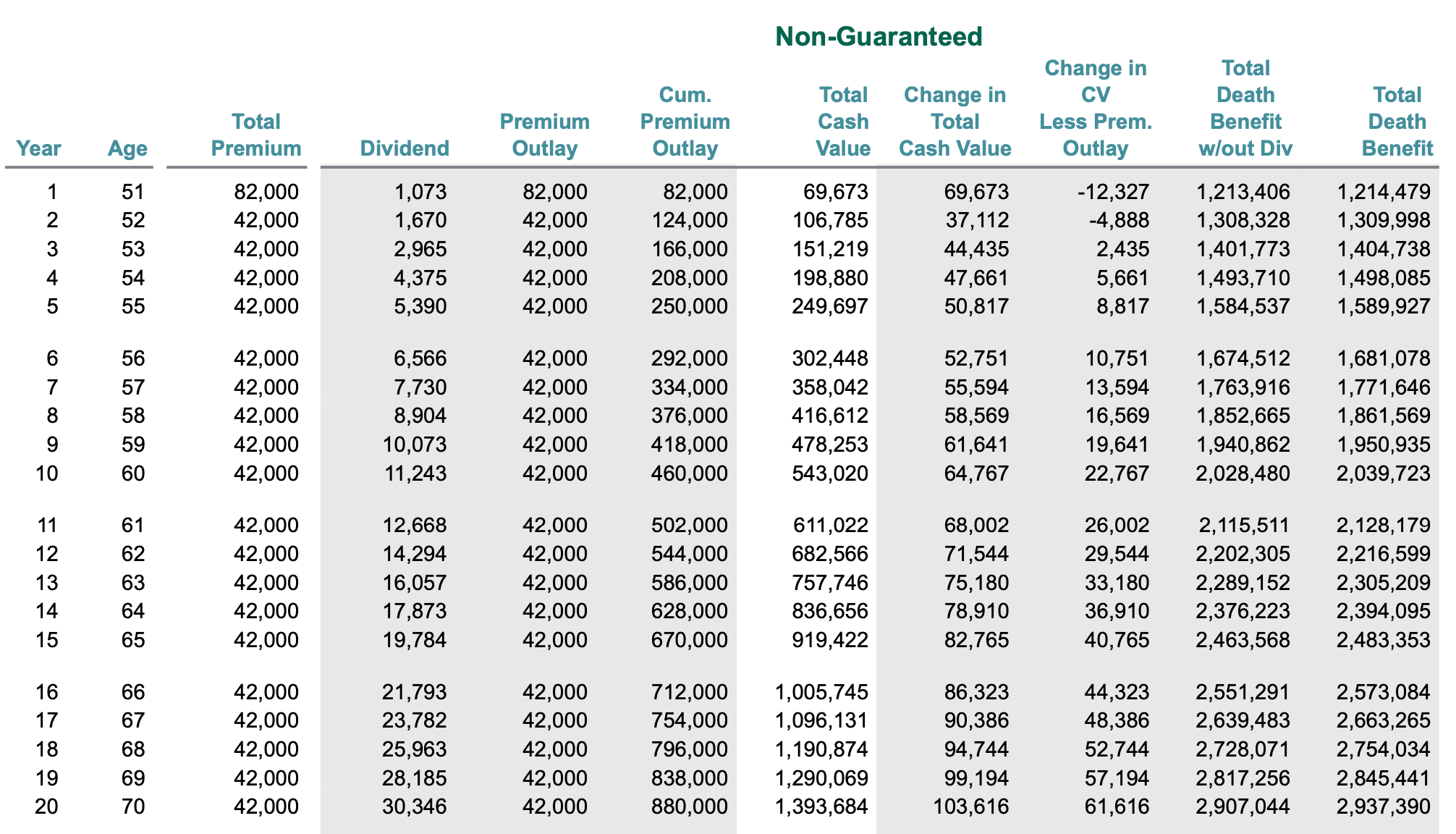
The accumulation value of a permanent life insurance policy grows on a tax-deferred basis, meaning no taxes are owed on interest or investment gains while they remain within the policy. Withdrawals are generally taxed as ordinary income only after they exceed the policy’s cost basis (total premiums paid), whereas policy loans are typically tax-free unless the policy is classified as a Modified Endowment Contract (MEC).
Permanent life insurance, such as whole life, universal life, and variable life, is often utilized not just for its death benefit but as a sophisticated financial vehicle for wealth accumulation. Understanding the tax mechanics of the "cash value" or "accumulation value" is essential for policyholders who intend to use these funds for retirement, education, or emergency liquidity. As of 2026, the Internal Revenue Code (IRC) continues to provide significant advantages to life insurance cash values, provided the policy meets specific statutory requirements.
The Mechanism of Tax-Deferred Growth
The primary tax benefit of life insurance accumulation value is tax deferral under IRC Section 72. Unlike a traditional brokerage account, where realized capital gains and dividends are taxed annually, the internal growth of a life insurance policy—whether from interest credits, dividends, or market gains—is not reported as taxable income.
This deferral allows the policyholder to benefit from the power of compounding. When earnings are not diminished by annual tax hits, the entire amount remains in the policy to generate further returns. For high-net-worth individuals or those in high tax brackets in 2026, this makes the accumulation value a powerful tool for tax-efficient wealth building. It is important to note that tax deferral is not tax disappearance; the manner in which you access the money determines if and when the IRS will require a portion of those gains.
The Importance of the Cost Basis
To understand how the accumulation value is taxed upon distribution, one must first understand the concept of "cost basis." In the context of life insurance, your cost basis is generally the total amount of premiums you have paid into the policy, minus any dividends received in cash or used to reduce premiums, and minus any prior tax-free withdrawals.
The cost basis acts as a "tax-free shield." When you withdraw money from a policy that is not a Modified Endowment Contract, the IRS applies the First-In, First-Out (FIFO) rule. This means the first dollars you take out are considered a return of your premium (your basis) rather than a distribution of gains. Since you already paid for those premiums with after-tax dollars, those initial withdrawals are not subject to income tax.

Taxation of Policy Withdrawals
Withdrawals involve a permanent reduction of the policy's cash value and often a corresponding reduction in the death benefit. Under the FIFO accounting method mentioned above, withdrawals are tax-free until the total amount withdrawn exceeds the policy's cost basis.
Once the cumulative withdrawals exceed the cost basis, every additional dollar withdrawn is considered "gain" and is taxed as ordinary income. It is a common misconception that these gains are taxed at capital gains rates. In reality, the IRS treats them as ordinary income, which can be significantly higher depending on your total income in the year of the withdrawal.
There is a critical exception to this rule: if you make a withdrawal within the first 15 years of the policy that results in a reduction of the death benefit (often called a "forced-out" distribution), a portion of that withdrawal may be taxable even if it is less than the cost basis. This is governed by IRC Section 7702(f)(7) and requires careful coordination with a tax professional.
Taxation of Policy Loans
One of the most attractive features of the accumulation value is the ability to take a policy loan. Instead of withdrawing the money, you borrow against the cash value, using it as collateral.
In 2026, policy loans from a standard (non-MEC) life insurance policy are generally not treated as taxable income. Because a loan is an obligation to repay, the IRS does not view it as a distribution of wealth. This allows policyholders to access liquidity without triggering a tax event, even if the loan amount exceeds the policy’s cost basis.
However, there are two major risks associated with policy loans:
- Policy Lapse: If a policy lapses or is surrendered while there is an outstanding loan, the amount of the loan is treated as a distribution. If the total loan amount plus any previous withdrawals exceeds the cost basis, the difference is taxed as ordinary income. This can create a "tax bomb" where the policyholder owes taxes on money they have already spent, without having a remaining policy to cover the bill.
- Modified Endowment Contracts: If the policy is a MEC, the loan is treated as a taxable distribution (LIFO) and may be subject to penalties.
The Modified Endowment Contract (MEC) Trap
The Internal Revenue Service created the Modified Endowment Contract (MEC) classification to prevent people from using life insurance purely as a tax-sheltered investment vehicle with little insurance protection. To avoid being classified as a MEC, a policy must pass the "7-pay test," which limits the amount of premium that can be paid into the policy during the first seven years.
If a policy becomes a MEC, it loses its favorable FIFO tax treatment. Instead, it follows Last-In, First-Out (LIFO) rules:
- Taxation of Gains First: Every dollar withdrawn or borrowed is considered a distribution of earnings first. You must exhaust all gains in the policy before you can access your tax-free cost basis.
- 10% Penalty: If you take a distribution (withdrawal or loan) from a MEC before the age of 59½, you may be subject to a 10% federal tax penalty on the taxable portion, similar to an early withdrawal from a 401(k) or IRA.
Once a policy is classified as a MEC, it remains a MEC forever. Policyholders must be extremely careful when "overfunding" a policy to ensure they do not accidentally trigger this status unless they intentionally seek the higher investment limits and are comfortable with the tax trade-offs.
Taxation upon Policy Surrender
If you decide to cancel your policy entirely—a process known as "surrendering"—the insurance company will pay you the "net cash surrender value." This is the accumulation value minus any surrender charges and outstanding loans.
The taxation of a surrender is straightforward:
- Calculate the total amount received (including the amount used to pay off any outstanding loans).
- Subtract the cost basis (total premiums paid).
- The remaining amount is the taxable gain.
This gain is taxed as ordinary income in the year the policy is surrendered. Because surrender charges typically decrease over 10 to 15 years, surrendering a policy in its early years often results in no taxable gain because the surrender charges and the lack of time for growth keep the payout below the cost basis.
Comparative Taxation Table
The following table summarizes how different methods of accessing the accumulation value are taxed in 2026 for a standard, non-MEC permanent life insurance policy.
| Method of Access | Tax Treatment (Non-MEC) | Tax Treatment (MEC) | Primary Tax Rule |
|---|---|---|---|
| Withdrawal | Tax-free up to cost basis; Gains taxed as ordinary income. | Gains taxed first as ordinary income. | FIFO (Non-MEC) vs. LIFO (MEC) |
| Policy Loan | Generally tax-free; Taxable only if policy lapses. | Taxed as ordinary income to the extent of gains. | Borrowing vs. Distribution |
| Full Surrender | Gains above cost basis taxed as ordinary income. | Gains above cost basis taxed as ordinary income. | Realized Gain Calculation |
| Dividends | Tax-free if used to pay premiums or left to accumulate. | Generally tax-free unless taken in cash. | Return of Premium |
| Death Benefit | Tax-free to beneficiaries. | Tax-free to beneficiaries. | IRC Section 101(a) |
Estate Tax and the Accumulation Value
While the internal growth and distributions are subject to income tax rules, the entire value of the policy (including the accumulation value and the death benefit) may be subject to federal estate tax.
In 2026, estate tax laws are particularly relevant as the increased exemptions from the Tax Cuts and Jobs Act (TCJA) have sunset or been modified. If the policyholder is the owner of the policy at the time of their death, the full death benefit is included in their gross estate. If the estate exceeds the federal or state exemption limits, the value could be taxed at rates as high as 40%.
To mitigate this, many individuals use an Irrevocable Life Insurance Trust (ILIT). By having the trust own the policy, the accumulation value and death benefit are removed from the individual's estate, potentially saving heirs millions in taxes. However, the trade-off is that the policyholder loses direct control over the accumulation value during their lifetime.
1035 Exchanges: Moving the Accumulation Value
If you have a policy with a large accumulation value but are unhappy with the performance or fees, you can move that value to a new policy without triggering a tax event. This is known as a Section 1035 Exchange.
Under IRC Section 1035, the "exchange" of one life insurance policy for another (or for an annuity) is a non-taxable event. The cost basis from the old policy carries over to the new policy. This allows for "portfolio rebalancing" within the insurance space without the friction of capital gains or ordinary income taxes. However, you cannot exchange an annuity for a life insurance policy; the IRS only allows the exchange to move toward "less favorable" tax vehicles or those of the same type.
Common Mistakes and Troubleshooting
- Ignoring the "Tax Bomb" on Lapses: Many policyholders stop paying premiums and let the policy's internal charges eat the cash value until it lapses. If there is a loan against the policy, the IRS treats the loan payoff at lapse as a taxable distribution. Many are shocked to receive a 1099-R for a policy they thought was "worthless."
- Taking Loans on MECs: Policyholders who treat a MEC like a bank account quickly find themselves paying high taxes and penalties. Always verify the MEC status before taking a loan.
- Misunderstanding Dividends: In a participating whole life policy, dividends are generally considered a "return of premium" and are not taxable until they exceed the total premiums paid. However, if dividends are left with the company to earn interest, the interest earned on those dividends is taxable annually.
Frequently Asked Questions
Are life insurance dividends taxable?
No, in most cases, life insurance dividends are considered a return of part of the premium you paid and are not taxable. They only become taxable if the total dividends received in cash exceed the total premiums you have paid into the policy. If you use dividends to buy "paid-up additions" (more insurance), the growth remains tax-deferred.
Does the death benefit include the accumulation value?
This depends on the policy type. In "Level Death Benefit" (Option A) policies, the accumulation value is part of the total death benefit. In "Increasing Death Benefit" (Option B) policies, the beneficiary receives both the face amount and the accumulation value. Regardless of the option, the entire amount paid to the beneficiary is generally income tax-free under IRC Section 101(a).
Can I lose my tax-deferred status if I change my policy?
Significant changes to a policy, such as a large increase in the death benefit or adding certain riders, can sometimes trigger a new 7-pay test. If the policy fails this new test, it could be reclassified as a Modified Endowment Contract. Always consult with your carrier before making structural changes to a high-cash-value policy.
What happens if I withdraw money from a variable life policy?
The tax rules for variable life insurance are the same as for whole life or universal life regarding the accumulation value. Withdrawals are FIFO (tax-free up to basis) and loans are generally tax-free. The "variable" part refers to how the accumulation value is invested (e.g., in sub-accounts similar to mutual funds), but the tax wrapper remains the same.
How is interest on policy loans handled for tax purposes?
For most individuals, the interest paid on a life insurance policy loan is considered personal interest and is not tax-deductible. This is a critical distinction, as the cost of the loan (the interest) cannot be used to offset the gains in the policy or other income.
Final Recommendation: Strategic Monitoring
The taxation of life insurance accumulation value is one of the most favorable areas of the tax code in 2026, but it requires active management. To maximize the benefits, policyholders should request an "In-Force Illustration" from their insurance company annually. This document provides a projection of the cost basis and the potential for the policy to become a MEC or lapse due to outstanding loans.
If your primary goal is tax-free income in retirement, ensure your policy is structured to stay below the MEC limits while maximizing the premium. If you are facing a potential policy lapse with a large loan, consider a 1035 exchange or a partial surrender to stabilize the policy before a taxable event occurs. Because tax laws and individual financial situations are complex, always consult with a qualified tax advisor or estate attorney before making significant distributions from a life insurance policy.
Image Gallery
Select an image to open it in a new tab.
Ingrid Bjornson
Global Cyber Policy and Regulation Analyst
