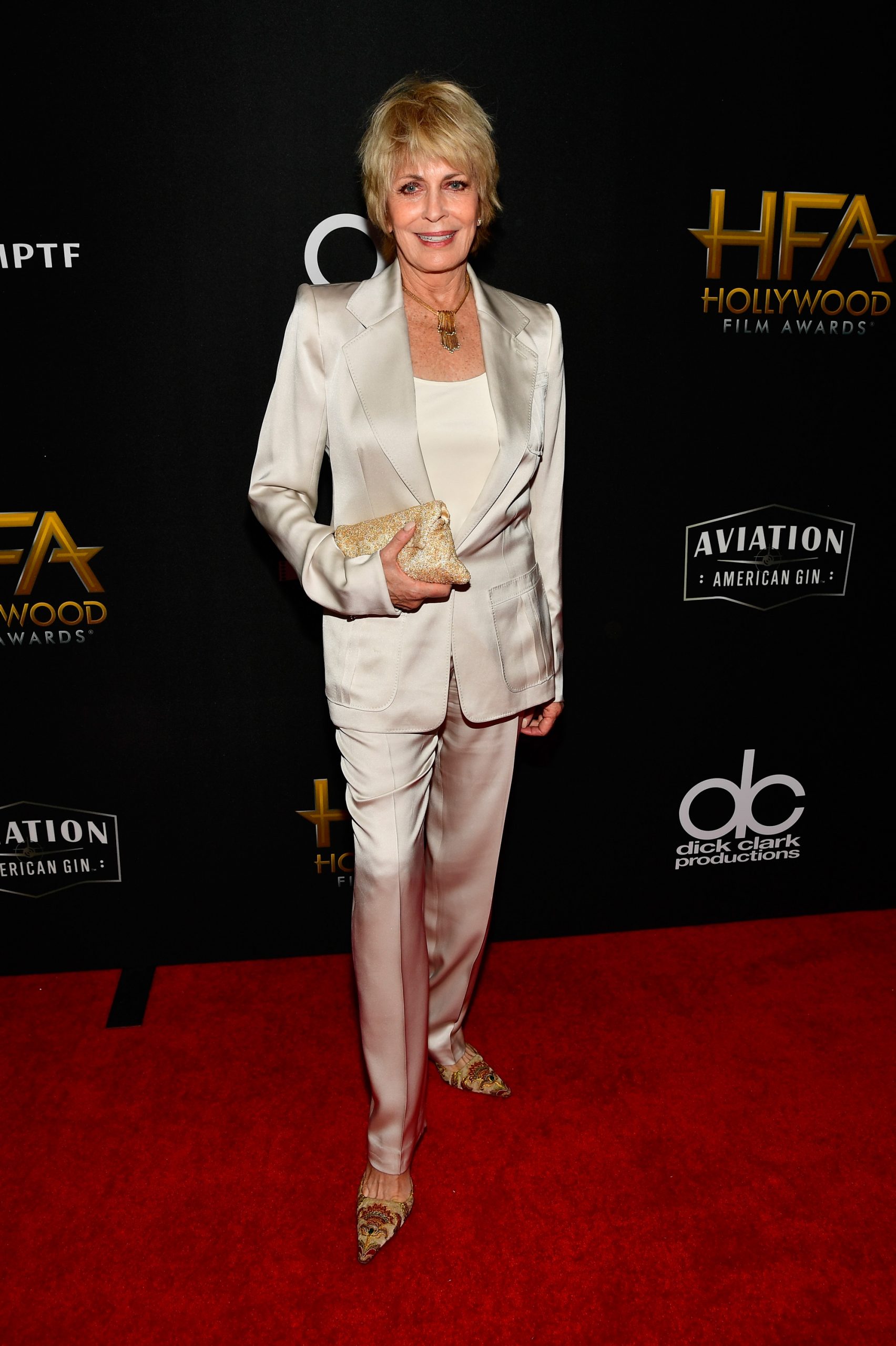
Joanna Cassidy is a celebrated American actress whose career spans over five decades, defined by her versatility, striking screen presence, and iconic roles in landmark films like Blade Runner and Who Framed Roger Rabbit. Her legacy is characterized by her ability to portray formidable, intelligent, and independent women, bridging the gap between classical Hollywood glamour and the nuanced character work of the modern era.
The Professional Foundations: From Art Student to Screen Presence
Born Joanna Virginia Caskey in 1945 in Haddonfield, New Jersey, Joanna Cassidy’s entry into the world of performance was not immediate. She grew up in a family of artists—her mother and grandfather were both painters—which instilled in her a keen visual sensibility that would later inform her approach to character development and physicality on screen. Cassidy initially followed this family tradition, studying art at Syracuse University. However, her life took a turn when she married Kennard C. Kobrin in 1964 and moved to San Francisco.
In California, Cassidy’s striking looks and 5'9" frame led her into modeling, but she quickly found herself drawn to the storytelling potential of acting. Her early career in the late 1960s and early 1970s was a period of rigorous apprenticeship. She appeared in uncredited or minor roles in films like Bullitt (1968) and television shows such as Mission: Impossible. This era was crucial for Cassidy; it was a time of learning the technical nuances of being on a set, understanding the camera, and developing the "no-nonsense" professional reputation that would define her career.
By the mid-1970s, Cassidy began securing more substantial guest spots on popular series like Starsky & Hutch and Taxi. These roles showcased her natural athleticism and a certain "earthy" sophistication that set her apart from the standard starlets of the time. She did not just inhabit a role; she commanded the space around her, a trait that caught the attention of major directors looking for actresses who could hold their own against Hollywood’s leading men.
The Sci-Fi Milestone: Zhora and Blade Runner (1982)
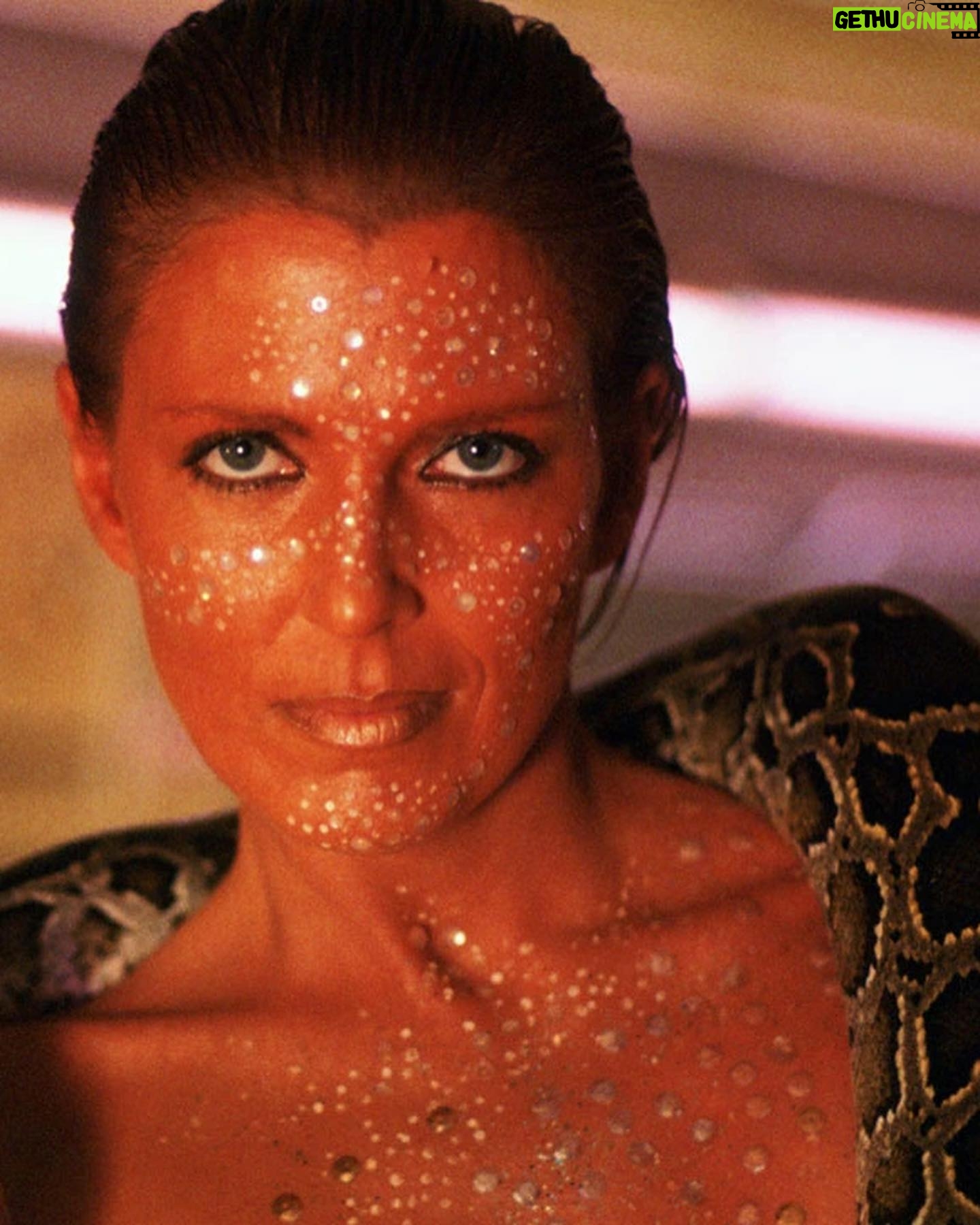
The most pivotal moment in Joanna Cassidy’s early career came when she was cast as Zhora Salome in Ridley Scott’s neo-noir masterpiece, Blade Runner. Though her screen time was relatively brief, the character became one of the most enduring images in science fiction history. Zhora was a "Replicant"—an artificial human—working as an exotic dancer with a synthetic snake.
Cassidy’s contribution to Blade Runner went beyond mere acting. She brought an intense physicality to the role, famously performing her own stunts, including the harrowing scene where Zhora is shot while running through multiple panes of glass. This sequence is often cited as one of the most aesthetically beautiful and tragic death scenes in cinema. Cassidy’s Zhora was not a one-dimensional villain; she was a desperate being fighting for her life, and Cassidy’s performance conveyed that existential dread with minimal dialogue.
Her legacy within the Blade Runner mythos was further cemented decades later. In the 2007 "Final Cut" of the film, Ridley Scott invited Cassidy back to re-film certain movements so that her face could be digitally composited over the original stunt double’s face, correcting a continuity error that had bothered fans for years. This willingness to return to the character twenty-five years later demonstrated Cassidy's deep respect for the work and her lasting connection to the sci-fi community.
Dramatic Excellence: Under Fire and the Buffalo Bill Era
Following the success of Blade Runner, Cassidy proved she was more than a genre icon. In 1983, she starred in Under Fire, a political thriller set during the Nicaraguan Revolution. Playing a radio journalist caught in a love triangle between characters played by Nick Nolte and Gene Hackman, Cassidy delivered a performance that was both intellectually rigorous and emotionally vulnerable. Under Fire is frequently praised for its realistic depiction of journalism, and Cassidy’s portrayal of Claire was central to that authenticity.
During the same period, Cassidy made a significant impact on television with the sitcom Buffalo Bill (1983–1984). She played Jo-Jo White, a director at a television station who had to manage the ego of a difficult talk-show host (played by Dabney Coleman). The role allowed Cassidy to showcase her comedic timing and her ability to play a position of authority with grace and wit.
Her work on Buffalo Bill earned her a Golden Globe Award for Best Actress in a Television Series – Musical or Comedy in 1984. Although the show was short-lived, it remains a cult favorite among television historians for its dark humor and sharp writing, and it solidified Cassidy’s status as a top-tier television lead who could balance comedy and drama effortlessly.
Technical Mastery: Who Framed Roger Rabbit (1988)
In 1988, Cassidy took on the role of Dolores in Robert Zemeckis’s Who Framed Roger Rabbit. This project was a massive technical undertaking, blending live-action with hand-drawn animation in a way that had never been seen before. Cassidy’s role was essential to the film's grounded reality; as the love interest and confidante to Bob Hoskins’s Eddie Valiant, she provided the emotional "anchor" for the story.
Acting in Who Framed Roger Rabbit required a specific type of discipline. Cassidy often had to interact with "nothing"—spaces where animated characters like Roger Rabbit or the Weasels would be added later in post-production. Her ability to maintain eye contact with empty space and react convincingly to invisible stimuli was a testament to her technical skill. Dolores was written as a "dame" in the classic noir sense—tough, loyal, and capable—and Cassidy inhabited that archetype perfectly, ensuring the film felt like a genuine 1940s mystery despite the cartoon chaos surrounding her.
| Film/Series | Year | Role | Notable Achievement |
|---|---|---|---|
| Blade Runner | 1982 | Zhora Salome | Iconic sci-fi performance; performed own stunts. |
| Buffalo Bill | 1983 | Jo Jo White | Won Golden Globe for Best Actress (TV Comedy). |
| Under Fire | 1983 | Claire | Critical acclaim for dramatic journalism role. |
| Who Framed Roger Rabbit | 1988 | Dolores | Key role in pioneering live-action/animation hybrid. |
| Don't Tell Mom the Babysitter's Dead | 1991 | Rose Lindsey | Memorable "cool boss" archetype in 90s comedy. |
| Six Feet Under | 2001–2005 | Margaret Chenowith | Emmy-nominated guest role; complex matriarch. |
| Body of Proof | 2011–2013 | Joan Murphy | Recurring role as a formidable judge. |
Television Renaissance: Margaret Chenowith and Six Feet Under
As Hollywood shifted in the late 1990s and early 2000s, Joanna Cassidy found a new home in the "Golden Age of Television." Her most significant late-career role came in the HBO series Six Feet Under (2001–2005), where she played Margaret Chenowith, the brilliant but deeply dysfunctional psychiatrist mother of Brenda and Billy Chenowith.
The role of Margaret was a departure from the more sympathetic characters Cassidy had played in the past. Margaret was narcissistic, sexually liberated, and often cuttingly cruel, yet Cassidy managed to find the underlying humanity and intelligence in the character. Her chemistry with Rachel Griffiths (Brenda) created one of the most complex mother-daughter dynamics on television at the time. This performance earned Cassidy an Emmy nomination for Outstanding Guest Actress in a Drama Series and introduced her to a new generation of viewers who appreciated her "no-holds-barred" approach to character acting.
Career Longevity: Maintaining Relevance in 2026
In the years following Six Feet Under, Cassidy remained a prolific force in the industry. She appeared in a wide array of series, including Bones, Call Me Fitz, and Body of Proof. Her career longevity is often attributed to her refusal to be pigeonholed. She transitioned from the "femme fatale" of her youth to the "formidable matriarch" or "intellectual authority" of her later years without losing the spark of rebellion that defined her early work.
As of 2026, Cassidy is frequently celebrated at film festivals and retrospectives, particularly those focusing on the history of science fiction and the evolution of women in film. She has become an advocate for older actresses in Hollywood, speaking out about the need for complex roles for women over 60. Her legacy is not just the characters she played, but the professional standard she set—arriving on set prepared, maintaining physical fitness to perform demanding scenes, and staying curious about new technology and storytelling methods.
Beyond her screen work, Cassidy has remained dedicated to her first love: art. She continues to paint and sculpt, often citing her background in visual arts as the reason she is so attentive to the "composition" of a scene and the way a character moves through light and shadow.
The Cassidy Archetype: Impact and Influence
What defines a "Joanna Cassidy role"? It is typically a character who possesses a high degree of agency. Whether she is playing a replicant fighting for survival, a journalist in a war zone, or a cynical psychiatrist, Cassidy’s characters rarely wait to be rescued. They are participants in their own fates.
This archetype has influenced a generation of actresses who seek to play "strong" women without sacrificing their femininity or their flaws. Cassidy proved that an actress could be physically striking and intellectually intimidating at the same time. Her work in Blade Runner influenced the "cyberpunk" aesthetic that remains popular today, while her work in Who Framed Roger Rabbit helped define the modern "meta" blockbuster.
The Technical Legacy
Cassidy is also a pioneer in the technical aspects of acting.
- Interaction with VFX: Long before green screens were standard, she mastered the art of physical interaction with non-existent elements.
- Stunt Work: Her insistence on performing her own stunts in Blade Runner set a high bar for authenticity in action cinema.
- Digital Reprisal: Her participation in the Blade Runner: Final Cut (2007) was an early example of an actor collaborating with digital technology to preserve the integrity of a performance.
FAQ: Understanding Joanna Cassidy’s Impact
What was Joanna Cassidy's most famous role?
While she has many notable roles, her portrayal of Zhora in Blade Runner (1982) is widely considered her most iconic. The character's visual design—the clear raincoat, the snake, and the dramatic death through glass—remains a staple of cinematic history and science fiction culture.
Did Joanna Cassidy win any major awards?
Yes, Joanna Cassidy won a Golden Globe Award in 1984 for Best Actress in a Television Series – Musical or Comedy for her role as Jo-Jo White in Buffalo Bill. She also received an Emmy nomination for her guest role as Margaret Chenowith in the HBO drama Six Feet Under.
Is Joanna Cassidy still active in 2026?
Joanna Cassidy has maintained an active presence in the industry for over 50 years. In 2026, she remains a respected figure in Hollywood, participating in voice acting, guest appearances, and film retrospectives. She is often seen at events celebrating the legacy of her most famous films.
How did she contribute to the 2007 "Final Cut" of Blade Runner?
For the 2007 release, director Ridley Scott wanted to fix a scene where a stunt double’s face was clearly visible during Zhora's death. Cassidy returned to a soundstage to recreate the facial expressions and head movements of the scene, which were then digitally mapped onto the original footage to ensure Zhora looked like Cassidy throughout the entire sequence.
What is Joanna Cassidy's background before acting?
Before becoming a professional actress, Cassidy was an art student at Syracuse University and a successful model. Her background in art has significantly influenced her approach to acting, particularly in how she visualizes characters and understands the aesthetics of film.
Summary of Legacy and Next Actions
Joanna Cassidy's career serves as a blueprint for longevity in the entertainment industry. She successfully navigated the transition from the studio system's tail end to the digital revolution, always prioritizing the integrity of the character over the size of the role. For fans and film historians, her body of work offers a masterclass in screen presence and technical adaptability.
Practical Recommendations for Further Exploration:
- Watch Blade Runner: The Final Cut: To see the seamless blend of her original 1982 performance and the 2007 digital updates.
- Explore Buffalo Bill: For those interested in the evolution of the television sitcom, this show highlights her award-winning comedic range.
- Follow Film Retrospectives: Cassidy frequently appears at major film festivals (such as TCM Classic Film Festival) to discuss her work with directors like Ridley Scott and Robert Zemeckis.
Image Gallery
Select an image to open it in a new tab.


Declan O'Connor
Higher Education and Campus Culture Reporter
