James Cameron’s Most Expensive Movies: A Deep Dive into High-Stakes Filmmaking

James Cameron’s most expensive movies include Avatar: The Way of Water (estimated at $350–$460 million), Avatar 3 (estimated at $250+ million), and the original Avatar ($237 million). Historically, he also broke records with Titanic ($200 million) and True Lies ($100 million), consistently redefining the financial boundaries of Hollywood production to achieve unprecedented technical milestones.
James Cameron is a filmmaker whose name is synonymous with the "mega-blockbuster." Throughout his career, he has developed a reputation not just for directing hits, but for betting the entire studio on technological leaps that many deemed impossible. In 2026, looking back at a career spanning over four decades, it is clear that Cameron’s penchant for high budgets is not about excess, but about the research and development required to create entirely new cinematic languages. From the depths of the Atlantic to the bioluminescent forests of Pandora, each of his most expensive films represents a significant moment in the evolution of visual effects and production scale.
The Financial Philosophy of James Cameron
To understand why James Cameron’s movies cost so much, one must understand his role as an innovator. Unlike many directors who work within the existing limitations of film technology, Cameron frequently builds the tools he needs from scratch. This "R&D phase" often accounts for a substantial portion of his budgets. Whether it is the creation of specialized underwater motion-capture systems for the Avatar sequels or the construction of a nearly full-scale replica of the RMS Titanic, the costs are driven by a demand for physical and digital realism.
In the industry, a "James Cameron film" is viewed as a high-risk, high-reward investment. While his budgets often lead to pre-release skepticism—with trade publications frequently predicting disaster—his track record of delivering the highest-grossing films of all time has given him unique leverage with studios like 20th Century Studios (now under Disney) and Paramount.
1. Avatar: The Way of Water (2022)
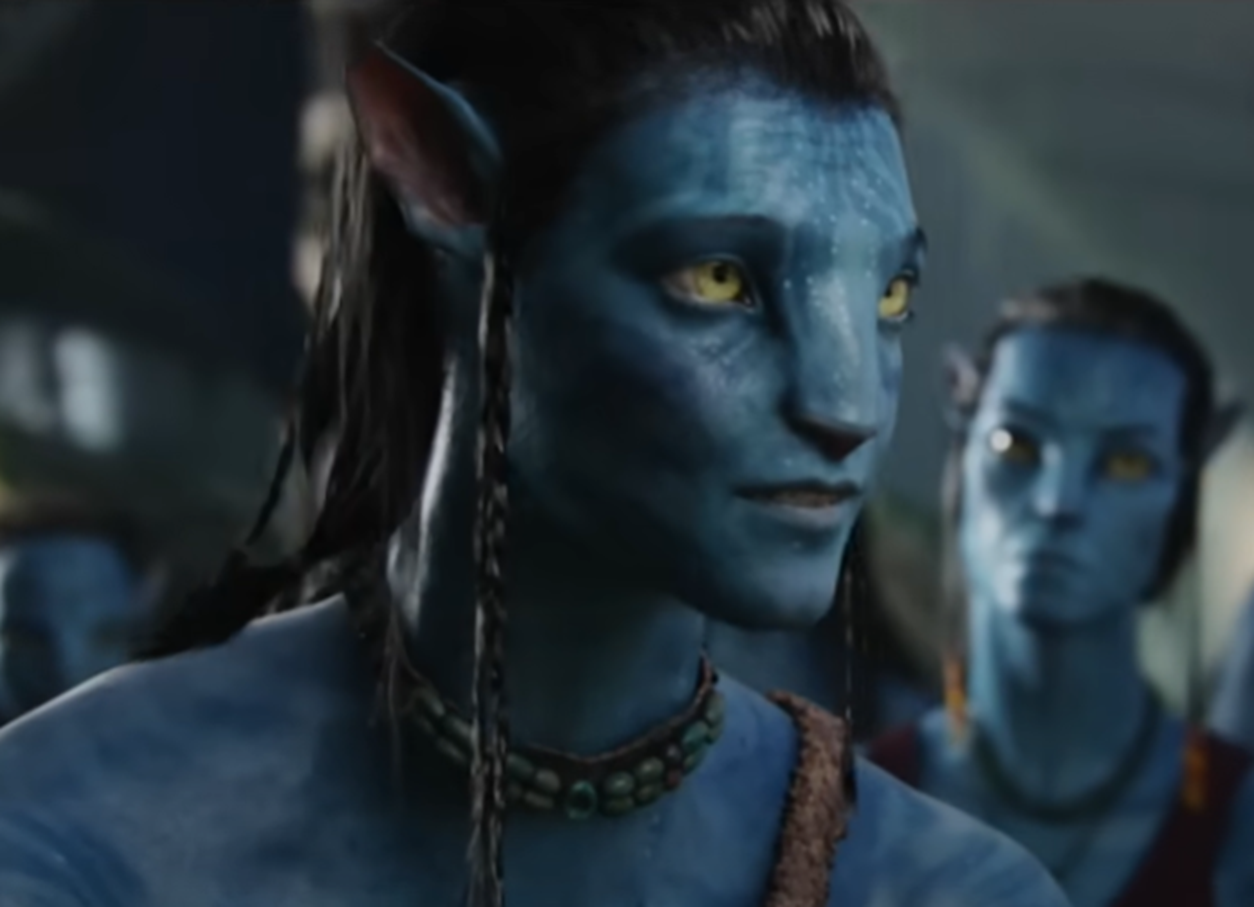
The most expensive project in James Cameron’s filmography to date is Avatar: The Way of Water. While Disney has never released a definitive final number, industry analysts and trade reports from The Hollywood Reporter and Variety estimate the production budget alone sat between $350 million and $460 million.
The Cost of Underwater Performance Capture
The primary driver of this staggering cost was the development of underwater performance capture technology. Prior to this film, "wet-for-dry" filming (using wires and smoke to simulate water) was the industry standard. Cameron insisted on filming in a 900,000-gallon tank that could simulate ocean currents and waves. This required the actors to undergo years of free-diving training and necessitated the creation of new cameras and sensors that could distinguish between actual performance data and the "noise" created by bubbles and moving water.
Long-Term Asset Building
It is important to note that the budget for The Way of Water was inflated by the fact that it was filmed concurrently with Avatar 3 and parts of Avatar 4. The investment included the construction of a permanent digital infrastructure and assets that would be reused across the entire franchise. This front-loading of costs is a common strategy in modern franchise filmmaking, but Cameron took it to an extreme scale.

2. Avatar 3: Fire and Ash (2025)
Released in late 2025, Avatar 3: Fire and Ash represents the next evolution of Cameron’s expensive journey on Pandora. While the exact standalone budget is difficult to decouple from the back-to-back production of the previous film, estimates place the specific production costs for this installment at $250 million to $300 million.
Technological Refinement
The budget for Fire and Ash benefited from the infrastructure established during the production of The Way of Water. However, the introduction of the "Ash People" and new volcanic biomes required significant investment in fire and fluid simulation software. Cameron’s partnership with Weta FX continued to push the boundaries of "high-frame-rate" (HFR) rendering, ensuring that the massive scale of the third film met the visual standards set by its predecessors.
3. Avatar (2009)
When the original Avatar was released in 2009, its $237 million production budget was among the highest ever seen. At the time, the film was a massive gamble on the future of 3D technology and motion capture.
Creating Pandora from Scratch
The budget was largely consumed by the creation of the "virtual camera" system. This allowed Cameron to see a low-resolution version of the CG environment and the actors' digital avatars in real-time as he filmed on a bare stage (the Volume). Furthermore, the photorealistic rendering of the Na'vi required a leap in skin texture and muscle simulation that had never been achieved at that scale. The film eventually grossed over $2.9 billion, proving that the high entry price was justified by the global audience's appetite for a transformative theatrical experience.
4. Titanic (1997)
Titanic is perhaps the most famous example of a "runaway" budget in Hollywood history. Originally greenlit for $110 million, the final cost ballooned to $200 million. Adjusted for inflation in 2026, this remains one of the most expensive movies ever produced.
The Horizon Tank and Realism
The costs associated with Titanic were primarily physical. Cameron convinced the studio to build a new production facility in Rosarito, Mexico, which featured a 17-million-gallon horizon tank. The construction of the 775-foot ship replica, which was 90% of the actual size of the original Titanic, required massive engineering feats, including hydraulic lifts that could tilt the ship to simulate the sinking.
The production was plagued by delays and rumors of chaos, leading many to believe it would be the biggest flop in history. Instead, it became the first film to cross the $1 billion mark, eventually reaching $2.2 billion and winning 11 Academy Awards.
5. True Lies (1994)
True Lies holds a significant place in cinematic history as the first movie to have a production budget of $100 million. Starring Arnold Schwarzenegger, this action-comedy combined practical stunts with burgeoning digital effects.
Practical Action at Scale
A large portion of the budget went toward the film's climax, which involved the use of actual Harrier Jump Jets. The production worked closely with the U.S. Marine Corps, paying for the use of the jets and the pilots. The filming of the bridge explosion sequence—a combination of miniatures and live-action pyrotechnics—showcased Cameron’s commitment to "big-screen" spectacle that justified the high ticket price.
6. Terminator 2: Judgment Day (1991)
While its $94 million to $102 million budget might seem modest by 2026 standards, Terminator 2: Judgment Day was the most expensive film ever made at the time of its release.
The CGI Revolution
The primary expense was the ground-breaking computer-generated imagery used to create the T-1000. Industrial Light & Magic (ILM) had to develop new "morphing" software to allow the liquid-metal assassin to transition between shapes. This was the first time a lead character in a film was largely a digital creation, setting the stage for everything from Jurassic Park to the modern MCU.
Comparison Table: James Cameron’s High-Budget Filmography
The following table compares the estimated production budgets and their historical significance at the time of release.
| Film Title | Release Year | Estimated Budget | Historical Financial Context |
|---|---|---|---|
| Avatar: The Way of Water | 2022 | $350M–$460M | One of the most expensive films in history. |
| Avatar 3: Fire and Ash | 2025 | $250M–$300M | Part of a multi-film production cycle. |
| Avatar | 2009 | $237M | Redefined 3D and Motion Capture costs. |
| Titanic | 1997 | $200M | First film to hit the $200M mark. |
| True Lies | 1994 | $100M | First film to hit the $100M mark. |
| Terminator 2: Judgment Day | 1991 | $102M | Most expensive film at the time of release. |
| The Abyss | 1989 | $43M–$47M | Massive cost for underwater filming in its era. |
Why the Budgets Are Justified
Critics often point to the astronomical costs of Cameron’s films as a sign of industry bloat. However, an analysis of the "Total Value" these films provide suggests a different story.
- Technological Legacy: The tools developed for Avatar and Terminator 2 are now standard across the industry. Cameron effectively subsidizes the R&D for the rest of Hollywood.
- Visual Longevity: Unlike many CGI-heavy films that look dated within five years, Titanic and the original Avatar still hold up remarkably well. The high budget buys a level of polish and "subsurface scattering" (the way light interacts with skin) that cheaper productions cannot afford.
- Global Appeal: Cameron’s films are designed for international audiences. By focusing on visual storytelling and universal themes, he ensures that the $400 million investment is recouped not just in North America, but in massive markets like China, Europe, and India.
Common Pitfalls in Estimating Film Budgets
When discussing "the most expensive movies," it is easy to fall into traps regarding the accuracy of the data.
- Marketing Costs: The figures listed above are production budgets. They do not include the marketing and distribution (P&A) costs, which can add another $100 million to $200 million to the total bill.
- Tax Incentives: Many of Cameron’s films are shot in locations like New Zealand or Mexico, which offer substantial tax rebates. A "gross" budget of $400 million might actually have a "net" cost to the studio that is 20-30% lower.
- Back-to-Back Filming: As seen with the Avatar sequels, costs are often blended across multiple films, making it difficult to pinpoint exactly how much was spent on a single movie versus the franchise infrastructure.
Frequently Asked Questions
Which James Cameron movie was the biggest financial risk?
While Avatar: The Way of Water had the highest dollar amount, Titanic was arguably the biggest risk. At the time, James Cameron was coming off a series of difficult productions, and the $200 million price tag was unprecedented. The studio was so concerned that Cameron famously offered to give up his director’s salary and percentage of the profits just to get the film finished.
Does James Cameron always go over budget?
Historically, Cameron has a reputation for exceeding initial estimates, but this is usually due to his perfectionism and the unpredictable nature of the new technologies he employs. However, his films have also consistently been the most profitable in history, which has led studios to treat his "over-budget" tendencies as a necessary part of his creative process.
How much did the Avatar sequels cost in total?
It is estimated that the combined production of Avatar 2 and Avatar 3, along with the preliminary work for Avatar 4 and 5, has a total price tag exceeding $1 billion. This makes the Avatar saga the most expensive continuous film production in the history of cinema.
Why was True Lies so expensive in 1994?
True Lies cost $100 million primarily because of the logistics of filming action sequences with actual military hardware and the high salaries of its stars, Arnold Schwarzenegger and Jamie Lee Curtis. It was a "perfect storm" of high-end practical stunts and early digital effects that set a new floor for what a summer blockbuster should cost.
How do James Cameron’s budgets compare to Marvel movies?
In the 2020s and 2026, many Marvel Cinematic Universe (MCU) films like Avengers: Endgame or Avengers: Secret Wars have reached the $350 million to $400 million range. While the dollar amounts are similar, Cameron’s budgets tend to go toward proprietary technology and physical builds, whereas much of the MCU budget is allocated to large ensemble casts and standard CGI pipelines.
Practical Recommendation: Viewing the Value
When evaluating the "expense" of a James Cameron film, the best way to understand the investment is to view the films in the highest possible quality—specifically 4K HDR at high frame rates where available. The detail in the textures of the T-1000 or the bioluminescent water of Pandora is where the millions of dollars are physically visible. For those interested in the business of film, following the quarterly reports of The Walt Disney Company provides insight into how these massive budgets are amortized over years of theme park attractions (like Pandora – The World of Avatar) and streaming residuals.
Image Gallery
Select an image to open it in a new tab.



Simon Caldwell
Enterprise Technology and Systems Editor
