How to Identify Green Ladybugs: Distinguishing Beneficial Insects from Garden Pests

To identify a green ladybug, look for an oblong, lime-green insect with twelve black spots on its back. While often mistaken for a ladybug, this is actually the Spotted Cucumber Beetle (Diabrotica undecimpunctata). Unlike beneficial red ladybugs, these green look-alikes are significant garden pests that consume foliage and spread plant diseases.
Understanding the "Green Ladybug" Misnomer
When gardeners encounter a small, spotted, green beetle, the most common instinct is to identify it as a "green ladybug." However, in the world of entomology, true ladybugs (family Coccinellidae) are rarely green. The insect most people are referring to is the Spotted Cucumber Beetle. While they share a similar spot pattern and size with the ladybug, their biological impact on your garden is diametrically opposed.
Identifying these insects correctly is a critical skill for any home gardener or agricultural professional in 2026. Mistaking a pest for a beneficial predator can lead to significant crop loss, as the management strategies for these two groups are entirely different. A true ladybug is a generalist predator that consumes aphids and mites, whereas the spotted cucumber beetle is a specialized herbivore that can decimate cucurbits (cucumbers, melons, squashes) and other vegetable crops.
Key Physical Characteristics of the Spotted Cucumber Beetle
To accurately identify the spotted cucumber beetle, you must look beyond the color and spots. By examining the body shape, antennae, and legs, you can distinguish this pest from the beneficial ladybug family.
Body Shape and Proportions
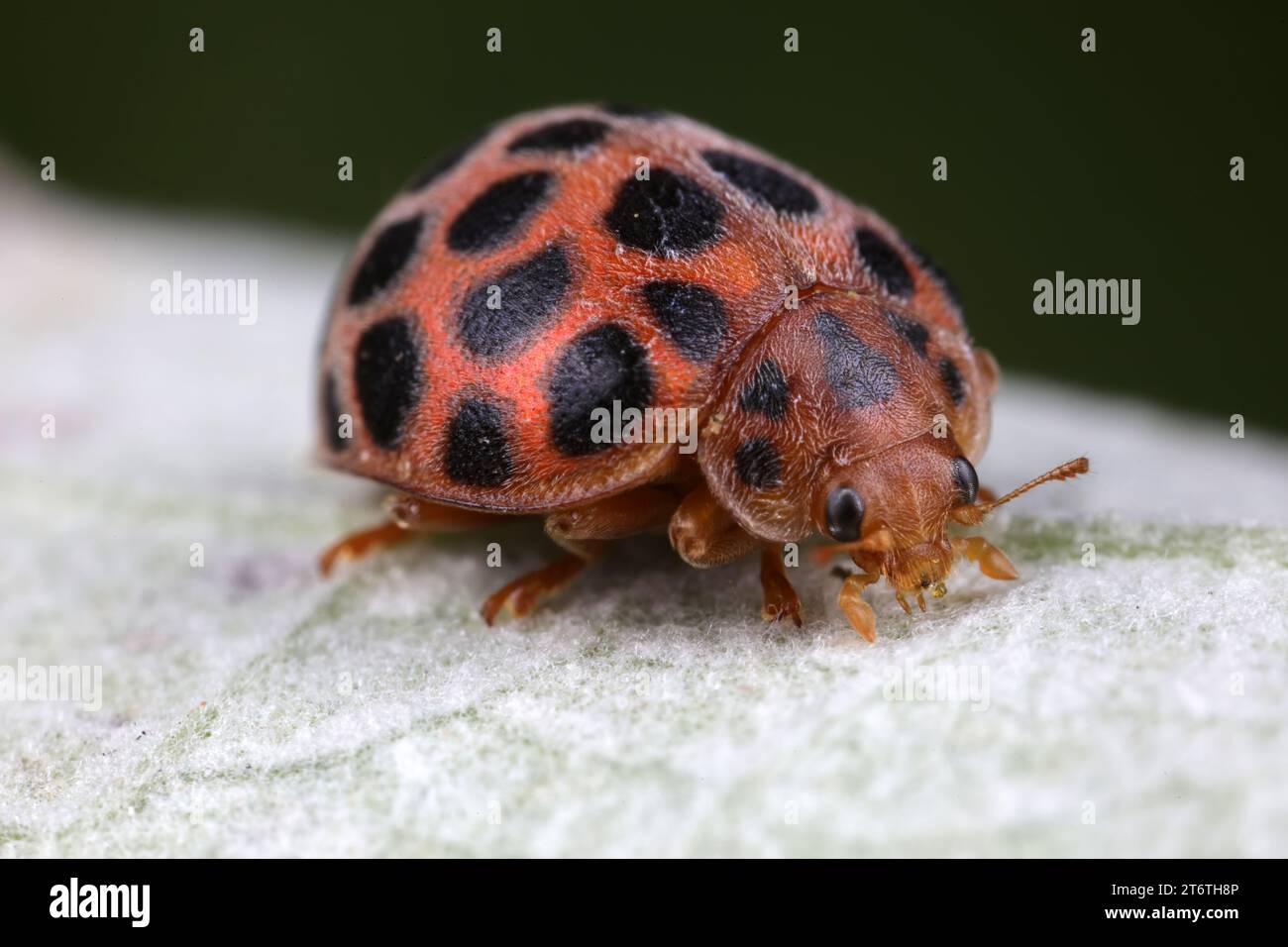
The most immediate differentiator is the silhouette. True ladybugs are typically hemispherical—meaning they are nearly as round as they are long and possess a distinct dome-like shape when viewed from the side. In contrast, the spotted cucumber beetle has an oblong or oval body. It is noticeably narrower and longer, resembling a small cigar rather than a rounded pebble.
Coloration and Spotting
The spotted cucumber beetle features a vibrant, lime-green or yellowish-green set of wing covers (known as elytra). On these elytra, you will typically find twelve distinct black spots arranged in three rows across the back.
It is important to note the color of the other body parts:
- Head: The head is usually black or dark brown.
- Thorax: The segment between the head and the wings (the prothorax) is typically the same lime-green or yellow as the wings, though it lacks spots.
- Antennae: Unlike the short, clubbed antennae of a ladybug, the cucumber beetle has long, slender, thread-like antennae that are about half the length of its body.
Leg Structure
The legs of a spotted cucumber beetle are much more prominent than those of a ladybug. Ladybugs have short legs that are often tucked under the body, making them difficult to see from an aerial view. The spotted cucumber beetle has longer, black legs that extend outward from the body, giving it a more "leggy" appearance and allowing it to move quickly across leaf surfaces.

The Spotted Cucumber Beetle vs. True Ladybugs
While color is the primary confusion point, several structural differences make identification definitive. The following table provides a side-by-side comparison of the physical and behavioral traits of the Spotted Cucumber Beetle and the common Convergent Lady Beetle (Hippodamia convergens).
| Feature | Spotted Cucumber Beetle | Convergent Lady Beetle (True Ladybug) |
|---|---|---|
| Primary Color | Lime Green to Yellowish-Green | Red, Orange, or Yellow |
| Body Shape | Oblong and relatively flat | Round, oval, and dome-shaped |
| Antennae | Long and thread-like (Filiform) | Short and clubbed |
| Spot Count | Exactly 12 black spots | Varies (usually 13 for convergent) |
| Diet | Leaves, flowers, and pollen | Aphids, scale insects, and mites |
| Movement | Fast runner; takes flight quickly | Slower walker; clumsy flight |
| Agricultural Role | Major pest / Disease vector | Beneficial predator |
Why Identification Matters: The Impact on Your Garden
Accurate identification is not just an academic exercise; it is the foundation of Integrated Pest Management (IPM). If you see "green ladybugs" in your garden, you are looking at a threat to your harvest.
Consumption of Foliage and Flowers
The adult spotted cucumber beetle is a generalist feeder but has a strong preference for the family Cucurbitaceae. They chew irregular holes in leaves and frequently feed on the petals and pollen of flowers. In high populations, they can skeletonize leaves, reducing the plant's ability to photosynthesize and decreasing overall vigor.
Larval Damage (Corn Rootworms)
The larvae of the spotted cucumber beetle are known as Southern Corn Rootworms. While the adults feed above ground, the larvae live in the soil and feed on the roots of corn, peanuts, and various grasses. This root damage can lead to "lodging," where the plant becomes unstable and falls over, or it can cause stunted growth and nutrient deficiencies.
Disease Transmission: The Greatest Threat
The most dangerous aspect of the spotted cucumber beetle is its role as a vector for plant diseases. As the beetle feeds, it can transmit Erwinia tracheiphila, the bacterium responsible for bacterial wilt.
Once a plant is infected with bacterial wilt:
- The bacteria multiply in the xylem (water-conducting tissue), essentially plugging the plant's vascular system.
- Individual leaves will start to wilt, followed by entire vines.
- The plant eventually dies, as there is no cure for the infection once it takes hold.
These beetles can also spread the Cucumber Mosaic Virus, which causes stunted growth and mottled, distorted leaves.
Seasonal Behavior and Life Cycle
Understanding when and where you will see these insects can help in identification and management. In 2026, climate patterns continue to influence the emergence dates of these pests, but their basic biology remains consistent.
Overwintering and Emergence
Adult beetles overwinter in the soil, under leaf litter, or in protected areas such as wooded borders. They emerge in early spring when temperatures consistently stay above 50°F (10°C). They often feed on alternative hosts, such as weeds or early-blooming wildflowers, before moving into vegetable gardens as soon as seedlings appear.
Reproduction
After mating, females lay eggs in the soil near the base of host plants. A single female can lay hundreds of eggs over several weeks. The larvae hatch and feed on roots for two to four weeks before pupating in the soil. Depending on the climate and latitude, there can be two to three generations per year, with populations peaking in mid-to-late summer.
Methods for Management and Control
If you have confirmed that your "green ladybugs" are indeed spotted cucumber beetles, you must take action to protect your garden. Because they are mobile and have multiple generations, a multi-pronged approach is most effective.
Physical Barriers and Cultural Controls
The most effective way to prevent damage is to stop the beetles from reaching your plants in the first place.
- Floating Row Covers: Cover young seedlings with a lightweight garden fabric. This prevents adults from landing and feeding. The covers must be removed once the plants flower to allow for pollination by bees.
- Delayed Planting: In some regions, planting crops a few weeks later than usual can help you miss the first wave of emerging adults.
- Trap Crops: Planting "Blue Hubbard" squash can draw beetles away from your primary crops, as they are highly attracted to this specific variety. You can then manage the beetles on the trap crop more easily.
Biological and Botanical Solutions
Promoting a healthy ecosystem can keep pest populations in check without harsh chemicals.
- Beneficial Insects: Tachinid flies and certain species of parasitic wasps are natural enemies of the cucumber beetle. Encouraging biodiversity in your garden helps support these predators.
- Neem Oil: An organic option that acts as a repellent and a growth regulator. Regular applications can deter feeding and disrupt the life cycle of the beetles.
- Kaolin Clay: Spraying a film of kaolin clay on leaves creates a physical barrier that irritates the beetles and prevents them from feeding.
Chemical Intervention
If populations are high and bacterial wilt is a known risk in your area, targeted insecticides may be necessary. Always follow the specific labels for 2026-approved products and apply them in the late evening to minimize the impact on honeybees and other pollinators.
Other "Green Ladybug" Look-alikes
While the spotted cucumber beetle is the most common insect referred to as a green ladybug, a few other species might cause confusion.
The Yellow-shouldered Ladybird (Apolinus lividigaster)
This is a true ladybug species found primarily in Australia and parts of Oceania. It has a yellowish-green or chartreuse hue and is a beneficial predator. However, it is not native to North America or Europe, so it is rarely the subject of identification queries in those regions.
The Bean Leaf Beetle (Cerotoma trifurcata)
This beetle can vary significantly in color, sometimes appearing yellow or dull green. While it has spots, it usually has a distinct black triangle at the front of the wing covers. Like the cucumber beetle, it is a pest rather than a beneficial insect.
The Green Lacewing (Chrysoperla spp.)
While lacewings look nothing like ladybugs in their adult form (they have long, delicate, translucent wings), their larvae are often called "aphid lions." These larvae are voracious predators of garden pests. Identifying the adult green lacewing is easy due to its bright green, slender body and large, lacy wings.
Frequently Asked Questions
Can "green ladybugs" bite humans?
While spotted cucumber beetles have mandibles designed for chewing plant tissue, they are not aggressive toward humans and do not possess a stinger. They may pinch if handled roughly, but they do not "bite" in the way a mosquito or spider might. They are not known to transmit diseases to humans.
Why are there no true green ladybugs in North America?
Evolutionarily, the red and orange colors of ladybugs serve as aposematic coloration—a warning to predators that the insect tastes bitter and may be toxic. Green is a camouflage color. Since ladybugs rely on chemical defenses (alkaloids), they benefit more from being highly visible and recognizable to birds and other predators.
How do I know if my plant has bacterial wilt from these beetles?
A quick field test involves cutting a wilted stem near the base. If you press the two cut ends together and slowly pull them apart, a "sticky," thread-like white sap will stretch between them. This indicates the presence of the Erwinia tracheiphila bacteria. If the sap is clear and watery, the wilting may be caused by dehydration or squash vine borers instead.
Do spotted cucumber beetles eat aphids like red ladybugs do?
No. Spotted cucumber beetles are strictly herbivores and occasional pollen feeders. They do not provide any pest-control benefits to your garden. If you see a green insect eating aphids, it is likely the larva of a hoverfly or a green lacewing, not a cucumber beetle.
Can I use pheromone traps for identification?
Pheromone traps are available for spotted cucumber beetles and are an excellent tool for monitoring. They can help you determine exactly when the beetles arrive in your garden so you can apply row covers or organic sprays at the most effective time.
Final Recommendation for Gardeners
The next time you spot a "green ladybug" on your cucumbers or zinnias, do not welcome it as a friend. Check for the oblong body shape, twelve black spots, and long antennae. Once you have confirmed it is a Spotted Cucumber Beetle, immediately implement physical barriers or organic deterrents. Early identification is the only way to prevent the devastating spread of bacterial wilt and ensure your garden remains productive throughout the 2026 growing season.
Image Gallery
Select an image to open it in a new tab.


Ingrid Bjornson
Global Cyber Policy and Regulation Analyst
