The Creative Alchemy of Gene Wilder and Mel Brooks: A Legacy of Cinematic Comedy

The partnership between Gene Wilder and Mel Brooks remains one of the most influential collaborations in cinematic history, defining the landscape of American satire. Their work together, primarily spanning three landmark films—The Producers, Blazing Saddles, and Young Frankenstein—fused Brooks' anarchic, maximalist directorial style with Wilder’s unique ability to portray fragile, high-intensity characters with profound humanity.
The Genesis of a Comedic Brotherhood
The meeting of Gene Wilder and Mel Brooks was not a calculated Hollywood arrangement but a serendipitous encounter rooted in the New York theater scene of the early 1960s. At the time, Wilder was a dedicated stage actor appearing in a production of Bertolt Brecht’s Mother Courage and Her Children alongside Anne Bancroft. Bancroft, who was dating and would later marry Brooks, introduced the two men backstage.
Brooks, already an established writer for Your Show of Shows, was struck by Wilder’s "natural, vulnerable" quality. He famously told Wilder that he had a screenplay called The Producers (then titled Springtime for Hitler) and that Wilder was the only person who could play the neurotic accountant Leo Bloom. While it took several years for the project to secure funding, the promise held. This initial bond formed the bedrock of a relationship that was as much a deep personal friendship as it was a professional alliance.
Their creative synergy relied on a "push-pull" dynamic. Brooks was the loud, energetic force who wanted to break every fourth wall and offend every sensibility. Wilder was the grounded, classically trained actor who insisted on finding the internal logic and emotional truth of even the most absurd characters. This tension prevented Brooks’ films from becoming mere sketch collections and elevated them into cohesive, character-driven narratives.
The Producers (1967): Launching a New Era of Satire
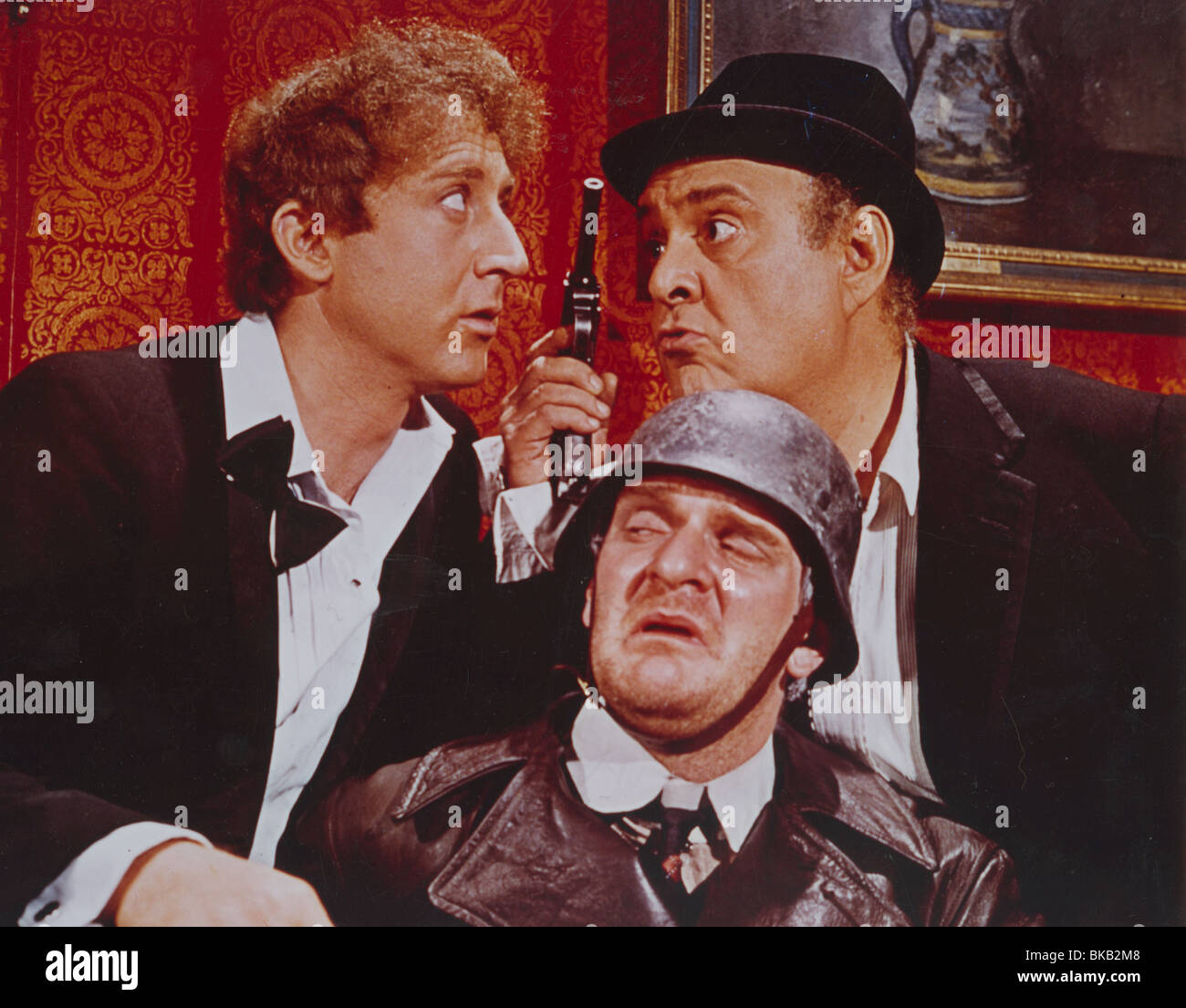
When The Producers finally went into production, it marked the first time the world witnessed the specific magic of Wilder and Brooks. The film follows Max Bialystock (Zero Mostel), a washed-up Broadway producer, and Leo Bloom (Wilder), a timid accountant, who realize they can make more money with a flop than a hit.
The Evolution of Leo Bloom
Wilder’s performance as Leo Bloom is a masterclass in escalating hysteria. The famous "blue blanket" scene, where Bloom suffers a panic attack after Bialystock touches his security blanket, was largely a result of Wilder’s improvisational instincts within Brooks’ framework. Wilder didn't just play the scene for laughs; he played it as a man truly on the brink of a nervous breakdown.
This approach changed the way comedy was performed in the late 1960s. Instead of "joking" for the camera, Wilder played the reality of the situation, which made the absurdity even funnier. The film earned Brooks an Academy Award for Best Original Screenplay and Wilder a nomination for Best Supporting Actor, cementing their status as a formidable duo.

Blazing Saddles (1974): The Accidental Masterpiece
By 1974, Mel Brooks was ready to take on the Western genre, but Gene Wilder was not originally slated to be in Blazing Saddles. The role of "The Waco Kid" was initially given to Gig Young. However, on the first day of filming, it became clear that Young was struggling with severe health issues that made it impossible for him to perform.
Brooks called Wilder in a panic. Wilder agreed to take the role on two conditions: that he could play the character with a certain degree of quiet dignity, and that Brooks would eventually look at a script Wilder was writing about a descendant of Victor Frankenstein.
Subverting the Western Hero
Wilder’s portrayal of the Waco Kid is the antithesis of the typical Western gunslinger. He is weary, gentle, and surprisingly philosophical. His chemistry with Cleavon Little’s Sheriff Bart provided the film with its moral center. While the movie is remembered for its groundbreaking (and often controversial) use of racial satire and fourth-wall-breaking gags, the genuine friendship between Bart and the Kid—rooted in the real-life affection between Wilder and Brooks—is what gives the film its lasting resonance.
Young Frankenstein (1974): The Pinnacle of Collaboration
If The Producers was their introduction and Blazing Saddles was a happy accident, Young Frankenstein was their collaborative magnum opus. Unlike the previous films, Wilder was a co-writer on this project. He wanted to create a "serious" comedy—one that looked and felt exactly like the 1931 Universal Frankenstein films but inhabited by Brooks’ comedic sensibilities.
The Creative Compromise
The production of Young Frankenstein is legendary for the creative negotiations between the two men. Wilder insisted that Brooks not appear in the film, fearing that Brooks’ Fourth-Wall-breaking presence would shatter the carefully constructed gothic atmosphere. Brooks reluctantly agreed, staying behind the camera to focus on the technical brilliance of the parody.
The "Puttin' on the Ritz" sequence is perhaps the most famous example of their creative friction. Brooks initially hated the idea, believing it was too "silly" even for this film. Wilder fought for it, arguing that the creature’s attempt at sophistication was essential to the character’s pathos. Brooks eventually relented, and the scene became the film’s most iconic moment.
| Feature | The Producers (1967) | Blazing Saddles (1974) | Young Frankenstein (1974) |
|---|---|---|---|
| Wilder's Role | Leo Bloom | The Waco Kid | Dr. Frederick Frankenstein |
| Primary Theme | Broadway/Financial Fraud | Western/Racial Satire | Gothic Horror Parody |
| Wilder's Contribution | Actor | Actor (Replacement) | Lead Actor & Co-Writer |
| Cinematic Style | High-energy farce | Anarchic satire | Stylized homage (B&W) |
| Cultural Impact | Established Brooks' voice | Broke social taboos | Refined the parody genre |
The Shift: Why the Collaboration Ended
Despite the massive success of their 1974 double-feature, Wilder and Brooks never made another movie together. This has long been a point of curiosity for fans, but the reasons were professional rather than personal.
Following Young Frankenstein, Gene Wilder transitioned into directing his own films, such as The Adventure of Sherlock Holmes' Smarter Brother (1975) and The World's Greatest Lover (1977). He also began a prolific and highly successful partnership with Richard Pryor, which dominated the late 70s and 80s.
Brooks, meanwhile, continued his path of ensemble parodies like Silent Movie (1976) and High Anxiety (1977). While they remained lifelong friends—frequently speaking on the phone and visiting one another—their creative paths diverged. Wilder sought more control over the "quiet moments" of his films, while Brooks remained committed to his boisterous, "everything-including-the-kitchen-sink" comedy style.
The Artistic Legacy in 2026
As we look back from 2026, the influence of Wilder and Brooks is visible in almost every facet of modern comedy. From the mockumentaries of Christopher Guest to the genre-bending satires of modern streaming hits, the DNA of their work remains prevalent.
The "Wilder-Brooks" Archetype
They established a specific comedic archetype: the "Straight-Man-in-a-Mad-World." In their films, Wilder was often the one reacting to the insanity around him, yet his reactions were so intense that he became the focal point of the humor. This paved the way for actors like Steve Carell or Bill Hader, who find comedy in the extreme psychological states of their characters.
Preserving the Craft
In 2026, cinema historians emphasize that Wilder and Brooks were pioneers of "metacomedy." Before it was a standard trope, they were making films about films. Young Frankenstein remains the gold standard for how to parody a genre with love and technical precision rather than just mockery. They used original props from the 1931 set and utilized vintage transition techniques (like iris-outs and wipes), showing that they respected the medium they were satirizing.
Frequent Inquiries Regarding Wilder and Brooks
Did Gene Wilder and Mel Brooks ever have a falling out?
No. Despite rumors that often follow successful Hollywood pairings, Wilder and Brooks remained exceptionally close until Wilder’s death in 2016. Brooks has often spoken in interviews about how much he misses Wilder, describing him not just as a collaborator but as a brother. Their "separation" in the late 70s was a mutual decision based on Wilder's desire to write and direct his own material.
What was the last project they worked on together?
Their last theatrical collaboration was Young Frankenstein in 1974. However, they appeared together in various documentaries and retrospectives over the decades, most notably the DVD and Blu-ray commentaries for their shared films, which are often cited by film students as essential listening for understanding comedic timing and direction.
Why did Mel Brooks not act in Young Frankenstein?
Gene Wilder made it a condition of his involvement. Wilder felt that Mel Brooks’ onscreen persona was so large and "modern" that it would distract from the 1930s gothic aesthetic they were trying to replicate. Brooks later admitted that Wilder was right, as it forced him to focus entirely on the film’s visual language and pacing.
Did they ever consider a sequel to any of their films?
There were occasionally talks about a Blazing Saddles sequel or a television spin-off, but both Wilder and Brooks were generally opposed to the idea of sequels. They believed that the stories they told were complete and that the specific magic of those films couldn't be recaptured. Brooks did eventually adapt The Producers and Young Frankenstein into successful Broadway musicals, though Wilder was not involved in those productions.
How did Gene Wilder’s acting style complement Mel Brooks’ directing?
Wilder provided the "soul" to Brooks’ "chaos." Brooks’ films could sometimes feel like a series of sketches, but Wilder’s commitment to his characters’ emotional stakes gave the audience a reason to care about the story. Wilder’s ability to go from a whisper to a scream in seconds perfectly matched Brooks’ jagged, high-energy editing style.
Recommended Viewing and Next Steps
To truly understand the depth of their collaboration, one should watch their films in chronological order. Starting with The Producers allows you to see the raw energy of their early work. Moving to Blazing Saddles reveals how they could tackle social issues through the lens of parody. Finally, Young Frankenstein shows their most polished and technically accomplished work.
For those interested in the technical aspects of their comedy, seeking out the "Making Of" documentaries for Young Frankenstein is highly recommended. These resources detail the specific lens choices and lighting techniques used to mimic the German Expressionist style of early horror films. In 2026, these films remain available on major high-definition streaming platforms and are frequently screened at revival theaters, a testament to their enduring relevance.
Image Gallery
Select an image to open it in a new tab.


Simon Caldwell
Enterprise Technology and Systems Editor
