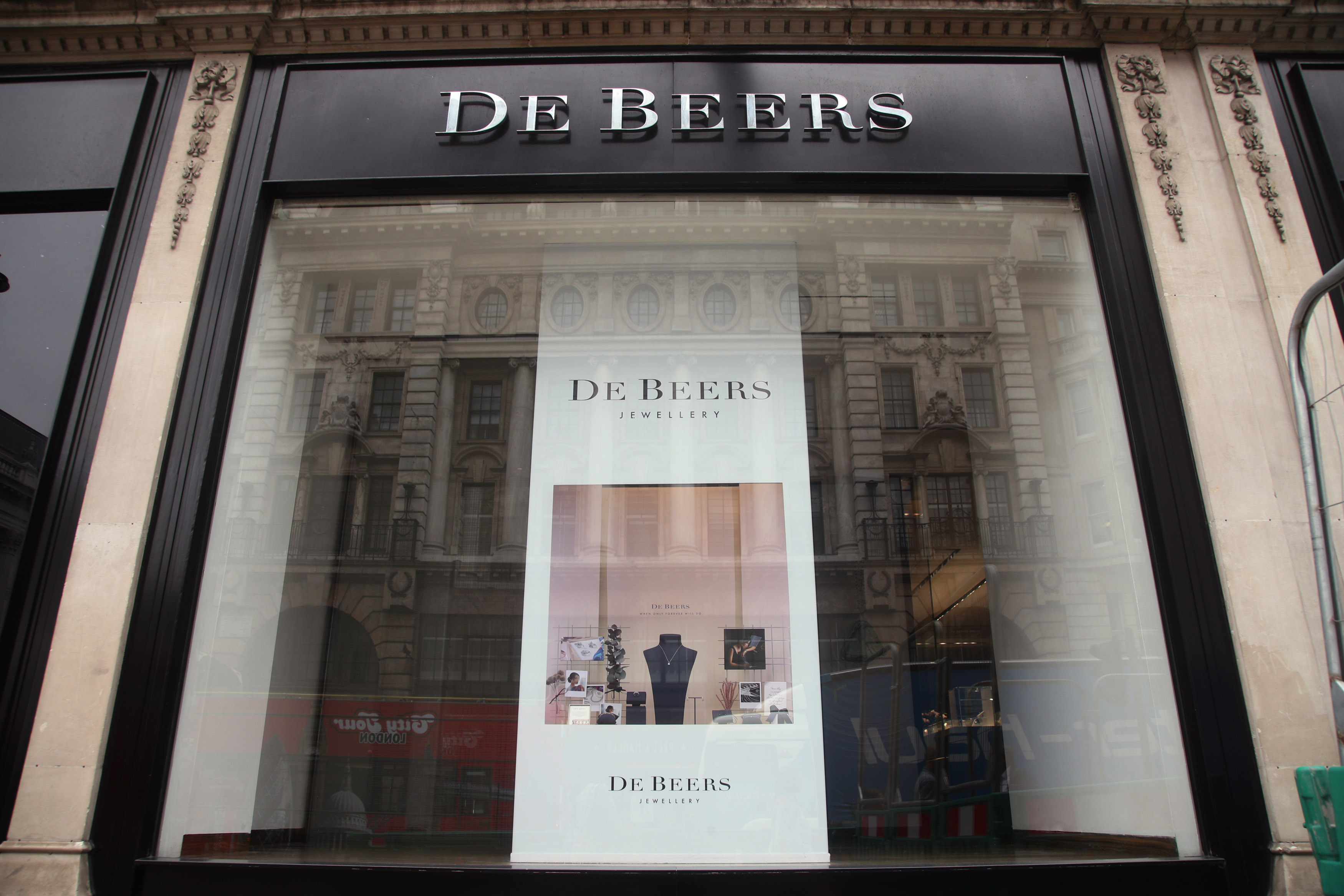
De Beers remains the most influential entity in the global diamond industry because it controls approximately one-third of the world’s rough diamond supply, pioneers end-to-end traceability through blockchain technology, and dictates the pricing architecture for both natural and lab-grown stones. Even as the company navigates a major structural transition away from Anglo American, its role as the industry’s primary guardian of "diamond equity" ensures its continued relevance in the luxury market.
The Transformation from Monopoly to Market Architect
For much of the 20th century, De Beers was synonymous with a global monopoly, at one point controlling over 80% of the world's rough diamond supply. In 2026, the company no longer functions as a price-fixing cartel, yet its influence has evolved into something perhaps more sophisticated: market architecture. Today, De Beers manages a complex ecosystem that spans exploration, mining, grading, retail, and synthetic production.
The company's shift from a supply-side monopoly to a brand-led leader was a response to antitrust pressures and the rise of independent mining operations in Russia, Canada, and Australia. By pivoting toward "Value over Volume," De Beers shifted its focus to the De Beers Jewellers and Forevermark brands. This transition was essential to maintain the perception of diamonds as a scarce, high-value asset rather than a mere commodity. By setting rigorous standards for which diamonds can carry their brand name, they effectively create a "tier" of quality that the rest of the industry uses as a benchmark.
Furthermore, De Beers' "Sight holder" system—a method of selling rough diamonds to a pre-approved list of bulk buyers—continues to stabilize the global pipeline. By choosing who gets access to their high-quality rough stones, De Beers maintains a level of indirect control over the cutting and polishing centers in India and Belgium, ensuring that the market is not flooded with excess inventory during economic downturns.
The Tracr Platform and the Standard of Provenance
In 2026, the primary challenge facing the diamond industry is no longer just "blood diamonds" or conflict stones, but the demand for total transparency regarding environmental, social, and governance (ESG) factors. De Beers matters because it has developed the industry's most robust solution to this problem: Tracr.
Tracr is a decentralized blockchain platform that provides a digital record of a diamond’s journey from the mine to the retail counter. This technology is critical for several reasons:
- Consumer Confidence: Modern consumers, particularly Gen Z and Millennials, demand proof that their luxury purchases did not fund conflict or cause irreparable environmental damage. Tracr provides an immutable "digital twin" for each stone.
- Sanction Compliance: With ongoing geopolitical tensions affecting Russian diamond exports (Alrosa), the ability to prove a diamond is "non-Russian" and sourced from ethical De Beers mines in Botswana, Namibia, or Canada is a significant commercial advantage.
- Asset Liquidity: A diamond with a verified digital history is easier to resell or insure. De Beers’ leadership in this space has forced other miners to adopt similar technologies, but Tracr remains the gold standard due to the sheer volume of data it handles.
By investing in this infrastructure, De Beers has positioned itself as the "trust layer" of the diamond trade. Without the standards set by De Beers, the natural diamond market would struggle to differentiate itself from the flood of unverified stones circulating in the secondary market.
Strategic Partnerships: The Botswana-De Beers Model
The company's relevance is also deeply tied to its unique sovereign partnerships. The most significant of these is Debswana, a 50/50 joint venture between De Beers and the Government of the Republic of Botswana. In 2023, a landmark 10-year sales agreement and a 25-year mining license extension were signed, which in 2026 are now central to the company’s operational stability.
This partnership matters because Botswana is the world’s leading producer of diamonds by value. The deal ensures that a significant portion of rough diamonds are sorted and sold within Botswana, fostering a local "knowledge economy" and supporting national development. For De Beers, this partnership provides a secure, long-term source of high-quality gems. For the world, it serves as a blueprint for how multinational extractive companies can work with host nations to ensure mutual prosperity.
The success of the "Diamonds for Development" narrative, championed by De Beers, is the industry’s strongest defense against critics who view mining as purely exploitative. If De Beers were to falter, the economic stability of several Southern African nations would be at risk, highlighting the company’s role as a geopolitical actor, not just a commercial one.
The Lab-Grown Diamond Paradox and Lightbox
One of the most disruptive forces in the jewelry world has been the rise of lab-grown diamonds (LGDs). De Beers matters in this segment because they effectively "capped" the price of synthetics through their subsidiary, Lightbox Jewelry.
When Lightbox was launched, it introduced a transparent, linear pricing model (originally $800 per carat) that was significantly lower than what other LGD producers were charging at the time. This was a strategic masterstroke intended to:
- Demarcate the Market: By pricing LGDs as "fashion jewelry" rather than "investment jewelry," De Beers protected the premium status of natural diamonds.
- Commoditize Synthetics: They used their technical expertise (via their Element Six division) to produce high-quality LGDs at a price point that competitors struggled to match, forcing the entire LGD market to lower its prices.
In 2026, as LGD prices have continued to stabilize at lower levels, De Beers’ strategy has been vindicated. They have successfully taught the consumer that while a lab-grown stone is chemically identical to a natural one, it does not hold the same "rarity value." This distinction is what keeps the high-end engagement ring market centered on natural stones, a segment De Beers continues to lead.
Comparative Market Position: Natural vs. Lab-Grown (2026 Status)
The following table illustrates how De Beers positions its products and influences the broader market segments in the current year.
| Feature | De Beers Natural (Forevermark) | Industry Standard LGDs | De Beers Lightbox (LGD) |
|---|---|---|---|
| Primary Value | Rarity and Resale Value | Accessibility and Price | Fashion and Transparency |
| Traceability | Tracr Blockchain Verified | Varied (Often Unclear) | Guaranteed Factory Origin |
| Pricing Model | Market Demand / Scarcity | Declining Commodity Price | Fixed / Linear Pricing |
| Environmental Impact | Carbon Neutral Goals (2030) | High Energy (unless solar) | Climate-Controlled Production |
| Target Audience | Bridal and Investment | Budget-Conscious Bridal | Self-Purchase / Gifting |
Marketing Influence: Cultivating the "Diamond Dream"
De Beers is responsible for arguably the most successful marketing campaign in history: "A Diamond is Forever." While the slogan is decades old, the company’s role in sustaining the "Diamond Dream" remains vital. In 2026, they lead the Natural Diamond Council (NDC), which focuses on generic marketing to maintain consumer desire for natural stones.
Without De Beers’ massive marketing spend and strategic storytelling, diamonds might have lost their status as the default symbol of love and commitment. They continue to adapt this messaging to modern values, focusing on the "unique" and "miraculous" nature of a stone formed billions of years ago. This narrative is the primary shield against the commoditization of the industry. When De Beers invests in a high-profile marketing campaign, the entire industry—from the smallest independent jeweler to the largest retail chain—benefits from the sustained consumer interest.
Structural Evolution: Life after Anglo American
The current year, 2026, marks a pivotal era for De Beers as it navigates its separation from Anglo American. This demerger or sale was initiated to allow Anglo American to focus on copper and iron ore, but for De Beers, it represents a return to its roots as a standalone diamond specialist.
This shift matters because it allows De Beers to be more agile. As an independent entity, it can pursue partnerships and capital structures that were previously restricted by the parent company’s broader mining interests. Investors and industry analysts watch this transition closely because the "new" De Beers is expected to be more focused on downstream luxury retail and technological licensing. The company is no longer just a mining firm; it is a luxury powerhouse and a tech provider.
Frequently Asked Questions
Is De Beers still a monopoly in 2026?
No, De Beers is no longer a monopoly. While it once controlled nearly 90% of the market, its current share of global rough diamond production is approximately 30-35%. It competes with the Russian state-owned Alrosa, Rio Tinto, and various Canadian mines. However, it remains the "price maker" and the most influential voice in industry standards.
Why are De Beers diamonds considered more ethical?
De Beers has implemented "Best Practice Principles" that go beyond the Kimberley Process. Their Tracr platform ensures that stones can be tracked from the moment they are mined, providing a level of transparency that many smaller or secondary-market players cannot match. They also contribute significantly to the GDP of partner nations like Botswana.
How has the Anglo American split affected De Beers?
The separation from Anglo American in 2025-2026 has allowed De Beers to streamline its operations. It has led to a more dedicated focus on the "Building Forever" sustainability goals and has given the company the freedom to innovate more rapidly in the lab-grown and retail sectors without competing for capital with large-scale industrial mining projects.
Does De Beers own the lab-grown diamond market?
They do not own it, but they "frame" it. Through their brand Lightbox, De Beers has set a price ceiling for lab-grown diamonds, which has forced other manufacturers to compete on price rather than claiming the stones have "investment value." This helps protect the higher margins of their natural diamond business.
What is the Kimberley Process and does De Beers still use it?
The Kimberley Process is a multilateral trade regime established in 2003 to prevent "conflict diamonds" from entering the mainstream market. De Beers not only follows it but has surpassed it by using blockchain and advanced serialization to provide more granular data than the Kimberley Process certificates require.
Final Guidance for Consumers and Investors
Whether you are an investor looking at the luxury goods sector or a consumer purchasing an engagement ring in 2026, De Beers' presence is unavoidable. For the investor, the company represents a unique play on both high-tech industrial manufacturing (via Element Six) and high-end luxury retail. For the consumer, a De Beers-sourced diamond remains the benchmark for "safe" luxury—a stone that is likely to have been sourced ethically, tracked technologically, and marketed with a level of prestige that maintains its psychological and financial value.
Those seeking the highest level of assurance should look for stones verified through the Tracr platform, as this represents the current peak of diamond provenance technology. As the company moves into its next chapter as a more independent entity, its ability to define what a diamond "means" will continue to be its most valuable asset.
Image Gallery
Select an image to open it in a new tab.
Mateo Castillo
Decentralized Finance and E-Payments Strategist
