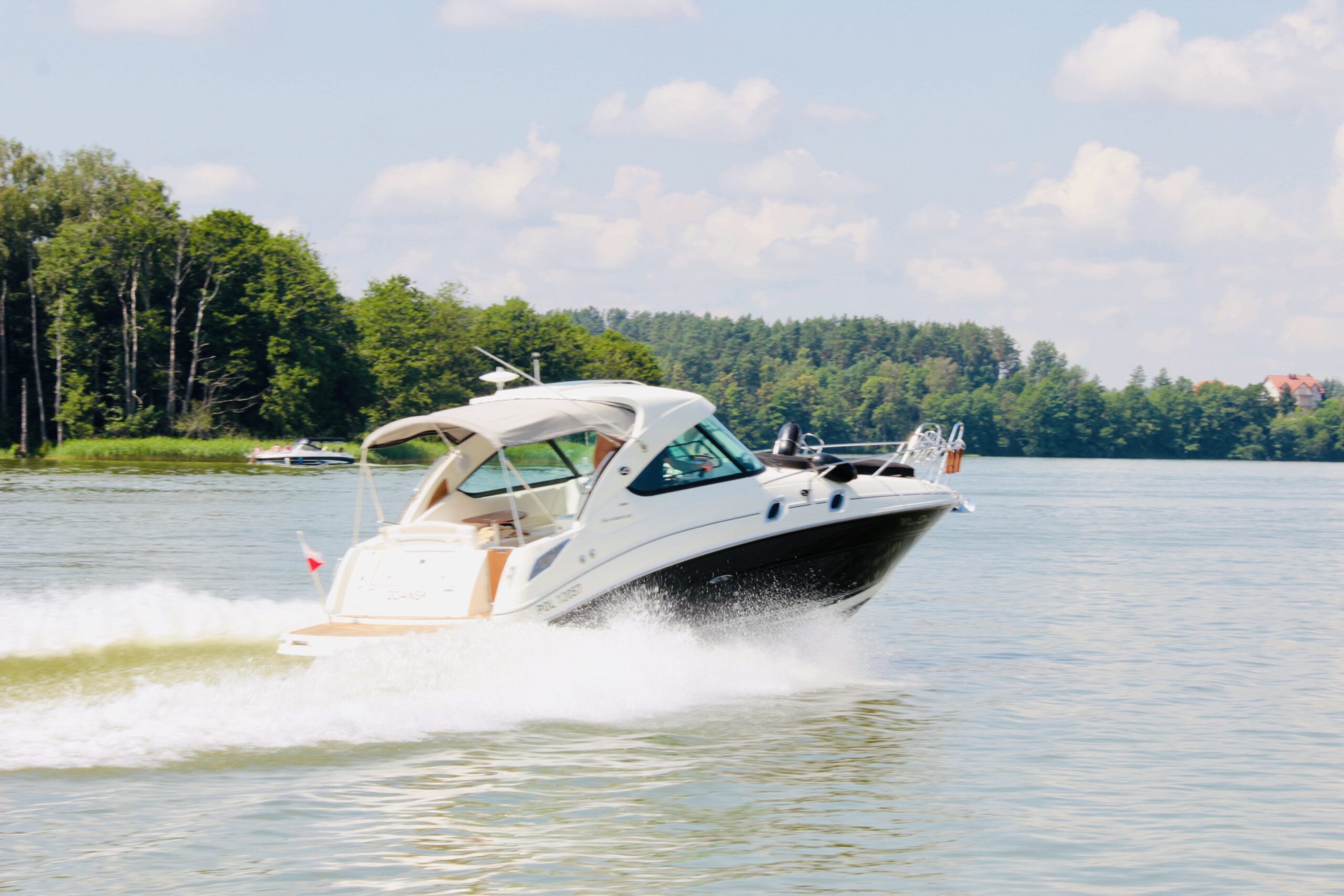
Boat owner financing is a specialized lending process where a borrower secures a loan to purchase a vessel, typically using the boat itself as collateral. These loans are characterized by longer repayment terms—often ranging from 10 to 20 years—and require specific documentation, including marine surveys for used vessels and proof of specialized insurance.
Navigating the waters of marine finance requires a different mindset than purchasing a car or a home. While a car loan is relatively short-term and a mortgage is tied to real property, boat financing sits in a unique middle ground. In 2026, the marine lending market has become highly segmented, offering tailored products for everything from small personal watercraft to multi-million dollar blue-water yachts. Understanding the mechanics of these loans, the criteria lenders use to evaluate risk, and the total cost of ownership is essential for any prospective boat owner.
The Core Mechanics of Boat Owner Financing
At its most fundamental level, boat financing is a secured loan. Because boats are mobile assets that can depreciate quickly or be moved across international borders, lenders view them as higher-risk than real estate but lower-risk than unsecured personal loans.
Secured vs. Unsecured Marine Loans
Most boat owners opt for secured loans. In this arrangement, the lender holds a lien on the boat's title. If the borrower defaults, the lender has the legal right to repossess the vessel. Because the loan is backed by an asset, interest rates are generally lower, and repayment terms are longer.
Unsecured loans, or personal loans, are typically reserved for smaller purchases—usually under $25,000. These do not require the boat as collateral, meaning the lender cannot easily seize the vessel upon default. However, because the lender takes on more risk, these loans carry significantly higher interest rates and much shorter repayment windows, often capped at five to seven years.
Marine-Specific Lenders vs. General Banks
When exploring boat owner financing, you will encounter two primary types of institutions: general banks/credit unions and specialized marine lenders.
- General Banks and Credit Unions: These institutions offer convenience, especially if you already have a checking or savings account there. However, they often have strict limits on the age of the boat they will finance and may not understand the nuances of boat valuation.
- Specialized Marine Lenders: These firms focus exclusively on the boating industry. They are often members of the National Marine Lenders Association (NMLA). These lenders understand the "blue book" value of vessels, the importance of specific engine brands, and the long-term durability of certain hull designs. They are more likely to offer 20-year terms on high-value yachts that a standard bank would find too risky.
Financial Requirements and Underwriting Standards
In 2026, marine underwriters use a combination of traditional credit metrics and asset-specific evaluations. To secure the best rates, a borrower must present a strong financial profile that demonstrates both the ability to pay and the stability to maintain the asset.
Credit Score Thresholds
While some lenders offer "subprime" marine financing, the most competitive rates are reserved for those with a Tier 1 credit score, typically 740 or higher. A score between 700 and 739 is generally considered Tier 2, still qualifying for standard rates but perhaps requiring a higher down payment. Scores below 680 often trigger manual underwriting, where the lender looks closer at the individual's debt history and income stability.
Debt-to-Income (DTI) Ratio
Lenders calculate your DTI by adding up all your monthly debt obligations (mortgage, car loans, credit card minimums) and the projected boat payment, then dividing that by your gross monthly income. For boat financing, most lenders prefer a DTI of 40% or lower. Because a boat is considered a luxury item rather than a necessity, underwriters are less flexible with high DTI ratios than they might be for a primary residence mortgage.
The Importance of Liquidity
For high-value vessels (typically those over $100,000), lenders may look beyond your income to your liquidity. They want to see that you have enough cash or liquid assets (stocks, bonds, savings) to cover the boat's operating costs and loan payments for at least six to twelve months in the event of a job loss. This "reserve" requirement ensures that the boat won't be neglected or abandoned if the owner's financial situation shifts.
Down Payment and Loan-to-Value (LTV)
One of the most critical components of boat owner financing is the down payment. Unlike the automotive world, where "zero-down" deals are common, the marine industry almost always requires "skin in the game."
Standard Down Payment Percentages
In the current 2026 market, the standard down payment for a new boat is 10% to 15%. For used boats, or for loans exceeding $250,000, lenders often require 20%.
The reason for these high down payments is initial depreciation. Much like a new car, a new boat loses a significant portion of its value the moment it leaves the dealer's lot. A 15% down payment ensures that the borrower does not immediately have "negative equity," where they owe more on the loan than the boat is worth.
Loan-to-Value (LTV) Ratios
The LTV is the amount of the loan divided by the appraised value of the boat. Lenders typically cap the LTV at 80% to 85%. If you are buying a used boat, the lender will not base the LTV on the asking price, but rather on the surveyed value or the NADA/BucBook valuation. If you agree to pay $50,000 for a boat that the lender values at $40,000, you will have to cover the $10,000 difference plus the standard down payment.
The Role of the Marine Survey in Financing
For any used boat purchase involving financing, a marine survey is almost always a mandatory prerequisite. A survey is a comprehensive inspection conducted by a certified professional to determine the vessel’s condition and fair market value.
Why Lenders Require Surveys
Lenders require surveys to protect their collateral. They need to know that the hull is structurally sound, that there is no osmotic blistering, and that the engines are in working order. A "Condition and Valuation" (C&V) survey provides the lender with an expert opinion on whether the boat is worth the sales price.
SAMS and NAMS Certification
Most lenders will only accept surveys from surveyors accredited by the Society of Accredited Marine Surveyors (SAMS) or the National Association of Marine Surveyors (NAMS). It is the buyer's responsibility to hire and pay for the surveyor, which can cost between $20 and $30 per foot of boat length.
Comparing Boat Financing Options (2026 Estimates)
The following table outlines the typical differences between various financing paths available to boat owners.
| Feature | Dealer Financing | Credit Union | Marine Specialist | Personal Loan |
|---|---|---|---|---|
| Typical Term | 10–15 Years | 5–12 Years | 10–20 Years | 3–7 Years |
| Interest Rates | Competitive to High | Low to Moderate | Competitive | High |
| Down Payment | 10–20% | 10–15% | 15–20% | 0% |
| Loan Limit | High (Dealer stock) | Moderate | Very High | Low (up to $50k) |
| Approval Speed | Fast (Same day) | Moderate | 2–5 Days | Very Fast |
| Survey Required? | Yes (if used) | Yes (if used) | Always (if used) | No |
Tax Considerations and "Second Home" Status
One often-overlooked aspect of boat owner financing is the potential for tax deductions. Under current IRS guidelines (which remain relevant in 2026), a boat can be classified as a second home if it has basic sleeping, cooking, and toilet facilities.
Interest Deductibility
If your boat meets the "second home" criteria, the interest paid on the boat loan may be deductible from your federal income taxes, similar to a mortgage on a vacation home. To qualify, the boat must have:
- A permanent berth (sleeping area).
- A galley (kitchen) with a built-in sink or stove.
- A head (toilet) with a holding tank.
It is vital to consult with a tax professional, as there are limits on the total amount of mortgage debt (primary and secondary combined) for which interest can be deducted.
The Process: Step-by-Step to Funding
- Get Pre-Approved: Before shopping, contact a marine lender to determine your borrowing capacity. This gives you leverage when negotiating with sellers or dealers.
- Select the Vessel: Once you find a boat, negotiate a purchase agreement "contingent on financing and a satisfactory survey."
- The Survey and Sea Trial: Hire a SAMS or NAMS certified surveyor. Attend the sea trial to ensure the engines reach their rated RPM and all systems function under load.
- Submit Documentation: Provide the lender with the survey report, your personal financial statements, tax returns (for large loans), and the boat’s current registration or Coast Guard documentation.
- Title Search and Insurance: The lender will conduct a title search to ensure there are no outstanding liens on the vessel. You must also provide proof of Marine Hull and Liability Insurance, naming the lender as the loss payee.
- Closing and Funding: Sign the loan documents and the security agreement. The lender will then wire the funds to the seller or the yacht broker’s escrow account.
Common Mistakes in Boat Financing
Ignoring the "Total Cost of Ownership"
New owners often focus solely on the monthly loan payment. However, the cost of owning a boat typically includes an additional 10% to 15% of the boat’s value annually in maintenance, slip fees, insurance, and fuel. A $1,000 monthly loan payment can easily turn into $2,500 in total monthly out-of-pocket expenses.
Overlooking the Engine Hours
In the automotive world, mileage is king. In boating, it is engine hours. A boat with high engine hours (over 1,000 for gasoline outboards or 3,000 for diesel inboards) may be harder to finance because the lender anticipates a significant drop in value when the engines eventually require a rebuild.
Choosing the Wrong Term Length
While a 20-year term makes the monthly payment attractive, it significantly increases the total interest paid over the life of the loan. Furthermore, because boats depreciate, a 20-year term on a fast-depreciating asset (like a fiberglass wakeboard boat) may result in being "underwater" on the loan for the first decade of ownership.
Frequently Asked Questions
What is the minimum credit score for boat financing?
While some specialty lenders may consider scores as low as 620, most reputable marine lenders require a minimum score of 680 to 700. To access the most competitive interest rates and 15-to-20-year terms, a score of 740 or higher is generally necessary. Scores below this threshold may result in higher down payment requirements, often jumping from 10% to 20% or more.
Can I finance a boat that is more than 15 years old?
Yes, but it is more challenging. Many standard banks cap the age of the vessel at 10 or 15 years. However, specialized marine lenders often finance older boats if they are "high-tier" brands (such as Hinckley, Hatteras, or Boston Whaler) that maintain their value well. These loans usually require a more rigorous survey and may have shorter repayment terms (e.g., 10 years instead of 20).
Is a down payment always required for a boat loan?
For traditional boat owner financing, a down payment of 10% to 20% is almost always required. The only way to avoid a down payment is to use an unsecured personal loan or a Home Equity Line of Credit (HELOC). However, personal loans have much higher interest rates, and HELOCs place your primary residence at risk if you default on the boat payment.
How long does the boat financing process take?
The timeline varies based on the loan size and the boat's location. Pre-approval can happen in 24 to 48 hours. However, the period from "offer accepted" to "funds wired" typically takes 2 to 4 weeks. This delay is primarily due to the time needed to schedule a marine survey, wait for the written report, and perform a title search.
Does the boat have to be Coast Guard documented?
For larger vessels (typically over 26 to 30 feet), many lenders require USCG Documentation rather than simple state registration. Documentation provides a more "cleansed" national record of ownership and liens, which offers the lender greater security. This process requires specific forms (like the CG-1258) and a small filing fee, which is usually handled by a documentation service during the closing process.
Practical Recommendation
Before applying for boat owner financing, calculate your "All-In" monthly budget, including slip fees and a 1% monthly maintenance reserve. Start by contacting a dedicated marine lending specialist rather than a general bank to ensure you are offered terms that reflect the true longevity of the vessel. Always ensure your purchase contract is contingent upon a satisfactory marine survey and sea trial to protect yourself from inheriting costly mechanical or structural issues.
Image Gallery
Select an image to open it in a new tab.
Ingrid Bjornson
Global Cyber Policy and Regulation Analyst
