
In 2026, loans taken against a variable life insurance policy are generally not subject to federal income tax because the Internal Revenue Service (IRS) views them as debt obligations rather than taxable distributions. However, this tax-free status depends on the policy remaining active until the insured's death and the contract not being classified as a Modified Endowment Contract (MEC). If a policy lapses or is surrendered while a loan is outstanding, any loan amount exceeding the policy's cost basis becomes taxable as ordinary income.
The Mechanics of Variable Life Insurance Loans
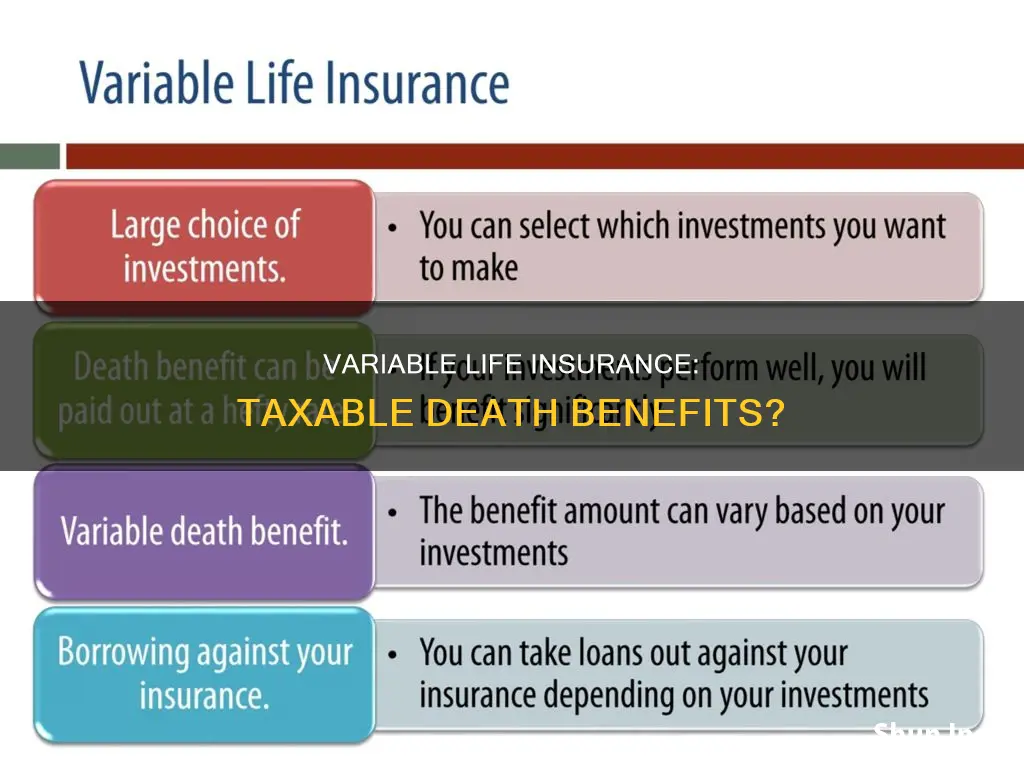
To understand the taxability of loans, one must first understand how a variable life insurance (VLI) policy functions. Unlike traditional whole life insurance, which offers a fixed rate of return on cash value, variable life insurance allows policyholders to allocate their cash value into various sub-accounts, which function similarly to mutual funds. These sub-accounts are tied to the performance of the equity and bond markets.
When you take a loan from a variable life insurance policy, you are not technically withdrawing your own money. Instead, the insurance company provides a loan using its general fund, while an equivalent portion of your policy’s cash value is moved into a "collateral account" or "loan reserve account." This collateral remains within the policy but is typically shifted out of the aggressive sub-accounts into a fixed-interest account to secure the loan.
Because the loan is secured by the death benefit and the cash value, the insurance company charges interest. Conversely, the company may credit interest back to the collateralized portion of your cash value. The difference between the interest charged and the interest credited is known as the "loan spread." In 2026, many competitive VLI products offer "wash loans," where the interest charged equals the interest credited, resulting in a net cost of zero for the policyholder, though the underlying sub-accounts lose the potential for market growth on that collateralized amount.
The General Rule: Tax-Free Access to Capital
Under Section 72 of the Internal Revenue Code, amounts received as a loan under a life insurance contract are generally not treated as taxable income. This is a significant advantage for policyholders seeking liquidity without triggering the immediate tax liabilities associated with selling stocks or withdrawing from a 401(k).
The "Tax-Free" status remains valid as long as:
- The policy is not a Modified Endowment Contract (MEC): The policy has not been overfunded beyond legal limits.
- The policy remains in force: The policy must not lapse due to non-payment or excessive loan balances.
- The policy is not surrendered: The policyholder must not voluntarily terminate the contract for its cash value while a loan is outstanding.
As long as these conditions are met, you can use the loan proceeds for any purpose—be it supplemental retirement income, business capital, or emergency expenses—without reporting the amount on your 2026 tax return.
The Modified Endowment Contract (MEC) Exception
The most critical exception to the tax-free rule for life insurance loans is the Modified Endowment Contract, or MEC. A policy becomes a MEC if the cumulative premiums paid during the first seven years (or following a material change) exceed the limits set by the "7-pay test." This test was designed by the IRS to prevent life insurance from being used purely as a short-term, tax-sheltered investment vehicle rather than a protection product.
If your variable life insurance policy is classified as a MEC, the tax rules change drastically:
- LIFO Taxation: Distributions, including loans, are taxed on a "Last-In, First-Out" (LIFO) basis. This means any gains (earnings) in the policy are considered to be withdrawn first and are taxed as ordinary income.
- Penalty Tax: If the policyholder is under the age of 59½, a 10% federal tax penalty typically applies to the taxable portion of the loan, similar to an early withdrawal from an IRA.
Before taking a loan in 2026, policyholders must verify the status of their contract. Most modern insurance carriers provide a "MEC warning" or tracking system to ensure policyholders do not inadvertently cross this threshold, but the responsibility for tax compliance ultimately rests with the taxpayer.
The "Tax Trap": Policy Lapse and Surrender
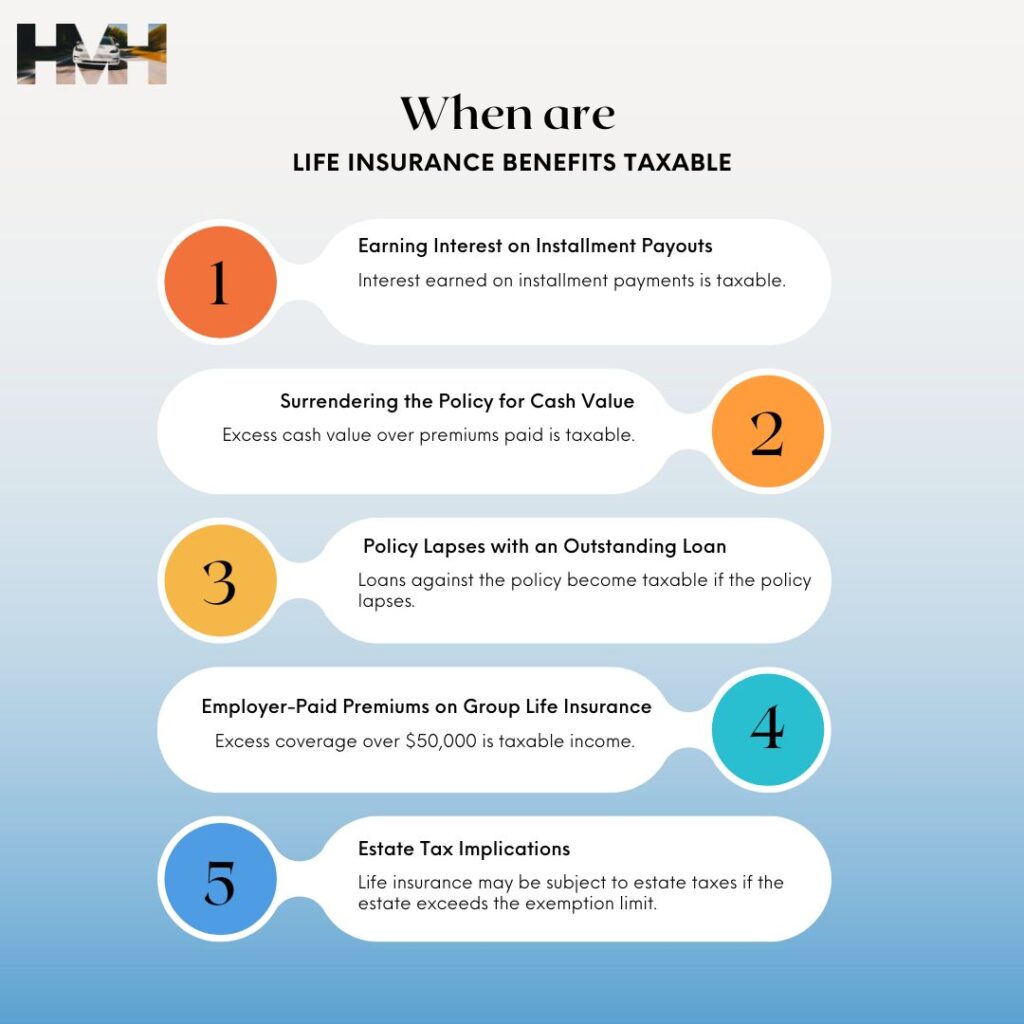
The greatest risk regarding variable life insurance loans taxability is a policy lapse. A variable life policy requires a certain level of cash value to cover the internal costs of insurance (mortality and expense charges). Because VLI cash values fluctuate with the market, a significant market downturn can cause the cash value to drop. If there is also an outstanding loan, the available equity may fall below the amount required to keep the policy active.
If the policy lapses or is surrendered, the IRS treats the outstanding loan balance as a "deemed distribution." The tax calculation is as follows: [Outstanding Loan Balance + Remaining Cash Value] - [Total Premiums Paid (Cost Basis)] = Taxable Gain
For example, if you paid $100,000 in premiums, took a $150,000 loan, and the policy subsequently lapses because the remaining sub-account values crashed, you would owe taxes on the $50,000 gain. This is often referred to as "phantom income" because you owe taxes on money you already spent years ago, and you may not have the liquid cash available to pay the tax bill.
Comparison of Tax Treatment: Loans vs. Withdrawals
It is important to distinguish between taking a loan and taking a partial withdrawal (surrender). In 2026, the tax mechanics for each are distinct for non-MEC policies.
| Feature | Policy Loan (Non-MEC) | Partial Withdrawal (Non-MEC) | MEC Loan/Withdrawal |
|---|---|---|---|
| Tax Order | Not a distribution (Debt) | First-In, First-Out (FIFO) | Last-In, First-Out (LIFO) |
| Immediate Tax | Generally $0 | Only if withdrawal > Cost Basis | Taxed to extent of gain |
| 10% Penalty | No | No | Yes (if under 59½) |
| Impact on Death Benefit | Reduces benefit by loan amount | Reduces benefit permanently | Reduces benefit |
| Interest Charged | Yes | No | N/A |
Cost Basis Explained
The "cost basis" is essentially the total amount of premiums you have paid into the policy, minus any previous tax-free withdrawals or dividends received in cash. Understanding your cost basis is vital for calculating potential tax exposure. In variable life insurance, if your sub-accounts perform exceptionally well, your cash value may far exceed your cost basis. While loans allow you to access that growth tax-free, the tax liability is merely deferred, not eliminated, if the policy terminates during your lifetime.
Interest Deductibility and Business Use
A common question in 2026 is whether the interest paid on a variable life insurance loan is tax-deductible. For individual policyholders, the answer is almost always "no." Personal interest is generally not deductible under current tax law.
However, if the loan is used for business purposes or to purchase taxable investments, there may be specific scenarios where the interest is deductible as "investment interest" or "business interest," subject to the complex tracing rules of the IRS. Policyholders should consult a tax professional before attempting to deduct policy loan interest, as the "collateralization" of life insurance cash value creates a unique legal structure that often disqualifies the interest from standard deductions.
Managing Risks in a Volatile Market
Because variable life insurance is tied to market performance, the taxability of loans is inextricably linked to investment strategy. In 2026, market volatility remains a primary concern for VLI holders.
- Over-leveraging: Taking a loan that represents more than 70-80% of your cash value is risky. A market correction could shrink your remaining cash value, leading to a "margin call" scenario where you must either pay back the loan or pay additional premiums to prevent a taxable lapse.
- Asset Allocation: When a loan is taken, the collateral is usually moved to a fixed-rate account. This changes your overall asset allocation. If you had a 100% equity allocation and you borrow 50% of the cash value, you are effectively now 50% equities and 50% fixed income. This can protect you in a down market but limits your recovery in an up market.
- Monitoring the 7-Pay Test: If you make a "material change" to your policy—such as increasing the death benefit—the 7-year MEC clock may reset. This can turn a previously tax-advantaged policy into a MEC, making future (and sometimes past) loans taxable.
FAQs
What happens to my loan if I die?
If the insured individual dies with an outstanding loan, the insurance company simply subtracts the loan balance and any accrued interest from the death benefit. The remaining balance is paid to the beneficiaries. Crucially, the death benefit—including the portion used to pay off the loan—is generally received by the beneficiaries income tax-free under IRS Section 101(a). This is the "cleanest" way to resolve a policy loan.
Can I repay the loan to avoid taxes?
Yes. You can repay the loan at any time while the policy is in force. Repaying the loan returns the collateralized funds to your chosen sub-accounts and eliminates the risk of a taxable lapse. However, the interest you paid to the insurance company is not refundable and does not increase your cost basis.
If my policy is a MEC, is the entire loan taxable?
No. Only the portion of the loan that represents "gain" in the policy is taxable. If your cost basis is $100,000 and the cash value is $120,000, and you take a $30,000 loan, $20,000 would be taxable as ordinary income (the gain), and the remaining $10,000 would be a tax-free return of basis. Note that the 10% penalty would also apply to the $20,000 if you are under age 59½.
Does the IRS track my variable life insurance loans?
Insurance companies are required to report certain distributions to the IRS using Form 1099-R. For non-MEC policies, a standard loan is typically not reported because it is not a distribution. However, if a policy lapses or is surrendered with a loan, or if the policy is a MEC, the company will issue a 1099-R reflecting the taxable income.
Is there a limit to how much I can borrow tax-free?
Technically, you can borrow up to the maximum amount the insurance company allows (usually 90-95% of the cash surrender value). However, from a tax perspective, the limit is the point at which the policy is at risk of lapsing. As long as the policy stays active, the entire loan remains tax-free, regardless of whether it exceeds your cost basis.
Practical Recommendations
Before accessing cash through a variable life insurance loan in 2026, follow these steps to protect your tax position:
- Request an In-Force Illustration: Ask your insurance carrier for an "in-force illustration" that models the loan. This document will show how the loan and interest charges will affect your cash value and death benefit over time, based on both current and hypothetical market returns.
- Verify MEC Status: Confirm in writing that your policy is not a Modified Endowment Contract. If it is, consider other sources of liquidity first.
- Maintain a Buffer: Never borrow the maximum available amount. Leave a significant "cushion" in your cash value to cover monthly insurance charges during market downturns.
- Consult a Tax Advisor: Life insurance taxation is a specialized field. If you have a large policy or are considering using loans as a significant part of a retirement strategy (often called a "LIRP" or Life Insurance Retirement Plan), professional tax guidance is essential to avoid "phantom income" traps.
By treating a variable life insurance loan as a strategic financial tool rather than "free money," you can leverage the tax-free benefits of the internal revenue code while avoiding the pitfalls of policy lapses and MEC reclassifications.
Image Gallery
Select an image to open it in a new tab.


Ingrid Bjornson
Global Cyber Policy and Regulation Analyst
