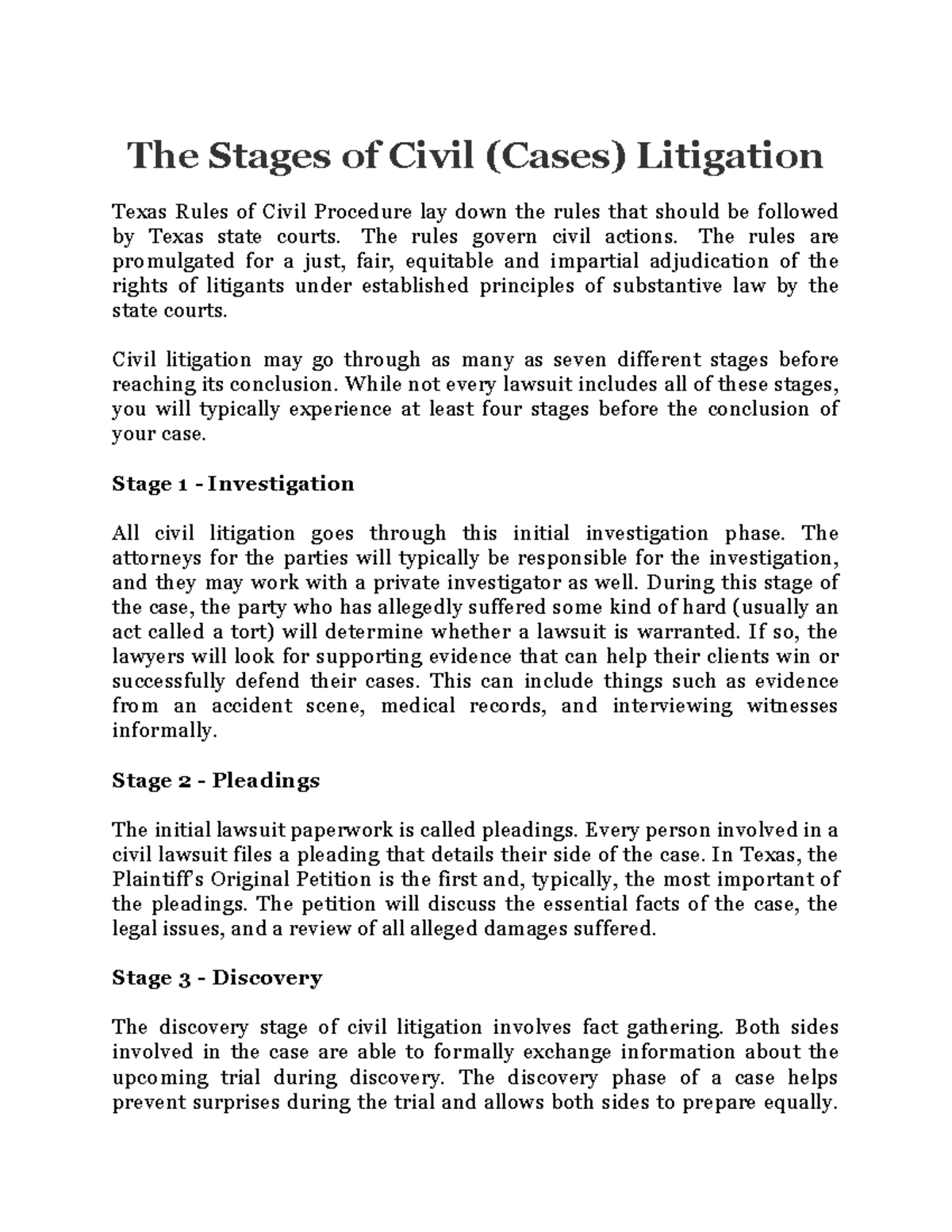
Rule 194 of the Texas Rules of Civil Procedure (TRCP) governs the mandatory exchange of information known as "Required Disclosures." In the modern Texas legal landscape of 2026, this rule requires parties to a lawsuit to automatically provide specific categories of information to the opposing side early in the litigation process, typically without the need for a formal discovery request.
The current version of Rule 194 represents a fundamental shift in Texas litigation strategy. Prior to 2021, a party had to serve a "Request for Disclosure" to trigger the production of basic case information. Following the significant amendments that took effect on January 1, 2021—which aligned Texas state practice more closely with Federal Rule of Civil Procedure 26(a)—the burden shifted. Disclosure is now an affirmative, self-executing duty. Failure to understand the nuances of this rule can lead to the exclusion of evidence, witnesses, or legal theories at trial.
The Evolution and Purpose of Rule 194
The primary objective of Rule 194 is to streamline the discovery process and reduce the "gamesmanship" often associated with the early stages of a lawsuit. By mandating the exchange of core information—such as the names of potential witnesses, the legal theories at play, and the calculation of damages—the rule aims to facilitate earlier settlements and reduce the costs associated with motion practice.
As we look at the practice in 2026, the courts have had several years to interpret the "automatic" nature of these disclosures. The consensus remains that Rule 194 serves as the floor, not the ceiling, of discovery. It ensures that every litigant, regardless of the complexity of the case, has access to the basic facts necessary to evaluate the merits of the dispute shortly after the lawsuit is filed.
Initial Disclosures: Timing and Deadlines
One of the most critical aspects of Rule 194 is the strict timeline for compliance. Unlike traditional interrogatories or requests for production, which are served by a party, the clock for Rule 194 Initial Disclosures starts automatically based on the filing of the first answer.
The 30-Day Rule
Under Rule 194.2(a), a party must make the initial disclosures at or within 30 days after the filing of the first answer, a motion to transfer venue, or a motion to dismiss, whichever comes first. This deadline applies to all parties who have appeared in the case. If a new party is joined later, they generally have 30 days from their first appearance to provide their disclosures.
Variations by Discovery Control Plan
The timing and scope of disclosures may also be influenced by the Discovery Control Plan assigned to the case under Rule 190. While Rule 194 provides the default timeline, a Level 3 Case (which involves a court-ordered discovery plan) may have customized deadlines tailored to the complexity of the litigation. However, even in Level 3 cases, practitioners in 2026 find that judges are hesitant to waive the initial disclosure requirement entirely, as it provides the foundational data for the rest of the discovery period.
Content of Initial Disclosures
Rule 194.2(b) lists the specific categories of information that must be disclosed. It is not enough to provide a general summary; the rule requires a "good faith" effort to be comprehensive.
- Correct Names of Parties: This ensures all entities are properly identified, including "doing business as" (d/b/a) names.
- Potential Parties: The names, addresses, and telephone numbers of any person or entity that may be joined in the suit.
- Legal Theories and Factual Bases: A description of the party’s claims or defenses. While this does not require a full legal brief, it must provide enough detail for the opposing party to understand the nature of the allegations.
- Amount and Method of Calculating Damages: A party seeking affirmative relief must disclose the economic damages they are claiming and the math behind those figures.
- Indemnity and Insurance Agreements: Any insurance policy or indemnity agreement that may be liable to satisfy part or all of a judgment must be disclosed. This is vital for settlement evaluations.
- Settlement Agreements: Any agreement under which any person may be liable to satisfy part or all of a judgment.
- Witness Information: The names, addresses, and telephone numbers of persons having knowledge of relevant facts, along with a brief statement of each person's connection with the case.
- Medical Records and Bills: In suits for personal injury, the plaintiff must provide a description or copies of medical records/bills or an authorization for the same.
Testifying Expert Disclosures under Rule 194.3
Beyond the initial facts of the case, Rule 194 governs the disclosure of expert witnesses. This is a separate phase of the disclosure process that occurs much later in the litigation cycle, typically as the trial date approaches.
Deadlines for Expert Designation
Unless the court orders otherwise, expert disclosures must be made according to the following schedule:
- Plaintiffs (or parties seeking affirmative relief): 90 days before the end of the discovery period.
- Defendants (or all other parties): 60 days before the end of the discovery period.
Required Expert Information
For any testifying expert, the disclosing party must provide the expert’s name, address, and telephone number, the subject matter on which the expert will testify, and the general substance of the expert’s mental impressions and opinions. For "retained" experts (those hired specifically for the litigation), the requirements are even more stringent, often including a list of all publications authored in the last ten years and a list of other cases in which the expert has testified in the previous four years.
Pretrial Disclosures under Rule 194.4
As a case moves toward its final resolution in 2026, Rule 194.4 mandates a final "cards-on-the-table" exchange. These disclosures are usually due 30 days before trial.
The purpose of pretrial disclosures is to prevent "trial by ambush." Parties must identify:
- Each witness they expect to present at trial (other than solely for impeachment).
- The designation of those witnesses whose testimony the party expects to present by deposition.
- An identification of each document or exhibit the party expects to offer.
Failure to list an exhibit or a witness in these disclosures can lead to an automatic objection at trial, and the court may bar the evidence unless the party can show "good cause" or that the failure to disclose does not unfairly surprise or prejudice the other parties.
Comparison of Disclosure Types
| Disclosure Type | Timing | Primary Goal | Key Components |
|---|---|---|---|
| Initial Disclosures | 30 days after first answer | Establish case foundations | Parties, legal theories, damages, insurance. |
| Expert Disclosures | 90/60 days before discovery end | Define technical testimony | Expert resumes, opinions, and data used. |
| Pretrial Disclosures | 30 days before trial | Prepare for final adjudication | Witness lists, exhibit lists, and depositions. |
Exemptions from Required Disclosures
Not every case in Texas is subject to the automatic disclosure requirements of Rule 194. Under Rule 194.1(b), certain proceedings are exempt because they are either expedited, involve limited discovery, or are handled in specialized courts. These include:
- Small Claims: Actions brought in Justice of the Peace courts.
- Family Law Actions: Specifically those brought under the Family Code, such as divorces or SAPCR (Suit Affecting Parent-Child Relationship) cases, which have their own specific disclosure rules (often under local rules or Title 5 of the Family Code).
- Administrative Appeals: Suits for judicial review of administrative proceedings.
- Forcible Entry and Detainer: Eviction suits.
- Rule 169 Cases: Expedited actions for certain cases involving $250,000 or less, though these cases still require disclosures, they often follow a truncated timeline.
The Duty to Supplement: Rule 193.5
A common mistake in Texas litigation is treating Rule 194 disclosures as a one-time event. Rule 193.5 creates an ongoing duty to supplement. If a party learns that their previous response was incomplete or incorrect, or if new information becomes available (such as a new witness or updated medical bills), they must amend their disclosures "reasonably promptly."
In 2026, the standard for "reasonably promptly" is generally interpreted as within 30 days of discovering the new information. If a party waits until the eve of trial to supplement their witness list with an individual they knew about six months prior, the court is likely to exclude that witness.
Consequences of Non-Compliance
Rule 193.6 provides the "teeth" for Rule 194. It states that a party who fails to make, amend, or supplement a discovery response (including a required disclosure) in a timely manner may not offer the evidence or the witness at trial.
There are only two narrow exceptions to this rule:
- Good Cause: The party must prove there was a legitimate reason for the failure to disclose.
- Lack of Surprise/Prejudice: The party must prove that the failure to disclose did not unfairly harm the opposing side's ability to prepare for trial.
In practice, the Texas Supreme Court has set a high bar for these exceptions. "Inadvertence" or "oversight" by an attorney is rarely considered good cause. This makes strict adherence to Rule 194 deadlines a top priority for any litigator in Texas.
Practical Tips for Practitioners in 2026
- Standardize the Template: Law firms should maintain a Rule 194 disclosure template that mirrors the 12 categories in 194.2(b). This ensures that no category—especially indemnity or damage calculations—is overlooked.
- Client Interviews are Discovery: Use the initial client intake process to gather the information needed for Rule 194. Since the 30-day clock starts almost immediately, you cannot wait until months into the case to identify witnesses or insurance policies.
- The "No-Request" Trap: Pro se litigants or attorneys moving from other jurisdictions often wait for the "Request for Disclosure" to arrive in the mail. In 2026, waiting for a request is a recipe for disaster. You must produce the information even if the other side says nothing.
- Verify Insurance Coverage: Always include the "Declarations Page" of any applicable insurance policy. Simply stating that "insurance exists" is usually insufficient under the current interpretation of Rule 194.
Frequently Asked Questions
Do I have to file my Rule 194 disclosures with the court?
No. Under Rule 191.4, discovery products—including disclosures—are generally not filed with the court. Instead, they are served on the parties. You should, however, file a "Notice of Service" with the court to create a record that the disclosures were provided timely.
What happens if I don't have all the information within 30 days?
You must provide the information that is "reasonably available" to you at that time. Rule 194.2(c) explicitly states that a party is not excused from making disclosures because they have not fully investigated the case. You provide what you have and supplement as the investigation continues.
Can we agree to waive Rule 194 disclosures?
Parties can enter into a Rule 11 agreement to modify discovery procedures, including the timing of disclosures. However, given the importance of this information for trial preparation, most courts require a compelling reason to waive these disclosures entirely.
Does Rule 194 apply to electronically stored information (ESI)?
Yes. Rule 194.2(b)(6) requires a description and location (or a copy) of documents and "tangible things" that the party has in its possession. In 2026, this almost always includes ESI, such as emails, text messages, and cloud-based data.
Is there a specific form for the disclosures?
Rule 194.6 states that disclosures must be in writing, signed by the attorney (or the party if pro se), and served on all parties of record. While there is no "official" government form, the structure must clearly address the categories listed in the rule.
Final Recommendation
For anyone involved in a civil lawsuit in Texas, the first priority following the filing of an answer must be the preparation of Rule 194 disclosures. Because the rule is self-executing, the burden of initiative lies entirely on the parties. By treating Rule 194 as a foundational step rather than a procedural hurdle, litigants can protect their evidence, avoid sanctions, and ensure their case is positioned for a successful resolution. Always consult the Texas Judicial Branch official website for the most current text of the rules, as local rules in specific counties may occasionally provide additional guidance on service and filing procedures.
Image Gallery
Select an image to open it in a new tab.
Simon Caldwell
Enterprise Technology and Systems Editor
