Alabama commercial auto insurance is a specialized legal contract providing financial protection for vehicles used in business operations throughout the state. As of 2026, Alabama law mandates that any vehicle utilized for commercial purposes—ranging from heavy-duty freight trucks to passenger sedans used for deliveries—must carry specific liability limits to cover bodily injury and property damage to third parties in the event of an at-fault accident.
Commercial auto insurance is fundamentally different from personal auto insurance in its scope, limits, and the risks it mitigates. In Alabama, businesses ranging from small landscaping startups in Mobile to large logistics fleets in Birmingham rely on these policies to satisfy state mandates, comply with federal trucking regulations, and protect their balance sheets from the high costs of litigation and vehicle repair. Understanding the nuances of Alabama’s specific legal environment, including its unique negligence laws, is critical for any business owner operating on the state's roadways.
The Legal Framework of Commercial Auto Insurance in Alabama
The Alabama Department of Insurance (ALDOI) serves as the primary regulatory body for all insurance products sold within the state. For commercial entities, insurance is not merely a suggestion but a statutory requirement for vehicle registration and operation.
Alabama’s Mandatory Minimum Liability Limits
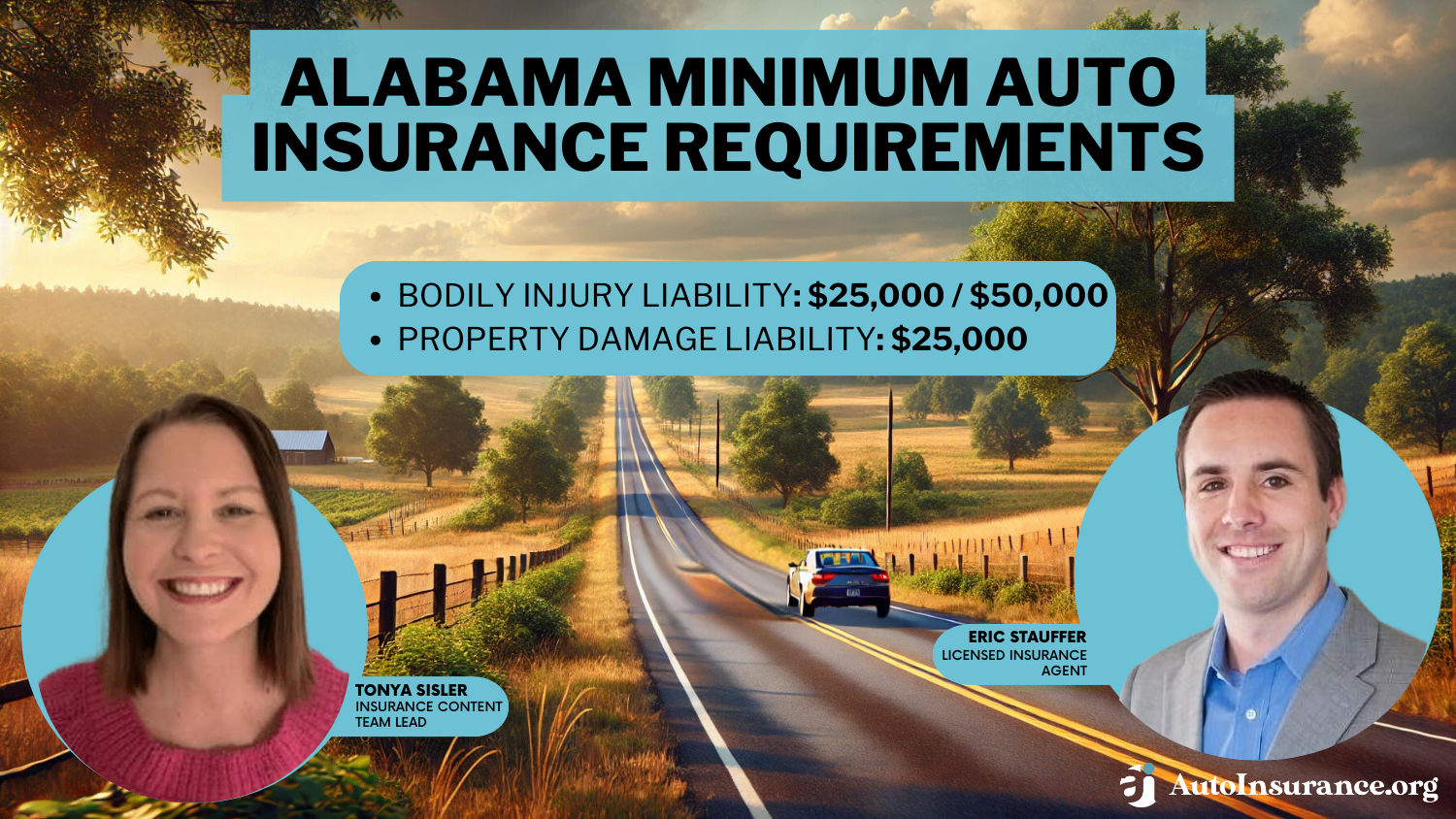
In 2026, the state of Alabama continues to enforce "25/50/25" minimum liability limits for all registered vehicles, including those used for commercial purposes. These limits represent:
- $25,000 for bodily injury per person.
- $50,000 for total bodily injury per accident (multiple people).
- $25,000 for property damage.
However, business owners must understand that these state minimums are rarely sufficient for commercial risks. A single accident involving a commercial van can easily exceed $100,000 in medical bills and property damage. Most Alabama commercial insurers recommend a Combined Single Limit (CSL) of at least $500,000 or $1,000,000. CSL policies provide a flat amount of coverage that can be applied to any combination of bodily injury and property damage, offering greater flexibility and protection during a claim.
The Impact of Alabama’s Contributory Negligence Law
One of the most critical aspects of understanding Alabama commercial insurance is the state’s adherence to the doctrine of Pure Contributory Negligence. Alabama is one of the few remaining jurisdictions where, if a driver is found to be even 1% at fault for an accident, they may be legally barred from recovering any damages from the other party.
For Alabama businesses, this law places a premium on having robust defense coverage within a commercial auto policy. Because the "all or nothing" nature of contributory negligence often leads to aggressive litigation, your insurance carrier must provide the legal resources to defend your drivers effectively. If your driver is partially at fault, your commercial policy will likely be the sole source of funding for repairs and medical costs, as you cannot seek compensation from the other driver’s insurance.
Essential Coverage Components for Alabama Businesses
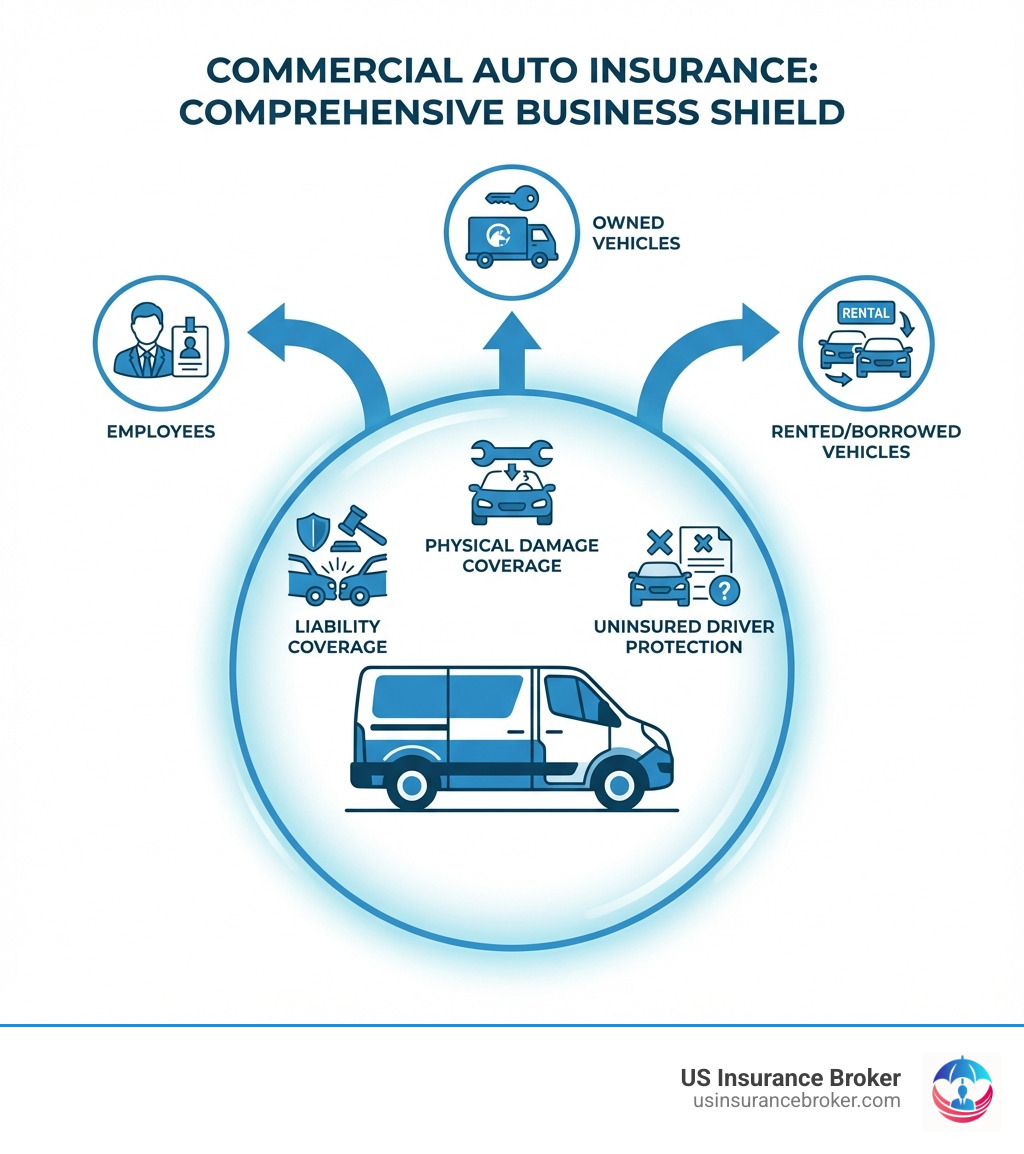
A comprehensive commercial auto policy in Alabama is built from several different types of coverage. Depending on your industry—whether it’s construction, agriculture, or retail—the "ideal" policy will vary.
Bodily Injury and Property Damage Liability
This is the core of the policy. It pays for the medical expenses, lost wages, and legal fees of third parties if your business vehicle is at fault in an accident. In the Alabama court system, settlements for bodily injury can be significant, especially in cases involving permanent disability or wrongful death. High liability limits are the first line of defense against a lawsuit that could otherwise bankrupt a small business.
Physical Damage Coverage
While liability covers others, physical damage covers your own assets. This is typically split into two parts:
- Collision Coverage: Pays for damage to your vehicle resulting from a crash with another vehicle or object, regardless of who is at fault.
- Comprehensive Coverage: Protects against "acts of God" and non-collision events common in Alabama, such as damage from falling timber (common in the logging regions), hail storms, flooding, theft, or vandalism.
Uninsured and Underinsured Motorist (UM/UIM)
According to historical data from the Insurance Research Council, Alabama has often ranked among the states with the highest percentage of uninsured drivers. Uninsured Motorist (UM) coverage is vital because it protects your business if one of your employees is hit by a driver who lacks insurance. Underinsured Motorist (UIM) coverage kicks in when the at-fault driver has insurance, but their limits are too low to cover your total damages. In Alabama, UM/UIM coverage is often "stacked," allowing for higher payouts based on the number of vehicles insured under the policy.
Medical Payments (MedPay)
MedPay provides immediate coverage for medical expenses for your driver and any passengers in your vehicle, regardless of who caused the accident. Given the rising cost of emergency room visits and diagnostic imaging in 2026, MedPay is a low-cost addition that ensures your employees receive immediate care without waiting for a liability determination.

Specialized Endorsements for Alabama Industries
Alabama’s economy is diverse, and a "one-size-fits-all" policy often leaves gaps in protection. Business owners should look for specific endorsements that tailor the policy to their daily operations.
Hired and Non-Owned Auto Insurance (HNOA)
This is perhaps the most overlooked coverage for Alabama small businesses. If you own a pizza parlor in Auburn or a law firm in Montgomery and your employees use their personal cars to run errands or make deliveries, your standard commercial policy may not cover them.
- Hired Auto: Covers vehicles your business leases or rents.
- Non-Owned Auto: Protects the business if an employee has an accident in their personal vehicle while performing a work task.
Without HNOA, the business entity itself can be sued for damages if an employee’s personal insurance limits are exhausted.
Cargo Insurance and On-Hook Coverage
For the thousands of logistics companies operating along the I-65 and I-20 corridors, Motor Truck Cargo insurance is essential. It protects the value of the goods being transported. For towing companies in Alabama, On-Hook Coverage is a specific requirement that insures the vehicle being towed, which is not covered under standard liability or collision.
Pollution Liability
Alabama’s agricultural and manufacturing sectors often transport chemicals, fertilizers, or fuels. If a commercial vehicle overturns and leaks these substances into a local waterway or soil, the cleanup costs are astronomical. A pollution endorsement covers the remediation costs and fines associated with such spills.
Comparison of Coverage Needs by Business Type
The following table outlines how different types of Alabama businesses should structure their commercial auto insurance portfolios in 2026.
| Business Sector | Vehicle Type | Critical Coverage | Recommended Liability Limit |
|---|---|---|---|
| Local Contractors | Pickups, Vans | HNOA, Tool/Equipment Floaters | $500,000 CSL |
| Long-Haul Trucking | Semi-Trucks | Cargo, Bobtail Insurance, FMCSA Filings | $1,000,000+ CSL |
| Food Delivery | Passenger Cars | Non-Owned Auto (HNOA) | $300,000 CSL |
| Passenger Transit | Buses, Shuttles | High MedPay, Excess Liability | $1,500,000+ (Regulated) |
| Logging/Forestry | Log Trucks | Pollution, Specialized Physical Damage | $1,000,000 CSL |
Factors Influencing Premiums in Alabama
In 2026, insurance carriers use sophisticated telematics and data modeling to determine premiums for Alabama businesses. Several state-specific factors play a major role in how much you will pay.
Geography and ZIP Codes
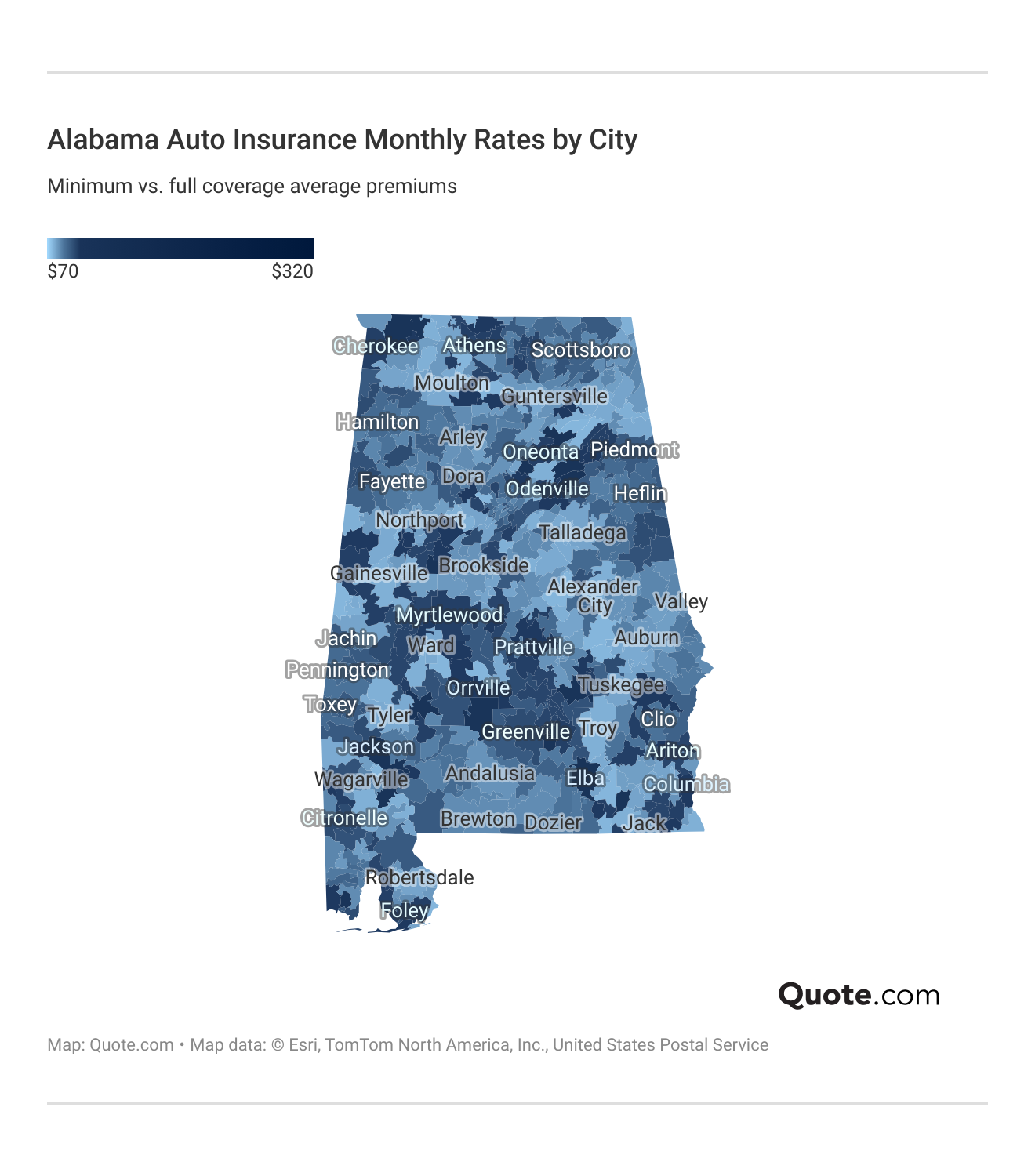
Insurance rates in Alabama are highly localized. A business based in a high-traffic urban area like Birmingham or Mobile will generally face higher premiums than a business in a rural county like Pike or Geneva. Higher population density correlates with a higher frequency of accidents and vehicle thefts.
Driving Records and the "Experience Mod"
The Motor Vehicle Report (MVR) of every driver on your policy is a primary rating factor. In Alabama, insurers look back three to five years. Even a single "Minor" violation (such as speeding 15 mph over the limit) can result in a 10% to 15% premium increase. Furthermore, larger fleets are subject to an "Experience Modifier," which adjusts premiums based on the business's actual loss history compared to the industry average.
Vehicle Weight Class
The Alabama Department of Revenue classifies vehicles by weight, and insurance companies follow suit. Light-duty vehicles (under 10,000 lbs) are the cheapest to insure. Heavy-duty vehicles (over 26,000 lbs) carry significantly higher premiums due to the catastrophic damage they can cause in a collision.
Telematics Adoption
By 2026, most Alabama insurers offer discounts for businesses that install telematics devices. These units track braking habits, speed, and cornering. For Alabama fleet owners, proving a culture of safety through data can lead to premium reductions of up to 25%.
Federal Requirements: The FMCSA and Alabama Trucking
If your Alabama-based business operates across state lines (interstate commerce), you are subject to the regulations of the Federal Motor Carrier Safety Administration (FMCSA). These requirements are more stringent than Alabama’s state-level rules.
The Motor Carrier Act of 1980 dictates that vehicles transporting non-hazardous freight must carry at least $750,000 in liability coverage. If you are transporting hazardous materials, the requirement jumps to $5,000,000. Additionally, the FMCSA requires specific filings (such as the Form MCS-90) to prove that the business has the financial responsibility to cover public liability and environmental restoration. Alabama-based truckers must ensure their insurance agent is familiar with these federal filings to avoid "Out of Service" orders during DOT inspections.
Common Pitfalls in Alabama Commercial Auto Insurance
Many Alabama business owners unknowingly expose themselves to risk by making common mistakes during the quoting process.
- Misclassifying Usage: Labeling a vehicle as "Personal" when it is used for business is the fastest way to have a claim denied. Alabama insurers are diligent about investigating the "intended use" of a vehicle post-accident.
- Omitting Drivers: Every employee who might get behind the wheel must be listed on the policy. In Alabama, "permissive use" is often more restricted in commercial policies than in personal ones.
- Ignoring Seasonal Changes: Alabama’s agricultural businesses often have seasonal peaks. Failing to adjust coverage limits or vehicle schedules during the off-season can lead to overpaying or, conversely, being underinsured during harvest.
- Neglecting the Radius of Operation: Most policies are rated based on how far your vehicles travel. If you tell your insurer you only operate within 50 miles of Montgomery but a driver has an accident in Atlanta, your claim could be scrutinized or denied based on "rate evasion."
Frequently Asked Questions
Does Alabama require commercial insurance for self-employed contractors?
Yes, if the vehicle is registered to a business entity or used primarily for business tasks, you must have a commercial policy. Even if you are a sole proprietor, if you have specialized equipment attached to your vehicle or use it to transport goods for a fee, a personal policy will likely exclude coverage for any accidents that occur during those activities.
How does Alabama’s "No-Fault" status affect commercial auto?
Actually, Alabama is not a no-fault state; it is a traditional tort state. This means the person who caused the accident is responsible for paying the damages. This makes the liability portion of your Alabama commercial auto policy the most important component, as you can be sued directly for medical bills and pain and suffering.
Can I use my personal auto insurance for my Alabama LLC?
Generally, no. Personal insurance policies specifically exclude "business use" beyond simple commuting. If your vehicle is owned by an LLC, it must be insured under a commercial policy. Attempting to use a personal policy for an LLC-owned vehicle is a breach of contract and will likely result in a denied claim.
What is the average cost of commercial auto insurance in Alabama for 2026?
While prices vary wildly based on vehicle type and industry, a typical small business in Alabama with one van and a clean driving record can expect to pay between $1,200 and $2,400 per year. For heavy trucking operations, premiums can exceed $10,000 per power unit annually.
Are trailers covered under my Alabama commercial auto policy?
Usually, liability coverage extends from the power unit (the truck) to the trailer while it is attached. However, physical damage coverage for the trailer itself (to fix the trailer if it flips or is stolen) must be specifically added to the policy as a scheduled item.
Summary and Recommended Actions
Understanding Alabama commercial auto insurance is a prerequisite for long-term business viability in the state. Because of Alabama’s strict contributory negligence laws and the high percentage of uninsured motorists, a bare-minimum policy is rarely a safe choice.
Next Steps for Alabama Business Owners:
- Audit Your Drivers: Review the MVRs of all employees annually to ensure no "hidden" violations are threatening your rates or coverage eligibility.
- Evaluate Limits: Move away from 25/50/25 minimums toward a minimum of $500,000 CSL to protect your business assets from litigation.
- Consult a Specialist: Work with an independent agent who understands the specific needs of Alabama’s primary industries, such as forestry, construction, or interstate logistics.
- Implement Safety Tech: Consider installing dash cams and telematics to both lower premiums and provide evidence in the event of a "he-said, she-said" accident in Alabama's contributory negligence environment.
By taking these steps in 2026, you ensure that your business remains compliant with Alabama law while shielding your company from the unpredictable costs of the road.
Image Gallery
Select an image to open it in a new tab.

Akira Tanaka
International Academic Trends Correspondent
