
Paracetamol is considered safe for use during breastfeeding and is the preferred choice for pain relief and fever reduction in lactating mothers. Scientific evidence indicates that only a negligible amount of the medication passes into breast milk—well below the therapeutic dose given directly to infants—posing no significant risk to the nursing baby.
The Consensus on Paracetamol and Lactation
As of 2026, healthcare organizations globally, including the World Health Organization (WHO) and the National Health Service (NHS), maintain that paracetamol (known as acetaminophen in the United States) is the first-line analgesic for breastfeeding parents. The primary reason for this recommendation is the drug’s long-standing safety profile and the specific way the human body processes it.
When a mother takes paracetamol, the medication enters her bloodstream to alleviate pain or reduce fever. While a small fraction does cross into the mammary glands, the concentration found in breast milk is remarkably low. Clinical studies consistently show that a nursing infant receives significantly less than 2% of the maternal-adjusted dose. To put this in perspective, this amount is a mere fraction of the dose a pediatrician would prescribe if the infant themselves required paracetamol for a fever.
The safety of paracetamol during lactation is supported by its pharmacokinetics—the way the drug moves through the body. It has a relatively short half-life (the time it takes for the concentration of the drug in the body to reduce by half), usually between two and three hours. Furthermore, paracetamol does not accumulate in the milk or the baby’s system over time when taken at standard therapeutic doses.
Understanding the "Relative Infant Dose" (RID)
To determine the safety of any medication during breastfeeding, clinical researchers use a metric called the Relative Infant Dose (RID). The RID is calculated by dividing the infant's dose via milk (mg/kg/day) by the mother's dose (mg/kg/day).
For paracetamol, the RID is typically estimated between 0.5% and 2.0%. Medical toxicology standards generally consider any medication with an RID of less than 10% to be safe for a healthy, full-term infant. Because paracetamol falls so far below this threshold, it is categorized as "L1" (Compatible) in many lactation safety databases, such as Hale’s Medications & Mothers' Milk.
This low transfer rate occurs because paracetamol does not bind heavily to proteins in the mother’s plasma, and its molecular structure does not encourage high-level diffusion into the fatty tissues of the breast. Consequently, the baby’s exposure remains minimal, and their developing liver is more than capable of processing the trace amounts they might ingest.

Recommended Dosage and Administration for Nursing Mothers
While paracetamol is safe, its safety is strictly tied to adhering to the recommended adult dosage. Overdosing on paracetamol is a serious medical emergency that can lead to liver failure, regardless of whether a woman is breastfeeding or not.
Standard Adult Dosage
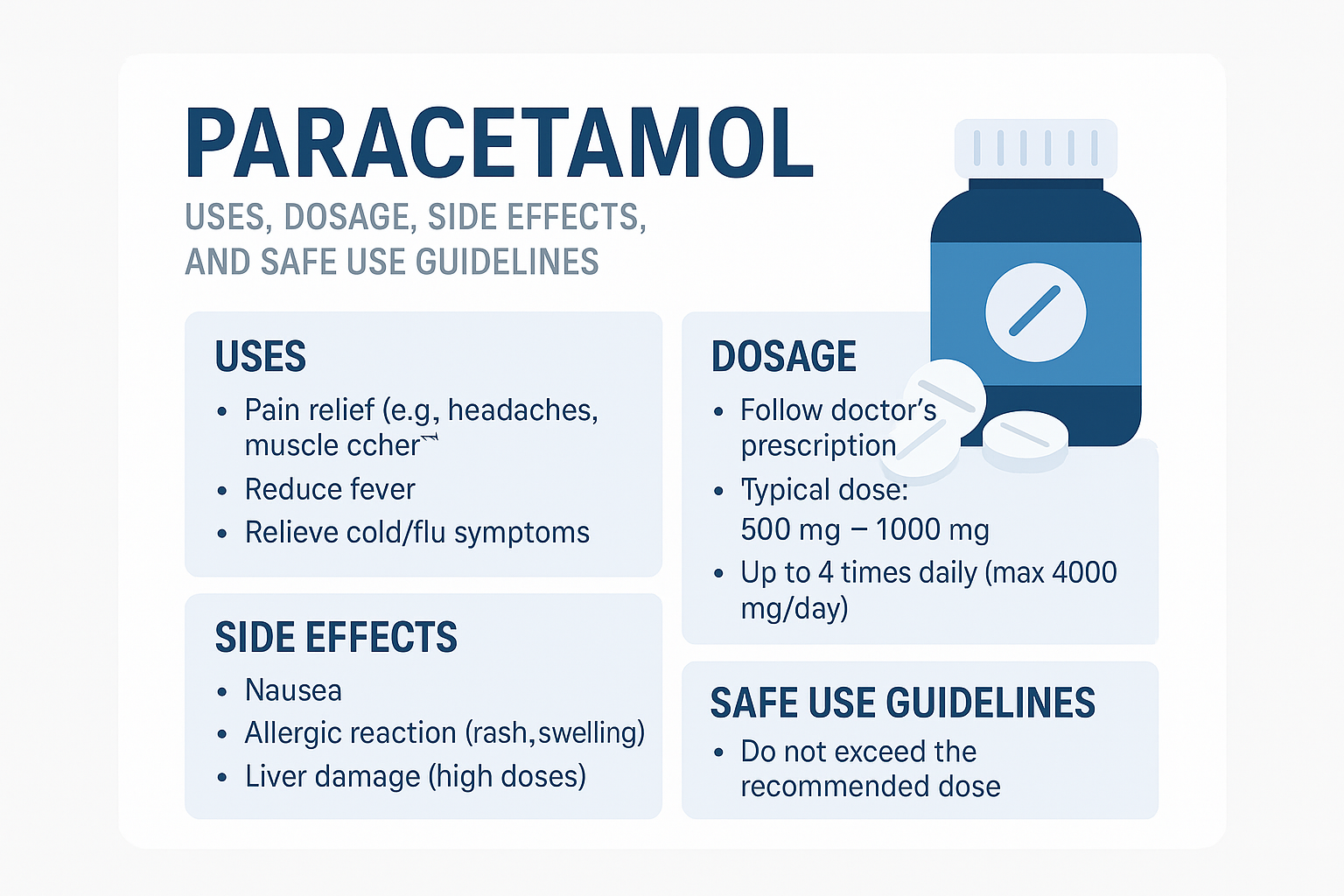
For a healthy adult, the standard dose is:
- 500mg to 1,000mg (1 or 2 tablets) taken every 4 to 6 hours.
- Maximum Dose: No more than 4,000mg (4 grams) in any 24-hour period.
Avoiding "Hidden" Paracetamol
One of the most common risks for breastfeeding mothers is the accidental ingestion of additional paracetamol through "all-in-one" cold and flu remedies. Many over-the-counter (OTC) products for congestion or sinus pain also contain paracetamol. If you take a dose of a cold remedy and then take two standard paracetamol tablets, you may inadvertently exceed the safe daily limit. Always read the active ingredients on every package.
Timing Your Doses
There is no medical requirement to "pump and dump" (expressing and discarding milk) after taking paracetamol. Because the amount transferred is so low, you do not need to time your doses around your breastfeeding schedule. However, if you are concerned, taking the medication immediately after a feeding session ensures that the peak levels of the drug in your bloodstream (which occur about 30 to 60 minutes after ingestion) happen while the baby is not nursing.
Common Reasons for Using Paracetamol While Breastfeeding
Breastfeeding mothers often face physical challenges that require effective pain management. Paracetamol is particularly useful in the following scenarios:
Postpartum Recovery
Whether recovering from a vaginal delivery or a C-section, pain management is crucial for the mother’s well-being and her ability to care for her newborn. Paracetamol is often used in conjunction with other safe anti-inflammatories to manage uterine cramping (afterpains) and surgical site discomfort.
Mastitis and Engorgement
Mastitis is an inflammation of the breast tissue that often involves an infection. It can cause intense pain, swelling, and high fever. Paracetamol helps manage the systemic symptoms (fever and aches) while the mother works to clear the blockage or takes prescribed antibiotics.
Viral Illnesses and Headaches
Sleep deprivation is a common reality for new parents, often leading to tension headaches. Additionally, if a mother catches a common cold or the flu, paracetamol can reduce a fever, making it easier for her to continue breastfeeding, which provides the baby with essential antibodies.
Comparing Pain Relief Options During Lactation
While paracetamol is the gold standard for safety, other options exist. Understanding how they compare helps in making an informed choice for your specific symptoms.
| Medication | Safety Category | Breast milk Transfer | Notes |
|---|---|---|---|
| Paracetamol | Highly Safe | Very Low (<2%) | Preferred for fever and general pain. |
| Ibuprofen | Highly Safe | Extremely Low (<1%) | Preferred for inflammation and "afterpains." |
| Aspirin | Avoid | Moderate | Risk of Reye’s Syndrome in infants; avoid unless prescribed. |
| Naproxen | Use with Caution | Low | Longer half-life; not ideal for long-term use while nursing. |
| Codeine | Avoid / Extreme Caution | Variable | Can cause infant drowsiness or respiratory issues. |
[Source: LactMed Database, 2026]
Potential Side Effects and Considerations
Although the risk to the infant is negligible, mothers should still monitor their babies for any unusual changes when starting a new medication. While documented reactions to paracetamol via breast milk are extremely rare, they are theoretically possible.
Monitoring the Infant
Watch for:
- Allergic Reactions: Rare cases of skin rashes have been noted in literature, though a direct causal link to paracetamol in milk is difficult to prove.
- Digestive Changes: Very rarely, a baby might show signs of irritability or changes in bowel movements, though this is more commonly associated with the mother's diet or other factors.
Maternal Health Conditions
If the mother has pre-existing liver or kidney conditions, the standard dose of 4,000mg per day may not be safe for her. In these cases, it is essential to consult a physician to determine a reduced dosage that effectively manages pain without stressing the mother's organs.
Combinations with Caffeine
Some "Extra Strength" paracetamol formulations contain caffeine. While moderate caffeine intake is generally fine for breastfeeding, some infants—particularly newborns or those born prematurely—may be sensitive to caffeine, resulting in jitters or difficulty sleeping. If you notice your baby is unusually alert or fussy, check if your pain reliever contains caffeine.
When to Consult a Healthcare Professional
While paracetamol is available over-the-counter, certain situations warrant a professional consultation:
- Prolonged Use: If you find yourself needing paracetamol for more than three consecutive days to manage a fever or pain, you should contact a doctor to investigate the underlying cause.
- Premature or Medically Fragile Infants: Babies born prematurely or those with metabolic disorders may process substances differently. If your baby is in the NICU or has a chronic health condition, always clear your medications with the neonatal team.
- Inadequate Pain Relief: If paracetamol is not sufficient to manage your pain, do not increase the dose beyond the maximum limit. Instead, ask your doctor about "stacking" paracetamol with ibuprofen, which is also safe for breastfeeding and often more effective for inflammatory pain.
The Importance of Maternal Comfort
There is a common misconception that breastfeeding mothers should "tough it out" and avoid all medications to protect the baby. However, modern medical consensus emphasizes that a mother’s physical health and comfort are vital for successful lactation.
Unmanaged pain can inhibit the "let-down" reflex (the release of milk) by triggering stress hormones like adrenaline and cortisol. By safely managing pain with paracetamol, mothers are often able to rest better, nurse more effectively, and maintain their milk supply. The tiny, trace amount of medication the baby receives is considered an acceptable and safe trade-off for the benefits of continued breastfeeding and a healthy, functioning parent.
Frequently Asked Questions
Does paracetamol reduce milk supply?
There is no evidence to suggest that paracetamol (acetaminophen) reduces milk supply. In fact, by reducing maternal pain and stress, it may actually help the let-down reflex function more efficiently.
Is it better to take paracetamol or ibuprofen while breastfeeding?
Both are considered very safe. Paracetamol is generally better for fevers and general pain, whereas ibuprofen is an anti-inflammatory (NSAID) and is often superior for swelling, mastitis, and uterine cramps. They can be taken together if necessary, provided you follow the dosage instructions for each.
Can I take paracetamol if my baby is also taking infant paracetamol?
Yes. The amount of paracetamol that passes into breast milk is so small that it does not significantly add to the dose the baby is receiving directly. However, you should inform your pediatrician about all medications you are taking if your baby is also being treated for an illness.
Should I avoid "Extra Strength" versions?
"Extra Strength" usually just means a higher dose per pill (e.g., 500mg or 650mg instead of 325mg). These are safe as long as you do not exceed the 4,000mg daily limit. Be cautious only of "Extra Strength" versions that add other ingredients like caffeine or antihistamines.
Can I take paracetamol if I am breastfeeding a newborn?
Yes. Paracetamol is safe from the very first day of breastfeeding. It is the most commonly used pain reliever in maternity wards worldwide for women who have just given birth.
Practical Recommendations for 2026
If you are a breastfeeding mother experiencing pain or fever, you can confidently use paracetamol as your primary treatment. To ensure the highest level of safety:
- Stick to the 4g limit: Never exceed 4,000mg in 24 hours.
- Check labels: Ensure no other "multi-symptom" medications you are taking contain paracetamol.
- Stay hydrated: Especially if you have a fever, as dehydration can impact milk supply more than the medication itself.
- Prefer single-ingredient tablets: Whenever possible, choose plain paracetamol rather than versions with added caffeine or decongestants to minimize the substances passed to your baby.
If you have specific concerns regarding your baby's health or your own recovery, the LactMed database provided by the National Library of Medicine remains the most authoritative resource for checking drug interactions with breast milk.
Image Gallery
Select an image to open it in a new tab.

Omar Farooq
EdTech Innovation and Virtual Pedagogy Journalist
