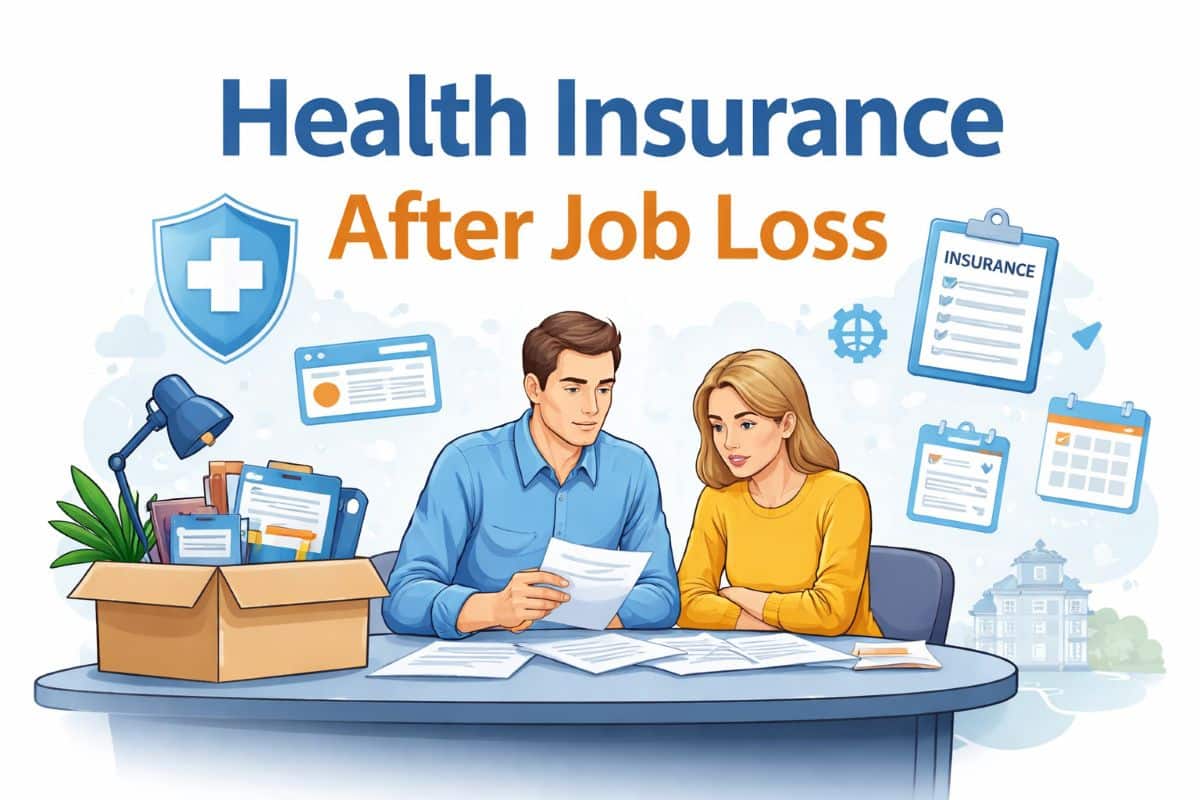
Experiencing a job loss triggers an immediate need to manage healthcare, as losing employment typically qualifies as a life event that grants a special enrollment period to modify, secure, or transition insurance coverage outside the standard open enrollment windows.
When an employment contract ends, the financial and structural changes can feel overwhelming, particularly regarding healthcare management. Navigating insurance adjustments after a job loss requires a clear understanding of your immediate options, statutory rights, strict enrollment timelines, and cost implications. Whether your coverage ended on your last day of work or extends through the end of the month, evaluating your alternatives early prevents coverage gaps and protects you against unexpected medical debt.
Understanding Job Loss as a Qualifying Life Event (QLE)
In the United States, losing a job-based health insurance plan is officially classified as a Qualifying Life Event (QLE) under federal regulations, specifically provisions outlined by the Centers for Medicare & Medicaid Services (CMS). This designation is critical because it alters the rules regarding when you can enroll in health insurance. Typically, individuals can only sign up for or change health plans during designated annual open enrollment periods. However, a QLE bypasses this restriction.
When you lose employer-sponsored health insurance, you trigger a Special Enrollment Period (SEP). For the Health Insurance Marketplace (often accessed via HealthCare.gov), a job loss that results in a loss of minimum essential coverage opens a 60-day window. This window begins on the exact date your previous coverage ends. Missing this 60-day threshold means you generally cannot enroll in a Marketplace plan until the next annual open enrollment period, leaving you entirely uninsured unless you qualify for other specific exceptions.
It is important to note that voluntary resignations and involuntary terminations (layoffs, downsizing, or firings) both generally qualify as long as the loss of job-based coverage is the direct result of the employment separation. However, if you voluntarily drop your employer-sponsored insurance while remaining employed, that is typically not considered a QLE.
Immediate Insurance Options After Losing Employment
Once employment ends, you are faced with several pathways to maintain health coverage. Each option carries distinct requirements, cost structures, and administrative procedures.
1. COBRA (Consolidated Omnibus Budget Reconciliation Act)
The Consolidated Omnibus Budget Reconciliation Act (COBRA) is a federal law that allows eligible employees and their dependents to temporarily continue their group health insurance coverage after employment ends.
- Eligibility: Generally applies to employers with 20 or more employees. Many states have "mini-COBRA" laws that extend similar continuation rights for smaller companies.
- Duration: Typically lasts for 18 months, though it can extend up to 36 months under certain secondary life events.
- Cost Factor: This is often the most expensive option. While you had coverage, your employer likely subsidized a significant portion of the monthly premium. Under COBRA, you are responsible for paying the entire premium—both your share and the employer’s share—plus a potential 2% administrative fee.
2. The Affordable Care Act (ACA) Marketplace
Turning to the federal or state-run health insurance exchanges is often the most cost-effective alternative to COBRA, especially for individuals whose household income has dropped due to unemployment.
- Financial Assistance: Premium tax credits and cost-sharing reductions are available based on your projected annual household income. When calculating your income for Marketplace subsidies, keep in mind that state unemployment benefits count as taxable income.
- Plan Tiers: Plans are categorized into Metal Tiers (Bronze, Silver, Gold, Platinum) based on how you and the plan share costs, allowing you to select a structure that matches your anticipated medical usage.
3. Spousal or Partner Coverage
If your spouse or domestic partner has access to an employer-sponsored health plan, losing your job qualifies as a QLE under their plan as well.
- Timeline: Just like the Marketplace, employer-sponsored plans typically enforce a strict 30-to-60-day window from the date of your job loss to add a dependent.
- Process: You will need to contact your spouse's human resources department, provide proof of coverage loss (such as a termination letter or a certificate of credible coverage), and complete the enrollment paperwork.
4. Public Programs (Medicaid and CHIP)
If your household income drops significantly following a job loss, you or your family members may immediately qualify for Medicaid or the Children’s Health Insurance Program (CHIP).
- Enrollment Window: Unlike Marketplace plans, Medicaid and CHIP enrollment is open 365 days a year; there is no 60-day limit.
- Evaluation: Eligibility is determined by state-specific income thresholds and household size, which vary depending on whether your state expanded Medicaid under the Affordable Care Act.

Comparing Your Post-Job Loss Insurance Choices
Choosing the right path requires balancing monthly premium costs against out-of-pocket medical expenses, network availability, and administrative complexity.
| Insurance Option | Typical Cost | Coverage Continuity | Enrollment Window | Best Suited For |
|---|---|---|---|---|
| COBRA | High (Full premium + 2% fee) | Exact same doctors and benefits | 60 days from notification | Those with ongoing treatments or who have already met their annual deductible. |
| ACA Marketplace | Varies (Subsidized based on income) | New network of doctors and plan structures | 60 days from coverage loss | Individuals seeking lower monthly premiums and income-based financial assistance. |
| Spouse's Plan | Moderate (Dependent on employer subsidy) | Integrated into partner's existing group plan | Typically 30–60 days from event | Households looking for centralized family coverage and stable network options. |
| Medicaid / CHIP | Low or Zero | State-regulated provider networks | Year-round (No strict deadline) | Individuals experiencing severe, long-term drops in household income. |
Step-by-Step Action Plan for Securing Coverage
To ensure a seamless transition and avoid lapses in medical protection, follow a structured approach immediately surrounding your employment separation.
- Verify Your Current Coverage End Date: Do not assume coverage ends on your last day of work. Many employer-sponsored plans remain active until the final day of the calendar month in which you are terminated. Ask your HR department for the precise termination date of your benefits.
- Request Documentation: Obtain written proof of your loss of coverage. While not always mandatory for immediate online applications, having a Certificate of Credible Coverage or a formal termination letter accelerates dispute resolutions and verifies your eligibility timeline.
- Evaluate Financial Projections: Calculate your total household income for the calendar year, factoring in severance pay, accumulated paid time off (PTO) payout, state unemployment benefits, and any income earned by other household members. This figure determines your eligibility for Marketplace subsidies.
- Compare COBRA and Marketplace Quotes: Compare the total monthly cost of COBRA against a Silver-tier Marketplace plan with subsidies applied. Remember that if you choose COBRA initially, you generally cannot switch to a Marketplace plan until the next open enrollment period unless you experience another QLE. However, you can choose a Marketplace plan during your SEP and later switch to COBRA if you act within your 60-day window.
- Submit Applications and Confirm Enrollment: Complete your chosen application before your 60-day Special Enrollment Period expires. Once processed, pay your first month's premium promptly to effectuate the policy and secure active status.
Frequently Asked Questions
What happens if I miss the 60-day Special Enrollment Period?
If you miss the 60-day window following your job loss, you generally cannot enroll in a Marketplace plan or add yourself to a spouse's plan until the next annual open enrollment period. Your main recourse would be exploring short-term health insurance plans (where permitted by state law), relying on Medicaid if your income qualifies you year-round, or paying out-of-pocket for medical care until open enrollment begins.
Do severance payments or PTO payouts affect my Marketplace subsidies?
Yes. When applying for Marketplace coverage, you must report your modified adjusted gross income (MAGI) for the entire year. Severance pay, paid time off cash-outs, and state unemployment benefits are all considered taxable income and must be included in your projections. Overestimating or underestimating this income can result in a reconciliation adjustment when you file your federal taxes.
Can I choose COBRA for a few months and then switch to the Marketplace?
Generally, no. Once you exhaust your COBRA coverage period or voluntarily drop COBRA before the term ends, it does not automatically trigger a new Special Enrollment Period for the Marketplace unless you experience a separate QLE. However, if you elect COBRA, you are permitted to drop it during an annual open enrollment period or if you move out of the plan's service area.
Are unemployment benefits considered income for Medicaid eligibility?
Yes. State unemployment insurance benefits count toward your household income calculations for Medicaid and CHIP. However, because Medicaid eligibility thresholds in expansion states are often evaluated on current monthly income rather than annual projections, a sudden job loss may still qualify you immediately even if your past annual earnings were high.
Next Steps and Professional Guidance
When managing insurance changes after a job loss, timing is critical. Your immediate priority should be confirming the exact date your employer coverage terminates and marking your calendar with the 60-day expiration date of your Special Enrollment Period. For personalized financial advice or complex tax situations involving Marketplace subsidies and severance packages, consult a licensed insurance broker, a certified application counselor, or a qualified financial advisor to ensure your healthcare continuity remains uninterrupted.
Image Gallery
Select an image to open it in a new tab.



Akira Tanaka
International Academic Trends Correspondent
