Fleetwood Mac is fundamentally a British rock band in its origins, foundation, and musical roots, but it evolved over time into a transatlantic Anglo-American powerhouse. While the group was formed in London in 1967 by British musicians Mick Fleetwood, Peter Green, and Jeremy Spencer, its greatest commercial success and defining lineup featured American singer Stevie Nicks and guitarist Lindsey Buckingham, who joined the group in 1975.
The British Origins and Blues Roots (1967–1970)
To understand the national identity of Fleetwood Mac, one must look back to its inception in London during the late 1960s. The band was born out of the British blues boom, a movement that saw young musicians in the United Kingdom reinterpreting traditional American delta and Chicago blues. Drummer Mick Fleetwood and bassist John McVie joined forces with guitarist and singer Peter Green, all of whom had previously played in John Mayall & the Bluesbreakers.
Along with slide guitarist Jeremy Spencer, this initial lineup established Fleetwood Mac as a purely British outfit. Their early sound was characterized by gritty blues-rock, instrumental compositions, and a distinct adherence to the style pioneered by American blues legends, yet filtered through the sensibilities of British musicians. During the early Peter Green era, the band achieved significant commercial success in the United Kingdom, scoring chart-topping hits like "Albatross" and enduring anthems like "Oh Well."
As the band progressed through various lineup changes in the early 1970s—including the departure of Peter Green, Jeremy Spencer, and Danny Kirwan—the core of the group remained resolutely British. Members such as keyboardist and vocalist Christine McVie (who married John McVie) joined the fold, solidifying the band's UK foundation even as their musical style shifted away from hard-edged blues toward melodic, radio-friendly pop-rock.
The Transatlantic Shift and American Expansion (1974–1975)
The turning point in the band's cultural and geographic identity occurred in 1974. Following the departure of American guitarist Bob Welch, Mick Fleetwood found himself searching for a new musical direction and a new recording studio in the United States. While reviewing potential studios at Sound City in Los Angeles, Fleetwood was played a track by the folk-rock duo Buckingham Nicks, featuring guitarist Lindsey Buckingham and vocalist Stevie Nicks.
Impressed by Buckingham's guitar work and production sensibilities, Fleetwood invited him to join the band. Buckingham agreed on one crucial condition: his musical and romantic partner, Stevie Nicks, had to join as well. Both Buckingham and Nicks were American citizens born in California and Arizona, respectively.
When they integrated into Fleetwood Mac in January 1975, the group underwent a profound transformation. The inclusion of two American songwriters fundamentally shifted the band’s creative output, infusing traditional British blues-pop foundations with West Coast harmonies, California pop-rock sensibilities, and American lyrical themes.
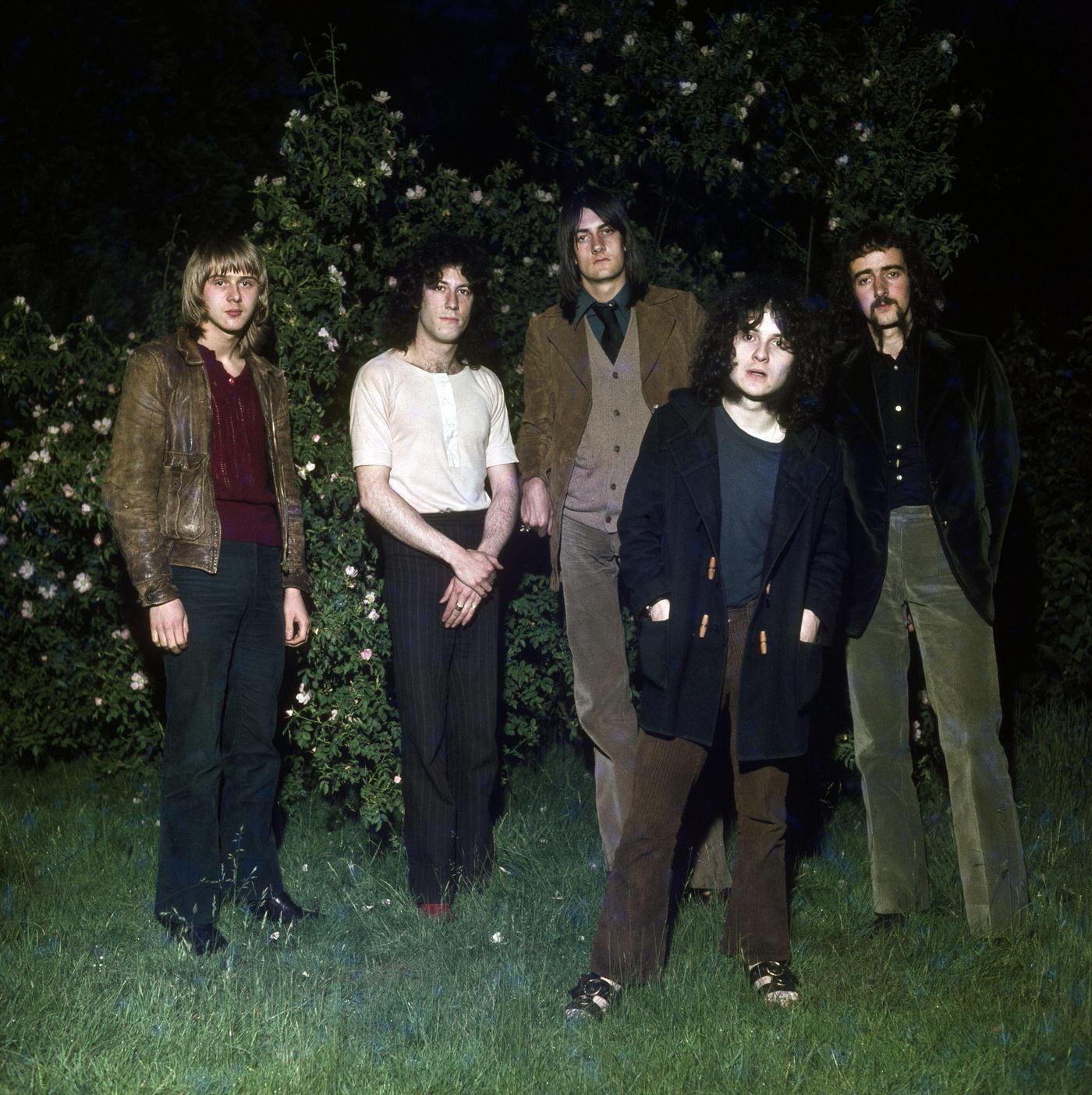
The Peak Era and Cultural Hybridity (1975–1987)
The resulting self-titled 1975 album Fleetwood Mac and its legendary 1977 follow-up Rumours cemented the band’s status as a global phenomenon. While the rhythm section (Mick Fleetwood and John McVie) and keyboardist Christine McVie remained proudly British, the front-facing creative engines of the band were now American.
This dynamic created a unique musical hybrid. The band recorded primarily in the United States, captured the zeitgeist of the American music scene, and enjoyed massive commercial dominance across North America. Yet, their foundational leadership and administrative core retained their British citizenship and European touring sensibilities.
During this era, Fleetwood Mac operated as a truly multinational enterprise. They resided largely in California during recording cycles, but their institutional memory, band name, and underlying organizational structure remained tethered to their British founders, Mick Fleetwood and John McVie.
| Era / Lineup Phase | Primary Geographic Origin | Key Members | Musical Style |
|---|---|---|---|
| The Blues Era (1967–1970) | British | Peter Green, Mick Fleetwood, John McVie, Jeremy Spencer | Traditional British Blues-Rock |
| The Transitional Era (1970–1974) | British | Mick Fleetwood, John McVie, Christine McVie, Bob Welch | Melodic Pop-Rock and Soft Rock |
| The Classic Era (1975–1987) | Anglo-American | Mick Fleetwood, John McVie, Christine McVie, Stevie Nicks, Lindsey Buckingham | West Coast Pop-Rock, Soft Rock, Stadium Pop |
| Later Years & Touring (1988–2019) | Anglo-American | Rotating American and British members (e.g., Neil Finn, Mike Campbell) | Arena Rock, Classic Pop |
Citizenship and Personal Backgrounds of Core Members
Examining the birthplaces and citizenships of the most famous lineup provides absolute clarity on the band's dual heritage:
- Mick Fleetwood: Born in Redruth, Cornwall, British.
- John McVie: Born in Ealing, London, British.
- Christine McVie: Born in Bouth, Lancashire, British.
- Stevie Nicks: Born in Phoenix, Arizona, American.
- Lindsey Buckingham: Born in Palo Alto, California, American.
Because three of the five classic-era members were British and two were American, the band is technically split right down the middle in terms of core nationality. However, the corporate and historical entity of Fleetwood Mac was legally established in England by British musicians.
Frequently Asked Questions
Was Fleetwood Mac originally a British band?
Yes. Fleetwood Mac was founded in London, England, in 1967 by British musicians Mick Fleetwood, Peter Green, and Jeremy Spencer. They spent their first several years operating exclusively within the British music scene, playing traditional blues-rock and achieving success on the UK charts before expanding internationally.
When did American members join Fleetwood Mac?
American musicians Stevie Nicks and Lindsey Buckingham officially joined the band in January 1975. Their inclusion marked the transition from a British blues-rock band into a globally renowned pop-rock powerhouse, leading to the creation of the blockbuster 1977 album Rumours.
Is Fleetwood Mac considered a UK or US band today?
Fleetwood Mac is most accurately categorized as a British-American rock band. While its origins, founders, and half of its classic lineup are British, its defining commercial peak, songwriting style, and recording home during its most successful years were deeply rooted in the American music industry.
Why do some people think Fleetwood Mac is American?
This perception arises because the band's most famous songs—such as "Dreams," "Go Your Own Way," and "Landslide"—were written and performed by American members Stevie Nicks and Lindsey Buckingham. Furthermore, the band spent decades based in California, dominating American radio and cultural landscapes throughout the late 1970s and 1980s.
Conclusion and Summary
Ultimately, Fleetwood Mac cannot be claimed exclusively by either nation. They began as a quintessentially British blues band in the late 1960s, anchored by London-trained musicians, but transformed in the 1970s into an Anglo-American collaboration. Recognizing both their British foundation and their American creative peak provides the most accurate answer to their enduring international identity.
Image Gallery
Select an image to open it in a new tab.


Ingrid Bjornson
Global Cyber Policy and Regulation Analyst
