
In most cases, you cannot directly increase the face value (death benefit) of an existing term life insurance policy once it has been issued and the contestability period has passed. To get more coverage, you must typically purchase a second policy to "layer" your protection, exercise a guaranteed insurability rider if your policy includes one, or replace your current policy with a new, larger one.
As of 2026, the life insurance landscape has become increasingly flexible, yet the fundamental structure of term life remains a fixed contract. When you sign your policy documents, you are essentially locking in a specific death benefit for a specific premium over a set number of years. However, life changes—such as purchasing a more expensive home, starting a business, or expanding your family—often necessitate a higher level of financial protection than you originally anticipated.
Understanding how to navigate these limitations is essential for maintaining a robust financial safety net. Below, we explore the specific mechanisms, costs, and strategies available to policyholders looking to "add" to their term life insurance coverage.
Why Existing Policies Are Generally Static
Term life insurance is designed to be a straightforward, low-cost product. Because the premiums are calculated based on your age and health at the time of application, allowing a policyholder to simply "add" $500,000 in coverage five years later would bypass the actuarial math that keeps the policy solvent.
If insurance companies allowed arbitrary increases, people would wait until they were diagnosed with an illness to increase their coverage, a phenomenon known as adverse selection. To prevent this, insurers require new underwriting for significant increases in coverage. While you may not be able to change the number on your original policy certificate, you have several sophisticated workarounds to achieve the same result.
Method 1: The "Life Insurance Laddering" Strategy
One of the most effective ways to "add" to your coverage in 2026 is a strategy known as laddering. Instead of trying to modify your existing policy, you purchase a second, separate policy that runs concurrently with the first.
How Laddering Works
Imagine you have an existing $500,000, 20-year term policy that you purchased five years ago. You recently took out a new mortgage and realized you need another $300,000 in coverage. Instead of canceling your original policy (which likely has a lower rate because you were younger when you bought it), you apply for a new $300,000, 15-year term policy.
For the next 15 years, you have a total of $800,000 in coverage. After 15 years, the second policy expires, and you are left with the remaining years of your original $500,000 policy.
Benefits of This Approach
- Cost Efficiency: You only pay for the extra coverage for the duration you actually need it.
- Rate Preservation: You keep the lower premium on your original policy rather than replacing the whole amount at your current (older) age.
- Customization: You can choose a different carrier for the second policy if they offer better rates for your current health profile or specific needs.

Method 2: Exercising a Guaranteed Insurability Rider (GIR)
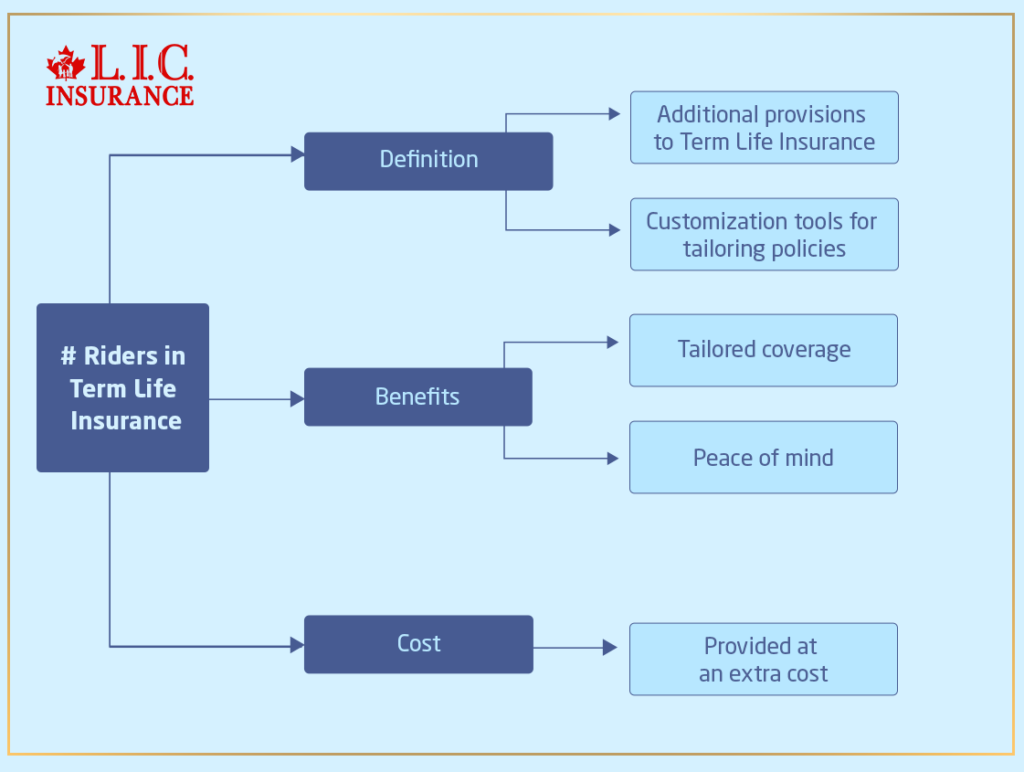
If you were proactive when you first purchased your policy, you might have included a Guaranteed Insurability Rider. This is one of the few ways to technically "add" to an existing policy without undergoing a new medical exam.
Trigger Events and Options
A GIR allows you to purchase additional blocks of insurance at specific intervals or following major life events. Common "trigger events" in 2026 contracts include:
- Marriage or legal domestic partnership.
- The birth or adoption of a child.
- The purchase of a primary residence (mortgage-based increases).
- Specific policy anniversaries (e.g., every 3 or 5 years).
Limitations of Riders
While a GIR is powerful, it is not infinite. Most riders have a "cap" on the total amount you can add (for example, you might be limited to adding $50,000 or $100,000 per event). Additionally, these riders usually expire once the policyholder reaches a certain age, often 40 or 45. If you have this rider, check your policy illustrations to see if you are within an "option window" to increase your coverage.
Method 3: Policy Replacement (The "Swap")
If you need a significantly larger amount of coverage and want to keep your life insurance management simple with a single premium payment, you can replace your existing policy.
The Replacement Process
This involves applying for a completely new policy for the full total amount you desire. For example, if you have $250,000 in coverage and want a total of $1 million, you apply for a new $1 million policy. Once the new policy is "in force" (meaning it has been approved and the first premium is paid), you cancel the old $250,000 policy.
Cautions Regarding Replacement
- New Contestability Period: Every new policy comes with a two-year contestability period. If you die within the first two years of the new policy, the insurer can investigate the application for material misrepresentations.
- Higher Premiums: Because you are older now than when you bought the first policy, the "per thousand" cost of insurance will likely be higher.
- Medical Underwriting: You will have to go through the health screening process again. If your health has declined (e.g., new high blood pressure or increased BMI), the new policy might be significantly more expensive or even denied.
Comparison of Methods to Increase Coverage
| Feature | Buy a Second Policy (Laddering) | Exercise GIR Rider | Policy Replacement |
|---|---|---|---|
| New Medical Exam? | Yes | No | Yes |
| Keeps Original Rate? | Yes (on the first policy) | Yes (on original portion) | No |
| Flexibility | High (choose any amount/term) | Low (limited by contract) | High (total restructure) |
| Complexity | Moderate (two bills/policies) | Low (simple form) | High (closing/opening accounts) |
| Best For | Growing debt or families | Minor health changes | Major lifestyle upgrades |
Factors to Consider Before Adding Coverage
Before you commit to a specific method of increasing your term life insurance, evaluate the following technical and financial factors relevant to the 2026 market.
1. Human Life Value and Income Replacement
Insurers use formulas to determine the maximum amount of coverage they will issue. Most companies in 2026 cap coverage at 20 to 30 times your annual income for younger individuals, with the multiplier decreasing as you approach retirement age. If you are seeking to add coverage that exceeds these standard "Human Life Value" calculations, you may need to provide additional financial justification, such as a large outstanding mortgage or complex estate planning needs.
2. Accelerated Underwriting in 2026
Modern underwriting has changed significantly. If you are healthy, "adding" a second policy may no longer require a paramedical exam (blood draw and physical). Many insurers now use automated underwriting that analyzes your prescription history, motor vehicle records, and credit-based insurance scores in real-time. This makes purchasing a second policy much faster and less invasive than it was a decade ago.
3. The "Convertible" Feature
While not strictly adding coverage, check if your current term policy is convertible. This allows you to turn some or all of your term insurance into permanent life insurance (like Whole Life) without a medical exam. If your goal in "adding" insurance is to ensure you have coverage that lasts until death (rather than just for a term), conversion is a critical tool to investigate.
Common Mistakes When Increasing Coverage
- Canceling the Old Policy Too Early: Never cancel your existing coverage until the new policy is fully approved and "in force." If you cancel first and then find out you are uninsurable or rated at a much higher price due to a discovered health issue, you could be left with no coverage at all.
- Ignoring Group Life Insurance: Before buying a new private policy, check your employer-sponsored benefits. While group life insurance is rarely enough on its own and isn't portable, it is often the cheapest way to add a "supplemental" $50,000 or $100,000 of coverage regardless of your health.
- Overlooking the Inflation Impact: In 2026, the purchasing power of a death benefit established in 2016 has diminished. When adding coverage, ensure you are accounting for current inflation rates and the projected cost of college tuition or housing for your beneficiaries.
Frequently Asked Questions
Can I add my spouse to my existing term life insurance policy?
Generally, you cannot add a spouse to an individual term policy after it has been issued. However, some insurers offer a "Spousal Rider" at the time of purchase. If you didn't add this initially, your spouse will almost certainly need to apply for their own separate policy. This is usually better anyway, as it provides more comprehensive coverage tailored to their specific health and age.
Is there a limit to how many life insurance policies I can have?
There is no legal limit to the number of policies you can own, but there is a limit on the total amount of coverage. Insurers share data through the MIB (formerly the Medical Information Bureau) to ensure a person isn't "over-insured" beyond their economic value. As long as your total death benefit across all policies makes sense relative to your income and debts, you can have multiple policies.
If I add a second policy, do the beneficiaries have to be the same?
No. One of the advantages of adding a second policy (laddering) is that you can designate different beneficiaries or different payout structures. For example, your first policy might be intended for your spouse to pay off the mortgage, while the second "added" policy could be directed into a trust for your children's education.
Does my premium stay the same if I use a Guaranteed Insurability Rider?
No. While you skip the medical exam, the premium for the additional amount of insurance will be based on your "attained age." This means the new portion of the coverage will be more expensive than the original portion, reflecting the fact that you are older when you exercise the option.
Can I increase my coverage if I have developed a chronic illness?
If you have a Guaranteed Insurability Rider, yes—that is exactly what it is for. If you do not have that rider, it will be very difficult to add coverage. In this scenario, your best bet is to keep your existing policy at all costs and look into "guaranteed issue" policies, though these typically have much lower coverage limits and higher costs.
Practical Recommendation: Your Next Steps
To determine the best path for adding to your coverage in 2026, start by performing a "Coverage Audit."
- Review your current policy document: Specifically look for the terms "Guaranteed Insurability Rider," "Additional Purchase Option," or "Conversion Privilege."
- Calculate your new "Gap": Subtract your current total death benefit from your updated financial needs (Mortgage + 10x Income + Education Costs).
- Check Employer Benefits: See if you can increase your group life election during the next open enrollment period for a low-cost, no-exam boost.
- Consult an Independent Agent: If your gap is over $100,000, ask an agent to run a "laddering" quote. Compare the cost of adding a second policy versus the cost of replacing your current one entirely.
By treating life insurance as a modular system rather than a static document, you can ensure your family remains protected regardless of how your financial responsibilities grow over time.
Image Gallery
Select an image to open it in a new tab.
Declan O'Connor
Higher Education and Campus Culture Reporter
