
Fund management charges are the costs associated with the professional oversight, administration, and distribution of an investment fund. Usually expressed as an annual percentage of your total investment, these fees are deducted directly from the fund’s assets, meaning they reduce your net returns rather than being billed to you as a separate invoice.
Investing is rarely a free endeavor. When you purchase units in a mutual fund, an exchange-traded fund (ETF), or a specialized investment trust, you are essentially outsourcing the complex tasks of asset selection, market analysis, and regulatory compliance to a professional team. In exchange for this service, the investment firm levies several types of charges. As we navigate the financial landscape of 2026, understanding the granular details of these costs is more critical than ever, as even a seemingly small difference in percentage points can result in a significant loss of wealth over a multi-decade investment horizon.
The Core Components of Fund Management Charges
To truly understand fund management charges, one must distinguish between the headline figure and the actual total cost of ownership. Many investors mistakenly believe that the Annual Management Charge (AMC) is the only fee they pay. However, the reality of fund accounting is more complex.
Annual Management Charge (AMC) vs. Ongoing Charges Figure (OCF)
The Annual Management Charge (AMC) represents the fee paid specifically to the fund manager for their expertise and the costs of running the investment house. This covers the salaries of the portfolio managers, the research team, and the general overhead of the firm. While the AMC is the most visible fee, it is rarely the final cost.
The Ongoing Charges Figure (OCF), often used interchangeably with the Total Expense Ratio (TER), provides a more accurate picture. The OCF includes the AMC plus additional operational expenses that are essential for the fund to function. These include:
- Custodial Fees: Payments made to a bank or third party to safely hold the fund's assets.
- Audit and Legal Fees: The costs associated with annual financial audits and ensuring the fund complies with evolving 2026 regulatory standards.
- Regulatory Fees: Payments made to financial authorities (such as the SEC in the United States or the FCA in the United Kingdom) for oversight.
- Administration Costs: The price of maintaining registrar services and processing unit transactions.
Because the OCF captures these "overhead" costs, it is the figure you should use when comparing the cost-efficiency of two different funds. A fund might advertise a low AMC of 0.50%, but if its OCF is 0.85%, the additional 0.35% is significantly eroding your capital.
Hidden and Transactional Costs
Beyond the OCF, there are charges that are often not included in the standard expense ratio because they are variable or event-driven. These "hidden" costs can be substantial, particularly in actively managed funds with high turnover.
Portfolio Transaction Costs
Every time a fund manager buys or sells a stock or bond within the portfolio, the fund incurs costs. These include brokerage commissions, bid-offer spreads (the difference between the price at which you can buy and sell an asset), and transaction taxes like Stamp Duty in the UK.
In 2026, regulatory frameworks have become more stringent, requiring managers to disclose these transaction costs more clearly in their "Value for Money" reports. However, these costs are still deducted from the fund’s performance before the net asset value (NAV) is calculated. If a manager trades frequently—a practice known as high portfolio turnover—the cumulative effect of these commissions can add an invisible 0.1% to 0.5% to your annual cost burden.
Performance Fees
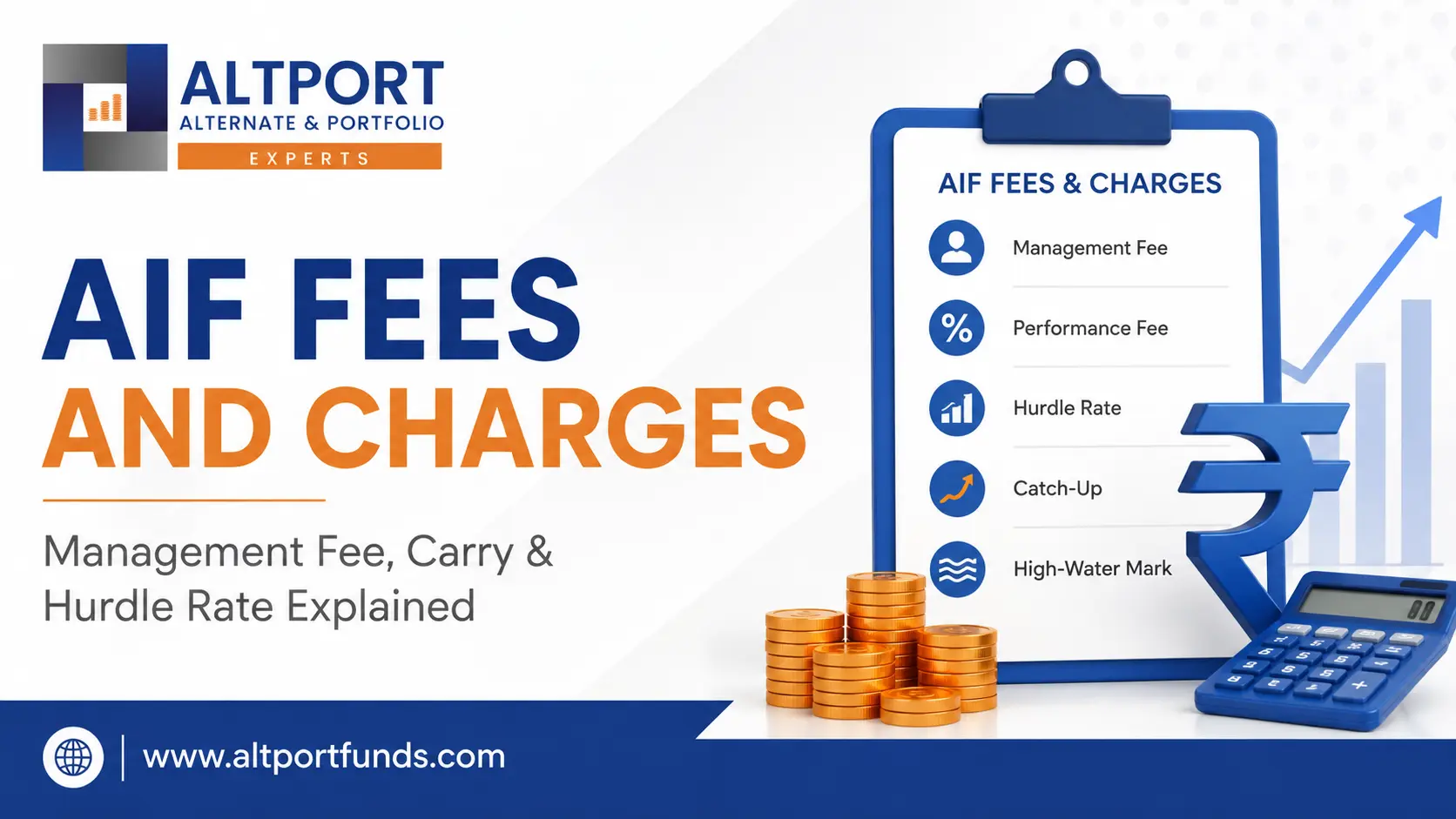
Performance fees are common in hedge funds and some specialized "absolute return" mutual funds. This is a "success fee" charged if the manager exceeds a specific benchmark or "high-water mark." For example, a fund might charge 10% of any gains achieved above a 5% annual hurdle rate.
While performance fees are designed to align the manager's interests with the investor's, they can be controversial. Critics argue that managers are already paid to perform through the AMC, and performance fees may incentivize managers to take excessive risks to hit their bonus targets. As an investor, you must verify if a performance fee has a "high-water mark" clause, which prevents the manager from charging a fee for recovering losses from a previous year.
The Compounding Effect of Fees on Long-Term Wealth
The most dangerous aspect of fund management charges is their ability to compound. Just as your returns compound over time, the "lost" money from fees also compounds in reverse. This is often referred to as the "drag" on a portfolio.
Consider an initial investment of $100,000 with an average annual market return of 7% over 30 years.
- With a 0.1% OCF (Typical Passive ETF): After 30 years, the portfolio would be worth approximately $739,000.
- With a 1.0% OCF (Typical Active Fund): After 30 years, the portfolio would be worth approximately $574,000.
In this scenario, the difference of 0.9% in annual fees results in a loss of over $165,000. The higher-fee fund consumed nearly 22% of the potential end-value of the portfolio. This highlights why understanding fund management charges is not just about saving a few dollars today; it is about protecting the viability of your retirement or long-term financial goals.
Active vs. Passive Management Cost Structures
The debate between active and passive investing is inextricably linked to management charges. In 2026, the gap between these two categories remains a primary driver of investor decision-making.
Active Management Charges
Active managers attempt to "beat the market" by hand-picking securities. This requires extensive research departments, expensive data terminal subscriptions (like Bloomberg or FactSet), and highly compensated analysts. Consequently, active fund OCFs typically range from 0.60% to 1.50%. To justify these fees, the manager must not only outperform the market but outperform it by a margin wide enough to cover their own fees. Historically, only a minority of active managers achieve this consistently over a decade or more.
Passive Management Charges (Index Funds and ETFs)
Passive funds do not try to beat the market; they simply track an index, such as the S&P 500 or the FTSE 100. Since this process is largely automated and requires no subjective analysis, the costs are drastically lower. In the 2026 market environment, competition among providers like Vanguard, BlackRock (iShares), and State Street has pushed OCFs for broad market trackers as low as 0.03% to 0.15%.
| Charge Category | Passive Fund (ETF/Index) | Active Mutual Fund | Specialized/Hedge Fund |
|---|---|---|---|
| Typical OCF/TER | 0.03% – 0.20% | 0.60% – 1.25% | 1.50% – 2.50% |
| Performance Fees | Virtually Never | Rare | Common (e.g., 20% of gains) |
| Transaction Costs | Low (Low turnover) | Moderate to High | High |
| Entry/Exit Fees | None (Buy/Sell Spread only) | Occasional (0% – 5%) | Common |
Additional Layers: Platform and Advisory Fees
It is a common mistake to assume that the fund's OCF is the total cost of investing. Most investors access funds through an intermediary, which adds its own layer of costs. In the 2026 financial ecosystem, these are typically divided into three tiers:
- Fund Management Charge: The cost of the fund itself (e.g., 0.75%).
- Platform Fee: The fee paid to the online broker or investment platform (e.g., Fidelity, Hargreaves Lansdown, or Charles Schwab) for the administration of your account, tax reporting, and the digital interface. These usually range from 0.15% to 0.45%.
- Financial Advisory Fee: If you use a professional financial advisor to select your funds, they may charge an ongoing "trail" or "servicing" fee, often around 0.50% to 1.00%.
When you combine an active fund (0.80%) with a platform fee (0.35%) and an advisory fee (0.75%), your total cost of investing can quickly exceed 1.90% per year. In a world where 2026 inflation and market returns may be moderate, a 2% annual drag is a monumental hurdle for your wealth to overcome.
Regulatory Protection and Transparency in 2026
By 2026, global regulators have implemented significant measures to ensure that fund management charges are more transparent. Under frameworks such as the SEC's Enhanced Disclosure Rules or the European Union's MiFID III guidelines, fund houses are required to provide a Key Investor Information Document (KIID) or a Customer Relationship Summary (Form CRS).
These documents are designed to be short and written in plain language. They must clearly state:
- The exact OCF.
- Any potential performance fees.
- A "Summary Risk Indicator" (SRI).
- A standardized table showing how charges affect a hypothetical $10,000 or £10,000 investment over time.
Investors should always request the KIID or Prospectus before committing capital. These documents serve as the legal source of truth regarding what you will be charged.
How to Evaluate if a Charge is "Worth It"
While low fees are generally better, the cheapest fund is not always the best. The goal is to maximize "Value for Money." To evaluate this, consider the following:
- Net Performance: A fund charging 1.0% that consistently returns 10% (net 9%) is better than a fund charging 0.1% that returns 5% (net 4.9%). However, remember that past performance is not a guarantee of future results, whereas fees are a certainty.
- Asset Class Complexity: It is easy and cheap to track the S&P 500. It is much harder and more expensive to invest in emerging market small-cap stocks or private equity. Higher fees are often justified in "inefficient" markets where professional research can uncover hidden value.
- Risk Management: Some higher-cost funds utilize hedging strategies to protect capital during market downturns. If a fund's management charge includes the cost of downside protection that aligns with your risk tolerance, the premium may be justifiable.
Common Pitfalls to Avoid
Even experienced investors fall into traps regarding fund management charges. Be wary of:
- "Closet Indexing": This occurs when an active manager charges a high fee (e.g., 1.0%) but essentially just copies an index. You are paying active prices for passive performance.
- Tiered Fee Structures: Some platforms charge a flat fee for small accounts but a percentage for large ones. Conversely, others offer lower percentages as your balance grows. Ensure you are on the most cost-effective tier for your specific portfolio size.
- Ignoring Cash Drag: Funds keep a small portion of assets in cash for liquidity. While you pay the management fee on the whole balance, the cash portion earns very little, effectively increasing the relative cost of the invested portion.
Frequently Asked Questions
Are fund management charges deducted all at once?
No. Fund management charges are typically accrued daily and reflected in the fund's Net Asset Value (NAV). The firm calculates the annual percentage, divides it by the number of trading days, and deducts that tiny fraction each day. This is why you don't see a "bill" for these fees in your transaction history; they are baked into the price you see on your screen.
Can I negotiate fund management charges?
Individual retail investors usually cannot negotiate the OCF of a mutual fund or ETF. However, if you are a high-net-worth individual or representing an institutional investor (like a pension fund), you may have access to "institutional share classes" which have significantly lower management charges than the "retail share classes" available to the general public.
Do I still pay charges if the fund loses money?
Yes. Fund management charges are based on the value of the assets under management, not on the profits generated. Even if your fund’s value drops by 20% in a market crash, the manager will still deduct their percentage fee based on the remaining balance. The only exception is the "performance fee" component, which is only charged when gains are made.
What is the difference between a "load" and a management charge?
A "load" is a sales charge paid either when you buy the fund (front-end load) or when you sell it (back-end load). These were common in the past but have largely been phased out in favor of ongoing management charges. Unlike the OCF, which is paid every year, a load is a one-time commission usually paid to the broker who sold you the fund.
How do I find the OCF of my current funds?
The most reliable way is to look at the fund's latest fact sheet or the Key Investor Information Document (KIID) on the provider's website. You can also use independent research tools like Morningstar or Trustnet, which aggregate fee data for thousands of funds globally.
Practical Recommendations for 2026 Investors
To optimize your investment strategy against the erosion of fees, follow these steps:
- Audit Your Portfolio: Once a year, list every fund you own and its OCF. If you are paying more than 0.75% for a broad-market fund, investigate whether a cheaper passive alternative exists.
- Use Passive as Your Baseline: Start with the assumption that you will use low-cost index funds. Only choose an active fund if you have a high-conviction reason to believe the manager can outperform their fee.
- Watch the Platform Costs: If your portfolio is large (e.g., over $100,000), a platform with a "flat fee" might be cheaper than one with a "percentage fee."
- Consolidate Accounts: Having multiple small accounts across different platforms can lead to paying multiple fixed administrative fees. Consolidating can often lower your total percentage cost.
- Review Value for Money Reports: Under current 2026 regulations, fund managers must publish annual reports justifying their fees. Read these to see if the manager is actually meeting their stated objectives.
Image Gallery
Select an image to open it in a new tab.


Omar Farooq
EdTech Innovation and Virtual Pedagogy Journalist
