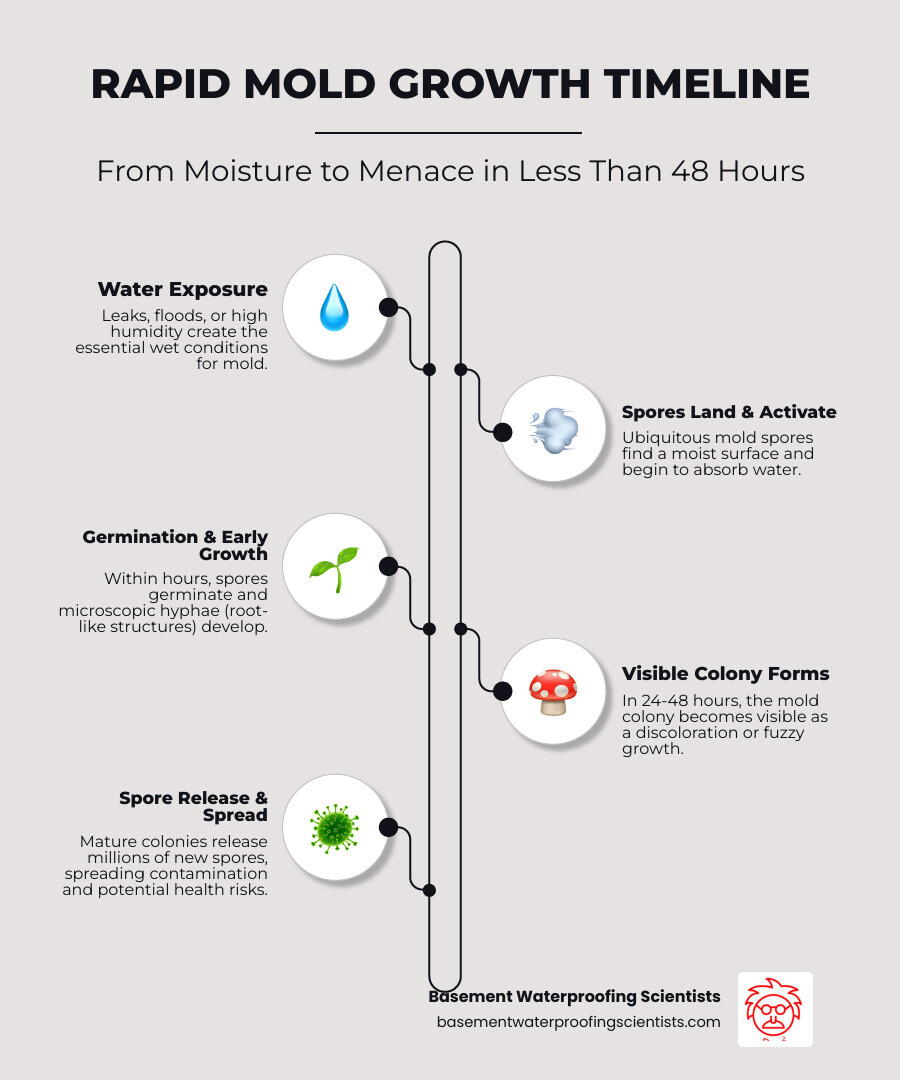
A standard residential mold remediation project typically takes 1 to 5 days to complete, depending on the extent of the growth, moisture levels, and impacted structural materials. Minor, localized mold cleanup can wrap up within 24 hours, whereas severe structural contamination involving multiple rooms or HVAC systems can require up to 7 days or more.
Overview: How Long Does Mold Remediation Take?
The duration of a mold remediation project varies based on the size of the contaminated area, how deeply the mold spores have penetrated structural building materials, and the time required to thoroughly dry the space. Mold remediation is not simply a matter of wiping down surfaces with bleach; it is a regulated restoration process designed to isolate, extract, and treat fungal growth while preventing cross-contamination to clean areas of the home.
The standard industry protocol follows guidelines established by the Institute of Inspection Cleaning and Restoration Certification (IICRC S520 Standard for Professional Mold Remediation). This standard categorizes projects by scope, which directly dictates the operational schedule.
| Project Scope | Affected Area Size | Typical Duration | Primary Activities Included |
|---|---|---|---|
| Minor / Localized | Under 10 sq. ft. | 1 Day (4–8 hours) | Surface containment, HEPA vacuuming, wipe down, localized antimicrobial application. |
| Moderate / Single Room | 10 to 100 sq. ft. | 2 to 3 Days | Full poly containment, HEPA air scrubbing, removal of affected drywall/insulation, 24–48 hour drying. |
| Extensive / Multi-Room | Over 100 sq. ft. | 4 to 7 Days | Advanced containment zones, heavy demolition, subfloor/framing treatment, 72-hour air scrubbing, clearance testing. |
| Severe / Structural & HVAC | Whole-house or ductwork | 7 to 14 Days | Total containment, HVAC duct cleaning/sanitization, structural drying, extended air filtration, third-party lab testing. |
Note: The timelines listed above reflect the remediation phase (containment, removal, cleaning, drying, and clearance). Structural reconstruction—such as installing new drywall, flooring, or trim—is a separate phase that occurs after remediation is certified complete.
The 7 Phases of the Mold Remediation Timeline
To understand what happens during a professional remediation project, it helps to break down the process into sequential phases. Skiping or rushing any of these steps increases the risk of spore recirculation or secondary mold growth.
- Phase 1: Inspection & Lab Testing (Hours to 48 Hrs)
- Phase 2: Containment & Negative Pressure Setup (Day 1: 2-4 Hours)
- Phase 3: HEPA Air Filtration & Scrubbing (Day 1 - Project Completion)
- Phase 4: Demolition & Porous Material Removal (Day 1 - Day 2)
- Phase 5: Surface Cleaning, HEPA Vacuuming & Encapsulation (Day 2 - Day 3)
- Phase 6: Structural Drying & Dehumidification (Days 3 - 5: 24-72 Hrs)
- Phase 7: Post-Remediation Verification (PRV) & Clearance (Days 5 - 7)
Phase 1: Initial Assessment, Moisture Mapping, and Testing (Day 0 to Day 1)
- Timeframe: 1 to 4 hours on-site; 24 to 48 hours for lab results (if samples are taken).
- What to Expect: Before physical work begins, a certified mold inspector or remediation contractor evaluates the property. They use moisture meters, thermal imaging cameras, and hygrometers to trace the moisture source driving the mold growth.
If air or surface samples are taken to identify spore concentrations or specific genera (such as Stachybotrys chartarum or Aspergillus), samples are sent to an accredited laboratory. While visual mold can often be addressed immediately without waiting for lab analysis, moisture mapping must occur before containment to define the project perimeter.
Phase 2: Containment Setup and Negative Air Pressure (Day 1: Morning)
- Timeframe: 2 to 4 hours.
- What to Expect: To prevent mold spores from escaping into unaffected parts of the home during demolition, technicians build physical isolation barriers using 6-mil fire-retardant polyethylene sheeting.
Technicians seal off doorways, supply and return HVAC vents, plumbing penetrations, and windows. They install High-Efficiency Particulate Air (HEPA) air scrubbers fitted with flexible ducting that vents outdoors. This creates negative air pressure inside the work zone, ensuring air flows into the containment area rather than leaking out into living quarters.
Phase 3: HEPA Air Filtration and Micro-Cleaning Setup (Day 1: Continuous)
- Timeframe: Runs continuously from Day 1 through final clearance.
- What to Expect: Industrial HEPA air scrubbers operate 24 hours a day during the active remediation phase. These units capture airborne fungal spores, hyphal fragments, and dust down to 0.3 microns with 99.97% efficiency. Continuous air scrubbing stabilizes the indoor air quality inside containment while work is underway.
Phase 4: Demolition and Removal of Contaminated Materials (Day 1 to Day 2)
- Timeframe: 4 to 16 hours, depending on material volume.
- What to Expect: Mold cannot be effectively cleaned from porous building materials like drywall, carpet, ceiling tiles, fiberglass insulation, or pad underlayment once hyphae have rooted deeply inside them. Technicians cut out affected drywall at least 12 to 24 inches beyond the visible mold boundary according to standard remediation practices outlined by the U.S. Environmental Protection Agency (EPA).
Removed materials are bagged in heavy-duty 6-mil trash bags inside containment, double-bagged, wiped down on the exterior, and transported directly out of the home to prevent cross-contamination. Non-porous materials (glass, metal, sealed tile) and semi-porous framing (solid wood studs) are retained for cleaning.
Phase 5: Surface Cleaning, HEPA Vacuuming, and Encapsulation (Day 2 to Day 3)
- Timeframe: 1 to 2 days.
- What to Expect: Remaining structural surfaces—such as wall studs, subflooring, and masonry—undergo rigorous mechanical cleaning. Technicians utilize a three-step cleaning protocol:
- HEPA Vacuuming: Captures loose surface spores and particulate matter.
- Damp Wiping / Wire Brushing: Application of EPA-registered antimicrobials, fungicides, or biocide solutions combined with mechanical agitating (brushing, sanding, or media blasting) to remove embedded fungal roots from wood.
- Secondary HEPA Vacuuming: Removes residual particles dislodged during scrubbing.
In many cases, technicians apply an antimicrobial coating or clear sealant (encapsulant) over structural wood to protect against future moisture exposure and prevent remaining microscopic trace elements from regenerating.
Phase 6: Structural Drying and Dehumidification (Days 3 to 5)
- Timeframe: 24 to 72 hours.
- What to Expect: Mold will re-establish itself within 24 to 48 hours if structural wood or concrete remains damp. Commercial-grade LGR (Low Grain Refrigerant) dehumidifiers and high-velocity air movers are placed inside the containment space to lower relative humidity below 50% and bring wood moisture content (WMC) down to safe thresholds (typically below 15% WMC).
Technicians return daily to check moisture meter readings. Containment remains completely sealed during this drying phase.
Phase 7: Post-Remediation Verification (PRV) and Clearance Testing (Days 5 to 7)
- Timeframe: 1 to 2 hours for sampling; 24 to 48 hours for laboratory verification.
- What to Expect: Once cleaning and drying are complete, a independent third-party Industrial Hygienist or certified mold inspector performs clearance testing. This involves:
- A thorough visual inspection to confirm the absence of dust, debris, and visible mold growth.
- Air quality sampling inside containment and comparing spore counts against an outdoor baseline sample.
If ambient spore counts inside containment are lower than or comparable to outdoor levels, and dominant indoor mold species are absent, the job is issued a Clearance Certificate. Only after receiving written clearance are the containment barriers taken down.

Critical Factors That Impact the Timeline
While standard projects take a few days, real-world variables can shorten or extend the schedule.
Key Timeline Drivers:
- Area Size & Severity (Small spot vs. framing saturation)
- Surface Porosity (Drywall removal vs. tile surface cleaning)
- Accessibility (Open room vs. low-clearance crawlspace/attic)
- Drying Requirements (Air drying vs. 72-hour mechanical LGR dehumidification)
- Administrative Factors (Insurance approvals, lab turnaround, 3rd-party clearance)
1. Depth of Water Damage and Drying Complexity
If mold stems from an undetected long-term plumbing leak, moisture may have deeply saturated subfloors, ceiling joists, or wall cavities. Structural wood takes longer to dry safely than thin surface materials. If structural framing has high moisture content, the drying phase alone can extend from 2 days to 5 days.
2. Location and Accessibility
Work progresses faster in open, easily accessible main-floor rooms. Conversely, working in cramped attics, tight crawl spaces, or narrow pipe chases requires specialized safety gear, smaller equipment, and additional manual effort. Navigating limited-access spaces adds 24 to 48 hours to the labor timeline.
3. HVAC Contamination
If mold spores have settled into the home's heating, ventilation, and air conditioning system, simple containment is insufficient. Whole-system duct cleaning, coil decontamination, and air handler sanitization require specialized equipment and certified HVAC technicians, adding 1 to 2 full days to the scope.
4. Insurance Claims and Third-Party Approvals
If your homeowner's insurance policy covers the loss, claims adjusters may need to inspect the property before materials are torn out or disposed of. Waiting for an adjuster’s approval or independent lab analysis can halt progress for 2 to 5 business days unless emergency containment measures are authorized.
What to Expect During Remediation: Safety, Noise, and Living Conditions
Homeowners often ask whether they can remain in the home while mold remediation is underway. The answer depends on the location and scope of the work.
- Noise Levels: Air scrubbers, LGR dehumidifiers, and air movers generate high decibels and run continuously 24 hours a day. The constant low-frequency humming and airflow can disrupt sleep.
- Containment Zones: Polyethylene barriers block access to specific rooms, hallways, or bathrooms. If the remediation zone includes your primary bathroom or kitchen, temporary relocation is often necessary.
- Air Containment Safety: When containment is set up properly with negative pressure, containment zones are safe, and spores will not escape into living areas. However, individuals with severe allergies, asthma, compromised immune systems, or chemical sensitivities should temporarily vacate the property until final clearance is achieved, as advised by the Centers for Disease Control and Prevention (CDC).
- Personal Belongings: Items inside the affected room must be evaluated. Non-porous items are cleaned inside containment. Porous items (upholstered furniture, mattresses, soft goods) heavily contaminated by mold generally cannot be saved and must be safely discarded.
Remediation vs. Reconstruction: Setting Realistic Expectations
A common point of confusion for property owners is distinguishing between mold remediation and reconstruction.
PROJECT TIMELINE OVERVIEW
- Mold Remediation Phase: 1 to 5 Days
- Containment & Air Scrubbing
- Demolition of Contaminated Drywall
- Surface Scrubbing & Antimicrobials
- Dehumidification & Structural Drying
- Final Clearance Testing
- Reconstruction Phase: 3 to 14+ Days
- Hanging & Taping New Drywall
- Sanding, Priming & Painting
- Installing Subfloors & New Flooring
- Resetting Trim, Baseboards & Fixtures
- Re-installing HVAC / Electrical
- Remediation ends when all mold is extracted, structural materials are dry, and the space passes clearance testing. The room will often be left down to the exposed wall studs and subfloor.
- Reconstruction begins after clearance. Hanging new drywall, taping, mudding, sanding, painting, laying carpet, and reinstalling trim can take anywhere from 3 days to 2 weeks depending on contractor availability and material lead times.
Make sure your contract clearly distinguishes whether the quoted timeline applies strictly to the remediation phase or includes full rebuild and finish work.
Common Timeline Pitfalls and How to Avoid Them
To prevent unnecessary delays during mold remediation, watch for these operational mistakes:
- Failing to Fix the Moisture Source First: Remediating mold before stopping the underlying plumbing leak, roof failure, or ground drainage issue guarantees mold will return. Always resolve the water source on Day 1.
- Accepting Visual Clearance Instead of Lab Testing: Never allow a contractor to tear down containment based solely on a visual check if the mold covered more than 10 square feet. Wait for independent lab clearance to confirm airborne spore levels have normalized.
- Removing Containment Early: Turning off HEPA air scrubbers or opening poly sheeting early allows disturbed spores to settle across unaffected rooms, requiring the entire process to start over.
- Skipping Structural Drying Verification: Applying encapsulant spray over damp timber traps moisture inside the wood, leading to rot and hidden mold growth behind newly installed drywall.
Frequently Asked Questions
How long does a mold inspection and lab report take?
An on-site mold inspection typically takes 1 to 3 hours. If air or surface swab samples are collected, lab turnaround time is generally 24 to 48 hours for standard spore trap analysis. Emergency lab processing is available for an extra fee, reducing turnaround to 12–24 hours.
Do air scrubbers need to run 24 hours a day during remediation?
Yes. HEPA air scrubbers must run continuously throughout the project to maintain negative air pressure and continuously filter airborne spores, fine dust, and microbial volatile organic compounds (mVOCs). Turning them off allows trapped spores to settle into surrounding surfaces.
How long after mold remediation can I safely re-enter the room?
You can safely occupy the space as soon as the post-remediation clearance test passes and containment is removed. If chemical antimicrobial sprays or encapsulants were applied, technicians typically recommend waiting 2 to 4 hours for fumes to disperse and coatings to dry completely.
Will insurance delays prolong the mold remediation timeline?
Yes. If you file an insurance claim, an adjuster must verify coverage and assess damages. While emergency mitigation (stopping leaks and setting up containment) can start immediately, heavy demolition of drywall or structural framing may be paused for 2 to 5 days pending adjuster approval.
What happens if a home fails the clearance test?
If post-remediation air samples reveal elevated spore counts inside containment, the remediation crew must re-clean the space. They will re-HEPA vacuum, damp-wipe structural surfaces again, and run air scrubbers for an additional 24 to 48 hours before a re-test is performed.
Practical Next Steps for Property Owners
If you suspect or have confirmed mold in your home, follow this immediate action plan to keep the timeline on track:
- Stop the Water Source: Immediately repair plumbing leaks, clear clogged drains, or direct surface runoff away from your foundation.
- Isolate the Affected Area: Close doors to the room and turn off central HVAC units if you suspect spores have entered ductwork, preventing contamination from spreading.
- Hire an Independent Inspector: Retain an un-affiliated certified mold inspector (CMRS or CIH) to conduct moisture mapping and baseline testing. Separating the tester from the remediation contractor prevents conflicts of interest.
- Review Contractor Credentials: Ensure your remediation company adheres to IICRC S520 guidelines, uses industrial HEPA filtration, and provides written contracts detailing both remediation and rebuild timelines.
- Verify Clearance Before Final Payment: Do not release final payment to your restoration team until an independent post-remediation clearance test confirms the space is clean and safe.
Disclaimer: Mold remediation protocols and safety requirements vary depending on building construction, local regulations, and individual health risks. For severe structural contamination or health concerns, consult a certified industrial hygienist and licensed environmental professional.
Image Gallery
Select an image to open it in a new tab.


Mateo Castillo
Decentralized Finance and E-Payments Strategist
