
Workers’ compensation is excluded from Commercial Package Policies (CPP) because it is a statutory requirement governed by specific state laws rather than standard contract law. While businesses often purchase workers' compensation alongside a CPP for convenience, they remain distinct legal entities with different rating structures, audit requirements, and regulatory oversight bodies.
In the 2026 insurance landscape, the distinction between a Commercial Package Policy (CPP) and a Workers' Compensation policy remains a fundamental pillar of risk management. For business owners, the desire for simplicity often leads to the question of why these two essential coverages cannot be merged into a single, unified policy document. While technology has streamlined the application and billing processes, the underlying legal and actuarial frameworks for workers’ compensation are incompatible with the "package" philosophy used for property and liability risks.
To understand why this separation exists, one must examine the legal mandates of state governments, the complex actuarial methods used to calculate premiums, and the specialized nature of claims handling for workplace injuries.
The Structure of a Commercial Package Policy (CPP)
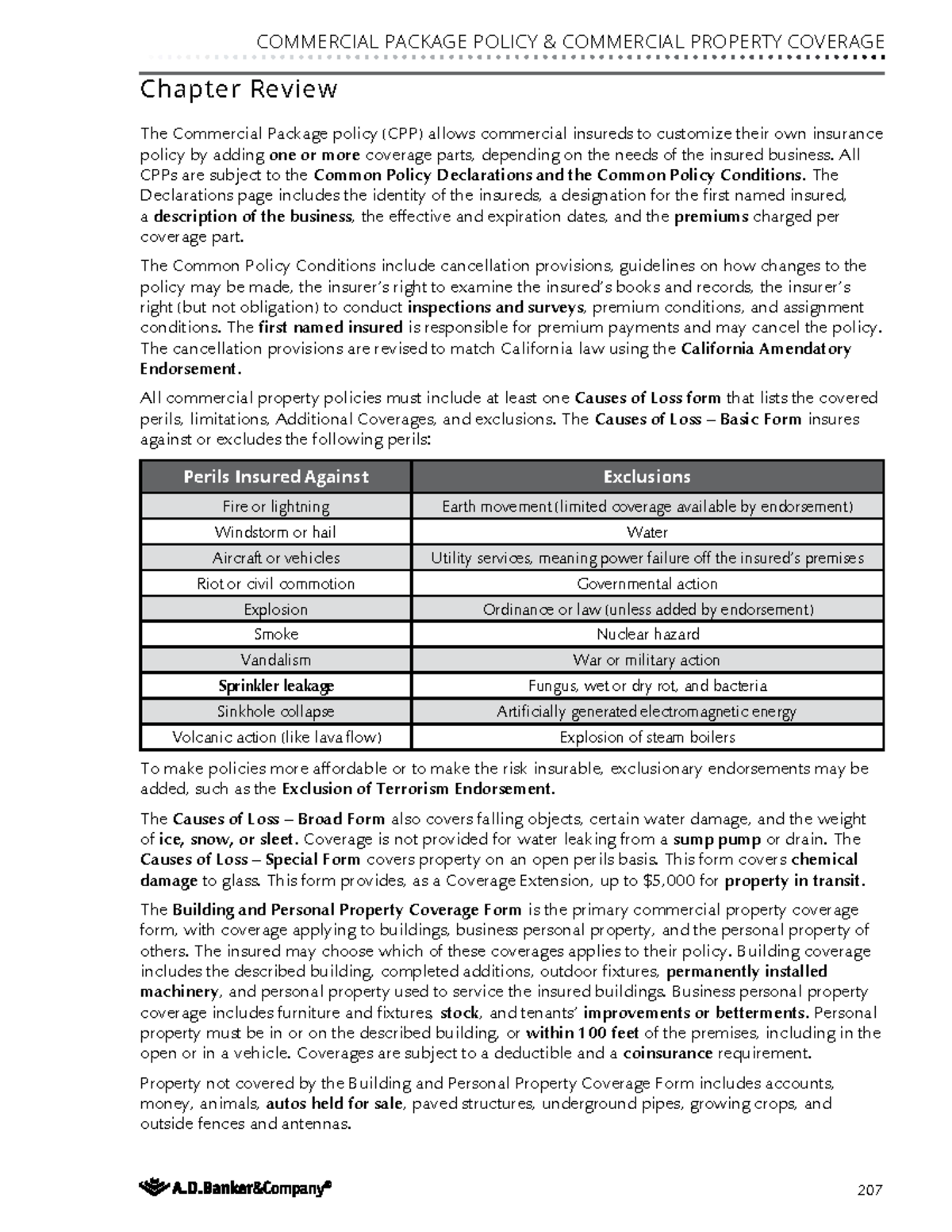
A Commercial Package Policy is a highly flexible insurance product designed to bundle multiple lines of coverage into a single contract. Developed by the Insurance Services Office (ISO), the CPP allows a business to select "modules" of coverage that fit its specific operational needs. By bundling these coverages, businesses often benefit from a package discount and a unified expiration date.
Standard components of a CPP usually include:
- Commercial General Liability (CGL): Protects against third-party claims of bodily injury or property damage.
- Commercial Property Insurance: Covers buildings and business personal property.
- Inland Marine Insurance: Covers property in transit or specialized equipment.
- Commercial Crime Insurance: Protects against employee dishonesty, forgery, or theft.
- Equipment Breakdown Coverage: Covers the repair or replacement of damaged machinery.
Despite this modularity, the ISO rules that govern the creation of a CPP specifically exclude workers’ compensation. A CPP is essentially a private contract between an insurer and a policyholder. In contrast, workers’ compensation functions as a social contract mandated and controlled by state legislatures.
The Statutory Nature of Workers’ Compensation
The primary reason workers’ compensation cannot be part of a CPP is its status as statutory insurance. Unlike general liability or property insurance, which a business might choose to purchase or customize, workers’ compensation is a legal requirement for nearly every employer in the United States (with minor exceptions, such as in Texas, where "nonsubscription" is an option).
Each state has its own Workers’ Compensation Board or Commission that dictates:
- Which employees must be covered.
- The specific medical and indemnity benefits an injured worker receives.
- The dispute resolution process (usually through administrative law judges rather than civil courts).
- The mandatory policy forms and endorsements that must be used.
Because the state government—not the insurance company—sets the terms of the coverage, an insurer cannot "package" it with private-market products like property insurance. If a carrier were to include workers’ compensation in a CPP, any change in state law would technically require a re-filing of the entire package, creating an administrative nightmare for regulators and insurers alike.

Actuarial Differences and Rating Systems
The way premiums are calculated for a CPP is fundamentally different from the way they are calculated for workers’ compensation. This technical divergence makes it impossible to use a unified rating plan.
CPP Rating Factors
In a Commercial Package Policy, premiums are often based on "premises and operations." For property insurance, the rate is determined by the construction type, occupancy, protection class (fire department proximity), and exposure (surrounding hazards). For general liability, the rate is often based on gross sales or square footage. These rates are relatively stable and are adjusted based on the specific risk profile of the business.
Workers’ Compensation Rating Factors
Workers’ compensation uses a specialized system overseen by the National Council on Compensation Insurance (NCCI) or independent state bureaus. The core components include:
- Classification Codes: There are hundreds of specific codes based on the actual duties of the employees (e.g., Code 8810 for clerical office employees vs. Code 5606 for construction project managers).
- Payroll-Based Exposure: Premiums are calculated per $100 of payroll. This requires a mandatory annual audit to ensure the estimated payroll matches the actual payroll.
- Experience Modification Factor (E-Mod): This is a multiplier based on the company's individual loss history compared to the industry average. It is a highly regulated number that changes annually and follows the employer even if they change insurance carriers.
Because the E-Mod and payroll audits are so specific to workers’ compensation, they do not align with the flat-rate or sales-based rating used in a CPP.
The Role of Monopolistic State Funds
Another significant barrier to including workers’ compensation in a Commercial Package Policy is the existence of monopolistic states. As of 2026, four states—Ohio, Washington, North Dakota, and Wyoming—require businesses to purchase workers’ compensation insurance directly from a state-operated fund.
In these jurisdictions, private insurance companies are legally prohibited from writing workers’ compensation policies. However, these same private companies are the primary providers of the coverages found in a CPP. If workers’ compensation were a mandatory part of a CPP, a business in Ohio would be unable to buy property or liability insurance because the private insurer could not provide the required workers’ compensation component.
To solve this, businesses in monopolistic states purchase a CPP from a private carrier and a separate "monoline" workers’ compensation policy from the state fund. They must also add a "Stop Gap" endorsement to their CGL policy to cover employer liability claims that the state fund might not fully address.
Differences in Claims Handling and Legal Defense
The legal framework for resolving claims is the final major reason for the separation. A CPP generally operates under standard tort law. If a customer slips and falls (General Liability), they can sue the business for negligence, and the case may go to a jury trial. The insurer’s duty is to defend the insured and pay damages if the insured is found liable.
Workers’ compensation operates under the "Exclusive Remedy" doctrine. This is a trade-off where employees give up their right to sue their employer for negligence in exchange for guaranteed medical benefits and wage replacement, regardless of who was at fault for the injury.
Claims for workers’ compensation are handled by specialized adjusters who understand medical fee schedules, vocational rehabilitation, and permanent partial disability ratings. These are medical-legal processes that are entirely foreign to a property adjuster dealing with a fire claim or a liability adjuster dealing with a broken window.
Comparison: Commercial Package Policy vs. Workers' Compensation
| Feature | Commercial Package Policy (CPP) | Workers' Compensation Policy |
|---|---|---|
| Legal Basis | Private Contract / Tort Law | State Statute / Administrative Law |
| Mandatory? | Generally Optional (unless required by lenders/landlords) | Mandatory for employers in almost all states |
| Rating Basis | Sales, Square Footage, or Property Value | Payroll per $100 / Class Codes |
| Audit Requirement | Occasional (usually for GL) | Mandatory Annual Audit |
| Pricing Adjustments | Package Discounts, IRPM | Experience Modification Factor (E-Mod) |
| Benefit Limits | Stated Policy Limits (e.g., $1M/$2M) | Statutory (Medical is often unlimited) |
| Carrier Options | Private Insurance Market | Private Market or State-Run Funds |
The Concept of the "Monoline" Policy
Because it cannot be part of a package, workers’ compensation is written as a monoline policy. This means it stands alone as its own legal contract with its own policy number.
Even if you use a modern insurance platform in 2026 that allows you to pay one monthly bill for your GL, Property, and Workers' Comp, you are technically paying for two separate products. If you look at your insurance folder, you will see a Commercial Package Policy document and a separate Workers' Compensation and Employers Liability Insurance Policy document.
This separation protects the business. If your property insurance is canceled due to a high risk of wildfires, your workers' compensation coverage remains unaffected as long as you continue to pay that specific premium. Conversely, a dispute over a workers' compensation audit will not automatically trigger a cancellation of your general liability coverage.
Managing Your Insurance Portfolio in 2026
For business owners navigating the complexities of 2026 regulations, the most effective way to manage these separate requirements is through integrated risk management.
- Coordinate with Payroll: Since workers’ compensation is payroll-based, using a "Pay-as-you-go" system is the modern standard. This links your workers' comp premium payments directly to your real-time payroll, reducing the "sticker shock" of the annual audit.
- Verify Certificates of Insurance (COI): When working with subcontractors, remember that their CPP will not prove they have workers’ compensation. You must specifically request a COI that shows a separate workers' compensation policy number and limits.
- Understand Employer’s Liability: While workers’ comp pays for medical bills, "Part Two" of the policy—Employer's Liability—protects you if an employee’s family sues for loss of consortium or third-party over-claims. This is often where the workers’ comp policy and the CPP overlap in terms of protection, but they still do not merge.
- Review Class Codes Annually: Because workers’ comp is not part of your package, it is often overlooked during the annual renewal of property and liability. Ensure your NCCI class codes still accurately reflect your employees' jobs to avoid audit penalties.
Frequently Asked Questions
Can I get a discount if I buy both from the same company?
Yes. Many insurance carriers offer what is known as a "companion discount" or "cross-sell credit." While the policies remain legally separate documents (they are not "packaged"), the insurer may reduce the premium on the CPP if they also hold your Workers’ Compensation policy, as it demonstrates a lower overall risk profile and account stability.
Why does my Workers' Comp policy have an "Employers Liability" section if it's not a liability policy?
Standard Workers' Compensation policies have two parts. Part One covers the statutory medical and wage benefits. Part Two is Employers Liability, which covers the business if it is sued for damages arising out of an employee injury that falls outside the "Exclusive Remedy" protections. This is a liability coverage, but it is kept with the WC policy to ensure there are no gaps in coverage for employee-related injuries.
If I move my business to a monopolistic state, what happens to my CPP?
Your Commercial Package Policy will likely stay with your private insurer, but they will be forced to remove the Workers' Compensation portion (if they were providing it as a separate monoline policy). You will then need to apply to the state fund (e.g., the Ohio Bureau of Workers' Compensation) for a new policy. You should also ask your private insurer to add "Stop Gap" coverage to your CPP.
Is it possible for a policy to look like a package but still be separate?
In 2026, many "BOP" (Business Owner's Policies) and "CPP" digital dashboards present all coverages in one window. This is a user interface convenience. Legally, the Workers' Compensation portion will always have its own unique policy form (typically the NCCI standard form) and a distinct policy number.
Does the exclusion of Workers' Comp from the CPP apply to small businesses too?
Yes. Even a small business with one employee that qualifies for a simple Business Owner's Policy (BOP)—a "mini" version of a CPP—must still purchase workers' compensation as a separate monoline policy. The legal and statutory barriers remain the same regardless of company size.
Practical Recommendations
If you are a business owner or risk manager, accept the separation of these policies as a structural necessity rather than an administrative hurdle. For your 2026 insurance planning, ensure that your agent or broker reviews both your Commercial Package Policy and your Workers’ Compensation policy simultaneously. This ensures that "Employers Liability" limits on the WC side are high enough to satisfy any contractual requirements from your clients, while your "General Liability" on the CPP side is set up to exclude employee-related claims correctly to avoid premium duplication.
Always keep your Workers' Compensation audit records separate from your general business records. Because this policy is subject to state-mandated audits, having a clean, dedicated trail of payroll by class code will prevent the most common headache associated with this monoline coverage.
Image Gallery
Select an image to open it in a new tab.
Declan O'Connor
Higher Education and Campus Culture Reporter
