
Mpox prevalence refers to the proportion of a specific population host group affected by active or past infections of the mpox virus (formerly known as monkeypox) at a given point in time. It measures both active viral shedding cases detected through diagnostic surveillance and population immunity levels documented through antibody seroprevalence studies.
Disclaimer: This article is intended solely for educational and informational purposes and does not constitute formal medical advice, diagnosis, or treatment. Consult a qualified healthcare professional or national public health authority for medical evaluation and clinical guidance.
Understanding Mpox Prevalence: Key Epidemiological Concepts
To evaluate the public health impact of mpox (an orthopoxvirus infection caused by the mpox virus, or MPXV), epidemiologists track specific metrics that describe how widely the pathogen circulates within human and animal populations. Understanding the concept of prevalence requires distinguishing it from related epidemiological measures like incidence and transmission rate.
- MPOX SURVEILLANCE METRICS
- INCIDENCE RATE
- Measures NEW cases over time (e.g., weekly new infections)
- Indicates current outbreak velocity and acute risk
- PREVALENCE RATE
- Measures TOTAL cases at a given snapshot in time
- Measures overall burden on healthcare & population immunity
- INCIDENCE RATE
Prevalence vs. Incidence in Infectious Disease Tracking
While incidence tracks the rate of new infections emerging within a defined time frame (such as weekly reported cases during an active epidemic), prevalence measures the total number of active or past cases present in a population at a specific point in time (point prevalence) or over a specified interval (period prevalence).
For an acute viral illness like mpox—where lesions typically resolve within two to four weeks—active clinical prevalence fluctuates rapidly in response to behavioral changes, public health interventions, and vaccination drives. Consequently, high active prevalence reflects sustained community transmission, whereas low prevalence indicates controlled spread or effective containment.
Active Viral Prevalence vs. Seroprevalence
Epidemiologists measure two main forms of prevalence when studying MPXV:
- Active Clinical Prevalence: Detected primarily via Polymerase Chain Reaction (PCR) testing of swab samples taken directly from skin lesions or mucosal surfaces. This metric identifies individuals currently infected and capable of transmitting the virus.
- Seroprevalence: Determined through serological assays that detect anti-orthopoxvirus antibodies (IgG and IgM) in blood plasma. High seroprevalence in a population indicates previous natural exposure, historical smallpox vaccination (which confers cross-protective immunity against mpox), or recent vaccination with modern non-replicating vaccines like JYNNEOS (MVA-BN).
Seroprevalence studies provide essential baseline data for public health agencies, demonstrating how much of a population remains immunologically naive and vulnerable to fresh outbreaks.
Genetic Clades and Their Impact on Prevalence
The prevalence of mpox is heavily dictated by the specific genetic strain, or clade, circulating in a region. MPXV is categorized into two major genetic clades—Clade I and Clade II—each possessing distinct sub-lineages, clinical profiles, transmission efficiencies, and geographical prevalence distributions.
- MPOX VIRUS (MPXV)
- CLADE I (Central Africa)
- Clade Ia
- Clade Ib
- CLADE II (West Africa)
- Clade IIa
- Clade IIb
- CLADE I (Central Africa)
Clade I (Central Basin Strain)
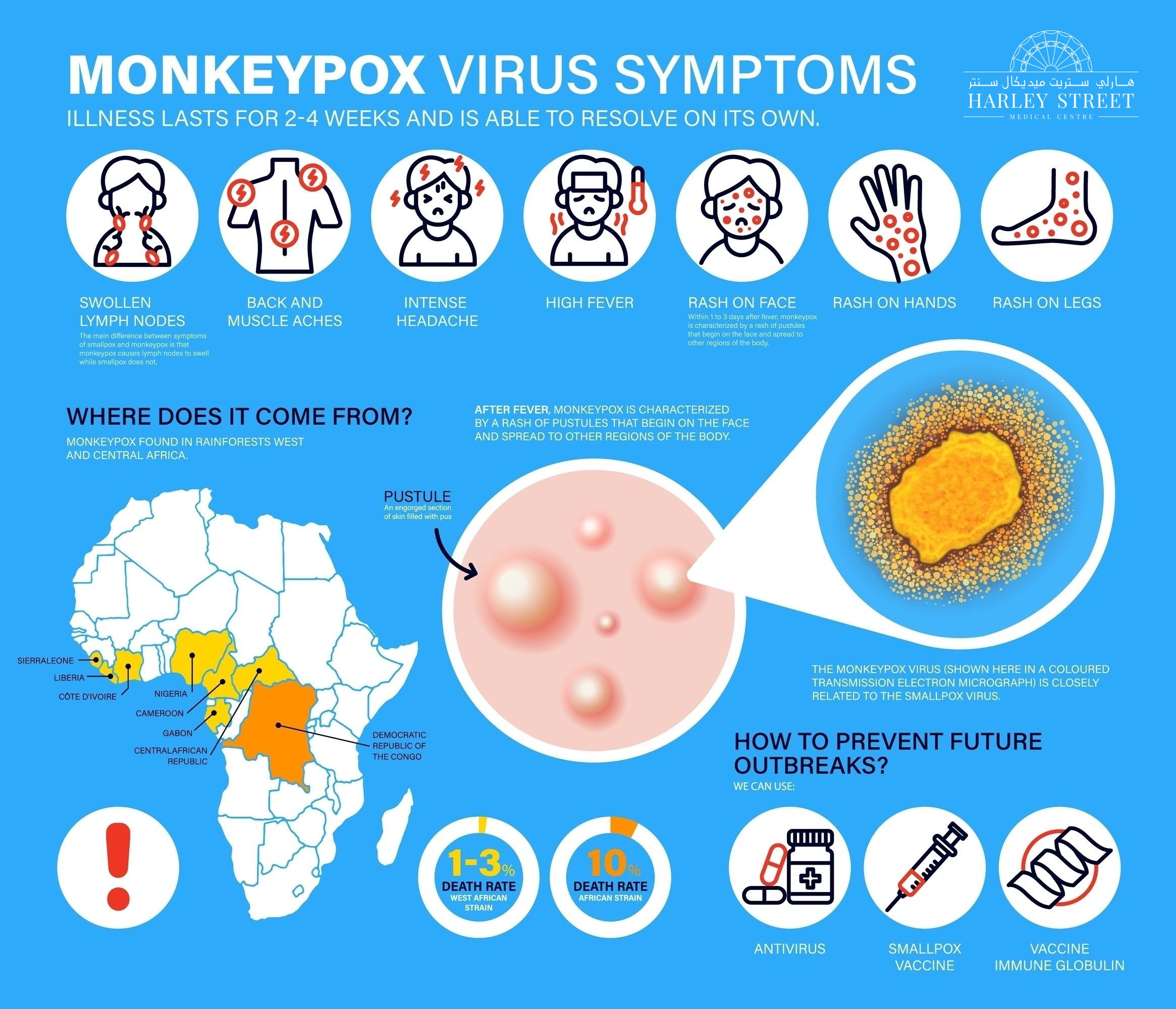
Historically centered in Central Africa, particularly the Democratic Republic of the Congo (DRC), Clade I is associated with more severe clinical disease and higher historical case fatality rates (CFRs), historically estimated between 1% and 10% in resource-constrained endemic settings.
- Clade Ia: Traditionally spread via zoonotic spillover from forest reservoirs (such as rodents and squirrels) into rural human populations, followed by localized household transmission.
- Clade Ib: Identified in eastern DRC and neighboring East African nations during major outbreaks in 2023–2024. Clade Ib demonstrated elevated human-to-human transmission through close physical and sexual contact networks, leading the World Health Organization (WHO) to declare a Public Health Emergency of International Concern (PHEIC) due to rapid regional prevalence expansion.
Clade II (West African Strain)
Clade II originated in West Africa and generally causes a milder clinical illness with low mortality rates (typically below 1% in immunocompetent individuals).
- Clade IIa: Circulates at endemic baseline levels in parts of West Africa, driven predominantly by animal-to-human spillover events.
- Clade IIb: The specific variant responsible for the massive multi-country global outbreak that began in 2022. Clade IIb adapted efficiently to sustained human-to-human transmission, predominantly spreading through interconnected sexual contact networks globally.
| Feature / Metric | Clade Ia | Clade Ib | Clade IIa | Clade IIb |
|---|---|---|---|---|
| Primary Geographic Hub | Central Africa (Congo Basin) | Central & East Africa | West Africa | Global (Worldwide distribution) |
| Primary Transmission Route | Zoonotic spillover; household contact | Human-to-human; sexual & close contact | Zoonotic spillover | Human-to-human; sexual contact networks |
| Historical Severity / CFR | Moderate to Severe (3%–10%) | Severe in vulnerable groups (~1%–3%) | Mild to Moderate (<1%) | Mild (<0.2% in robust care settings) |
| Prevalence Profile | Rural endemic clusters | Rapidly expanding regional prevalence | Localized endemic baseline | Low global baseline post-2022 wave |
| Predominant Demographics | Children, rural hunters, households | Sex workers, adults, family contacts | Rural populations, wildlife handlers | Men who have sex with men (MSM), adults |
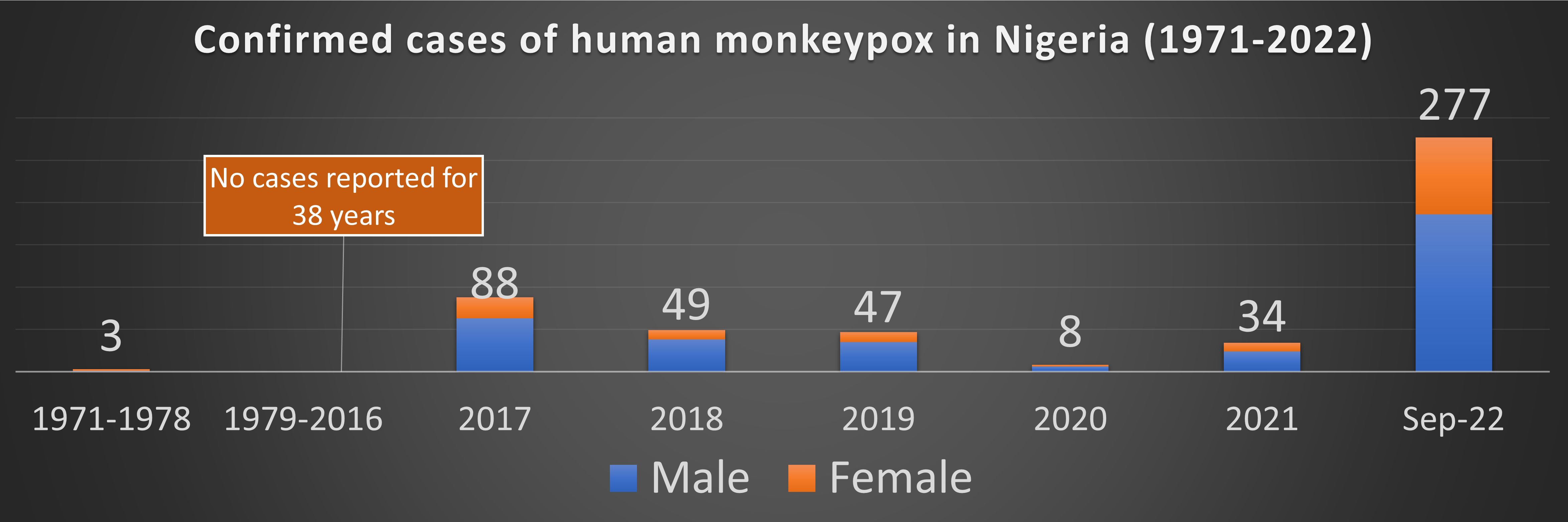
Historical and Geographic Prevalence Dynamics
Mpox prevalence has undergone dramatic spatial and demographic shifts since the virus was first recognized in human populations.
Endemic Baseline (1970–2021)
Following the identification of the first human mpox case in 1970 in the DRC, the disease remained largely confined to remote tropical rainforest regions of Central and West Africa. Prevalence during this period was characteristically low, sporadic, and seasonal, heavily tied to human interaction with wild animal reservoirs.
However, population-level seroprevalence steadily declined over these decades following the eradication of smallpox in 1980 and the subsequent cessation of routine smallpox vaccination, which had provided roughly 85% cross-protection against MPXV. This created an expanding population of individuals with no immunity to orthopoxviruses.
HISTORICAL PREVALENCE SHIFT (1970 - PRESENT)
- 1970–2021: Low, sporadic rural endemicity (Central/West Africa)
- Driven by animal spillover; waning smallpox immunity
- 2022–2023: Global outbreak wave (Clade IIb)
- Rapid urban spread globally via interconnected networks
- 2024–2026: Dual-pattern epidemiology
- Persistent low Clade IIb baseline globally
- Sustained endemic & epidemic Clade Ib surges in Africa
The 2022–2023 Global Epidemic Wave
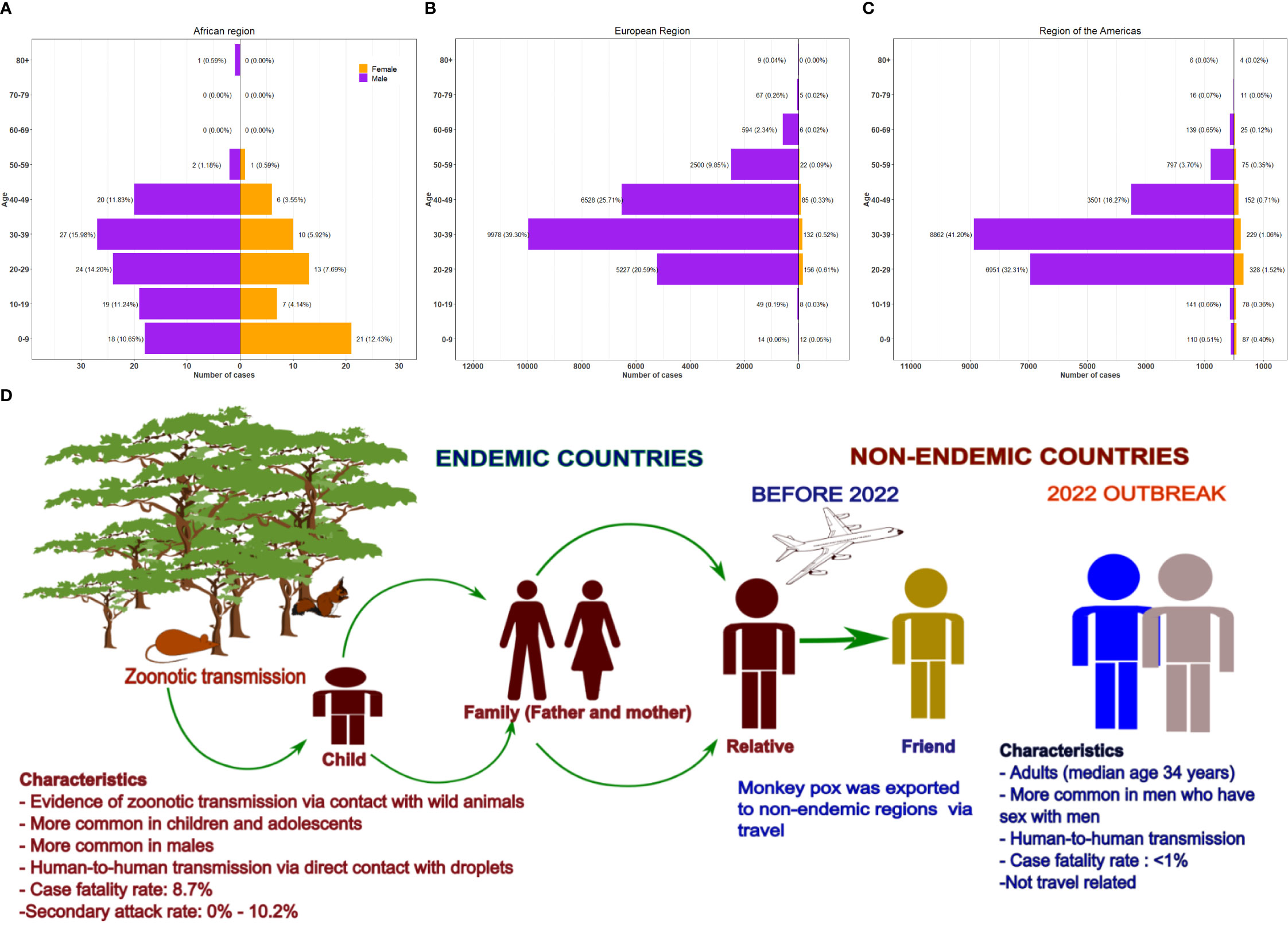
In May 2022, a sudden shift occurred when Clade IIb began spreading outside Africa across non-endemic countries in Europe, North America, South America, and Asia. Active prevalence peaked rapidly due to uninterrupted transmission within dense social and sexual networks.
At its height, tens of thousands of cases were confirmed globally within months. Enhanced public health responses—including rapid diagnostic scaling, targeted vaccination campaigns using modified vaccinia Ankara vaccines, and community-driven risk mitigation—successfully brought global Clade IIb prevalence down to manageable, low-level baseline circulation by late 2023.
Contemporary Epidemiological Profile (2024–2026 Context)
The epidemiology of mpox exhibits a dual-track pattern:
- Low Baseline Clade IIb Circulation: Non-endemic regions maintain low, sporadic case detection, managed through routine clinical surveillance and targeted post-exposure vaccination.
- Clade I and Ib Resurgence in Endemic Corridors: Regions in Central and East Africa experience sustained higher prevalence driven by Clade I lineages. High population density, limited access to vaccines, co-infections (such as advanced HIV), and economic vulnerabilities contribute to persistent transmission challenges.
Key Transmission Drivers Influencing Prevalence
The prevalence of mpox in any given region depends directly on the modes of transmission operating within the local population.
- MPOX TRANSMISSION DRIVERS
- Direct Skin-to-Skin Contact
- Contact with Respiratory Droplets
- Fomites & Contaminated Surfaces
Direct Physical and Sexual Contact
Direct, prolonged contact with infectious mpox skin lesions, scabs, or bodily fluids is the primary driver of high active prevalence. During mucosal or skin-to-skin contact—particularly during intimate or sexual activities—viral particles bypass intact skin defenses or enter through micro-abrasions, leading to infection.
Respiratory Droplets and Fomites
- Respiratory Droplets: Infection can occur via prolonged face-to-face interaction through large respiratory droplets, though this mode is far less efficient than direct physical lesion contact.
- Fomites: MPXV is a robust, enveloped DNA virus capable of remaining viable on inanimate surfaces, bedding, clothing, and towels used by an infected person. In household or institutional settings, unhygienic handling of contaminated materials can sustain localized prevalence spikes.
Zoonotic Exposure Risks
In endemic forested zones, human prevalence is continuously reinforced by contact with infected wildlife. Activities such as hunting, skinning, preparing bushmeat, or handling wild rodents (e.g., Funisciurus and Heliosciurus squirrels, gambian pouched rats) introduce fresh viral lines into human communities.
Measuring and Surveillance Methods for Mpox Prevalence
Accurate prevalence tracking relies on a multi-tiered surveillance infrastructure integrated across local healthcare facilities, specialized reference laboratories, and international public health networks like the U.S. Centers for Disease Control and Prevention (CDC).
- MPOX SURVEILLANCE & DIAGNOSTICS
- Real-Time PCR Assays (Active Case Detection)
- Wastewater Epidemiology (Community Screening)
- Serological Surveys (Population Immunity)
Real-Time PCR Testing
Diagnostic confirmation relies on real-time reverse transcription polymerase chain reaction (rPCR) assays. Clinicians swab active skin or mucosal lesions to extract viral DNA. PCR assays target conserved orthopoxvirus genes while utilizing specific primer sets to differentiate between Clade I and Clade II strains.
Wastewater Epidemiology
Wastewater surveillance has emerged as a cost-effective, non-invasive method for monitoring community-level mpox prevalence. Because infected individuals shed MPXV DNA in feces, urine, and skin flakes washed down drains, analyzing municipal wastewater samples allows public health authorities to detect viral resurgence weeks before clinical presentations rise.
Serological Population Surveys
To measure cumulative exposure and population-level herd immunity, epidemiologists conduct serosurveys utilizing enzyme-linked immunosorbent assays (ELISA) and neutralization assays. These studies detect long-lasting IgG antibodies against orthopoxvirus surface proteins, helping map population vulnerability across geographic regions.
Factors Modifying Disease Prevalence and Outbreak Severity
Several biological, social, and logistical variables influence how rapidly mpox prevalence expands or contracts within a community.
- FACTORS INFLUENCING MPOX PREVALENCE DYNAMICS
- INCREASE PREVALENCE (Risks)
- Low population immunity
- High host contact density
- Co-infections (Unmanaged HIV)
- Limited diagnostic access
- DECREASE PREVALENCE (Mitigation)
- Ring vaccination (MVA-BN)
- Early diagnosis & isolation
- Targeted risk communication
- Environmental sanitation
- INCREASE PREVALENCE (Risks)
Immunological Gaps and Waning Immunity
The absence of routine smallpox vaccination since 1980 left populations under age 45-50 with virtually no natural cross-protective orthopoxvirus immunity. Where vaccination coverage with modern two-dose MVA-BN vaccine remains low, viral susceptibility remains high, allowing prevalence to spike following introduced cases.
Co-Infections and Host Susceptibility
Individuals with advanced, unmanaged HIV infection or other significant immunocompromising conditions face higher viral loads, prolonged viral shedding, more severe necrotizing cutaneous lesions, and higher mortality. Prolonged viral shedding in immunocompromised hosts increases the window of contagiousness, indirectly expanding local prevalence.
Healthcare Infrastructure and Diagnostic Access
In regions with sparse laboratory capacity, mpox cases often go undiagnosed or are misidentified as chickenpox (varicella-zoster virus), syphilis, or herpes simplex virus. Under-reporting artificially depresses official prevalence figures while allowing undetected community transmission chains to persist.
Public Health Strategies to Control and Reduce Prevalence
Controlling mpox prevalence requires an integrated public health response combining targeted medical countermeasures, community engagement, and global disease surveillance.
- PREVALENCE CONTROL FRAMEWORK
- VACCINATION STRATEGIES (Pre- & Post-Exposure)
- CLINICAL MANAGEMENT (Antivirals (Tecovirimat))
- BEHAVIORAL MITIGATION (Education & Isolation)
Vaccination Strategies
Vaccination remains the primary tool for reducing population susceptibility and lowering infection prevalence:
- MVA-BN (JYNNEOS / Imvanex / Imvamune): A non-replicating smallpox/mpox vaccine administered in a two-dose series. It is utilized both for Pre-Exposure Prophylaxis (PrEP) in high-risk populations and Post-Exposure Prophylaxis (PEP) within 4 to 14 days of exposure.
- LC16m8: A minimally replicating vaccine licensed in select jurisdictions, particularly useful in broad outbreak control settings.
Antiviral Therapeutics
For severe cases or high-risk patients, antiviral therapeutics help reduce symptom duration and viral shedding:
- Tecovirimat (TPOXX): An antiviral agent that inhibits the orthopoxvirus VP37 protein, preventing the virus from producing envelope proteins necessary for viral egress and dissemination within the host.
- Brincidofovir and Cidofovir: Secondary nucleotide analog options reserved for severe refractory cases under specialized clinical protocols.
Behavioral Risk Reduction and Public Health Messaging
Clear, non-stigmatizing communication empowers vulnerable communities to adopt protective behaviors during high-prevalence periods. Recommended measures include:
- Avoiding direct physical contact with individuals presenting with unexplained skin rash or skin lesions.
- Practicing mutual monogamy or reducing partner numbers during active community outbreaks.
- Utilizing personal protective equipment (PPE) when caring for infected family members or patients.
- Isolating at home until all cutaneous lesions have fully re-epithelialized and fresh skin has formed.
Frequently Asked Questions
What is the difference between mpox prevalence and mpox incidence?
Mpox prevalence measures the total proportion of individuals in a population who have active or past mpox infections at a specific point in time. In contrast, mpox incidence measures only the rate of newly diagnosed cases over a defined period (e.g., weekly new reported infections).
Why did global mpox prevalence rise dramatically in 2022?
Global prevalence rose rapidly in 2022 because Clade IIb established sustained human-to-human transmission within highly interconnected social and sexual networks. Low baseline population immunity following the historic discontinuation of smallpox vaccination allowed the virus to spread efficiently across non-endemic countries.
How does Clade I prevalence differ from Clade II prevalence?
Clade I (including sub-lineages Ia and Ib) is predominant in Central and East Africa, exhibiting higher clinical severity and substantial transmission via both household contact and sexual networks. Clade II (specifically IIb) is distributed globally, typically causes milder clinical disease, and spreads primarily through close physical or sexual contact.
Can wastewater testing accurately reflect community mpox prevalence?
Yes. Wastewater surveillance measures MPXV DNA shed in human bodily fluids and skin flakes. This approach offers a reliable, unbiased indicator of community prevalence trends, often detecting viral circulation before individuals present to healthcare facilities for testing.
Does smallpox vaccination protect against mpox?
Historical smallpox vaccines and modern non-replicating vaccines like JYNNEOS (MVA-BN) provide cross-protective immunity against MPXV because both belong to the Orthopoxvirus genus. A complete two-dose JYNNEOS series significantly reduces the risk of infection and clinical severity, lowering overall transmission prevalence.
Practical Recommendations and Next Actions
To minimize risk and contribute to lowering community prevalence, individuals and healthcare providers should adopt proactive strategies:
- Assess Individual Exposure Risk: Evaluate your potential risk based on geographic location, occupation (e.g., laboratory personnel, healthcare worker), and personal contact networks.
- Complete Recommended Vaccination: If eligible or belonging to a designated high-risk group, complete the full two-dose MVA-BN (JYNNEOS) vaccine series to ensure maximum immunological protection.
- Recognize Clinical Signs Early: Inspect skin for unusual focal lesions, macules, papules, vesicles, or pustules, especially when accompanied by systemic prodromal symptoms like fever, swollen lymph nodes (lymphadenopathy), and myalgia.
- Follow Isolation and Testing Protocols: If lesions appear, isolate immediately from household members and pets, cover lesions, contact a healthcare provider, and request a diagnostic PCR swab test.
- Report Cases to Public Health Authorities: Prompt clinical reporting ensures accurate regional prevalence tracking, enabling public health agencies to deploy contact tracing and vaccine resources effectively.
Image Gallery
Select an image to open it in a new tab.



Omar Farooq
EdTech Innovation and Virtual Pedagogy Journalist
