
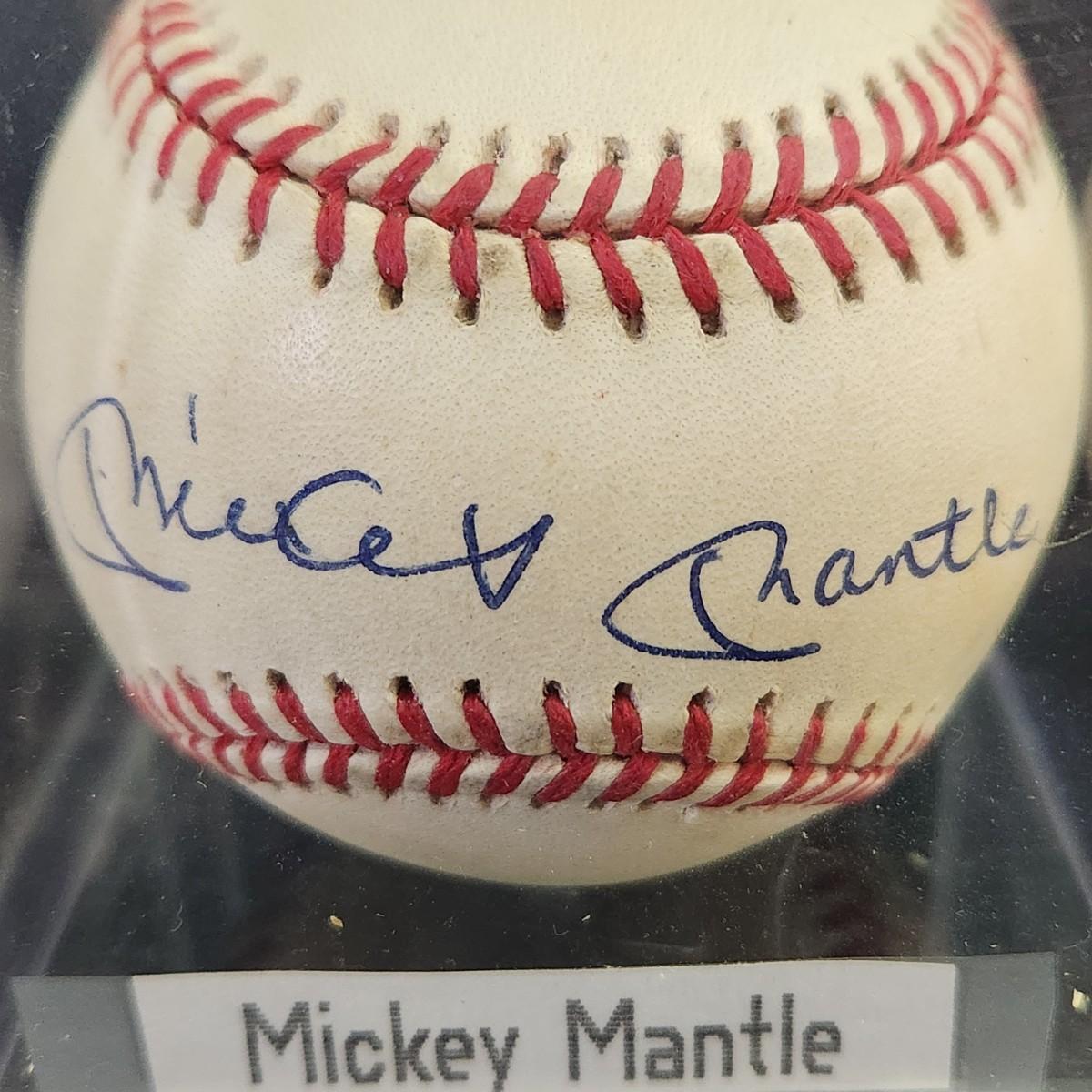
Determining the value of a baseball signed by Mickey Mantle requires evaluating several core factors, including signature authenticity, baseball condition, ink quality, official authentication, and the historical context of when the autograph was signed. While a genuine Mantle-signed baseball typically commands anywhere from $300 to several thousand dollars, market valuation depends heavily on professional third-party authentication and the specific provenance of the item.
Introduction to Mickey Mantle Autograph Collecting
Mickey Mantle remains one of the most heavily collected figures in sports memorabilia history. Throughout his career with the New York Yankees and well into his retirement, Mantle signed thousands of baseballs, photographs, and baseball cards for fans, teammates, and corporate clients. Because of this high volume, finding a Mickey Mantle-signed baseball is relatively common compared to rarer historical figures like Babe Ruth or Lou Gehrig. However, this high volume also means the market is flooded with clubhouse signatures, secretarial autographs, and outright forgeries.
Understanding the true value of a baseball signed by Mickey Mantle requires looking past the mere presence of his name. Collectors, auction houses, and sports memorabilia dealers examine the interplay between the quality of the signature, the type of baseball used, the presence of tamper-evident certification, and historical era markers. Navigating this marketplace safely demands a systematic approach to authentication and condition grading.
Core Factors That Drive Market Value
When professional sports appraisers evaluate a signed baseball, they weigh multiple distinct variables. No single factor determines value on its own; instead, value emerges from how these elements combine.
| Valuation Factor | Impact on Mickey Mantle Signed Baseball Value |
|---|---|
| Authentication | Third-party cert (PSA/DNA, JSA, Beckett) is essential. |
| Signature Placement | Sweet spot placement commands a 20% to 50% premium. |
| Ink & Condition | Bold blue or black ballpoint; fading or bleeding drops value. |
| Baseball Type | Official American/National League balls outvalue cheap ones. |
| Era & Inscription | Vintage 1950s/60s signatures or HOF inscriptions add value. |
1. Signature Placement and Quality
Mickey Mantle signed baseballs across five decades, and his penmanship evolved significantly from his playing days in the 1950s to his final years in the mid-1990s.
- The Sweet Spot: A signature located directly on the sweet spot—the area where the seams are closest together on the panel between the red stitching—is the gold standard. Sweet-spot signatures consistently command higher prices than side-panel signatures.
- Legibility and Flow: Mantle’s signature shifted from a crisp, precise script in his youth to a more hurried, stylized version later in life. A bold, unhurried signature with complete loops and clear lettering holds superior market appeal compared to a rushed or shaky signature.
2. Ink Type and Preservation
The medium used to sign the baseball heavily influences longevity and value.
- Ballpoint Pen vs. Marker: Mantle frequently signed using blue or black ballpoint pens, as well as felt-tip markers (such as Sharpies). Blue ballpoint ink from the 1950s and 1960s tends to resist fading well when stored properly. Modern felt-tip markers, particularly blue ones from the 1970s and 1980s, are prone to fading or turning purple if exposed to ultraviolet light.
- Ball Discoloration: A pristine white baseball provides maximum contrast, making the signature pop. Toned, yellowed, or shellacked baseballs (often coated to preserve the leather) can diminish value if the coating has damaged the signature ink or yellowed unevenly.
3. Type of Baseball
The brand and historical accuracy of the baseball itself matter significantly.
- Major League Baseballs: Baseballs bearing the stamped logos of official league presidents (such as William Harridge or Joe Cronin during his playing days) hold higher historical value.
- Souvenir Baseballs: Baseballs signed on cheap, plastic-coated souvenir balls or synthetic replicas generally sell at a heavy discount compared to official league specifications.
- Commemorative Baseballs: Baseballs featuring special stamps, such as Hall of Fame inductions or specific milestones, command specialized collector interest.

The Crucial Role of Authentication
Because Mickey Mantle is one of the most frequently forged signatures in sports history, a raw, uncertified baseball carries inherent risk and typically sells for a fraction of its potential value. Before assigning a definitive value to a Mantle-signed baseball, it must pass through rigorous third-party authentication.
The three industry-standard authentication companies recognized by major auction houses and insurers are:
- Professional Sports Authenticator (PSA/DNA): Utilizes expert authenticators and database comparison to issue letters of authenticity (LOA) and tamper-evident stickers.
- James Spence Authentication (JSA): Widely respected for autograph evaluation, providing serial-numbered certification cards and letters.
- Beckett Authentication Services (BAS): Employs advanced examination techniques to verify ink chemistry, pressure, and script morphology.
Without a certificate of authenticity (COA) or letter of authenticity from one of these primary agencies, buyers must factor in the cost and risk of submitting the item for grading. If an authentication service deems the signature a forgery or inconclusive ("opinion not rendered"), the monetary value drops to the base value of an unsigned vintage baseball.
Chronological Evolution of Mickey Mantle’s Signature
Mickey Mantle’s signature changed noticeably throughout his life, reflecting his age, physical health, and the sheer volume of autograph requests he fulfilled. Understanding these eras helps collectors date the signature and verify its authenticity against known exemplars.
The Playing Era (1951–1968)
Signatures from Mantle’s active playing career on the New York Yankees are among the most coveted by advanced collectors. During this period, his signature was typically sharp, distinct, and executed with steady hand pressure. Baseballs from this era feature period-appropriate league stamps, adding historical synergy to the piece.
The Retirement and Show Era (1970s–1980s)
Following his retirement, Mantle made regular appearances at card shows, golf tournaments, and memorabilia signings. His signature during this timeframe remained relatively consistent, though high-volume signing sessions sometimes resulted in faster, slightly abbreviated script formations.
The Later Years (1990–1995)
In the final years of his life, health struggles sometimes impacted Mantle’s handwriting. Signatures from this era can exhibit a shakier hand, slower stroke execution, or less defined loops. While these signatures are genuine and heavily collected by fans who met him late in life, they generally trade at lower price points than pristine playing-era examples unless accompanied by unique inscriptions or professional authentication.
Common Pitfalls and Counterfeit Detection
Navigating the market for signed memorabilia requires vigilance against fraudulent items. Common traps include:
- Secretarial Signatures: During his playing career, the Yankees organization and Mantle occasionally utilized secretaries or family members to sign fan mail. While these are technically vintage, they are not hand-signed by Mantle and command vastly lower values.
- Auto-Pens and Mechanical Reproductions: Although less common for baseballs than flat paper goods, printed facsimiles of Mantle’s signature do exist on promotional items and cheap souvenirs. A close-up examination under magnification reveals solid ink lines rather than the continuous fluid strokes of a hand-applied pen.
- Fake Certificates: Unscrupulous sellers sometimes pair forged baseballs with counterfeit certificates of authenticity or printed cards from non-existent grading companies. Always cross-reference serial numbers directly on the official websites of PSA/DNA, JSA, or Beckett.
Frequently Asked Questions
How much is a Mickey Mantle signed baseball worth?
Most authenticated Mickey Mantle signed baseballs retail between $300 and $2,000. The exact price depends on signature placement, ink boldness, ball condition, and whether it features third-party certification from PSA/DNA, JSA, or Beckett. Rare vintage game-used balls or multi-signed items featuring other legends (such as Joe DiMaggio or Yogi Berra) can push values significantly higher.
Can I clean a dirty baseball signed by Mickey Mantle?
No. Attempting to clean, wipe, or restore a vintage baseball or its signature almost always destroys value. Cleaning agents, water, or erasers can smudge the ink, degrade the leather, and remove crucial historical patina. Leave the item in its current condition and consult a professional conservator or auction house before taking any physical action.
What is the "sweet spot" on a baseball?
The sweet spot refers to the panel on a baseball where the red stitching lines come closest together. Autographs placed in this exact location are considered premier collectibles because they display prominently in protective display cases, commanding higher market values than side-panel signatures.
How can I tell if my Mickey Mantle signature is real?
Visual comparison against verified exemplars can help, but definitive verification requires third-party authentication. Submitting the baseball to PSA/DNA, JSA, or Beckett allows professional authenticators to examine pen pressure, ink characteristics, and script morphology under magnification to issue an official certificate of authenticity.
Does an inscription increase the value of the baseball?
Yes, in many cases. Inscriptions such as "HOF 74" (Hall of Fame induction year), "3x MVP," or personalized dedications can add value, provided the handwriting matches known authentic samples. However, long personal inscriptions written to third parties can sometimes narrow the pool of interested buyers compared to a clean, unpersonalized signature.
Next Actions for Owners and Prospective Buyers
If you currently own a Mickey Mantle signed baseball or are looking to purchase one, your next steps depend on your primary objective. If you are holding an uncertified item passed down through family, prioritize submitting clear, high-resolution photographs to an online quick-opinion service provided by PSA/DNA or JSA before paying for full physical authentication and shipping insurance. If you intend to sell the item, reaching out to established national auction houses specializing in sports memorabilia will yield professional appraisals and connect you directly with serious collectors. Always store authenticated baseballs in UV-protected acrylic display cases away from direct sunlight, high humidity, and extreme temperature fluctuations to preserve their condition and long-term market value.
Image Gallery
Select an image to open it in a new tab.

Zara El-Hashem
Sociocultural Dynamics and Academics Writer
