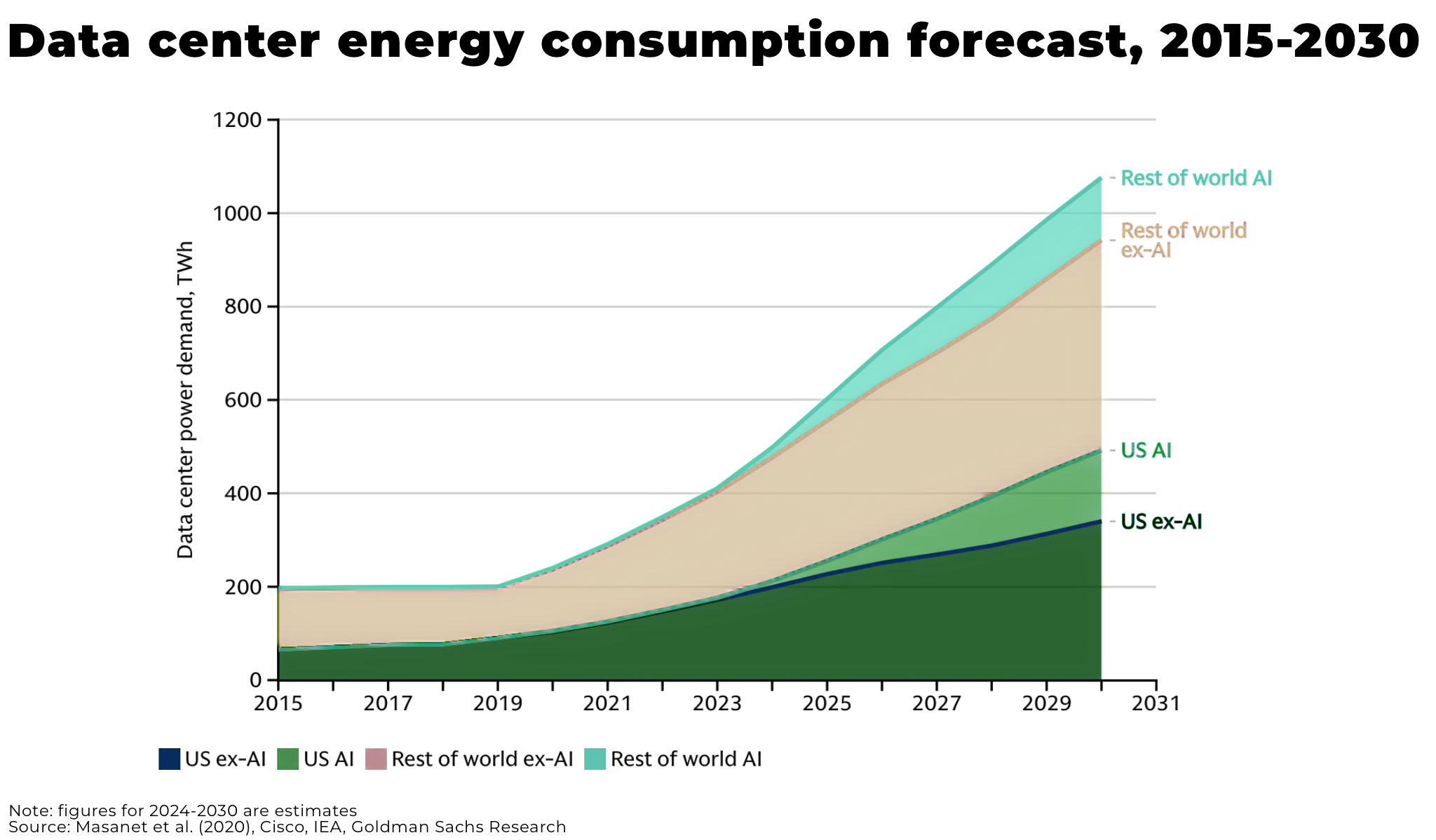
As of 2026, data centers account for approximately 3% to 4% of global electricity consumption, a significant increase from the stable 1% seen in the previous decade. While architectural efficiency and hardware optimization have improved, the massive scaling of generative AI and high-performance computing (HPC) has fundamentally shifted the energy profile of the global digital infrastructure.
The Evolution of Data Center Power Demand
For nearly a decade, the narrative surrounding data center energy consumption was one of surprising stability. Between 2010 and 2020, even as internet traffic tripled and data center workloads grew sixfold, total energy use remained relatively flat at roughly 200–250 terawatt-hours (TWh). This "efficiency miracle" was largely due to the migration from small, inefficient enterprise data centers to massive "hyperscale" facilities operated by companies like Google, Amazon, and Microsoft. These hyperscalers utilized advanced cooling and optimized server management to do more with less.
However, the landscape in 2026 is vastly different. The emergence of large language models (LLMs) and the integration of AI into nearly every software vertical have ended the plateau. Unlike traditional cloud computing—which involves serving web pages or processing database queries—AI training and inference require GPUs (Graphics Processing Units) that consume significantly more power per rack. A traditional server rack might draw 5 to 10 kilowatts (kW), whereas modern AI-dense racks in 2026 frequently exceed 50 to 100 kW.
This shift means that the total energy footprint is no longer just a byproduct of "being online." It is a primary constraint on global technological expansion. The International Energy Agency (IEA) and various national grid operators now view data centers as critical infrastructure that can either stabilize or strain national power grids depending on how they are managed.
Primary Drivers of Energy Growth in 2026
The surge in energy consumption is not a result of a single factor but a convergence of several high-intensity digital trends. Understanding these drivers is essential for identifying where efficiency gains are still possible.
Generative AI and Large Language Models
The most significant driver is the computational intensity of AI. Training a single state-of-the-art model requires thousands of specialized chips running at full capacity for weeks or months. Once trained, the "inference" phase—when users actually interact with the AI—consumes even more energy in aggregate due to the sheer volume of queries processed globally every second. In 2026, AI-related workloads are estimated to represent nearly 40% of all data center energy use, up from less than 10% in 2022.
The Rise of Edge Computing
As 5G and IoT (Internet of Things) devices have proliferated, the need for low-latency processing has moved data centers closer to the user. "Edge" data centers are smaller facilities located in urban centers. While they reduce the energy cost of data transmission, they often lack the economies of scale and cooling efficiencies found in massive rural hyperscale campuses, leading to a higher energy cost per unit of data processed.
Data Sovereignty and Localization
Increasingly, nations are mandating that data belonging to their citizens must be stored and processed within their borders. This has led to the construction of data centers in regions where the local power grid may not be optimized for high-density loads or where renewable energy sources are scarce. This geopolitical requirement often overrides the environmental preference for building in cooler climates or areas with abundant hydroelectric power.

Measuring Efficiency: The PUE Metric and Beyond
To understand the truth about consumption, we must look at how efficiency is measured. The industry standard has long been Power Usage Effectiveness (PUE).
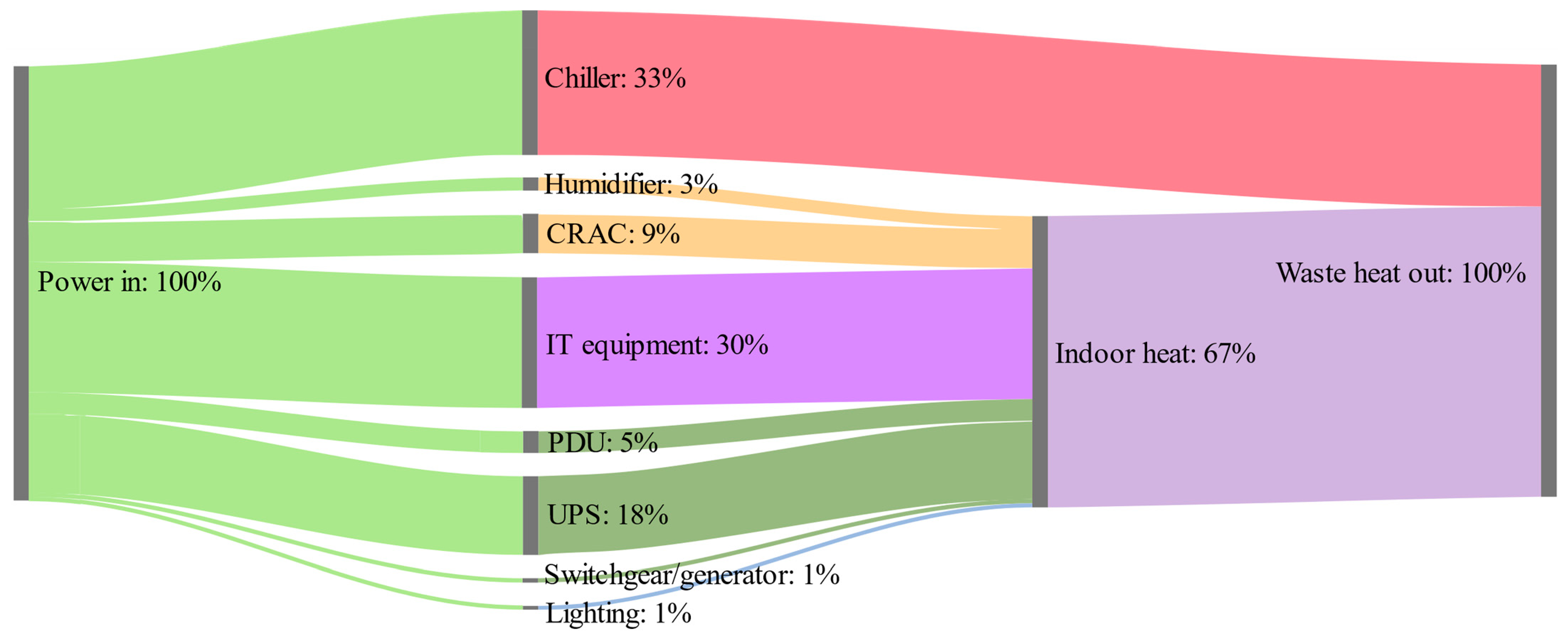
PUE is calculated by dividing the total power entering the data center by the power used specifically by the IT equipment. A PUE of 1.0 would mean 100% of the energy goes to the servers, with zero energy wasted on cooling, lighting, or power distribution.
- 1.5 - 2.0: Common for older, enterprise-level facilities.
- 1.1 - 1.2: The current gold standard for hyperscale data centers in 2026.
- < 1.1: Achieved only in facilities using advanced liquid cooling or direct-to-chip cooling in cold climates.
However, PUE is an incomplete metric. It does not account for the efficiency of the servers themselves or the source of the energy. In 2026, the industry is moving toward more holistic metrics, such as Carbon Usage Effectiveness (CUE) and Water Usage Effectiveness (WUE), to provide a more transparent view of environmental impact.
Technical Strategies for Reducing Consumption
The industry has not sat idly by as energy demands rose. Several critical technological shifts have mitigated what could have been an even more drastic increase in power usage.
Transition to Liquid Cooling
Air cooling—the practice of blowing chilled air through server aisles—has reached its physical limit for AI-dense hardware. In 2026, liquid cooling has become a mainstream requirement for new builds. By circulating coolant directly over the chips or immersing servers in non-conductive fluid, operators can remove heat much more efficiently than with air. This reduces the energy required for cooling by up to 90% compared to traditional HVAC systems.
Chip-Level Power Management
Modern processors are now designed with "energy-proportional computing" in mind. This means that a server's power draw scales linearly with its workload. In the past, an idle server might still draw 50% of its peak power; today’s chips utilize advanced "sleep states" and dynamic frequency scaling to ensure that when a server isn't working, it isn't consuming significant electricity.
The Role of Artificial Intelligence in Operations
Ironically, AI is being used to solve the very energy problem it created. Machine learning algorithms now manage data center cooling systems in real-time, predicting weather changes and workload spikes to adjust temperatures with a precision that human operators cannot match. According to Google’s DeepMind, these systems can reduce cooling energy consumption by as much as 40%.
Comparison of Cooling Technologies and Efficiency
The following table compares the typical energy profiles of different data center architectures as of 2026.
| Facility Type | Typical PUE | Cooling Method | Energy Density | Primary Use Case |
|---|---|---|---|---|
| Legacy Enterprise | 1.8 - 2.2 | Traditional CRAC/CRAH (Air) | Low (< 5kW/rack) | Internal corporate apps |
| Modern Colocation | 1.3 - 1.5 | Chilled Water / Indirect Evaporative | Medium (10-25kW/rack) | Cloud hosting, SaaS |
| Hyperscale Cloud | 1.1 - 1.2 | Direct Evaporative / Free Cooling | High (20-40kW/rack) | Global web services |
| AI Specialized (HPC) | 1.05 - 1.1 | Direct-to-Chip / Immersion Liquid | Extreme (50-100kW+) | LLM Training, Research |
The Grid and Renewable Energy Integration
The "truth" about data center energy is inextricably linked to the source of that energy. A data center consuming 100 megawatts (MW) of coal-fired power has a vastly different impact than one powered by wind or solar.
In 2026, the leading tech firms have moved beyond "Renewable Energy Credits" (which merely offset fossil fuel use) toward 24/7 Carbon-Free Energy (CFE). This goal involves matching every hour of data center operation with an hour of carbon-free energy produced on the same local grid. This is driving massive investment in:
- Utility-Scale Battery Storage: To provide power during non-sunny or non-windy periods.
- Small Modular Reactors (SMRs): Some data center operators are exploring on-site nuclear energy to provide steady, carbon-free "baseload" power.
- Geothermal Energy: Utilizing the Earth's heat for constant, reliable energy production.
Despite these efforts, the sheer scale of demand is creating friction. In certain hubs like Northern Virginia, Dublin, and Singapore, the "data center density" has led to local restrictions on new builds because the existing electrical grids simply cannot handle the load without risking blackouts for residential areas.
Regulatory Landscape and Transparency
By 2026, reporting on energy consumption has shifted from voluntary to mandatory in many jurisdictions. The European Union’s Energy Efficiency Directive (EED) now requires data center operators to publish detailed sustainability reports, including their PUE, water usage, and heat reuse initiatives.
In the United States, the SEC has implemented climate disclosure rules that force publicly traded tech companies to account for their Scope 1, 2, and 3 emissions. This includes the energy used by the third-party data centers they rent, creating a "trickle-down" effect where even small data center providers must become efficient to keep their large corporate clients.
One emerging trend in 2026 is District Heating. Data centers are essentially giant heaters; forward-thinking cities are now requiring new facilities to capture their waste heat and pipe it into local municipal heating systems for homes and offices. This turns "wasted" energy into a community asset, significantly improving the net environmental footprint of the facility.
Frequently Asked Questions
Does deleting my emails actually save energy?
While deleting unnecessary data does technically reduce storage requirements, the energy impact of a single email is negligible. The vast majority of data center energy is consumed by the "always-on" infrastructure, cooling, and the massive computational power required for AI and video streaming. System-level optimizations by providers have a much larger impact than individual user habits.
Is AI the main reason data centers use so much power?
Yes, as of 2026, AI is the primary driver of growth in the sector. Traditional cloud computing has become very efficient, but the "brute force" nature of AI training and the high frequency of AI-assisted queries require significantly more electricity per operation than standard digital tasks.
Are data centers more efficient than home servers?
Almost always. Because of economies of scale, professional data centers use specialized cooling and power delivery systems that are much more efficient than a server or high-end PC running in an office or home environment. Consolidating workloads into efficient data centers is generally a net win for energy conservation.
Why don't all data centers just use renewable energy?
While many aim to, the challenge is "firmness." Solar and wind are intermittent. A data center must run 24/7/365. Until battery technology and long-duration storage are fully mature and affordable, many data centers must still rely on the general power grid, which often contains a mix of fossil fuels and renewables.
What is "Heat Reuse" in data centers?
Heat reuse is the process of capturing the hot air or water generated by servers and using it for other purposes, such as heating nearby buildings or greenhouses. In 2026, this is becoming a standard feature for urban data centers to meet strict sustainability regulations.
Practical Recommendations for the Future
For businesses and policymakers, the path forward involves focusing on three key areas:
- Prioritize Density over Expansion: Instead of building more floor space, focus on upgrading existing facilities to support liquid cooling and higher-density racks, which utilize energy more effectively.
- Invest in Grid-Interactive Technology: Data centers should be viewed as part of the energy solution. By using their backup batteries to help balance the grid during peak demand, data centers can become a stabilizing force for renewable energy.
- Audit Software Efficiency: Energy consumption is not just a hardware problem. "Green coding" practices—writing software that requires fewer computational cycles—can reduce the energy load at the source.
The "truth" is that while data centers are consuming more power than ever, they are also the most efficient energy consumers in the history of industrial infrastructure. The challenge of 2026 and beyond is ensuring that this consumption is matched by a rapid transition to a carbon-free electrical grid.
Image Gallery
Select an image to open it in a new tab.



Zara El-Hashem
Sociocultural Dynamics and Academics Writer
