
Observing our planet as a finite sphere suspended in the vast expanse of the cosmos fundamentally alters human perception, triggering a profound cognitive shift known as the overview effect. This phenomenon transforms abstract environmental and geopolitical concepts into tangible realities, fostering an unprecedented sense of global unity and ecological responsibility among those who experience it.
The boundary of Earth's atmosphere is not merely a line on a map, but a fragile, luminous veil that protects all known life from the lethal vacuum of space. For centuries, humanity navigated and mapped the world from the ground, dividing continents, partitioning oceans, and erecting invisible borders that dictated conflict and cooperation. However, when viewed from orbit, these geopolitical boundaries vanish entirely. Mountain ranges bleed into river systems, and oceans blend into a continuous fluid envelope. This vantage point challenges deeply ingrained terrestrial assumptions, offering a stark reminder that human divisions are superficial against the backdrop of a shared planetary home. Understanding this transformation requires examining the psychological, scientific, and philosophical dimensions of orbital observation.
The Cognitive Shift: Defining the Overview Effect
The term "overview effect" was coined in 1987 by space philosopher Frank White, who interviewed numerous astronauts and cosmonauts about their psychological reactions to viewing Earth from space. The core of this experience is a sudden realization of the interconnectedness of all earthly systems.
When astronauts look out the window of a spacecraft, they do not see a collection of separate countries fighting for resources. Instead, they witness a single, dynamic entity—a blue and white marble glowing against the pitch-black void. This visual input triggers a rapid restructuring of cognitive frameworks. Concepts that were once theoretical, such as atmospheric fragility, climate systems, and global interdependence, become visceral truths.
Several key elements characterize this cognitive shift:
- Simultaneous Awareness: The ability to perceive the planet as a whole while simultaneously recognizing the intricate details of local ecosystems.
- Vulnerability Perception: Observing the paper-thin nature of the troposphere, which highlights the immediate risks of industrial pollution and resource depletion.
- Universal Identity: A profound reduction in nationalist sentiment, replaced by an expanded identity centered on planetary citizenship.
- Ground-Based Perception: Fragmented borders, localized focus
- Orbital Transition: Visualizing the spherical whole
- Cognitive Restructuring: Realizing planetary interconnectedness
- Behavioral Integration: Long-term environmental stewardship
Scientific and Technological Milestones in Earth Observation
Humanity's ability to see the Earth as a sphere from space evolved through precise technological milestones. The journey began with rudimentary high-altitude balloon flights and suborbital V-2 rocket launches in the mid-20th century, which provided the first grainy, black-and-white images of the horizon's curvature.
The turning point arrived with crewed spaceflight programs like Mercury, Gemini, and Apollo. The Apollo 8 mission in 1968 delivered the iconic "Earthrise" photograph, capturing our blue planet rising above the stark, cratered surface of the Moon. This image is widely credited with catalyzing the modern environmental movement. Unlike impersonal data sets, the photograph provided an emotional anchor that resonated with the general public.
In the decades following, Earth-observing satellite constellations revolutionized climatology, meteorology, and geography. Instruments like NASA’s Earth Observing System (EOS) and the European Space Agency’s Copernicus program continuously monitor carbon cycles, ocean temperatures, and deforestation rates.
| Era | Key Mission / Technology | Primary Visual Achievement | Impact on Perspective |
|---|---|---|---|
| 1940s–1950s | V-2 Rockets / High-Altitude Balloons | First suborbital horizon curves | Demonstrated the finite depth of the atmosphere. |
| 1960s | Apollo 8 | The "Earthrise" photograph | Visualized Earth as an isolated oasis in deep space. |
| 1970s–1990s | Landsat / Space Shuttle | Multispectral global mapping | Established systematic monitoring of human impact. |
| 2000s–Present | International Space Station / Deep Space Probes | Real-time high-definition video feeds | Democratized the overview effect for civilian populations. |
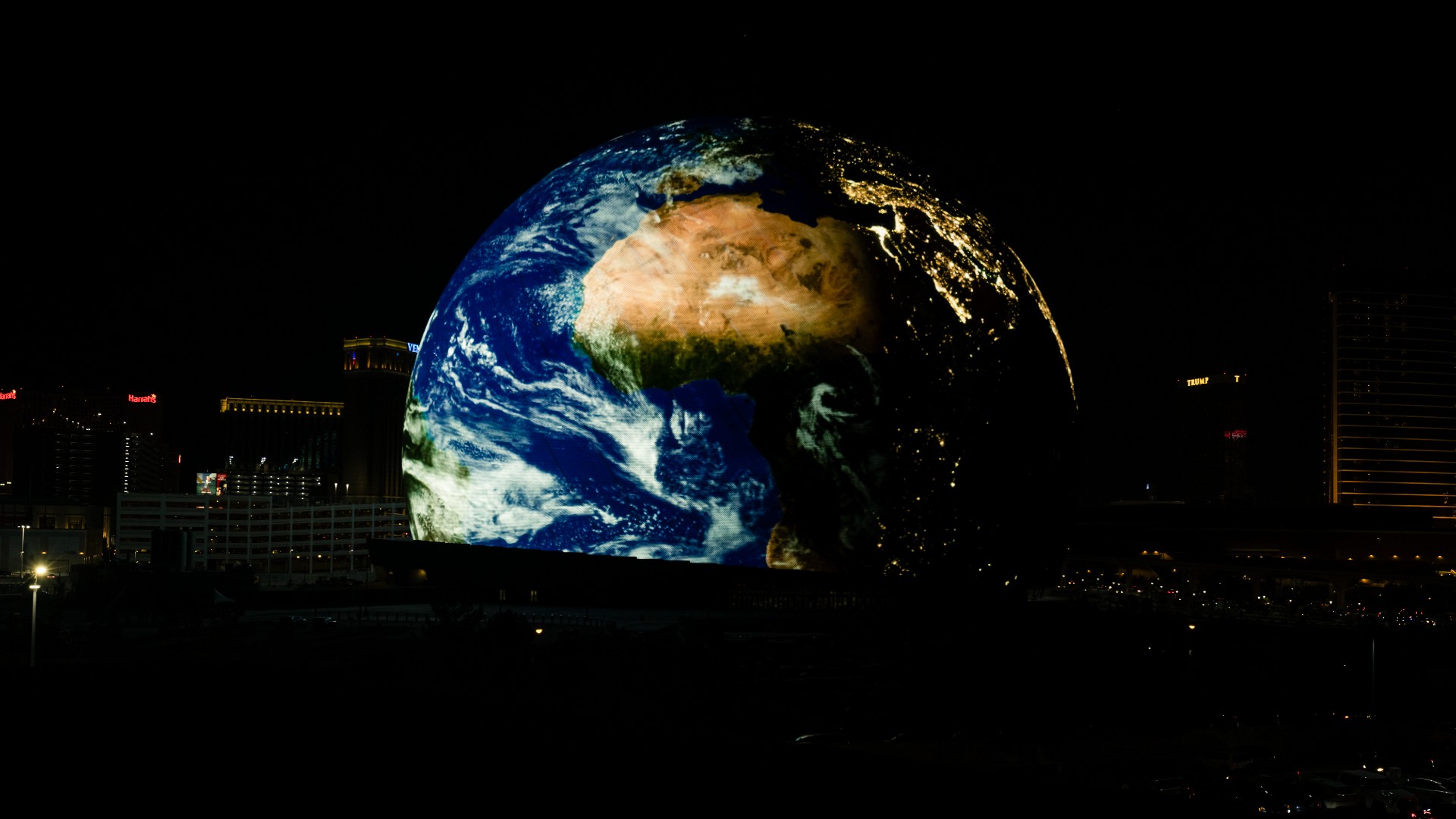
Psychological and Philosophical Implications
The psychological impact of viewing the sphere from space extends far beyond individual astronauts. It challenges philosophical constructs that have dominated human thought since antiquity. For generations, philosophical traditions often separated humanity from nature, treating the natural world as an infinite resource to be conquered or managed.
Seeing the Earth from orbit dismantles the illusion of infinity. The realization that the atmosphere has a strictly measurable volume forces a reevaluation of ethical responsibilities toward future generations. Philosophers have noted that this perspective fosters a shift from homocentric ethics to ecocentric ethics, where the health of the entire planetary biosphere becomes the primary metric of well-being.
Furthermore, this perspective alters the perception of time. From space, geological time scales and rapid anthropogenic changes intersect. Observers note that glaciers receding, rivers changing courses, and urban sprawl creeping across continents become visible proofs of human agency on a geological scale. This realization often induces a profound sense of responsibility, driving retired astronauts to become vocal advocates for sustainability, international diplomacy, and science education.
Democratizing the View: From Astronauts to Virtual Observers
Historically, the privilege of seeing the Earth as a sphere was restricted to a select group of professional astronauts and cosmonauts. This exclusivity limited the broader cultural dissemination of the overview effect. However, modern technology has significantly bridged this gap.
High-definition live video feeds from the International Space Station, panoramic commercial space tourism flights, and sophisticated virtual reality simulations allow millions of people to experience a facsimile of orbital observation. While looking at a screen does not fully replicate the physiological and psychological intensity of floating in microgravity while gazing at the horizon, it nonetheless broadens global ecological consciousness.
As commercial spaceflight expands in the mid-2020s, access to suborbital altitudes is gradually shifting from government-funded programs to private enterprise. This transition raises important questions about equity, environmental regulation of rocket emissions, and the philosophical implications of commercializing what was once considered a transcendent, unifying human experience. Despite these complexities, the proliferation of space-based imagery ensures that the visual proof of Earth’s unity remains a permanent fixture of modern culture.
Frequently Asked Questions
What is the overview effect, and who experiences it?
The overview effect is a cognitive shift in awareness reported by some astronauts and cosmonauts during spaceflight, while viewing the Earth from orbit or the Moon. It involves a sudden understanding of the interconnectivity of life on Earth, a deep sense of responsibility for planetary stewardship, and a transcendence of national borders. While primarily documented among professional spacefarers, anyone engaging deeply with space imagery or virtual orbital simulations can experience a milder form of this perspective shift.
How did the first images of Earth from space change society?
The first photographs of Earth from space, particularly the "Earthrise" image captured during the Apollo 8 mission in 1968, provided undeniable visual proof that our planet is a single, isolated, and fragile ecosystem. These images helped galvanize the grassroots environmental movement of the late 1960s and 1970s, leading to the creation of Earth Day and the passage of landmark environmental protection legislation worldwide.
Can virtual reality replicate the overview effect?
Virtual reality cannot entirely replicate the physiological sensations of microgravity or the profound psychological realization of being hundreds of miles away from home. However, high-fidelity VR simulations and continuous live feeds from space stations offer immersive visual experiences that help bridge the gap, fostering empathy for global environmental challenges among students, researchers, and the general public.
Why do borders disappear when viewed from orbit?
Geopolitical borders are human constructs established through treaties, historical conflicts, and cartography. They rely on terrestrial landmarks like rivers, mountain ridges, or lines of latitude and longitude. From low Earth orbit, these political divisions are invisible because natural atmospheric haze, oceanic currents, and continental landmasses dominate the visual spectrum, revealing a seamless and undivided planetary sphere.
How does satellite monitoring support planetary conservation?
Earth-observation satellites use advanced multispectral imaging, radar, and atmospheric sensors to track environmental changes in real time. They measure deforestation, monitor greenhouse gas emissions, track oceanic temperature anomalies, and assess agricultural yields. This data provides scientists, policymakers, and international organizations with the empirical evidence needed to implement effective conservation strategies and enforce environmental treaties.
Image Gallery
Select an image to open it in a new tab.
Celine Dubois
Contemporary Living and Global Arts Columnist
