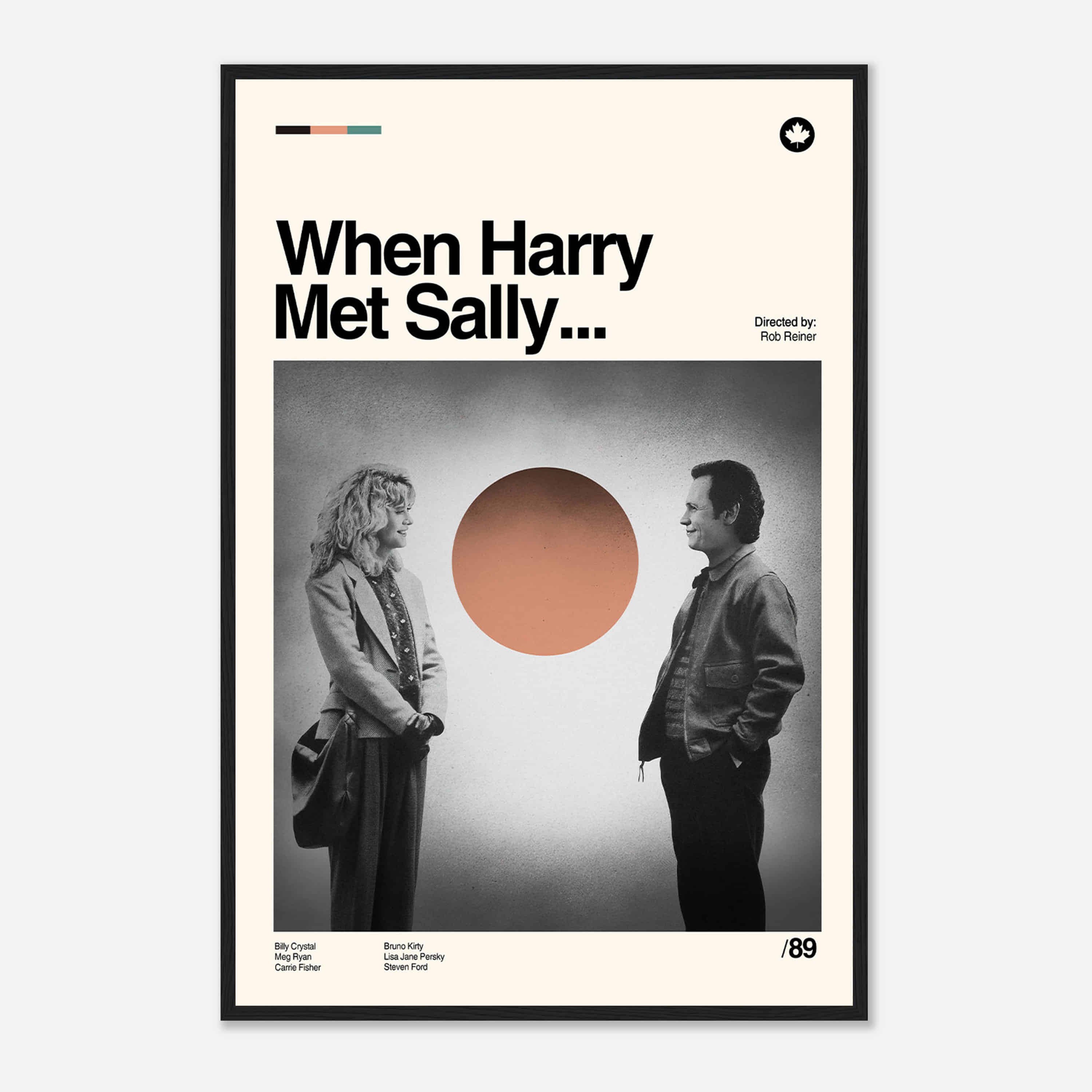
Rob Reiner served as the director and primary creative catalyst for the 1989 classic When Harry Met Sally..., transforming his personal experiences as a single man into the film's foundational narrative. While Nora Ephron penned the screenplay, the story originated from Reiner’s post-divorce life, with the character of Harry Burns acting as a direct surrogate for Reiner himself.
As of 2026, When Harry Met Sally... remains the gold standard for the romantic comedy genre. While many viewers focus on the undeniable chemistry between stars Billy Crystal and Meg Ryan, or the sharp wit of screenwriter Nora Ephron, the film’s existence and specific tonal execution are the results of Rob Reiner’s directorial vision. Reiner was not merely a "director for hire"; he was the architect of the film’s central philosophy. By the late 1980s, Reiner had already established himself with hits like This Is Spinal Tap and The Princess Bride, but this project was his most personal endeavor, seeking to explore the complexities of male-female friendships through a lens of brutal, often hilarious, honesty.
The Autobiographical Genesis of Harry Burns
The inception of When Harry Met Sally... began not with a script, but with a series of conversations between Rob Reiner and producer Andrew Scheinman. Following his divorce from director Penny Marshall, Reiner found himself navigating the dating world of the 1980s with a sense of bewilderment and cynicism. He wanted to make a movie that captured the "hell" of being a single man, specifically focusing on the internal dialogues and anxieties that men rarely expressed openly.
When Reiner pitched the idea to Nora Ephron, the collaboration became a "battle of the sexes" in a creative sense. Reiner provided the "Harry" perspective—cynical, obsessed with death, and convinced that sex always gets in the way of friendship. Ephron provided the "Sally" perspective—optimistic, structured, and equally opinionated. Reiner’s role was to ensure that the male voice remained authentic to his own experiences. Many of Harry’s most famous traits, including his pessimism and his habit of reading the last page of a book first so he knows how it ends in case he dies, were direct imports from Reiner’s own personality.
Directorial Influence on Narrative Structure
Reiner’s directorial choices differentiated the film from the "screwball comedies" of the past and the "formulaic rom-coms" that followed. One of his most significant contributions was the inclusion of the "documentary" interludes—the segments where elderly couples recount how they met.
These segments were inspired by Reiner’s interest in real-life love stories. He and Ephron interviewed real couples, then hired actors to recreate those stories on camera. This structural choice, guided by Reiner, served a dual purpose: it grounded the fictional relationship of Harry and Sally in a broader, more universal reality, and it provided a rhythmic "breather" between the main narrative’s time jumps. Reiner insisted on a naturalistic aesthetic, avoiding the heightened, brightly lit look common in 80s comedies in favor of a warm, sophisticated palette that mirrored the changing seasons of New York City.
Casting as a Tool for Authenticity
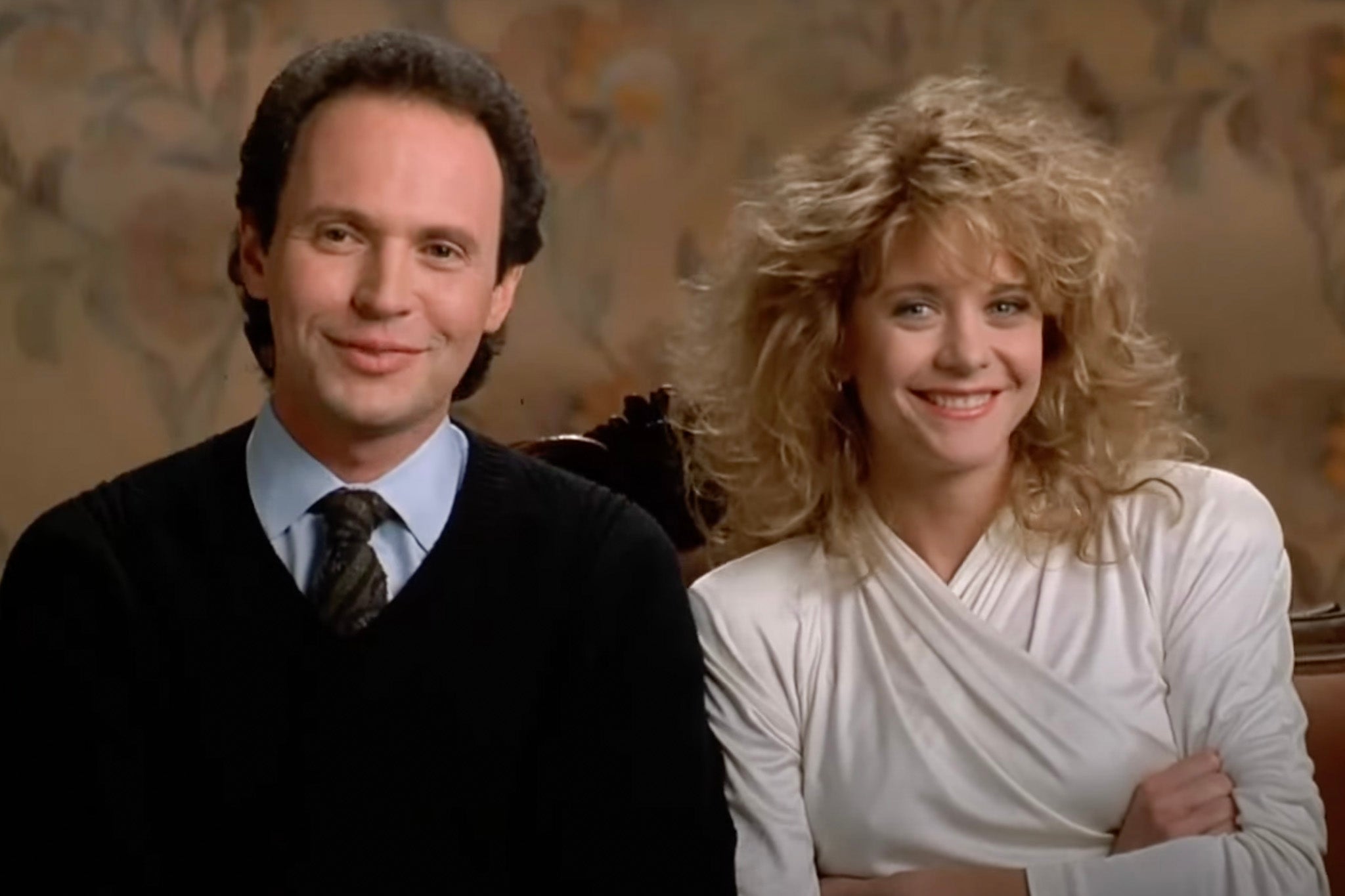
Reiner’s role in casting was pivotal, specifically his decision to cast his real-life best friend, Billy Crystal. Because Reiner and Crystal shared a deep, personal shorthand, they were able to workshop the character of Harry Burns to reflect their shared observations about masculinity. This friendship allowed Reiner to push Crystal toward a performance that was more vulnerable and less "jokey" than his previous work.
For the role of Sally Albright, Reiner initially considered several actresses before Meg Ryan was cast. Reiner’s role here was to help Ryan find the balance between being "high maintenance" (a term coined by the film) and deeply likable. He famously directed her through the film’s most iconic sequence: the simulated orgasm at Katz’s Delicatessen. During rehearsals, Ryan was initially hesitant about the scene's intensity. To demonstrate exactly what he wanted, Reiner sat down at a table and performed the scene himself, pounding the table and shouting, providing the blueprint for what would become one of the most famous moments in cinema history.
Creative Collaboration: Reiner vs. Ephron
While Nora Ephron is often credited with the film’s "voice," the final product was a result of a rigorous dialectic process facilitated by Reiner. The two spent months meeting at the Russian Tea Room in New York, where Reiner would pour out his thoughts on women, sex, and loneliness, and Ephron would challenge or refine them.
| Creative Element | Primary Influence | Rob Reiner’s Specific Contribution |
|---|---|---|
| Central Premise | Rob Reiner | The question: "Can men and women be friends without sex getting in the way?" |
| Harry’s Personality | Rob Reiner | The "dark side" of the male psyche; death obsession and cynicism. |
| The "Deli" Scene | Meg Ryan/Reiner | Reiner directed the timing and the "I'll have what she's having" punchline. |
| Interview Segments | Rob Reiner | Conceived the idea of using real-life stories to ground the film. |
| Visual Style | Rob Reiner | Chose a Woody Allen-esque "New York City as a character" aesthetic. |
| Musical Tone | Rob Reiner | Selected Harry Connick Jr. to provide a timeless, standards-based soundtrack. |
Shaping the Tone Through Music and Setting
Reiner’s role extended to the film’s sonic identity. In 1989, many films relied on contemporary pop soundtracks. Reiner, however, wanted a "timeless" feel that evoked the Great American Songbook. He sought out a young Harry Connick Jr. to perform standards like "It Had to Be You." This choice, driven by Reiner’s desire for the film to feel like an instant classic rather than a product of the late 80s, contributed significantly to its longevity.
The use of New York City was also a specific directorial mandate. Reiner worked with cinematographer Barry Sonnenfeld to capture the city in a way that felt romantic yet lived-in. From the autumn leaves in Central Park to the Metropolitan Museum of Art, Reiner’s direction framed the city as a witness to the characters' eleven-year evolution. He resisted the urge to use sets, opting for locations that added layers of texture and history to the dialogue-heavy scenes.
The "I'll Have What She's Having" Moment
One cannot discuss Rob Reiner’s role without mentioning his mother, Estelle Reiner. During the filming of the Katz’s Delicatessen scene, Reiner realized the scene needed a "button"—a final comedic beat to release the tension of Meg Ryan’s performance. It was Reiner’s decision to cast his mother as the patron who delivers the immortal line: "I'll have what she's having."
This moment exemplifies Reiner’s directorial instinct. He knew that the humor shouldn't just come from Harry or Sally, but from the world reacting to them. By placing his own mother in the scene, he added a layer of meta-commentary and familial warmth that smoothed over the potentially scandalous nature of the scene. It turned a provocative moment into a universally relatable piece of comedy.
Challenges and Directorial Decisions
During production, Reiner faced the challenge of making a movie where "nothing happens" in a traditional sense. There are no car chases, no high-stakes villains, and no grand melodramatic twists. The conflict is entirely internal and verbal. Reiner’s role was to maintain a pace that felt energetic despite the lack of physical action.
He achieved this through:
- The "Walk and Talk": Reiner utilized long tracking shots of Harry and Sally walking through New York. This kept the visual energy high while the characters engaged in dense philosophical debates.
- Split-Screen Sequences: Reiner used split-screen to show the characters talking on the phone while watching the same movie on TV. This visually represented their growing connection even when they were physically apart.
- Temporal Jumps: Reiner had to navigate a timeline spanning over a decade. He used the changing seasons and subtle costume shifts to signal the passage of time without relying on clunky "five years later" title cards.
Reiner’s Legacy as a Rom-Com Pioneer
Before When Harry Met Sally..., romantic comedies were often seen as "light" or "formulaic." Reiner’s role was to elevate the genre by infusing it with the intellectual rigor of a character study. He proved that a film about people talking could be as commercially successful and culturally significant as any action blockbuster.
The film's success allowed Reiner to continue his streak of critical and commercial hits, leading to the formation of Castle Rock Entertainment. More importantly, it created a blueprint for the "modern" romantic comedy—one that prioritizes psychological depth and realistic dialogue over "meet-cutes" and slapstick. Every romantic comedy released in the decades following, up to the present day in 2026, owes a debt to the structural and tonal foundations laid by Reiner.
Frequently Asked Questions
Was Rob Reiner the one who came up with the "Can men and women be friends?" question?
Yes. The central theme of the movie was born from Reiner's actual conversations with his friend and producer Andrew Scheinman. After Reiner's divorce, he found himself questioning the motivations behind his friendships with women and brought this specific dilemma to Nora Ephron to develop into a screenplay.
Did Rob Reiner write any of the dialogue in the film?
While Nora Ephron is the sole credited screenwriter, the script was developed through an intensely collaborative process. Reiner contributed many of the character beats for Harry Burns. In the film industry, this is often considered "uncredited writing," but Reiner always maintained that the "voice" of the film belonged to Ephron, while the "soul" of the male perspective was his.
Who came up with the ending of the movie?
The original ending was actually more melancholy. In the first iterations of the story, Harry and Sally do not end up together; they simply go their separate ways, reflecting Reiner’s own cynical view of dating at the time. However, during the production, Reiner fell in love with photographer Michele Singer (whom he eventually married). His newfound happiness changed his perspective on the story, leading him to direct a happy ending where Harry and Sally marry.
Is it true that Rob Reiner acted out the "fake orgasm" scene?
Yes. To help Meg Ryan overcome her embarrassment and to show exactly what kind of physical comedy the scene required, Reiner sat in the middle of the crowded deli and performed the act himself. This is a testament to his "actor’s director" style, where he was willing to do anything he asked his cast to do.
What was the significance of the elderly couples' interviews?
Rob Reiner wanted to show that the "Harry and Sally" story was just one of many ways people find love. He found the stories of real couples much more moving than anything a writer could invent. By directing actors to perform these real-life anecdotes, he added a layer of "truth" that made the central romance feel more attainable and grounded.
Practical Takeaway for Cinephiles
When watching When Harry Met Sally..., look beyond the witty banter and notice the directorial pacing. Observe how Reiner uses the "interviews" to bridge massive gaps in time, and how he uses New York City to mirror the emotional state of the characters (cold and distant in the beginning, warm and vibrant as they fall in love). Understanding Reiner’s role as the "muse" for the character of Harry Burns adds a layer of vulnerability to the film that explains why it has remained relevant for nearly 40 years. For those interested in filmmaking, the collaboration between Reiner’s lived experience and Ephron’s structural brilliance serves as the ultimate case study in how personal truth creates universal art.
Image Gallery
Select an image to open it in a new tab.


Celine Dubois
Contemporary Living and Global Arts Columnist
