Understanding Why Net Worth Is the Difference Between a Firm’s Assets and Liabilities

Net worth represents the residual interest in the assets of a firm after deducting all its liabilities, serving as a fundamental metric of financial health, solvency, and long-term economic value creation.
At its core, the statement that net worth is the difference between a firm’s assets and liabilities reflects the foundational identity of accounting: everything a business owns, controls, or is owed must be financed either by borrowing money from creditors or by investing capital from owners. When evaluated over time, changes in this residual value capture the cumulative success or failure of operational strategies, investment decisions, and capital allocations.
For business owners, executives, investors, and creditors, calculating and interpreting net worth requires a clear understanding of asset classification, liability obligations, valuation methods, and the structural differences between book value and market reality.
The Core Equation: Assets Minus Liabilities
The relationship between assets, liabilities, and net worth is captured by the fundamental accounting equation, which underpins modern double-entry bookkeeping:
$$\text{Assets} = \text{Liabilities} + \text{Owner's Equity}$$
Rearranging this equation isolates net worth (frequently referred to as owner's equity, shareholders' equity, or book value in corporate contexts):
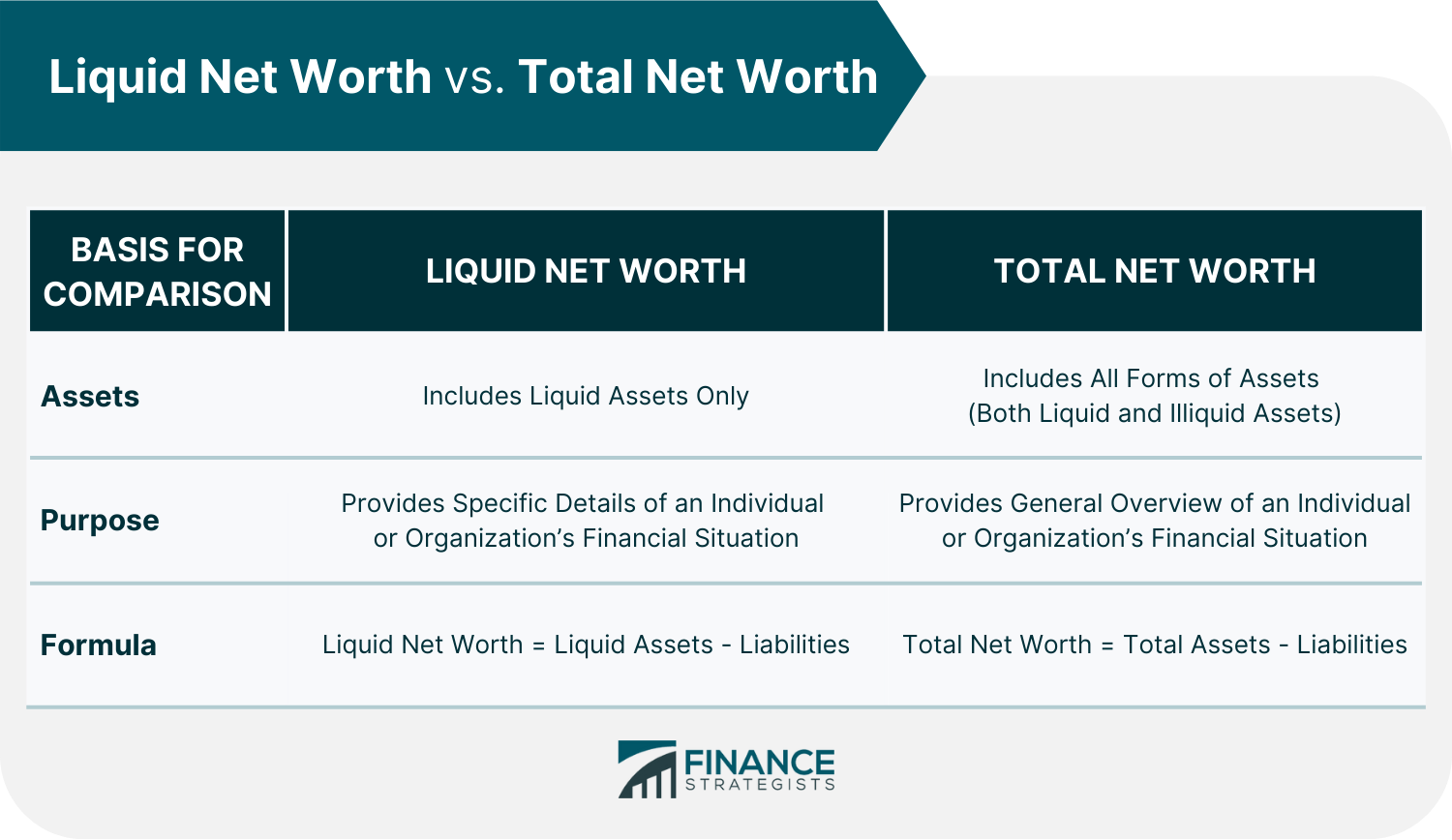
$$\text{Net Worth} = \text{Assets} - \text{Liabilities}$$
This equation must always balance. Every transaction a firm undertakes—whether purchasing inventory on credit, paying off a bank loan, or issuing new shares—alters at least two elements of this equation while maintaining equilibrium.
- ASSETS
- (What the firm owns, controls, or is owed)
- Divided into:
- LIABILITIES (What the firm owes)
- NET WORTH (Residual owner stake)
Defining Assets: Economic Resources
Assets are economic resources controlled by a firm as a result of past events, from which future economic benefits are expected to flow. To be recognized on a balance sheet, an asset must possess reliable measurability and ownership or enforceable control. Assets are traditionally divided into two primary categories:
- Current Assets: Resources expected to be converted to cash, sold, or consumed within one operating cycle or one year (e.g., cash and cash equivalents, accounts receivable, inventory, and prepaid expenses).
- Non-Current (Fixed) Assets: Long-term investments that provide economic benefits over multiple years (e.g., property, plant, equipment, intellectual property, long-term investments, and goodwill).
Defining Liabilities: Present Obligations
Liabilities represent present obligations of the firm arising from past events, the settlement of which is expected to result in an outflow of resources embodying economic benefits. Like assets, liabilities are categorized by their maturity timeline:
- Current Liabilities: Obligations due within one operating cycle or one year (e.g., accounts payable, short-term debt, accrued expenses, and taxes payable).
- Non-Current (Long-Term) Liabilities: Obligations due after one year or beyond the normal operating cycle (e.g., long-term bank loans, bonds payable, mortgage obligations, and deferred tax liabilities).
When total liabilities are subtracted from total assets, the resulting figure is the net worth. If assets exceed liabilities, the firm possesses a positive net worth. If liabilities exceed assets, the firm operates with a negative net worth, often signaling insolvency or severe financial distress.
Book Value Versus Market Value
A common point of confusion for stakeholders analyzing a firm's net worth is the distinction between accounting book value and true economic market value.
Accounting Book Value
The net worth calculated directly from a balance sheet is known as book value. It relies on historical cost accounting principles, meaning most assets are recorded at their original purchase price minus accumulated depreciation or amortization.
- Advantages: High verifiability, auditability, and consistency across reporting periods.
- Limitations: Historical costs often fail to reflect current market conditions. For example, a commercial building purchased decades ago may be listed on the balance sheet at a fraction of its modern real estate market value, while internally generated intangible assets like brand reputation or proprietary software may not appear on the balance sheet at all unless acquired through a business combination.
Market Value of Equity
In contrast, the market value of a firm’s net worth—particularly for publicly traded corporations—is determined by market participants through stock pricing:
$$\text{Market Capitalization} = \text{Share Price} \times \text{Total Outstanding Shares}$$
For privately held companies, market value is estimated using valuation methodologies such as discounted cash flow (DCF) analysis, comparable company multiples, or asset-based valuation appraisals. A healthy, growing firm frequently exhibits a market value significantly higher than its book value because investors price in future earnings potential, growth opportunities, and unrecorded intangible assets.

Practical Breakdown of Financial Position Elements
To illustrate how net worth is derived in practice, consider a hypothetical manufacturing firm, Apex Industrial Solutions, at the close of the fiscal year.
| Financial Category | Specific Account Item | Amount (USD) |
|---|---|---|
| Current Assets | Cash and Cash Equivalents | $450,000 |
| Accounts Receivable | $320,000 | |
| Inventory | $530,000 | |
| Non-Current Assets | Property, Plant, and Equipment (Net) | $1,800,000 |
| Patents and Trademarks | $150,000 | |
| Total Assets | Sum of All Assets | $3,250,000 |
| Current Liabilities | Accounts Payable | $210,000 |
| Short-Term Notes Payable | $90,000 | |
| Accrued Wages and Taxes | $100,000 | |
| Non-Current Liabilities | Long-Term Bank Loan | $1,250,000 |
| Total Liabilities | Sum of All Liabilities | $1,650,000 |
| Net Worth | Total Assets minus Total Liabilities | $1,600,000 |
In this example, Apex Industrial Solutions reports total assets of $3,250,000 and total liabilities of $1,650,000. Subtracting the liabilities from the assets yields a net worth (total equity) of $1,600,000. This figure represents the net amount that would theoretically belong to the owners if all assets were liquidated at book value and all liabilities were paid off simultaneously.
Why Net Worth Matters for Stakeholders
Net worth is not merely an abstract accounting figure; it serves critical functions for various external and internal stakeholders evaluating a business.
1. Solvency and Creditworthiness
Creditors, commercial lenders, and suppliers examine a firm's net worth to gauge credit risk. A substantial net worth acts as a financial cushion or buffer against operational losses, economic downturns, or customer defaults. Lenders often establish debt covenants requiring a borrower to maintain a minimum level of net worth or equity-to-asset ratios to ensure adequate risk-sharing.
2. Investment Analysis
Equity investors analyze net worth changes over consecutive reporting periods to evaluate wealth generation. Metrics derived from net worth, such as Return on Equity (ROE), measure how efficiently management utilizes owner capital to generate net income:
$$\text{ROE} = \frac{\text{Net Income}}{\text{Average Shareholders' Equity}}$$
3. Strategic Decision-Making
Internal management relies on net worth trends to determine borrowing capacity, plan capital expenditures, evaluate merger and acquisition targets, and decide whether to retain earnings or distribute dividends to shareholders.
Common Misconceptions and Valuation Pitfalls
Misinterpreting a firm’s net worth can lead to poor financial decisions. Several common pitfalls should be avoided during analysis:
- Equating Net Worth with Liquid Cash: Net worth is a cumulative accounting measure, not a pile of spendable money. A firm can report a high net worth tied up in illiquid real estate, specialized machinery, or slow-moving inventory while simultaneously struggling to meet immediate payroll obligations due to a cash shortage.
- Ignoring Off-Balance-Sheet Obligations: Certain financial commitments, such as operating leases, contingent liabilities from pending lawsuits, or pension obligations, may not be fully captured within traditional liability totals, potentially overstating the true net worth.
- Overlooking Intangible Asset Impairment: Goodwill and intellectual property recorded on the balance sheet must be tested periodically for impairment. If a firm’s business model deteriorates, these assets may lose value, requiring write-downs that directly reduce net worth.
Frequently Asked Questions
What happens to a firm's net worth when it generates a net profit?
When a firm generates a net profit and chooses not to distribute the full amount as dividends, the retained earnings flow directly into the equity section of the balance sheet. Because net income increases retained earnings, and retained earnings are a component of net worth, profitable operations directly increase the firm's net worth. Conversely, net losses reduce net worth.
Can a firm have a positive cash flow but negative net worth?
Yes. Cash flow measures the actual movement of cash in and out of a business during a specific period, whereas net worth is an accumulated measure of assets minus liabilities over the life of the enterprise. A startup might secure large amounts of debt financing or incur significant historical setup costs that exceed its current asset base, resulting in negative net worth while still maintaining positive operational cash flow.
How do intangible assets affect a firm's net worth calculation?
Intangible assets like patents, trademarks, copyrights, and purchased goodwill are included in total assets if they meet strict accounting recognition criteria. However, because their economic value can be subjective, conservative analysts often calculate "tangible net worth" by subtracting all intangible assets from total net worth to evaluate the firm strictly on hard, physical, and liquid resources.
Why might two firms with identical net worth have completely different risk profiles?
Net worth only reveals the net difference, not the composition of the underlying components. Firm A might achieve a $2 million net worth backed by high liquid cash reserves and minimal debt, whereas Firm B might achieve the same $2 million net worth backed by illiquid real estate and high short-term liabilities. Firm B carries significantly higher liquidity and solvency risk despite having the identical net worth figure.
Conclusion and Next Actions
Understanding that net worth is the difference between a firm’s assets and liabilities provides a vital lens for evaluating financial stability and operational performance. Stakeholders should review balance sheets alongside income statements and cash flow statements to gain a complete picture of liquidity, leverage, and profitability.
When assessing any enterprise, examine the underlying quality of its assets, verify the maturity schedule of its liabilities, and track how net worth evolves over successive reporting periods to make informed credit, investment, or strategic management decisions.
Image Gallery
Select an image to open it in a new tab.

Akira Tanaka
International Academic Trends Correspondent
