Filing UCC-1 Financing Statements in California: Requirements and Procedures (2026)

In California, you need to file a UCC-1 Financing Statement if you are a secured party—such as a lender, lessor, or seller—wishing to "perfect" a security interest in a debtor’s personal property. This filing provides public notice of your claim, establishing your legal priority over other creditors in the event of a default or bankruptcy.
The Uniform Commercial Code (UCC) is a standardized set of laws governing commercial transactions across the United States. While the code aims for uniformity, each state, including California, has specific administrative procedures and filing offices. In California, the Secretary of State (SOS) oversees the centralized filing system for most security interests in personal property. Understanding whether you need to file is the first step in protecting your financial interests when extending credit or leasing high-value assets.
What is a UCC-1 Filing and Why Does it Matter?
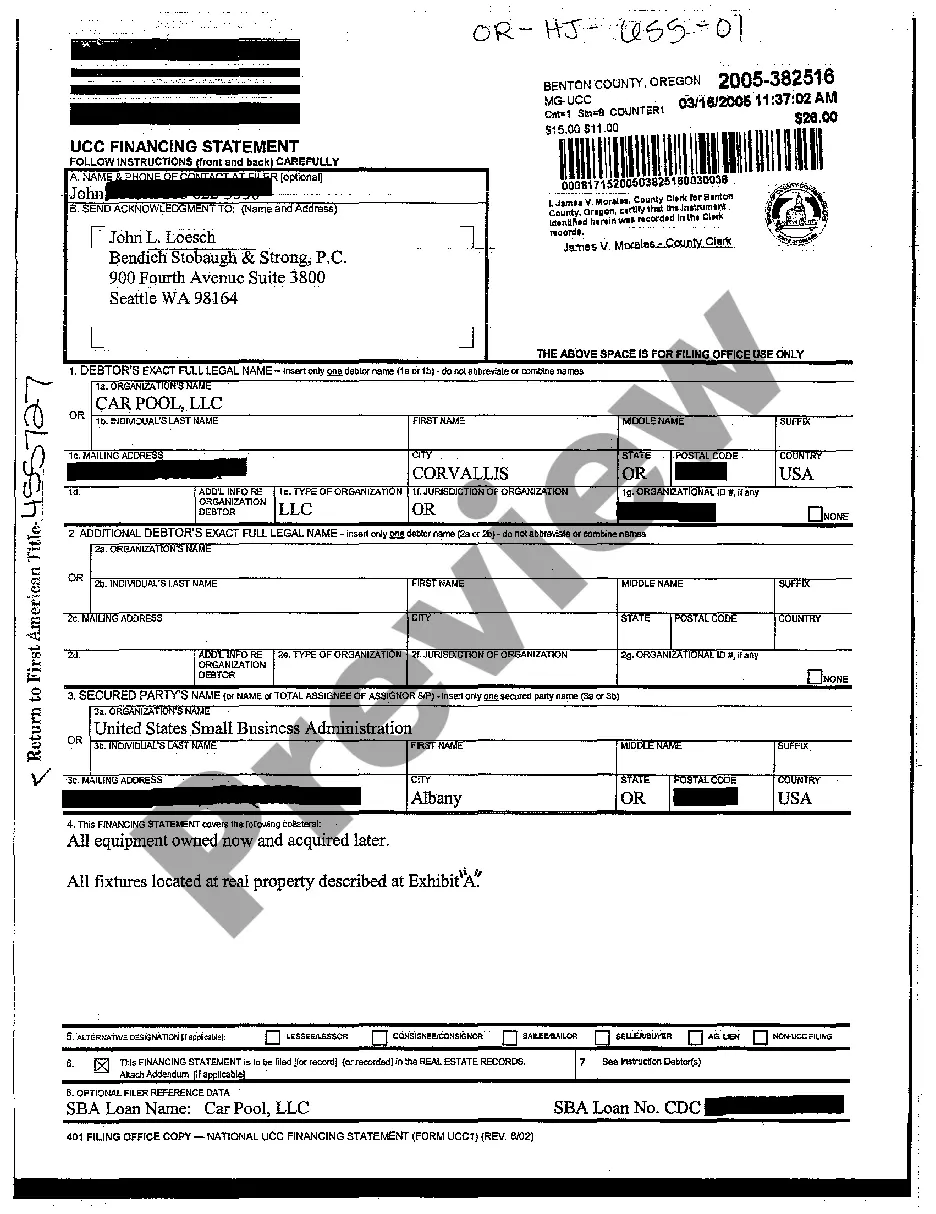
A UCC-1 Financing Statement is a legal form that a creditor files to give notice that they have an interest in the personal property of a debtor. This process is known as "perfection." Under Article 9 of the California Commercial Code, "attachment" occurs when a security agreement is signed, but "perfection" usually requires public notice via a UCC-1 filing.
The primary reason to file is to establish priority. In the world of commercial lending, the general rule is "first in time, first in right." If a business defaults on its loans and has multiple creditors, the creditor who filed their UCC-1 first typically has the first claim to the assets (the collateral). Without a filed UCC-1, you are considered an "unsecured" creditor. In a bankruptcy proceeding, unsecured creditors are often at the back of the line, frequently receiving little to no compensation after secured creditors have been satisfied.
Determining if You Need to File in California
Not every transaction requires a UCC filing, but if you are involved in any of the following scenarios in 2026, a filing is likely necessary to protect your assets:
1. Business Loans and Lines of Credit
If you are a bank, private lender, or even an individual lending money to a California-based business, you should file a UCC-1. Most commercial loans are "secured," meaning the borrower pledges assets—such as machinery, inventory, or accounts receivable—as collateral. Filing the UCC-1 ensures that if the borrower takes out a second loan from another bank using the same collateral, your claim remains superior.
2. Equipment Leasing
Lessors often file UCC-1 statements even though they technically own the equipment. This is sometimes called a "protective filing." It prevents the lessee from selling the equipment to a third party or using it as collateral for another loan by putting the world on notice that the equipment is already subject to a lease agreement.
3. Inventory Financing (Floor Planning)
Suppliers who provide inventory on credit often use UCC filings to maintain a "Purchase Money Security Interest" (PMSI). A PMSI can give a supplier "super-priority" over other creditors who might have a general lien on all the debtor’s assets, provided the filing is done correctly and within specific timeframes.
4. Factoring and Accounts Receivable
Companies that purchase accounts receivable (factors) must file UCC-1 statements to show they have purchased those specific assets. This prevents the business from selling the same receivables to multiple factors.
5. Consignments
In California, if you deliver goods to a merchant for sale on consignment, and those goods are worth more than a certain threshold (typically $1,000), you may need to file a UCC-1 to protect your ownership interest against the merchant's other creditors.
Types of Collateral Covered by California UCC Filings
The California Secretary of State accepts filings for various types of personal property. It is important to distinguish between personal property (covered by the SOS) and real property (covered by County Recorders).
- Tangible Assets: This includes "goods," such as manufacturing machinery, office furniture, vehicles (though vehicles often have separate title lien requirements), and inventory.
- Intangible Assets: This includes accounts receivable, intellectual property (to an extent), negotiable instruments, and "general intangibles" like software licenses or business goodwill.
- Farm Products: California has specific provisions for agricultural liens. If you are lending to a farm or vineyard, specialized UCC filings for crops and livestock are essential.
- Fixtures: A "fixture" is an item of personal property that becomes so attached to real estate that it is considered part of the land (e.g., a commercial HVAC system). While a UCC-1 can be filed with the Secretary of State for fixtures, a "fixture filing" should also be recorded in the real estate records of the county where the property is located to ensure maximum protection.
The Perfection Process: Step-by-Step Guide for 2026
Filing in California has become increasingly streamlined through the California Secretary of State’s bizfile portal. As of 2026, electronic filing is the standard and most efficient method.
Step 1: Verify the Debtor’s Legal Name
This is the most critical step. Under California law, a "seriously misleading" name on a UCC-1 can invalidate the entire filing. For an individual, you must use the name as it appears on their unexpired California driver’s license. For a registered organization (like a Corp or LLC), you must use the exact name on file with the Secretary of State in their home jurisdiction.
Step 2: Identify the Secured Party
Provide the full legal name and mailing address of the person or entity extending the credit or leasing the assets.
Step 3: Describe the Collateral
The description must "reasonably identify" the collateral. You can use general categories (e.g., "all inventory and accounts receivable") or specific serial numbers for high-value machinery. Many creditors use a "blanket lien" description, which covers all current and future assets of the debtor.
Step 4: Determine the Filing Location
For a California-based corporation, LLC, or limited partnership, you file with the California Secretary of State. If the debtor is an individual, you file in the state of their primary residence. If the debtor is an unregistered entity (like a general partnership), you file in the state where their chief executive office is located.
Step 5: Submit and Pay Fees
Use the online portal to submit the filing. Electronic filings are generally processed instantly, and you will receive a filing number and timestamp.
California UCC Filing Fees and Processing (2026)
Fees are subject to change, but the California Secretary of State maintains a standard fee schedule for UCC documents.
| Service Type | Filing Method | Estimated Fee (2026) | Processing Time |
|---|---|---|---|
| UCC-1 Financing Statement | Online (bizfile) | $5.00 - $10.00 | Immediate/24 Hours |
| UCC-1 Financing Statement | Paper / Mail-in | $20.00 - $30.00 | 5-10 Business Days |
| UCC-3 Amendment/Termination | Online (bizfile) | $5.00 - $10.00 | Immediate/24 Hours |
| Information Request (Search) | Online (bizfile) | Free (Search Only) | Immediate |
| Certified Search Certificate | Online / Mail | $10.00 - $15.00 | 1-3 Business Days |
Note: Paper filings are increasingly discouraged and may incur additional "handling" fees or longer delays. Always check the official California Secretary of State UCC fee schedule for the most current rates.
Common Mistakes and Legal Pitfalls
Even a small error in a UCC filing can lead to a loss of priority, which can be devastating in a collection scenario.
Incorrect Debtor Name
As mentioned, the name must be exact. Do not use trade names or "DBAs" (Doing Business As) in the primary debtor name field. While you can add DBAs as "Additional Debtors," the legal name must be the priority.
Failure to File a UCC-3 Continuation
A UCC-1 filing in California is valid for five years. If the debt is not paid off by then, you must file a UCC-3 Continuation Statement within the six-month window before the expiration date. If you miss this window by even one day, the filing lapses, and you lose your priority. If you then file a new UCC-1, your "priority date" becomes the new filing date, meaning any other creditor who filed in the interim now jumps ahead of you.
Vague Collateral Descriptions
While "all assets" is often acceptable for general business loans, it might not cover specific types of collateral like commercial tort claims or specific consumer goods. Precise language is your best defense.
Filing in the Wrong Jurisdiction
If a business is incorporated in Delaware but operates exclusively in California, you must file the UCC-1 in Delaware. The "location of the debtor" for a registered organization is its state of incorporation, not its physical place of business.
Searching for Existing UCC Filings in California
Before lending money or purchasing a business, you should conduct a UCC search. This reveals if other lenders have already claimed the assets as collateral.
You can perform a free search on the California Secretary of State's website using the debtor’s name or filing number. However, for a formal "certified" search that can be used in legal due diligence or at a loan closing, you should request a certified UCC search report. This provides a "snapshot" of all active filings against a specific debtor and is essential for confirming that your new filing will be in the "first position."
Managing Changes: UCC-3 Amendments
A UCC-1 is not a static document. Throughout the life of a loan or lease, changes may occur that require a UCC-3 filing:
- Amendments: Used to change a name, address, or add/delete collateral.
- Assignments: Used if the original lender sells the loan to another bank.
- Continuations: Extends the five-year life of the filing.
- Terminations: Filed once the debt is paid in full. Under California law, a secured party is often required to file a termination statement within a specific timeframe after the debtor sends a demand once the obligation is satisfied.
Frequently Asked Questions
Does a UCC filing affect a person's credit score?
A UCC filing itself is not a "negative" mark like a tax lien or a judgment. It is a common part of business financing. However, it will appear on business credit reports (like Dun & Bradstreet) and may be visible on personal credit reports if the individual is a sole proprietor or a personal guarantor. It informs other lenders of the debtor's existing debt load and encumbered assets.
How long does a California UCC filing last?
In California, a standard UCC-1 filing is effective for five years from the date of filing. To maintain the priority of the security interest, a continuation statement (UCC-3) must be filed during the six-month period prior to the five-year expiration date.
Can I file a UCC-1 against an individual for a personal loan?
Yes, if the loan is secured by personal property (like a valuable collection or equipment). However, Article 9 of the Commercial Code has stricter rules for "consumer goods" to protect individuals from predatory practices. Filing a UCC-1 on a personal vehicle is usually unnecessary because the lien is instead recorded on the vehicle's title through the DMV.
What happens if I don't file a UCC-1?
If you don't file, your security interest is "unperfected." This means it is still valid against the debtor (you can still sue them if they don't pay), but it is invalid against "third parties." If the debtor sells the collateral to someone else or gets another loan from a bank that does file a UCC-1, you lose your right to seize that asset.
Is a signature required on a UCC-1 in California?
As of 2026, the debtor's physical signature is generally not required on the UCC-1 form itself for electronic filing. However, the secured party must have a signed Security Agreement from the debtor that authorizes the filing. Filing a UCC-1 without authorization is a serious legal offense and can lead to statutory damages.
Next Steps for Secured Parties
If you have determined that you need to file a UCC-1 in California, your next action should be to gather the correct legal names of your debtors and a precise list of collateral. Access the California Secretary of State's bizfile portal to begin the process. For complex transactions, especially those involving "super-priority" PMSI filings or cross-state jurisdictions, consulting with a commercial attorney is highly recommended to ensure your interests are fully protected.
Image Gallery
Select an image to open it in a new tab.

Akira Tanaka
International Academic Trends Correspondent
