Real-Life Final Destination Deaths: Analyzing Freak Accidents and Chain Reactions

Real-life incidents resembling the Final Destination film franchise involve "Rube Goldberg" style chain reactions where minor mechanical failures or human errors lead to catastrophic outcomes. While the movies utilize supernatural premonitions, actual cases—such as the TWA Flight 800 disaster or highway logging truck spills—highlight the terrifying reality of high-consequence, low-probability events in the modern world.
The Final Destination series, which debuted in 2000, carved a unique niche in the horror genre by replacing a sentient slasher with "Death" itself—an invisible force that corrects "glitches" in its design through elaborate, multi-step accidents. While the films are hyperbolic, the concept of a "freak accident" is rooted in the very real physics of entropy and mechanical failure. As of 2026, safety engineering has advanced significantly, yet the public’s fascination with these "one-in-a-million" tragedies persists because they expose the perceived fragility of our daily lives.
The Anatomy of a "Final Destination" Style Accident
In the world of safety science and forensic engineering, what fans call a "Final Destination death" is often categorized as a systemic failure or a cascading event. These are accidents where a single point of failure is not enough to cause a fatality, but a specific sequence of unrelated malfunctions aligns perfectly to bypass multiple safety layers.
This is often explained by the Swiss Cheese Model of accident causation. Imagine several slices of Swiss cheese stacked together; each hole represents a weakness in a different part of a system (mechanical, human, environmental). Usually, the holes don't line up, and the accident is prevented. A Final Destination scenario occurs when the holes align perfectly, allowing a hazard to pass through every defense.
In reality, these events lack the "grand design" of a supernatural entity, but they share the cinematic quality of being nearly impossible to predict. They often involve high-energy environments—highways, construction sites, or industrial facilities—where kinetic energy or pressure is precariously contained.
The Foundation in Reality: TWA Flight 800
The original Final Destination (2000) was famously inspired by a real-life tragedy. Screenwriter Jeffrey Reddick originally wrote the script as an episode for The X-Files, basing the core concept on the 1996 explosion of TWA Flight 800.
On July 17, 1996, the Boeing 747-131 exploded and crashed into the Atlantic Ocean shortly after takeoff from John F. Kennedy International Airport, killing all 230 people on board. The subsequent investigation by the National Transportation Safety Board (NTSB) lasted four years and became one of the most complex in aviation history. The cause was determined to be an explosion of flammable fuel/air vapors in a center wing fuel tank, likely triggered by a short circuit.
The "freak" nature of this accident—a spark in a place it shouldn't be, occurring at the exact moment the fuel-to-air ratio was combustible—mirrored the "Death’s Design" theme. The movie took this tragedy and added the layer of "survivor's guilt" and the idea that those who missed the flight were merely delaying an inevitable fate.
Highway Hazards: The Legacy of the Logging Truck
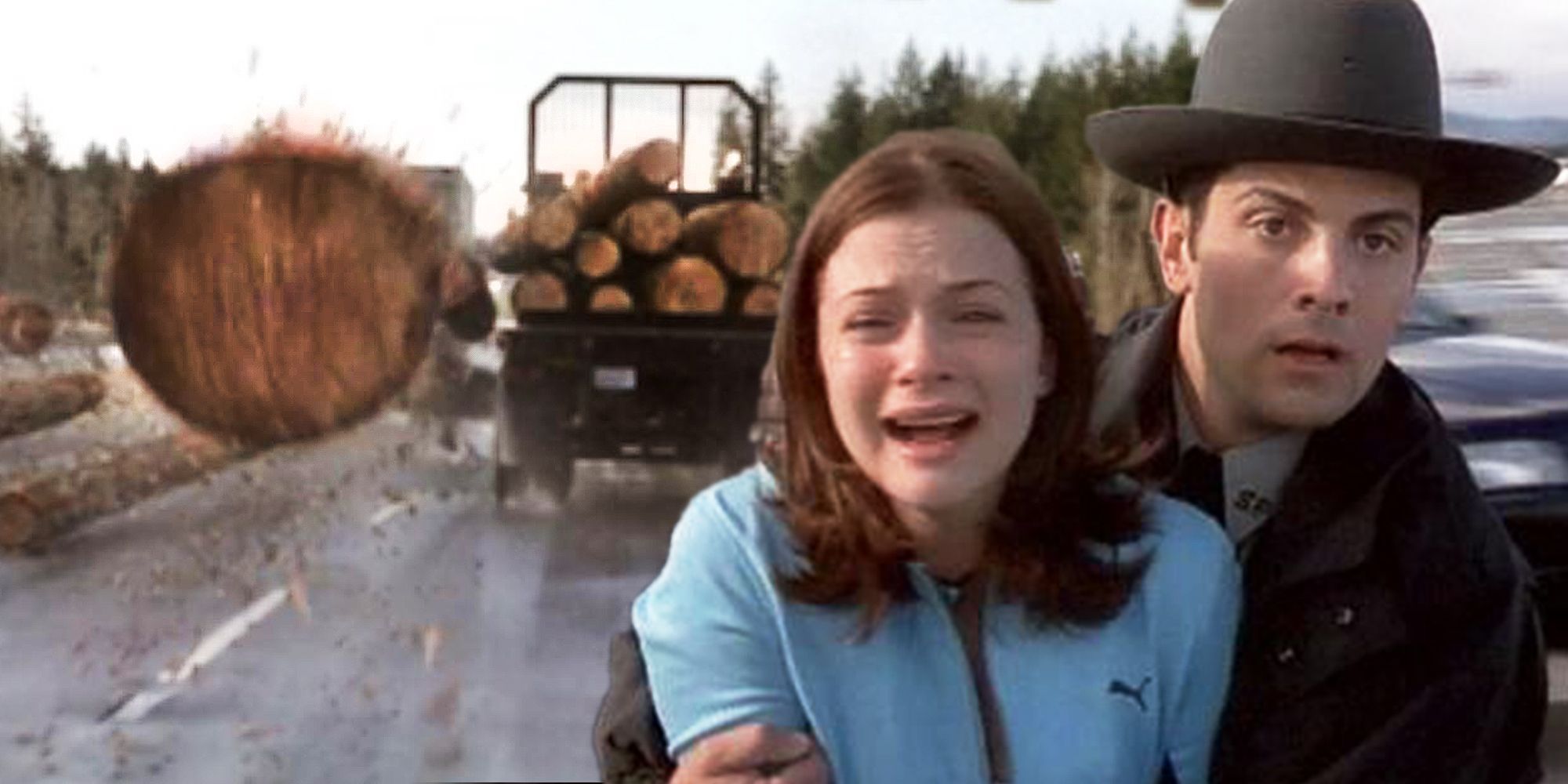
Perhaps the most iconic scene in the entire franchise occurs at the beginning of Final Destination 2, where a truck carrying massive logs sheds its load on a highway, leading to a massive multi-car pileup. This scene significantly impacted the public consciousness, to the point where, even in 2026, many drivers still refuse to follow logging trucks on open roads.
In real life, while logging trucks are subject to strict Department of Transportation (DOT) regulations regarding load securement, accidents do happen. These are usually caused by:
- Mechanical Failure of Chains or Straps: Over time, weather and tension can cause microscopic fractures in steel chains or fraying in synthetic straps.
- Improper Weight Distribution: If the center of gravity shifts during a sharp turn, the sheer force can exceed the "Working Load Limit" (WLL) of the restraints.
- Dynamic Loading: A sudden stop causes the logs to exert much higher force than their static weight would suggest, potentially snapping the "headboard" of the trailer.
Actual reports of logs impaling vehicles are rare, but they are not non-existent. In various jurisdictions, police have recorded incidents where debris—ranging from rebar to industrial spools—has detached from transport vehicles due to "harmonic vibration" that loosened fasteners, proving that the cinematic fear is grounded in basic physics.
Mechanical Failures in Recreation: Roller Coasters and Water Parks
Final Destination 3 focused on a roller coaster derailment, tapping into a common phobia. While modern amusement parks are among the most regulated and inspected environments in the world, history records several incidents that echo the film's premise.
The Physics of Derailment
For a roller coaster to derail in real life, multiple redundant systems must fail simultaneously. Modern coasters use "up-stop" wheels that lock the car to the track from underneath, preventing it from lifting off. In real-world tragedies, such as the 1977 Big Dipper crash in London or more recent incidents in various international parks, the cause is usually metal fatigue.
Metal fatigue is an insidious "silent killer" in engineering. It occurs when a material is subjected to repeated loading and unloading. Over thousands of cycles, microscopic cracks form. If these aren't caught by ultrasonic or X-ray testing, the component can fail suddenly and catastrophically without warning. In the context of "Death's Design," metal fatigue is the ultimate real-world antagonist—a ticking clock hidden inside the very steel meant to keep us safe.
Water Park Hazards
The "pool drain" scene in Final Destination 4 highlights a very real, albeit rare, danger known as suction entrapment. Before the passage of the Virginia Graeme Baker Pool and Spa Safety Act, pool drains could exert hundreds of pounds of pressure if blocked. In real life, this has led to tragic accidents where swimmers were pinned to the bottom of a pool. While modern "anti-entrapment" covers have largely mitigated this risk by 2026, it remains a stark example of how a hidden mechanical flaw can turn a place of leisure into a trap.
The Escalator and Elevator "Phobia"
The franchise frequently utilized the fear of being crushed or mangled by heavy machinery, specifically escalators and elevators. To the average person, these machines are black boxes of mystery. To a technician, they are powerful kinetic systems with immense torque.
Escalator "Comb Plate" Incidents
In The Final Destination (the fourth film), a character is nearly pulled into the internal gears of an escalator. In reality, modern escalators have "comb plate" sensors designed to shut the motor down if an object—like a shoe or a bag—gets caught. However, if these sensors are improperly maintained or bypassed, the motor (which is powerful enough to move dozens of people simultaneously) will not stop. Real-life incidents in malls, particularly in Southeast Asia and parts of the U.S. in the early 2010s, have shown that if a floor panel collapses, the person can indeed fall into the machinery.
Elevator Leveling and Freefall
Elevators are statistically the safest form of travel, but they are the subject of intense "Final Destination" style fears. The most common real-world "freak" accident involves "mis-leveling," where the elevator stops a few inches above or below the floor, causing a trip. The more terrifying—and thankfully rarer—scenario involves an elevator moving while the doors are open. This is usually caused by a failure in the "interlock" circuit, a safety system that ensures the elevator cannot move unless the circuit is closed.
Comparison of Movie Scenarios vs. Real-Life Probabilities
The following table compares the sensationalized deaths of the films with the real-world statistical risks and common failure points identified by safety boards.
| Film Scenario | Real-Life Equivalent | Primary Failure Mechanism | Statistical Rarity |
|---|---|---|---|
| Plane Crash (FD1) | TWA Flight 800 | Center Wing Tank Explosion | Extremely Rare (1 in millions of flights) |
| Log Truck (FD2) | Unsecured Load Spills | Strap failure / Kinetic shifts | Common (Thousands of road debris events annually) |
| Roller Coaster (FD3) | Derailment / Structural Failure | Metal Fatigue / Lack of NDT Testing | Very Rare (Highly regulated) |
| Tanning Bed (FD4) | Hyperthermia / Electrical Fire | Thermostat Failure / Locked Cover | Extremely Rare (Modern beds have safety latches) |
| Escalator (FD4) | Entrapment | Comb Plate / Sensor Failure | Moderate (Usually results in minor injury) |
| Gym/Weightroom (FD5) | Blunt Force Trauma | Spotter Error / Equipment Fatigue | Low (Highly dependent on user behavior) |
The Psychology of "Death's Design"
Why are we so captivated by these real-life "Final Destination" parallels? Psychologists suggest it stems from a need to find patterns in chaos. The "Just-World Hypothesis" makes it difficult for humans to accept that a tragic death can occur for no reason. By framing a freak accident as "Death's Design," the movies provide a narrative structure to the randomness of the universe.
In reality, these events are often the result of normalized deviance. This is a term coined by sociologist Diane Vaughan to describe the process where people become so accustomed to a small flaw or a skipped safety step that they no longer see it as a risk—until the day all those small flaws align.
Risk Mitigation: Avoiding the "Chain Reaction"
While we cannot control "fate," we can influence the variables that lead to freak accidents. By 2026, safety protocols have evolved specifically to prevent the types of chain reactions seen in movies.
- Redundancy: Never rely on a single safety device. In engineering, "fail-safe" means that if one component breaks, the system defaults to a safe state (e.g., elevator brakes that are held open by magnets and snap shut if power is lost).
- Situational Awareness: On highways, avoid "wolf packs" (groups of cars) and stay clear of trucks carrying heavy, visible loads. The "4-second rule" for following distance provides the reaction time needed if a load shifts.
- Maintenance Records: For those in industrial or high-risk hobbies (like SCUBA or skydiving), the "Final Destination" scenario is avoided through rigorous equipment logging. Most accidents are preceded by "near-misses" that were ignored.
- Environmental Scanning: When entering a public space, subconsciously noting the "emergency stop" buttons on escalators or the exits in a theater isn't paranoia—it's a fundamental survival skill that breaks the "chain" of a potential accident.
FAQ: Real-Life Freak Accidents
Has anyone ever survived a "Final Destination" style premonition?
There are numerous accounts of people who had "bad feelings" and chose not to board planes or trains that later crashed. One of the most famous is the story of several people who avoided the Titanic due to various omens. However, scientists attribute this to "hindsight bias," where we only remember the "premonitions" that happened to coincide with a disaster, while forgetting the thousands of times we felt "bad" and nothing happened.
Are logging trucks as dangerous as the movie depicts?
The specific scenario of a log bouncing through a windshield is highly improbable due to the way logs are tapered and loaded. However, unsecured loads are a leading cause of highway accidents. In real life, the danger is usually the "swerve" to avoid the debris rather than the debris itself.
Can a tanning bed actually lock you inside?
Modern tanning beds (manufactured after the 1990s) are designed with a "clamshell" lid that is held down by gravity or simple shocks, not a mechanical lock. It is virtually impossible to be "locked" inside a tanning bed. The risks associated with them are long-term (skin cancer) or immediate (burns from faulty timers), but not entrapment.
What is the "most likely" Final Destination death in real life?
Statistically, the most likely "chain reaction" accident involves a house fire. A series of small events—a frayed wire, a pile of laundry near a heater, and a smoke detector with a dead battery—aligns to create a tragedy. This is a grounded, real-world version of the movie's "Death's Design."
Is there a specific field of study for these types of accidents?
Yes, it is called Forensic Engineering. These professionals investigate why a structure or machine failed. They look for the "initial triggering event" and the subsequent "propagation path," which is essentially the scientific study of a "Final Destination" scenario.
Final Recommendation: Breaking the Design
While it is easy to become hyper-focused on the "one-in-a-million" freak accidents depicted in film, the best way to ensure personal safety is to focus on the high-probability risks. Check the batteries in your smoke detectors, replace tires before they go bald, and never ignore a "funny noise" in your vehicle’s braking system. Real-life safety isn't about outsmarting an invisible entity; it is about maintaining the systems that keep entropy at bay. If you feel uneasy in a specific environment—like a poorly maintained carnival ride or a cluttered construction site—trust your intuition and remove yourself from the situation. You don't need a premonition to recognize a lack of safety.
Image Gallery
Select an image to open it in a new tab.


Omar Farooq
EdTech Innovation and Virtual Pedagogy Journalist
