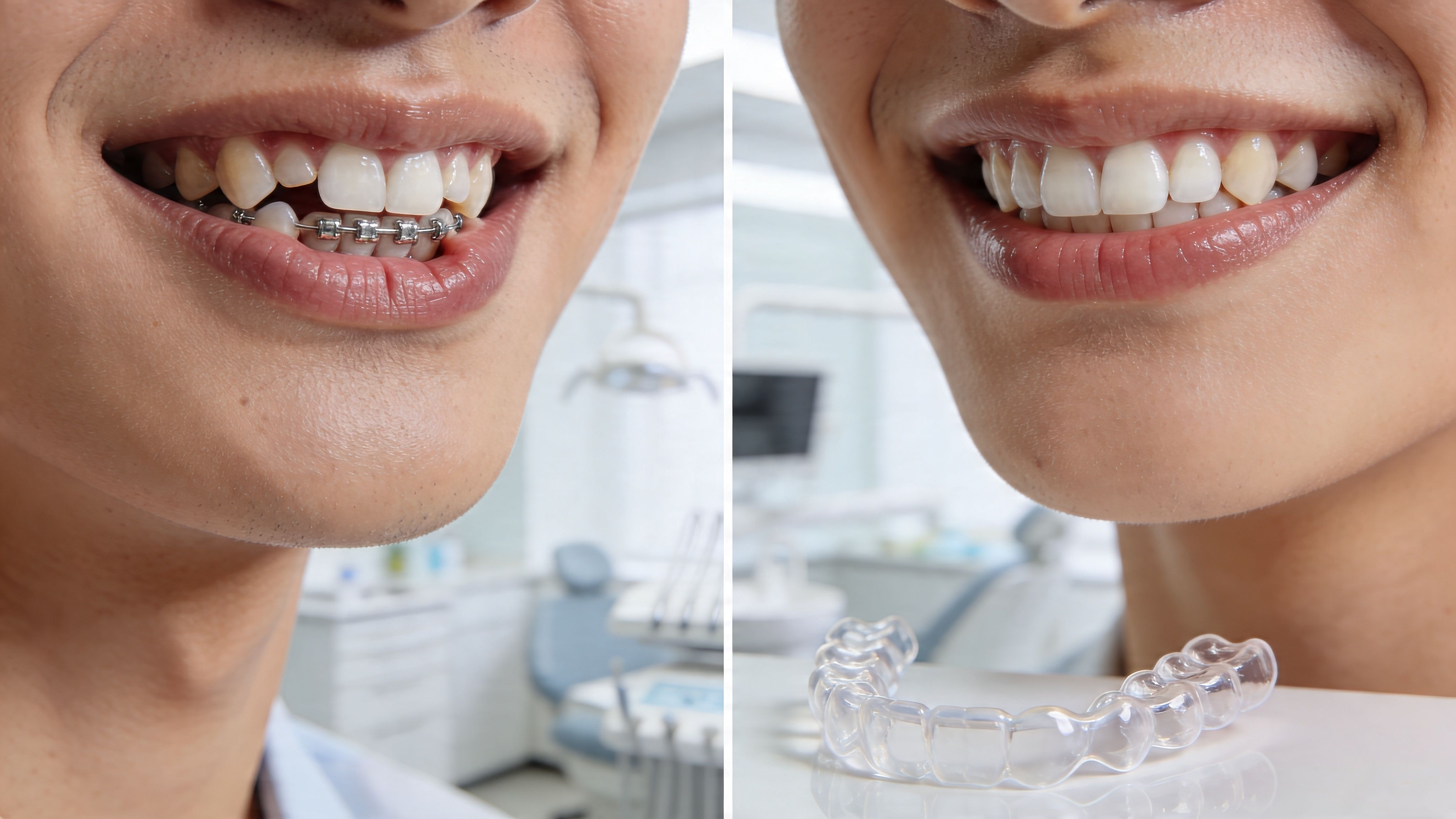
When undergoing Invisalign treatment, noticing gaps between your clear aligners and your teeth is a common concern that often requires immediate attention. These gaps typically indicate that the aligner is not tracking correctly, meaning your teeth are not moving according to the pre-programmed 3D plan. Ensuring a snug fit is essential for achieving the desired orthodontic results within your estimated treatment timeframe.
Why Gaps Occur During Invisalign Treatment
Invisalign works by applying precise, calibrated pressure to specific teeth to move them into alignment. This system relies on "tracking," which is the term orthodontists use to describe how well the teeth fit into the aligner trays. When a gap appears—usually between the edge of the tooth and the bottom of the tray—it signals a loss of tracking.
Several factors contribute to these gaps. The most frequent cause is insufficient wear time. Invisalign aligners must be worn for 20 to 22 hours every day. If you remove them too often or for extended periods, your teeth may attempt to shift back toward their original positions, causing them to "rebound" before the next tray can fully engage. Additionally, anatomical challenges, such as teeth that are rounded, very short, or severely rotated, may not have enough surface area for the aligner to grip effectively. In some instances, the orthodontic software may have projected a movement that the tooth is physically struggling to execute, leading to a mechanical mismatch between the plastic and the enamel.
The Difference Between Normal and Problematic Gaps
Not every small space between a tooth and an aligner indicates a failure of the treatment. Minor gaps, often no larger than the thickness of a piece of paper, can sometimes occur at the beginning of a new tray cycle as the teeth begin to move into a new position. However, these spaces should generally resolve within 24 to 48 hours as the teeth settle into the new tray.
A problematic gap is one that persists or grows over the course of the week. If you notice a visible space at the incisal edge (the biting edge) of a tooth, or if a specific tooth—often a lateral incisor or a canine—fails to seat fully into the tray, you are dealing with a tracking issue. If these gaps are left unaddressed, the discrepancy can compound with each subsequent tray, eventually leading to a point where the aligners no longer fit at all.

How to Troubleshoot Minor Tracking Issues
If you identify a gap, the most effective immediate solution is the use of "chewies." A chewie is a small, cylindrical piece of spongy material that you bite down on to help seat the aligners more firmly against your teeth. By biting on the chewie in the area where the gap exists, you apply extra pressure to help the tooth fully engage with the aligner.
Step-by-Step Guide to Using Chewies
- Identify the Gap: Locate exactly which tooth is not tracking fully into the tray.
- Position the Chewie: Place the chewie directly over the area where the gap is visible.
- Apply Consistent Pressure: Bite down firmly and hold for several seconds, then release. Repeat this process across the entire arch, focusing specifically on the problematic tooth for 5 to 10 minutes.
- Frequency: Use the chewies at least 2–3 times a day, especially right after inserting a fresh set of aligners.
If using chewies for two to three days does not eliminate the gap, you should contact your provider. Persistent gaps usually signify that the teeth have reached a "plateau" and require an adjustment to the treatment plan.
The Role of Attachments and IPR
To prevent gaps, your orthodontist may use specific mechanical aids. Attachments (or "buttons") are small, tooth-colored composite bumps bonded to the teeth. These act as handles for the aligners, providing the necessary leverage to push, rotate, or pull a tooth into place. If you are noticing gaps, your provider might suggest adding more attachments to provide better grip.
Interproximal Reduction (IPR) is another technique that may be used to create space. Sometimes, gaps occur because there is physically no room for the teeth to move. By gently filing a tiny amount of enamel between teeth, your provider creates the necessary clearance for crowded teeth to rotate or shift without creating unwanted pressure that causes the aligner to lift.
Comparison of Tracking Challenges
| Feature | Minor Settling Gap | Tracking Failure |
|---|---|---|
| Duration | Resolves in 1–2 days | Persists beyond 3+ days |
| Visual Appearance | Barely visible | Clearly visible space at biting edge |
| Action Required | Continue wear, use chewies | Consult orthodontist immediately |
| Impact on Timeline | Minimal to none | Likely requires refinements/rescan |
When to Seek Professional Intervention
When troubleshooting at home fails, a clinical intervention is necessary. Your orthodontist may determine that you need "refinements." Refinements involve taking new digital scans of your teeth to assess their current position and ordering a new set of aligners that better reflect the actual progress made.
As of 2026, advances in digital impression technology allow providers to identify tracking failures much earlier than in previous years. If you find yourself frequently experiencing gaps, do not ignore them or "force" the aligners by pushing them into place, as this can cause discomfort and unnecessary stress on your roots. Always inform your dental professional if you cannot get a tray to seat fully after a few days of persistent effort.
Frequently Asked Questions
Will gaps between the tooth and aligner cause the treatment to fail?
Gaps themselves do not cause failure, but they do signify that the treatment is not progressing as planned. If ignored, the cumulative error will result in an final outcome that does not match your ClinCheck 3D model, necessitating a new plan.
Can I just switch to the next tray if I have a gap?
No. Never switch to the next tray if your current tray is not fully seated. Moving to the next tray will only exacerbate the issue, as the next tray is designed to build upon the position achieved by the current one. If the current one isn't finished, the next will fit even worse.
Why do some teeth, like lateral incisors, struggle to track?
Lateral incisors often have shorter clinical crowns and specific root angles that make them resistant to movement. Because they provide less surface area for the aligner to grip, they are the most common teeth to experience tracking gaps during orthodontic treatment.
Is it normal to have a gap when I put in a new tray for the first time?
Yes, a very slight gap immediately after changing trays is common, as the teeth are being nudged into a new position. This should disappear within 24 hours of consistent wear.
Does the cost of my treatment change if I have tracking issues?
Most comprehensive Invisalign plans include "refinement" aligners within the initial cost. However, always verify your specific treatment contract, as some limited-scope plans may charge additional fees for mid-course corrections or additional sets of aligners.
Conclusion and Next Actions
Understanding the nuances of Invisalign gaps allows you to take an active role in your orthodontic journey. By monitoring how your aligners fit and using tools like chewies effectively, you can often correct minor issues before they escalate. However, if you notice persistent gaps that do not resolve with standard troubleshooting, the most reliable next action is to schedule an appointment with your orthodontist. A prompt mid-course correction is often a simple procedure that ensures you remain on track to reach your goals.
Image Gallery
Select an image to open it in a new tab.
Zara El-Hashem
Sociocultural Dynamics and Academics Writer
