
Civilian civil servants primarily access life insurance through the Federal Employees' Group Life Insurance (FEGLI) program, the largest group life insurance program in the world. As of 2026, employees can choose between Basic coverage, which is partially subsidized by the government, and three additional options (A, B, and C) that are fully employee-funded. While FEGLI offers convenience and no medical exams for new hires, many civil servants also utilize private term or whole life policies to lock in lower rates as they age.
Navigating life insurance as a civilian civil servant requires a deep understanding of how government-sponsored programs integrate with personal financial goals. Unlike the private sector, where life insurance is often a fixed benefit, the federal system is modular. You are not required to participate, but for most, the "Basic" coverage serves as the cornerstone of their survivor benefit plan.
As we look at the landscape in 2026, the cost-benefit analysis of these options has become increasingly important. With shifting interest rates and evolving actuarial tables, understanding the "age-band" system of federal insurance is critical for long-term financial health. This guide breaks down the structural components of civilian life insurance, compares them to private-sector alternatives, and outlines the strategic decisions necessary for both new hires and those approaching retirement.
The Foundation of Federal Coverage: FEGLI Basic
For the vast majority of civilian civil servants, the journey begins with FEGLI Basic. When you are hired into a covered position, you are automatically enrolled in Basic unless you explicitly waive it. This coverage is unique because the cost is shared: the federal government pays one-third of the premium, while the employee pays two-thirds.
Eligibility and Automatic Enrollment
Basic coverage is available to most full-time and part-time federal employees. It does not require a medical examination if you enroll within the first 60 days of your appointment. This "guaranteed issue" aspect is one of the most significant benefits for employees with pre-existing health conditions who might otherwise struggle to find affordable private coverage.
Calculating the Death Benefit
The value of Basic insurance is calculated using a specific formula: your annual rate of basic pay, rounded up to the nearest $1,000, plus $2,000. For example, if a civil servant earns $74,200, the pay is rounded to $75,000, and $2,000 is added, resulting in a $77,000 death benefit.
The Extra Benefit for Younger Employees
A frequently overlooked feature of the Basic plan is the Extra Benefit. This provides additional coverage to employees under age 45 at no additional cost. If you are age 35 or younger, your Basic insurance amount is doubled (2x). This multiplier decreases by 0.1 each year until it disappears at age 45. This feature is designed to provide maximum protection during the years when employees are most likely to have young children and high mortgage debt.
Expanding Protection: Options A, B, and C
While Basic coverage provides a safety net, it is rarely enough to cover the total financial needs of a modern family. To bridge this gap, civilian civil servants can select from three optional plans. It is important to note that the government does not contribute to the premiums for these options; the employee pays 100% of the cost.
Option A: Standard
Option A is a fixed, $10,000 death benefit. It is often viewed as a "burial policy" intended to cover immediate final expenses. While the premium is relatively low, its utility has diminished over time as inflation has reduced the purchasing power of a $10,000 payout.
Option B: Additional
Option B is the most flexible and widely used expansion. It allows employees to choose coverage in multiples of their annual basic pay (1, 2, 3, 4, or 5 times).
- Multiplier Logic: If you earn $100,000 and choose the 5x multiplier, you have $500,000 in Option B coverage.
- The Age-Band Trap: Option B premiums are based on five-year age bands (e.g., 45–49, 50–54). As you move into a higher bracket, the cost increases—often doubling or tripling at older ages. In 2026, many mid-career civil servants find that Option B becomes significantly more expensive than private term insurance once they pass age 50.
Option C: Family
Option C provides coverage for your spouse and eligible dependent children. Like Option B, it works in multiples. Each multiple is worth $5,000 for a spouse and $2,500 for each child. You can choose up to five multiples. This means a maximum of $25,000 for a spouse and $12,500 per child. While the individual coverage amounts are modest, the premium covers all eligible children, making it a cost-effective choice for large families.
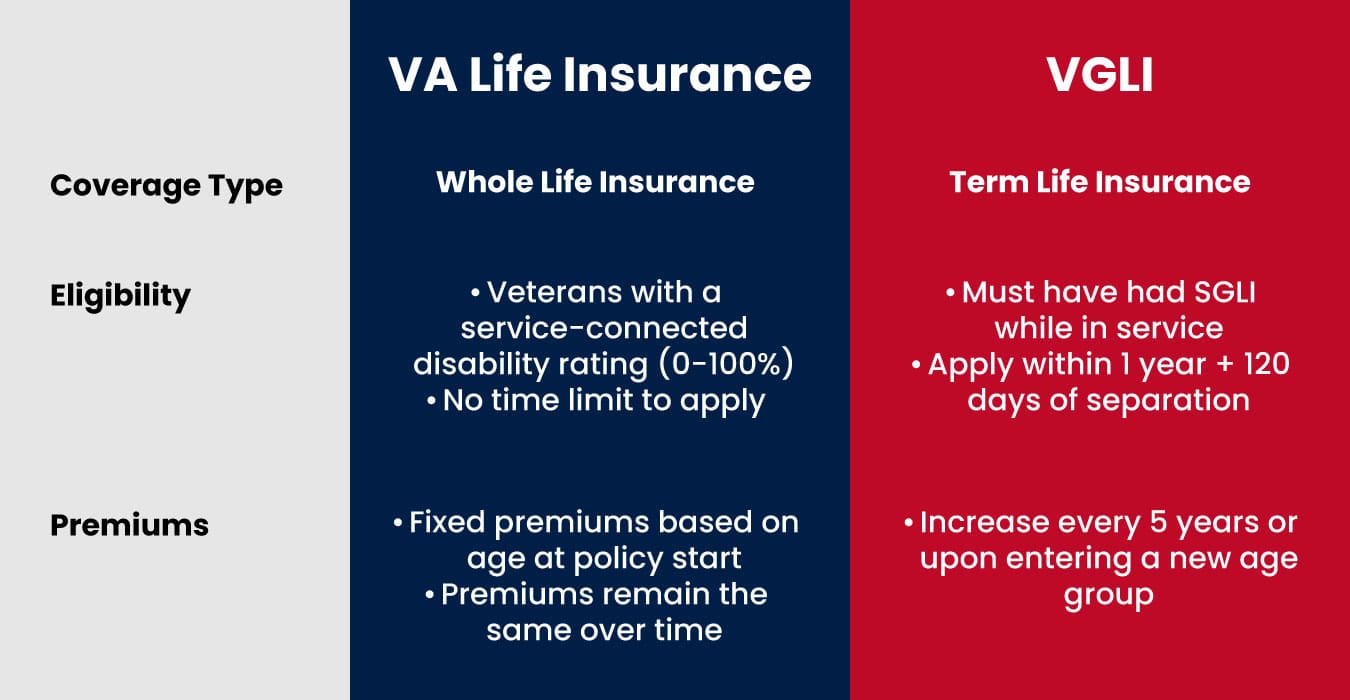
2026 FEGLI Premium Structure and Cost Analysis
The cost of civilian life insurance is deducted directly from your bi-weekly paycheck. In 2026, the rates remain structured to favor younger, healthier employees, while costs escalate for those in the later stages of their careers.
| Insurance Type | Coverage Amount | 2026 Cost Basis (Bi-Weekly) | Who Pays? |
|---|---|---|---|
| Basic | Salary + $2k | $0.16 per $1,000 of coverage | 66% Employee / 33% Gov |
| Option A | $10,000 | Age-banded (e.g., $0.40 to $13.00) | 100% Employee |
| Option B | 1x to 5x Salary | Age-banded per $1,000 | 100% Employee |
| Option C | 1x to 5x Multiples | Age-banded per Multiple | 100% Employee |
Understanding the Age-Band Escalation
For civil servants using Option B, the "cost cliff" typically occurs between the ages of 50 and 60. At age 45, the cost per $1,000 of coverage might be $0.06. By age 60, that same coverage could jump to $0.44 or higher. This represents a 700% increase in premiums over 15 years, while the death benefit remains tied to a salary that likely isn't growing at the same rate. This is the primary reason financial advisors recommend that healthy civil servants look at private term life insurance during their 40s to lock in a level premium for 20 or 30 years.
Private Life Insurance vs. FEGLI: A Strategic Comparison
For many civilian civil servants, the best strategy is not "either/or" but a combination of FEGLI and private insurance. Private policies offer several advantages that the federal system cannot match, but they also come with more stringent requirements.
The Advantage of Medical Underwriting
FEGLI does not require a medical exam during the initial hire period. This is excellent for those with health issues. However, if you are in excellent health, you are essentially subsidizing the risk of your less-healthy colleagues. Private insurers use medical underwriting to reward healthy individuals with "Preferred Plus" rates. In 2026, a healthy 40-year-old non-smoker can often secure a $500,000 private term policy for less than the cost of the equivalent Option B coverage over the life of the policy.
Portability and Ownership
One major limitation of FEGLI is that it is tied to your employment. While you can carry it into retirement under specific conditions, you cannot "take it with you" if you leave the civil service for the private sector (though you can convert it to an individual policy, the rates are often prohibitively high). A private policy is owned by you, independent of your employer, providing continuous protection regardless of your career path.
Customization and Riders
Private policies allow for "riders"—additional benefits like accelerated death benefits for terminal illness, waiver of premium for disability, or long-term care provisions. While FEGLI has a Living Benefits provision, it is far less flexible than the specialized riders available in the private market in 2026.
Life Insurance in Retirement: The Five-Year Rule
One of the most complex aspects of civilian civil servant life insurance is the transition to retirement. To carry your FEGLI coverage into retirement, you must meet two main criteria:
- You must retire on an immediate annuity.
- You must have been enrolled in the coverage for the five years of service immediately preceding your retirement (or for the full duration of your eligibility if less than five years).
The Post-65 Reduction
When you retire, you must make a choice regarding your Basic insurance once you reach age 65. Most retirees choose the 75% Reduction. Under this choice, your coverage remains at its full value until age 65, at which point the value reduces by 2% per month until it reaches 25% of its original value. This 25% "floor" stays with you for life, and the best part is that once the reduction begins at 65, you no longer pay premiums for it.
Alternatively, you can choose a 50% reduction or No Reduction, but these require significantly higher premiums that continue for life. For most civil servants, the 75% reduction provides a cost-effective way to maintain a small "final expense" benefit without draining their pension.
How to Change Your Coverage: Open Seasons and QLEs
Unlike health insurance (FEHB), FEGLI does not have an annual Open Season. In fact, Open Seasons for life insurance are rare, sometimes occurring only once a decade. Therefore, you must be proactive.
Qualifying Life Events (QLEs)
You can increase your insurance coverage if you experience a Qualifying Life Event, such as marriage, divorce, the death of a spouse, or the birth/adoption of a child. You have 60 days from the date of the event to submit Standard Form 2817 to your HR office to increase your coverage.
Providing Evidence of Insurability
If you do not have a QLE and there is no Open Season, your only way to increase coverage is to provide Evidence of Insurability. This involves completing a physical exam and answering medical questions (Form SF 2822). If the Office of Federal Employees' Group Life Insurance (OFEGLI) approves your application, you can then enroll in Basic and Options A and B (but not Option C).
Common Pitfalls and Strategic Recommendations
As a civilian civil servant in 2026, avoiding common insurance mistakes can save your family hundreds of thousands of dollars.
- Relying Solely on Option B: Many employees "set it and forget it" with Option B. They wake up at age 55 to find their bi-weekly premium has ballooned to several hundred dollars. Review your pay stubs every time you enter a new age bracket.
- Ignoring Beneficiary Designations: Life insurance is a contract. It bypasses your will. If you haven't updated your SF 2823 since you were hired 20 years ago, your death benefit might go to an ex-spouse or a deceased relative. Check your designations every three years.
- Failing the Five-Year Rule: Some employees drop their coverage to save money, intending to pick it back up right before retirement. If you haven't held the coverage for the full five years before your retirement date, you cannot carry it into your golden years.
- Underestimating Spouse Needs: Civil servants often focus on their own coverage but neglect the financial impact of losing a spouse. Option C is a start, but if your household relies on two incomes or the labor of a stay-at-home parent, a private policy for the spouse is usually necessary.
Frequently Asked Questions
Can I cancel my FEGLI coverage at any time?
Yes, you can decrease or cancel your FEGLI coverage at any time by submitting Standard Form 2817. However, be cautious: getting that coverage back is difficult and usually requires medical underwriting or waiting for a rare Open Season. If you cancel Basic, you automatically cancel all optional insurance as well.
What is the FEGLI "Living Benefit"?
If you are diagnosed with a terminal illness and have a life expectancy of nine months or less, you can elect to receive a "Living Benefit." This allows you to receive the payout of your Basic insurance while you are still alive. This can be used for medical bills or any other purpose, but it reduces the amount your beneficiaries will receive later.
Does FEGLI cover accidental death and dismemberment (AD&D)?
AD&D coverage is included automatically with Basic and Option A at no extra cost for employees, but it does not apply to retirees. AD&D pays an additional benefit (equal to the face value of the policy) if death results from an accident, or a portion of the benefit for the loss of a limb or eyesight.
Is FEGLI coverage valid if I am working overseas?
Yes, civilian civil servants working for the US government in overseas posts maintain their FEGLI eligibility. The coverage is global, though the premiums and benefits remain denominated in US dollars and are subject to the same rules as domestic employees.
How are life insurance proceeds taxed for federal employees?
Generally, the death benefit paid to beneficiaries from FEGLI or private life insurance is not subject to federal income tax. However, the proceeds may be included in the deceased’s estate for estate tax purposes if the total estate exceeds federal or state thresholds. In 2026, these thresholds remain high, but it is worth consulting a tax professional for large estates.
What happens to my insurance if I go on Leave Without Pay (LWOP)?
If you are on LWOP, your FEGLI coverage continues for up to 12 months at no cost to you. After 12 months, the insurance terminates, though you have a 31-day grace period to convert it to a private individual policy.
Final Recommendation for 2026
For most civilian civil servants, the optimal strategy in 2026 is to maintain FEGLI Basic for its government subsidy and the 75% reduction benefit in retirement, while shopping for private term life insurance to replace or supplement Option B. This approach allows you to leverage the "guaranteed" nature of federal benefits while taking advantage of the lower costs and fixed premiums available in the private market. Always ensure your private policy is "in force" before you cancel any portion of your FEGLI coverage.
Image Gallery
Select an image to open it in a new tab.


Akira Tanaka
International Academic Trends Correspondent
