
Whether you must pay taxes when cashing out a life insurance policy depends primarily on the amount you receive relative to the "cost basis"—the total premiums you have paid into the policy—and the specific type of policy you hold. Generally, you are only taxed on the portion of the payout that exceeds your total investment, known as the gain.
Cashing out a life insurance policy, often referred to as surrendering the policy, is a significant financial decision that involves moving from a state of coverage to a state of liquidity. For many policyholders, this is not merely a transaction but a shift in long-term asset management. Understanding the intersection of tax law and insurance mathematics is essential to ensuring you do not encounter an unexpected tax bill when you receive your check from the insurer.
Understanding the Mechanics of Policy Surrender
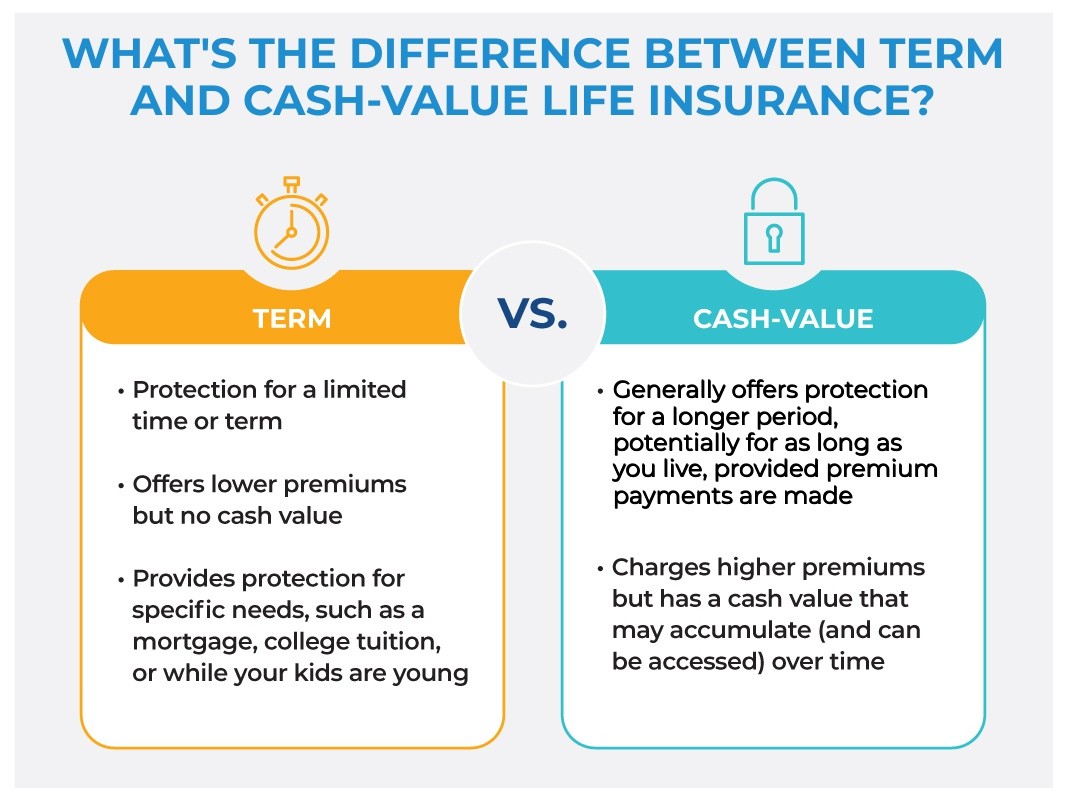
When you surrender a permanent life insurance policy—such as whole life, universal life, or variable life insurance—you are entitled to the policy’s cash value. This cash value represents the savings component of the policy that has accumulated over time through premium payments and interest earnings.
The tax implications of this withdrawal are governed by the principle of "cost basis." In the eyes of the Internal Revenue Service (IRS), your cost basis is essentially the net total of the premiums you have paid into the policy, minus any dividends or prior withdrawals you may have already received. When you surrender the policy, the insurer calculates your payout based on the accumulated cash value.
If the amount you receive from the surrender is less than or equal to your cost basis, the transaction is typically considered a return of principal and is not subject to income tax. If the payout exceeds your cost basis, the excess is considered taxable income. This gain is taxed as ordinary income, not as a capital gain, which is a critical distinction for your tax filing.
The Role of Policy Type in Taxation
The tax treatment of a policy cash-out can vary slightly depending on the architecture of your insurance contract. It is vital to review your specific policy documents to determine if your policy is a "Modified Endowment Contract" (MEC).
A MEC is a policy that has been funded too heavily relative to its death benefit, often failing the "7-pay test" established by the Technical and Miscellaneous Revenue Act of 1988. If your policy is classified as a MEC, tax rules become much stricter. Withdrawals and surrenders from a MEC are treated as "Last-In, First-Out" (LIFO), meaning you are treated as taking out the earnings (the taxable portion) before you ever touch your principal (the non-taxable cost basis). Furthermore, if you are under age 59½, you may be subject to an additional 10% penalty on the taxable portion of the withdrawal, similar to early distributions from a 401(k) or IRA.
Comparing Surrender Outcomes
To visualize how taxation impacts your net proceeds, consider the following comparison of scenarios based on hypothetical policy values.
| Scenario | Total Premiums Paid (Basis) | Cash Value Payout | Taxable Amount | Tax Implication |
|---|---|---|---|---|
| Recovery of Basis | $50,000 | $45,000 | $0 | No tax; loss is not deductible |
| Break-Even | $50,000 | $50,000 | $0 | No tax |
| Gain on Surrender | $50,000 | $65,000 | $15,000 | $15,000 taxed as ordinary income |
| MEC Status | $50,000 | $65,000 | $15,000 | Taxed as income + potential 10% penalty |
Calculating Your Cost Basis Accurately
Calculating your cost basis is rarely as simple as looking at a single number. You must account for several adjustments to your total premium payments:
- Total Premiums Paid: Sum all the premiums you have paid over the life of the policy.
- Minus Dividends: If you received dividends from the insurance company and chose to take them as cash rather than reinvesting them in the policy, these must be subtracted from your basis.
- Minus Prior Loans/Withdrawals: Any partial surrenders or loans taken against the policy cash value that were not repaid reduce your cost basis.
- Plus Reinvested Dividends: If you used dividends to purchase "paid-up additions" (which increase the death benefit and cash value), the cost basis of those additions is added to your total basis.
If you are unsure of your exact cost basis, you should request an "in-force illustration" or a "surrender statement" from your insurance carrier. In 2026, most major insurers provide digital portals where you can download these documents, which will explicitly state your total premiums paid and your current cash surrender value.
Tax Reporting: Form 1099-R
When you surrender your policy, the insurance company is required to report the transaction to the IRS. You will receive an IRS Form 1099-R, "Distributions From Pensions, Annuities, Retirement or Profit-Sharing Plans, IRAs, Insurance Contracts, etc."
This form will show the gross distribution (the total amount you received) and the taxable amount. It is imperative that you review this form carefully. Sometimes, the insurance company may report the entire payout as taxable if they do not have an accurate record of your premiums paid (often because of policy transfers or age of the policy). If the 1099-R is incorrect, you will need to provide documentation to the IRS during tax filing to justify your actual cost basis and prove that the taxable portion is smaller than what the insurer reported.
Strategic Alternatives to Surrendering
Before finalizing a surrender, consider if there are alternatives that might achieve your goals without the immediate tax impact:
- Policy Loans: You can borrow against the cash value of your policy. Loans are generally not considered taxable income, provided the policy stays in force. However, if the policy lapses while a loan is outstanding, the entire loan balance can become taxable income at that moment, potentially causing a massive, unexpected tax bill.
- Partial Surrenders: You can choose to withdraw only a portion of the cash value. By keeping the policy active, you may be able to manage the tax hit by staying in a lower tax bracket.
- 1035 Exchange: Under Section 1035 of the Internal Revenue Code, you can trade one life insurance policy for another, or exchange a life insurance policy for an annuity, without triggering immediate tax consequences. This is a powerful tool if your goal is to move your money into a more efficient product rather than simply cashing out.
Common Pitfalls and Mistakes
The most common error policyholders make is assuming that the entire cash value is "profit." Because life insurance is a long-term contract, it is easy to forget the decades of premiums paid.
Another mistake is failing to account for the loss of the death benefit. When you surrender a policy, the life insurance protection ends. If you still have dependents who rely on your income or estate, you are essentially trading future financial security for current liquidity. Always evaluate if the tax cost and the loss of coverage are worth the immediate cash inflow.
FAQ: Frequently Asked Questions
Does the IRS tax the death benefit if I pass away before surrendering? Generally, no. Life insurance death benefits are typically received income tax-free by the beneficiaries. This is one of the primary tax advantages of life insurance, but it only applies if the policy remains in force until your death.
Is there a difference in taxation between whole life and universal life? The tax principles regarding the cost basis and the taxation of gains are the same for both. However, universal life policies have flexible premiums and interest crediting, which can make the cost basis calculation more complex and prone to errors if you have missed premium payments or reduced your death benefit over the years.
Can I deduct the loss if my cash value is less than the premiums I paid? Unfortunately, no. If you surrender a policy and the payout is less than your cost basis, the IRS does not allow you to claim a capital loss. The loss is considered a personal expense associated with the cost of insurance protection you enjoyed while the policy was active.
Do I have to report the cash-out if the payout is very small? Even if the gain is small, you are required to report it if you receive a 1099-R. The IRS receives a copy of this form, and failing to report the income it reflects will likely lead to an automated inquiry or audit from the tax authorities.
What happens to my tax liability if I use the cash to pay off the policy loan? If you have an outstanding loan, the insurer will typically subtract the loan balance from the cash value before sending you the check. The tax calculation is then based on the net amount received. However, you must be careful, as the "gain" calculation still includes the amount used to satisfy the loan.
Final Next Actions
If you are considering cashing out, your first step should be to contact your life insurance carrier and request a "surrender quote." This document should outline the total cash value, any surrender charges, the amount of the payout, and your cost basis. Once you have this, consult with a tax professional or a certified financial planner. They can help you model the tax impact on your current-year tax return and ensure that you are not triggering a higher tax bracket or losing valuable benefits unnecessarily. If you plan to move the money into another investment, ask your advisor specifically about the 1035 exchange process to determine if it is a viable path to preserve your tax-deferred status.

Image Gallery
Select an image to open it in a new tab.
Akira Tanaka
International Academic Trends Correspondent
