There is no legal limit to how often you can refinance your mortgage, but lenders typically impose a "seasoning requirement" of six months between loans. Strategically, you should only refinance when the long-term interest savings or financial benefits outweigh the closing costs, which usually requires a "break-even" period of 24 to 36 months.
Deciding how often to refinance a mortgage is a balancing act between capturing lower interest rates and managing the high transactional costs associated with new loan origination. While some homeowners find themselves refinancing multiple times within a decade as market conditions shift, others may only do it once. In 2026, with the mortgage market reflecting several years of economic adjustments, understanding the mechanics of "seasoning," break-even points, and long-term equity goals is essential for any borrower looking to optimize their housing debt.
The Technical Limits: Understanding "Seasoning" Requirements
While the law does not strictly forbid a borrower from refinancing every month, the mortgage industry has built-in safeguards known as seasoning requirements. These are internal policies set by lenders or mandates from government-sponsored entities like Fannie Mae and Freddie Mac.
For most conventional loans, lenders require a waiting period of at least six months from the date of your last closing before you can refinance with the same property as collateral. This period ensures that the borrower has a demonstrated history of making on-time payments and allows the lender to recover some of the administrative costs of the previous loan. If you are looking for a cash-out refinance, these seasoning requirements are often stricter, frequently requiring the homeowner to have held the title for at least 12 months.
Government-backed loans have even more specific timelines. For instance, Federal Housing Administration (FHA) and Department of Veterans Affairs (VA) "streamline" refinances—which are designed to lower rates with minimal paperwork—typically require a waiting period of 210 days from the last closing or until six consecutive monthly payments have been made. These rules prevent "churning," a practice where lenders encourage frequent refinancing just to generate new loan fees without providing a tangible benefit to the borrower.
The Economic Reality: Calculating the Break-Even Point
The most significant constraint on how often you should refinance is the break-even point. Refinancing is not free; it generally costs between 2% and 5% of the total loan amount in closing costs. These fees cover the appraisal, title search, credit reports, and lender origination charges.
To determine if a refinance is worth the frequency, you must divide the total cost of the refinance by the monthly savings on your mortgage payment. For example, if a refinance costs $6,000 and saves you $200 per month, your break-even point is 30 months ($6,000 / $200 = 30). If you plan to refinance again—or sell the home—before that 30-month window closes, you will essentially lose money on the transaction.
In the 2026 financial landscape, borrowers must be particularly cautious about "no-cost" refinances. These products do not actually eliminate fees; instead, the lender either rolls the costs into the principal balance or charges a slightly higher interest rate to cover them. While this reduces out-of-pocket expenses, it extends the time it takes to build equity and can make frequent refinancing a net negative for your net worth.

Strategic Reasons to Refinance Frequently
Despite the costs, there are specific scenarios where refinancing multiple times in a short period might be the correct financial move.
Removing Private Mortgage Insurance (PMI)
If you purchased a home with less than 20% down, you are likely paying Private Mortgage Insurance. If local property values have surged significantly within a year or two, your Loan-to-Value (LTV) ratio might drop below 80% faster than expected. In this case, refinancing to a new conventional loan to cancel PMI can save hundreds of dollars a month, even if the interest rate remains relatively stable.
Converting an Adjustable-Rate Mortgage (ARM)
Borrowers who started with an ARM may find themselves in a volatile interest rate environment. If fixed rates drop below the "cap" or the current adjustment rate of an ARM, refinancing into a 30-year fixed loan provides long-term security. Doing this as soon as the market allows can protect against future spikes, even if you only recently took out the ARM.
Utilizing Significant Home Equity
In 2026, many homeowners have seen substantial equity growth. A homeowner might refinance once to lower their rate, and then 18 months later, refinance again to take cash out for a major renovation or to consolidate high-interest debt. As long as the LTV remains healthy (typically below 80%), using a refinance as a tool for capital management is a common strategy for sophisticated investors.
The Risks of Refinancing Too Often
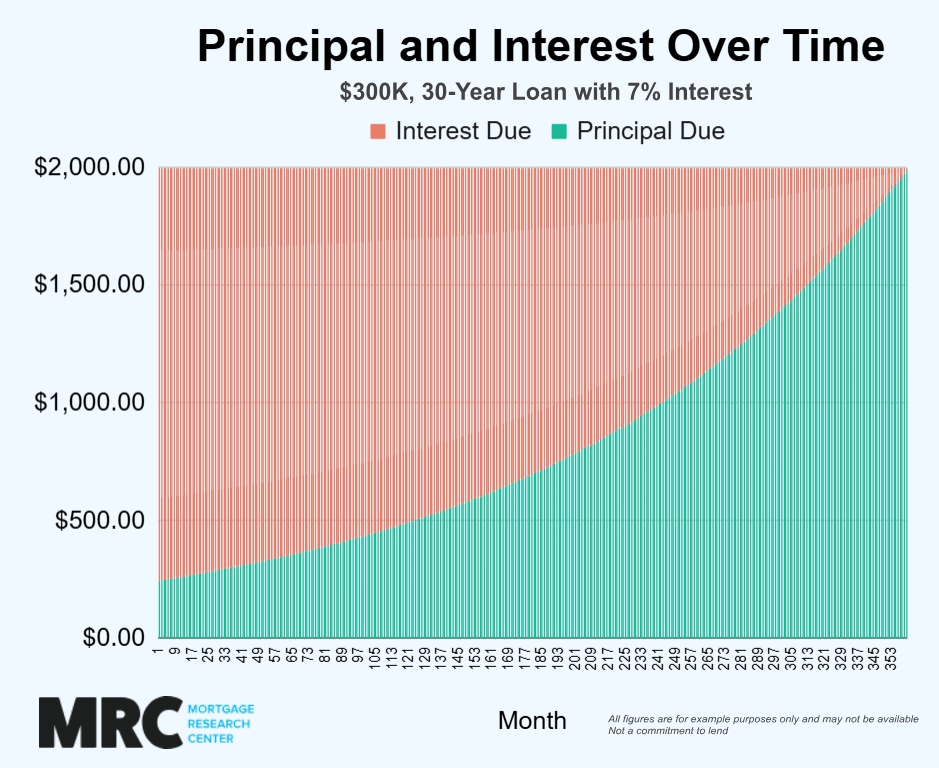
The primary risk of frequent refinancing is the "resetting of the clock." Most mortgages are 30-year products. If you have paid your mortgage for five years and then refinance into a new 30-year loan, you have effectively extended your total debt obligation to 35 years.
Furthermore, the early years of a mortgage are interest-heavy. Because of amortization schedules, the majority of your monthly payment goes toward interest rather than the principal balance in the beginning. By refinancing every few years, you keep yourself in the interest-heavy portion of the schedule, significantly slowing down the rate at which you actually own the home.
There is also the impact on your credit score. Every refinance involves a "hard inquiry" on your credit report, which can cause a temporary dip in your score. Multiple inquiries within a short timeframe can signal to lenders that you are a high-risk borrower, potentially leading to higher interest rates or even a loan denial.
Comparing Refinance Types and Timing
| Refinance Type | Minimum Waiting Period | Primary Motivation | Cost Consideration |
|---|---|---|---|
| Rate-and-Term | 6 months (standard) | Lower interest rate or shorter term | High closing costs; focus on break-even |
| Cash-Out | 12 months (standard) | Accessing home equity for cash | Usually carries higher interest rates |
| FHA Streamline | 210 days / 6 payments | Lowering monthly FHA payments | Lower costs, but requires existing FHA loan |
| VA IRRRL | 210 days / 6 payments | Reducing VA interest rates | No appraisal usually required; limited fees |
| PMI Removal | Variable (based on LTV) | Eliminating insurance premiums | New appraisal cost is the main hurdle |
Practical Steps to Evaluate Your Frequency
Before proceeding with a refinance, especially if you have done so in the last 24 months, follow these steps:
- Request a Closing Disclosure (CD) Mock-up: Ask your lender for a detailed breakdown of all fees. Do not rely on verbal estimates.
- Check Your Current Amortization: See how much of your current payment is going toward principal. Compare this with the new loan's amortization schedule.
- Audit Your Long-Term Plans: Are you planning to stay in the home for at least five more years? If the answer is no, the frequency of your refinancing should be zero unless the savings are immediate and massive.
- Consider a "Recast" Instead: If your goal is to lower your monthly payment and you have extra cash, ask your lender about a mortgage recast. This involves paying a lump sum toward the principal and having the lender re-amortize the remaining balance without a full refinance or new closing costs.
Frequently Asked Questions
Can I refinance twice in one year?
Technically, yes, though it is difficult. Most lenders require a six-month "seasoning" period. If you closed a loan in January, you could potentially close another in July or August. However, you would need to justify the costs, as you would be paying two sets of closing costs within 12 months, which rarely makes financial sense unless rates dropped precipitously.
Does refinancing hurt my credit score long-term?
While the initial hard inquiry and the closing of an old account might cause a temporary drop of 5 to 20 points, a refinance can help your credit long-term. If the lower monthly payment makes you more consistent with other bills or if you use a cash-out refinance to pay off high-interest credit card debt, your overall credit profile will improve.
What is the "1% Rule" for refinancing?
The 1% Rule is a traditional guideline suggesting you should only refinance if you can lower your interest rate by at least 1%. While this is a good starting point, it is not a hard rule. In 2026, with higher home balances, even a 0.5% drop can result in significant monthly savings that justify the costs, especially if the borrower plans to stay in the home long-term.
Are there penalties for refinancing too early?
Most modern residential mortgages do not have prepayment penalties, meaning you can pay off or refinance the loan at any time. However, you should check your specific note. If a prepayment penalty exists, it is often structured as a percentage of the remaining balance or a set number of months' worth of interest, which could make an early refinance prohibitively expensive.
How does a 15-year vs. 30-year refinance affect frequency?
Switching from a 30-year to a 15-year mortgage is a common reason for a second refinance. While the monthly payment usually increases, the interest rate is typically lower and the total interest paid over the life of the loan is drastically reduced. If you have been in a 30-year loan for a few years and your income has increased, refinancing into a 15-year term can be a brilliant move to build wealth quickly.
Final Recommendation
To optimize your mortgage strategy in 2026, do not focus solely on the interest rate. Instead, focus on the Net Benefit. If a refinance provides a tangible improvement to your monthly cash flow or long-term equity—and you intend to keep the loan long enough to pass the break-even point—the frequency is irrelevant. However, for most homeowners, a frequency of more than once every 24 to 36 months should be scrutinized heavily to ensure you aren't simply "churning" your equity into lender fees. Always compare at least three different loan estimates to ensure the costs of your "next" refinance are as low as possible.
Image Gallery
Select an image to open it in a new tab.

Zara El-Hashem
Sociocultural Dynamics and Academics Writer
