Is the Mercedes-Benz SLR McLaren Engine the Same as Other McLaren Engines?
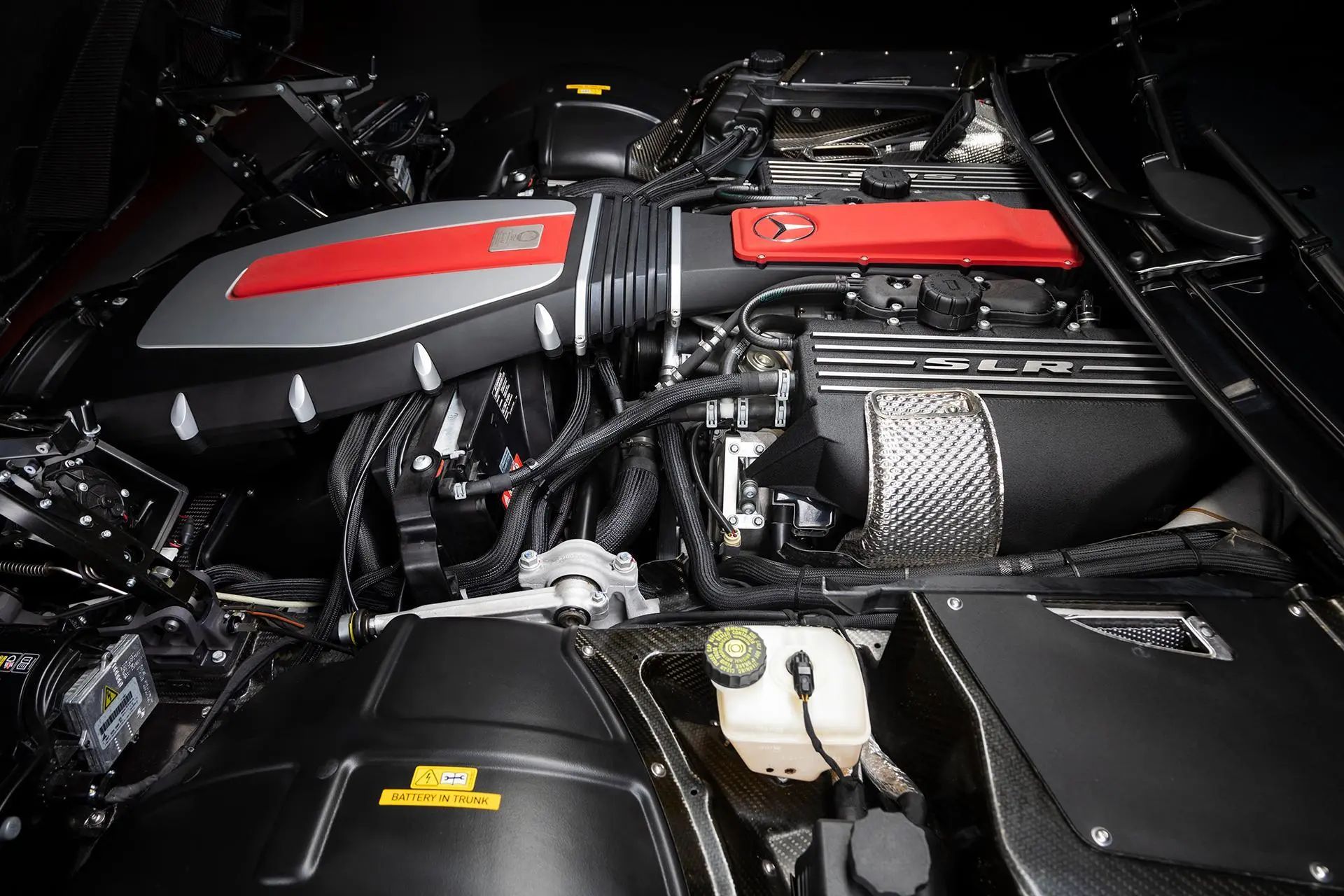
The Mercedes-Benz SLR McLaren does not share an engine with any production vehicle engineered solely by McLaren Automotive. While the SLR was developed in collaboration with McLaren, its 5.4-liter supercharged V8 engine is a proprietary Mercedes-Benz AMG powerplant. It is mechanically distinct from the twin-turbocharged engines used in modern McLaren supercars like the 720S or the Artura.
The Genesis of the Mercedes-Benz SLR McLaren Engine
To understand why the engine in the Mercedes-Benz SLR McLaren is unique, one must examine the specific partnership that existed between Mercedes-Benz and McLaren during the early 2000s. At the time, Mercedes-Benz owned a significant stake in the McLaren Group, and the two entities collaborated to create a flagship grand tourer that blended German engineering with British racing heritage.
The project, codenamed "Project 7," aimed to create a vehicle that balanced extreme performance with the luxury and grand touring capability associated with the Mercedes-Benz brand. Unlike modern McLaren supercars, which are built around a lightweight carbon fiber monocoque and a mid-engine architecture designed in-house by McLaren, the SLR was designed as a front-mid-engine configuration. This placement was intended to facilitate the traditional luxury performance feel of a Mercedes-Benz while benefiting from the balance provided by shifting the engine mass slightly behind the front axle line.
Technical Anatomy of the SLR Powerplant
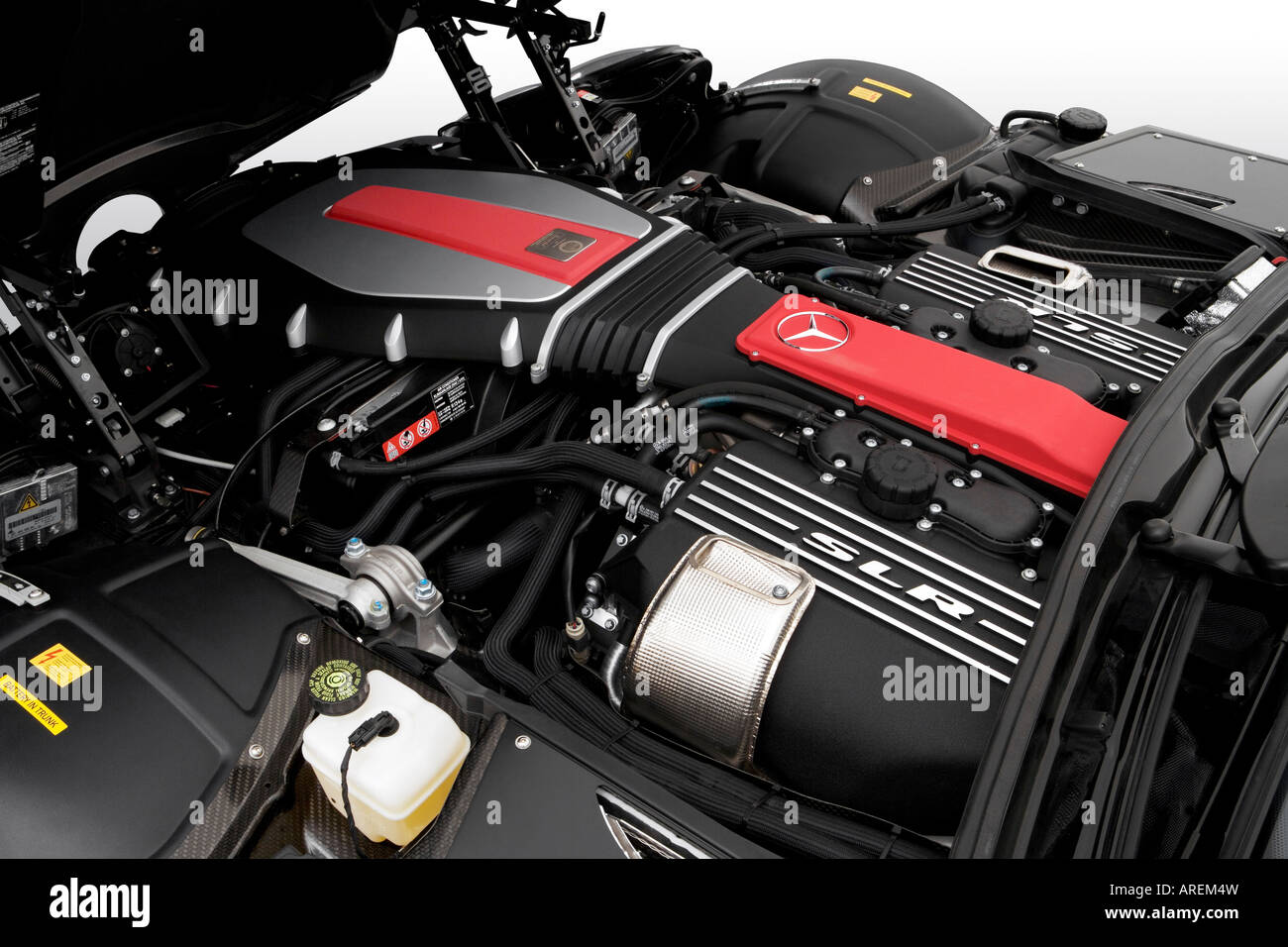
The engine found in the Mercedes-Benz SLR McLaren is the M155. This unit is fundamentally derived from the M113 V8, which was the workhorse engine for Mercedes-Benz AMG models throughout the late 1990s and early 2000s. However, the M155 was heavily modified by AMG to meet the extreme performance requirements of the SLR.
Key technical characteristics of the M155 include:
- Supercharging: The engine features a Lysholm-type twin-screw supercharger, which provides near-instantaneous torque delivery. This is a stark contrast to the twin-turbocharged systems used by McLaren Automotive in their independent vehicle lineup, which rely on exhaust-driven turbines to build boost.
- Dry-Sump Lubrication: To accommodate the low, front-mid-engine profile and ensure consistent oil pressure during high-G cornering, the M155 utilizes a dry-sump lubrication system. This is a common feature in race-bred engines, separating it from the wet-sump M113 engines found in standard Mercedes-Benz models of the era.
- Hand-Assembled Precision: As with all AMG engines, the M155 was hand-assembled in Affalterbach, Germany, by a single technician whose signature is etched on a metal plaque on top of the engine cover.
Comparing the SLR Engine to McLaren Automotive Engines
The confusion regarding whether the SLR shares an engine with "a McLaren engine" usually stems from the brand name itself. However, it is essential to distinguish between the entity "McLaren" as it exists today (the independent automotive manufacturer founded in 2010) and the engineering consultancy that partnered with Mercedes-Benz.
The M838T and M840T Comparison
The engines currently powering McLaren Automotive vehicles—such as the 3.8-liter and 4.0-liter twin-turbo V8s (the M838T and M840T)—are bespoke units. These engines were developed in partnership with Ricardo, a British engineering firm, specifically for use in McLaren’s monocoque chassis architecture. They share no common architecture, casting, or internal components with the Mercedes-Benz M155.
| Feature | Mercedes-Benz SLR (M155) | McLaren Automotive (M840T) |
|---|---|---|
| Engine Configuration | 5.4L Supercharged V8 | 4.0L Twin-Turbo V8 |
| Primary Philosophy | High-torque Grand Tourer | High-revving Supercar |
| Manufacturer Origin | Mercedes-AMG (Affalterbach) | Ricardo/McLaren (United Kingdom) |
| Induction Type | Lysholm Twin-Screw Supercharger | Dual Exhaust-Driven Turbochargers |
| Primary Vehicle Use | Mercedes-Benz SLR McLaren | McLaren 720S/750S/etc. |
Architectural Differences and Performance Philosophy
The performance target of the Mercedes-Benz SLR McLaren was "Grand Touring." This dictated a specific power delivery profile characterized by a broad, flat torque curve that allows for effortless acceleration at high speeds. The supercharger provides a linear response that feels more akin to a naturally aspirated engine than a turbo unit.
Conversely, McLaren Automotive’s engines are engineered for the track. They are designed to be lightweight and compact to fit within the rear-mid-engine chassis design of their vehicles. The utilization of twin-turbochargers allows McLaren to extract higher specific power outputs per liter compared to the M155 engine, focusing on extreme power-to-weight ratios rather than the luxurious torque delivery of the SLR.
Is There Any Shared Technology?
While the engines are entirely different, it would be incorrect to say the SLR and modern McLarens share no DNA. The collaboration between the two companies facilitated significant knowledge transfer regarding carbon fiber chassis technology. McLaren’s expertise in carbon fiber construction, which they developed in Formula 1, was integral to the SLR’s chassis design.
However, in terms of powertrain, the SLR remains a purely Mercedes-AMG product. From the block architecture and the ignition system to the specific tuning of the ECU, the engineering lineage of the SLR engine is firmly rooted in the German automotive tradition of the early 2000s, rather than the British mid-engine supercar lineage that McLaren Automotive established later.
Addressing Common Misconceptions
A frequent source of confusion is the "McLaren" suffix in the vehicle's name. Owners and enthusiasts often assume that because "McLaren" is in the title, the powertrain must be a product of the racing firm. It is critical for collectors to understand that the SLR is a Mercedes-Benz product manufactured in Woking, England, using engineering input from McLaren, but the engine is a Mercedes-Benz part.
If you are looking for parts for an SLR engine, you must use Mercedes-Benz part numbers. You will find that these components are serviced through the Mercedes-Benz dealer network and are compatible with other high-performance Mercedes-Benz models of that era, such as the CLK DTM or the E55 AMG, albeit with significant modifications specific to the SLR application.
Frequently Asked Questions
Are SLR engine parts interchangeable with other V8 Mercedes engines? No. While the engine is based on the M113 architecture, many components—including the supercharger, intake manifold, exhaust headers, and dry-sump system—are unique to the M155. Attempting to swap parts from a standard M113 into an SLR engine will result in performance degradation or mechanical failure.
Why did Mercedes choose a supercharger instead of a turbocharger for the SLR? In the early 2000s, AMG’s preferred method for increasing power in their high-performance models was the supercharger. It offered the immediate throttle response required for the driving dynamics of a heavy, front-engined grand tourer, whereas turbocharging technology of that period often suffered from significant "lag."
Does the Mercedes-Benz SLR McLaren engine have a "signature" builder? Yes. Following the AMG "One Man, One Engine" philosophy, every M155 engine was assembled by a single technician at the AMG factory in Affalterbach. The plaque on the engine cover identifies the technician who performed the assembly.
Can modern McLaren shops service the Mercedes SLR engine? Generally, no. McLaren Automotive service centers are equipped to maintain their own bespoke engines and carbon-chassis vehicles. The Mercedes-Benz SLR McLaren requires specialized knowledge of Mercedes-AMG hardware and diagnostic software, making authorized or expert-independent Mercedes-Benz service centers the correct venue for maintenance.
Is the SLR engine considered reliable by modern standards? The M155 engine is widely considered robust, provided the maintenance schedule is followed precisely. The primary concerns for owners are typically related to the supercharger clutch assembly and the cooling systems required to manage the heat generated by the forced induction system.
Next Steps for Owners and Collectors
If you are currently evaluating an SLR for purchase or maintenance, the most important action is to verify the history of the engine through an official Mercedes-Benz service record. Given the complexity of the M155 engine and its specific supercharger components, ensure that any maintenance has been performed by technicians who have direct experience with the M155 platform. Do not rely on service documentation from McLaren Automotive, as they do not have a functional history with this specific engine and will not have the parts or diagnostic tools required for effective repair.

Image Gallery
Select an image to open it in a new tab.



Simon Caldwell
Enterprise Technology and Systems Editor
