The First Modern President in US History: Redefining Executive Power

Determining the first modern president in US history typically points to Franklin Delano Roosevelt (FDR), who fundamentally transformed the scope of the federal government, weaponized mass media through the "fireside chats," and permanently expanded the policymaking powers of the executive branch through the New Deal.
Introduction to Presidential Modernity
When historians, political scientists, and constitutional scholars discuss the evolution of the United States presidency, a clear dividing line emerges between the 19th-century executive office and the modern institution we recognize today. While early American presidents operated largely as administrators who deferred to Congress on domestic policymaking, the contemporary presidency functions as the undeniable center of American political life, setting legislative agendas, commanding global media attention, and managing a massive bureaucratic apparatus.
Among historians and biographers, Franklin Delano Roosevelt is overwhelmingly recognized as the first modern president in US history. However, identifying FDR as the pioneer of the modern presidency requires looking beyond a single election cycle. It demands an examination of how previous chief executives laid structural groundwork, how technological shifts altered political communication, and how systemic crises forced a permanent restructuring of the balance of power between the legislative and executive branches.
This article explores the defining characteristics of the modern presidency, traces the contributions of precursors like Theodore Roosevelt and Woodrow Wilson, analyzes the transformative actions of Franklin D. Roosevelt, and evaluates the enduring consequences of this institutional shift on American governance.
Defining Characteristics of the Modern Presidency
To understand why a specific chief executive earned the designation of the first modern president, one must first establish the criteria that separate a traditional presidency from a modern one. The transformation is not merely a matter of chronological dating or personality style; it represents a structural and psychological shift in how the American public, Congress, and the executive branch view the office.
A traditional presidency, which characterized much of the 19th century following the founding era, was defined by congressional primacy. Congress initiated legislation, debated national direction, and expected the president to execute those laws with minimal interference in the legislative process. Presidents viewed vetoes primarily as tools to block unconstitutional legislation rather than instruments to force policy changes.
In contrast, the modern presidency is marked by several distinct operational pillars:
- Legislative Leadership: The modern president is expected to act as chief legislator, presenting a comprehensive legislative agenda to Congress and mobilizing public pressure to pass it.
- Mass Media Communication: Modern executives bypass traditional gatekeepers, utilizing radio, television, and digital platforms to speak directly to the citizenry and shape public opinion.
- Administrative State Management: The modern executive manages an expansive bureaucracy of executive departments, independent agencies, and regulatory bodies, wielding significant discretionary power.
- Global Leadership and National Security: The president functions as the undisputed commander-in-chief of an active, permanent military apparatus and the primary architect of foreign policy.

Precursors to Modernity: Theodore Roosevelt and Woodrow Wilson
While Franklin Roosevelt is widely credited with cementing the modern presidency, he did not build the framework entirely from scratch. Two transformative figures in the early 20th century—Theodore Roosevelt and Woodrow Wilson—fundamentally altered the office's trajectory and established crucial precedents that later presidents would expand.
Theodore Roosevelt and the "Bully Pulpit"
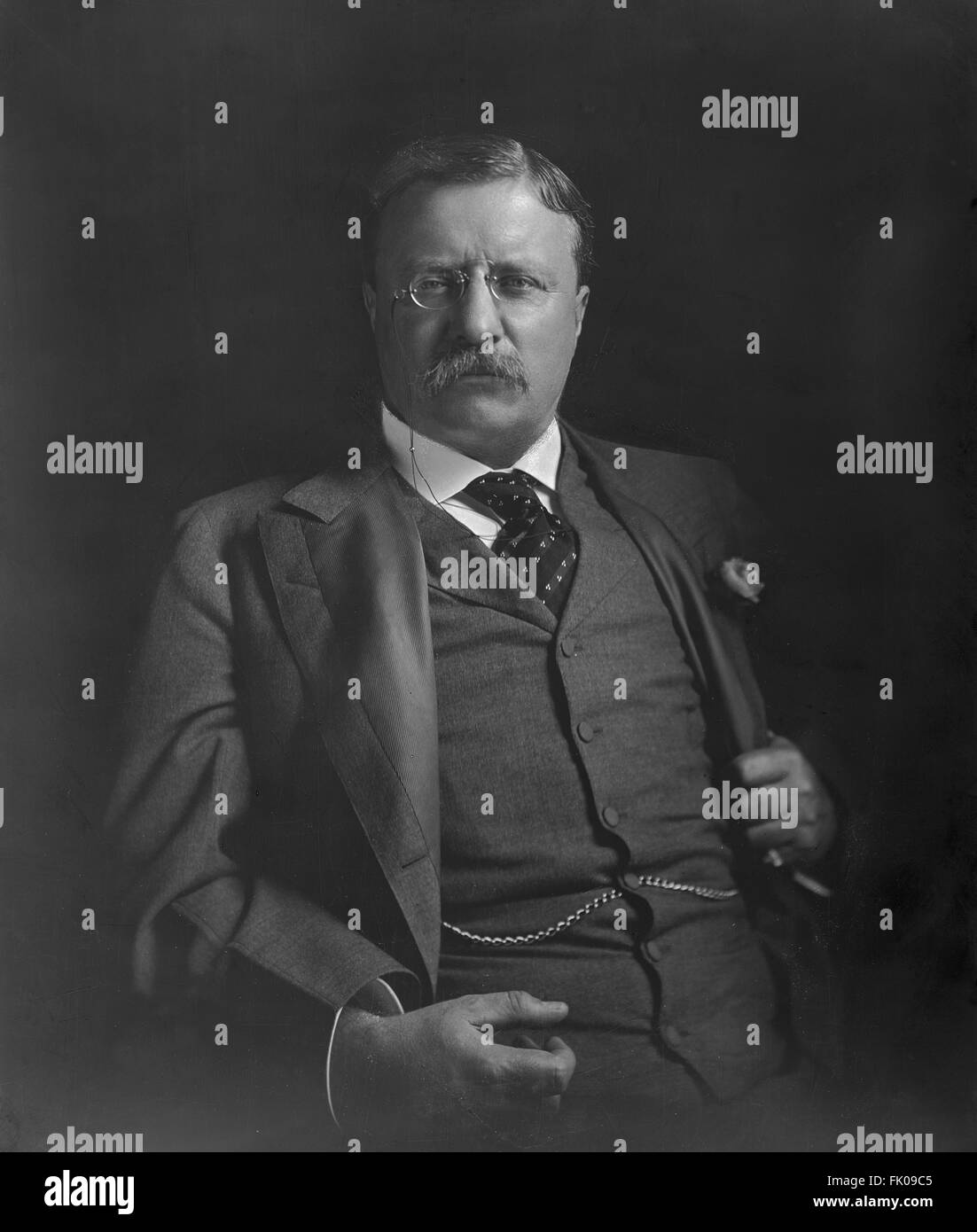
Theodore Roosevelt, who assumed office in 1901 following the assassination of William McKinley, brought a radically dynamic philosophy to the executive branch. Roosevelt viewed the presidency as a "bully pulpit"—an extraordinary platform from which to preach progressive reform and appeal directly to the American people.
Roosevelt expanded executive authority by embracing the "stewardship theory" of the presidency. Unlike his predecessors who believed the executive could only exercise powers explicitly granted by the Constitution or statutes, Roosevelt argued that the president had the legal duty to do anything the needs of the nation demanded, provided it was not explicitly forbidden by the Constitution or laws.
During the anthracite coal strike of 1902 and his aggressive enforcement of the Sherman Antitrust Act, Roosevelt demonstrated that the executive branch could intervene directly in the national economy to protect public interest, shifting expectations away from congressional passivity.
Woodrow Wilson and the Legislative Agenda
Woodrow Wilson, elected in 1912, took the expansion of presidential power a step further, specifically regarding the legislative process. Before Wilson, presidents rarely appeared before a joint session of Congress to deliver speeches, and they certainly did not lobby individual lawmakers for specific bill passages.
Wilson shattered this precedent by reviving the practice of delivering the State of the Union address in person. He worked closely with congressional allies to draft sweeping legislation, including the Underwood Tariff, the Federal Reserve Act, and the Clayton Antitrust Act. Wilson established the expectation that the White House would serve as the primary engine for domestic reform, anchoring the executive branch firmly to the legislative process.
The Catalyst: Franklin D. Roosevelt and the New Deal
Despite the foundational contributions of the two Roosevelts and Wilson, the Great Depression and World War II created a crucible that permanently shattered the old constitutional equilibrium. When Franklin D. Roosevelt took office in March 1933, the United States was facing the worst economic collapse in its history, accompanied by widespread bank failures and unprecedented unemployment.
| Era / Phase | Primary Focus of Executive Power |
|---|---|
| 19th Century | Administrative execution; congressional primacy |
| Early 20th Century | Bully pulpit utilization; early legislative activism |
| Post-1933 (FDR) | Comprehensive agenda setting; mass media mobilization |
FDR recognized that traditional legislative deliberation was too slow to address the immediate emergency. In his first one hundred days in office, his administration flooded Congress with sweeping bills designed to provide relief, recovery, and reform. Congress, overwhelmed and desperate for action, largely rubber-stamped the administration's proposals. This moment established the enduring expectation that a newly elected president must deliver an ambitious legislative program within their first months in office.
The Executive Office of the President (EOP)
As the federal government ballooned in size to manage New Deal programs like the Works Progress Administration and the Social Security Administration, the existing infrastructure of the White House proved inadequate. To manage this massive administrative apparatus, FDR commissioned the Brownlow Committee, which led to the creation of the Executive Office of the President (EOP) in 1939 via the Reorganization Act.
The creation of the EOP was a watershed moment in institutional history. It provided the president with a dedicated personal bureaucracy—including the Bureau of the Budget and specialized advisers—independent of traditional cabinet departments. This administrative innovation ensured that future presidents would possess the structural machinery necessary to centralize control over the entire executive branch.
The Power of Mass Communication: Fireside Chats
FDR revolutionized political communication by mastering the medium of radio. Through his informal "fireside chats," Roosevelt bypassed hostile print media publishers and spoke directly into the living rooms of millions of American families. His warm, reassuring tone fostered a sense of personal connection and trust, transforming the presidency from a distant institution into a comforting, familiar presence in daily life. This direct-to-public communication model remains a cornerstone of modern executive politics.
Historical Comparison of Presidential Eras
To clearly understand how the office evolved, it is helpful to contrast the structural, operational, and communicative differences across major eras of American history.
| Feature | 19th-Century Presidency | Early 20th-Century Presidency | The Modern Presidency (FDR Onward) |
|---|---|---|---|
| Primary Lawmaker | Congress | Congress, with emerging executive input | The President (Chief Legislator) |
| Media Strategy | Partisan newspapers; written statements | Speeches, whistle-stop tours, pulpits | Direct broadcast, radio, TV, digital |
| Bureaucracy | Minimal; patronage-based civil service | Expanding regulatory agencies | Massive centralized EOP and agencies |
| Foreign Policy | Isolationist; reactive diplomacy | Emerging global presence | Permanent superpower leadership |
| Crisis Management | Limited federal intervention | State-level primacy with federal aid | Immediate federal executive intervention |
Expansion of Commander-in-Chief Powers
While FDR’s domestic policies transformed the executive branch's relationship with the economy, World War II permanently expanded the president's role in foreign affairs and national security. The mobilization of millions of troops, the coordination of global supply chains, and the ultimate development of atomic weapons concentrated unprecedented authority in the Oval Office.
The passage of the National Security Act of 1947 under Harry S. Truman—building directly upon the wartime precedents established by FDR—further institutionalized this shift. The creation of the Department of Defense, the Central Intelligence Agency (CIA), and the National Security Council (NSC) provided future presidents with permanent instruments of statecraft and intelligence that operated largely outside the immediate scrutiny of Congress.
Consequently, the modern president functions not only as the leader of a domestic political party and a legislative advocate, but also as the commander-in-chief of a global military apparatus capable of projecting power instantaneously.
Legacy and Ongoing Debate Over Presidential Power
The institutionalization of the modern presidency has generated continuous debate among legal scholars, historians, and political scientists regarding the health of American constitutional checks and balances.
Proponents of the modern presidency argue that a complex, fast-moving global society requires a centralized, energetic executive who can act decisively during crises. In an era of nuclear weapons, instant global communication, and intricate economic shocks, waiting for congressional consensus is viewed as a dangerous vulnerability.
Conversely, critics warn that the modern presidency has evolved into an "imperial presidency," a term popularized by historian Arthur M. Schlesinger Jr. Critics point to the routine use of executive orders, unilateral military interventions without formal congressional declarations of war, and broad delegations of authority as evidence that the constitutional separation of powers has been severely eroded.
Despite these ongoing debates, the structural reality of the office remains fixed. No president can return to the 19th-century model of administrative passivity without failing to meet the complex demands placed upon the executive branch by the public and the global community.
Frequently Asked Questions
Why is Franklin D. Roosevelt considered the first modern president instead of George Washington or Abraham Lincoln?
While Washington established foundational procedural precedents and Lincoln exercised sweeping wartime powers, neither sustained a permanent structural transformation of the office during peacetime. FDR permanently changed the presidency by institutionalizing executive legislative leadership, creating the Executive Office of the President, and utilizing mass media to maintain a continuous, direct relationship with the public.
Did Theodore Roosevelt have more influence on the presidency than Franklin Roosevelt?
Theodore Roosevelt coined the modern rhetorical style of the office and popularized the bully pulpit, but his legislative achievements were relatively modest compared to FDR's. Franklin Roosevelt took Theodore's conceptual framework and operationalized it through permanent institutional structures, making him the definitive first modern president.
What role did technology play in the creation of the modern presidency?
Radio and the expansion of national media networks allowed chief executives to bypass partisan newspaper editors and speak directly to millions of citizens simultaneously. This technological shift enabled presidents to cultivate personal political movements and pressure Congress directly from the Oval Office.
How did the Great Depression alter the balance of power between Congress and the president?
The severity of the economic collapse demanded rapid, comprehensive federal intervention that a fragmented legislative body could not efficiently coordinate. Congress willingly delegated vast policymaking authority to the executive branch, establishing a precedent of executive-led governance that persisted long after the crisis ended.
What is the Executive Office of the President (EOP)?
Established in 1939, the EOP is a collection of agencies and specialized advisory bodies—such as the Office of Management and Budget and the National Security Council—that provide the president with the administrative and logistical support required to manage the modern federal government.
Conclusion and Recommended Next Actions
Franklin Delano Roosevelt's tenure fundamentally redefined the American presidency, transforming it from a largely administrative office dependent on congressional leadership into the dynamic, centralized center of national governance. For students of history, political observers, and citizens interested in the mechanics of American democracy, studying the evolution of the modern presidency provides essential context for understanding contemporary political dynamics, legislative gridlock, and executive overreach.
To deepen your understanding of this historical shift, consider exploring primary source documents such as the Brownlow Committee Report of 1937, reading Arthur M. Schlesinger Jr.'s seminal work The Imperial Presidency, or examining the transcripts of FDR's original radio fireside chats available through the Franklin D. Roosevelt Presidential Library and Museum.
Image Gallery
Select an image to open it in a new tab.
Ingrid Bjornson
Global Cyber Policy and Regulation Analyst
