Why Zero Trust Architecture Matters for Cloud Data Storage Security
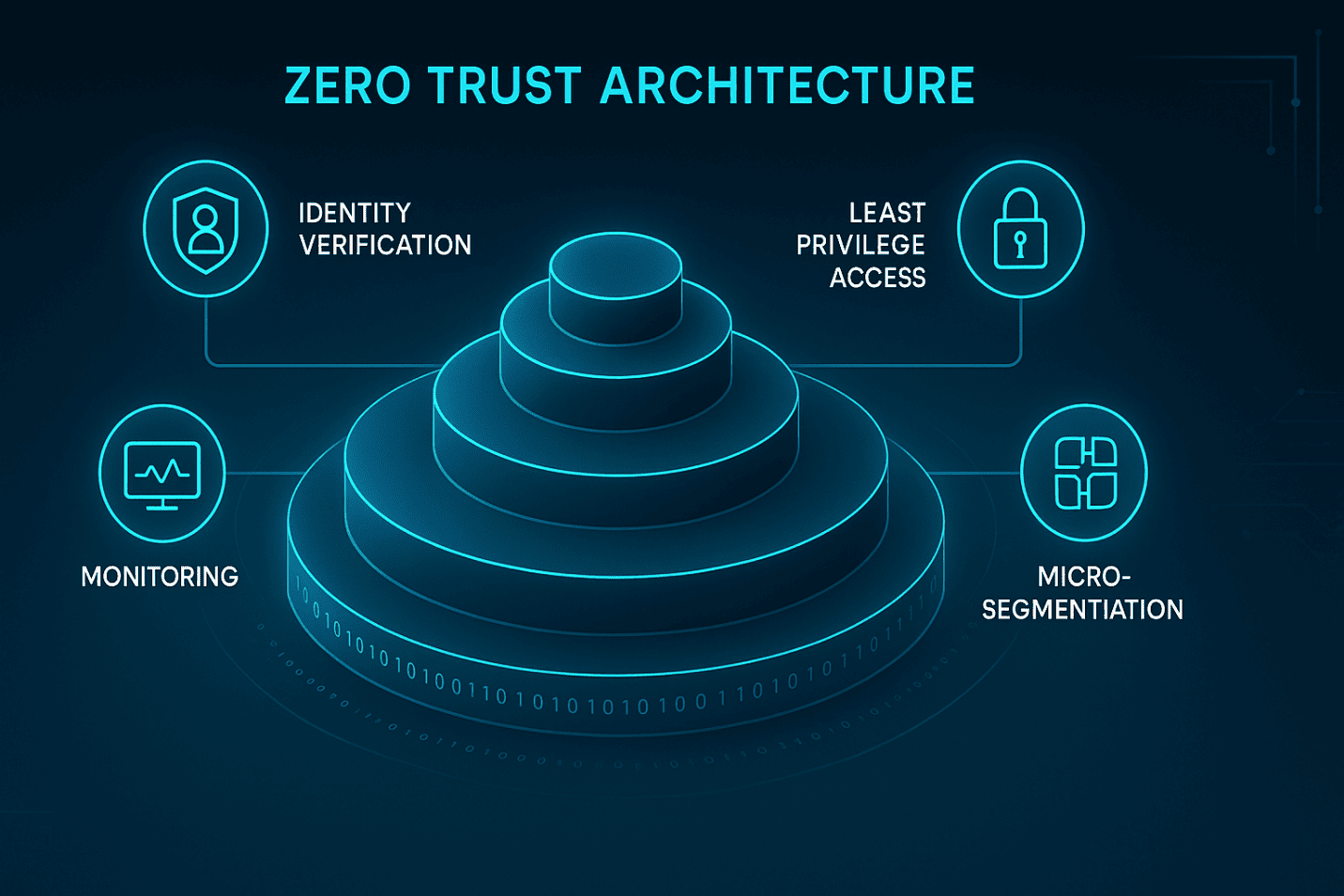
Zero trust architecture matters for cloud data storage security because it eliminates the vulnerabilities of traditional perimeter-based defenses by enforcing continuous, context-aware verification for every user, device, and application attempting to access sensitive assets. As organizations migrate increasingly complex workloads, proprietary applications, and sensitive customer records to multi-cloud and hybrid environments, traditional network boundaries have dissolved. Perimeter defenses—such as corporate firewalls, virtual private networks (VPNs), and implicit trust granted to devices inside an enterprise network—are no longer sufficient to stop modern, sophisticated cyber threats.
The traditional model of enterprise security operated on a "trust, but verify" philosophy. Once a user or device authenticated at the network perimeter, they were often granted lateral freedom to traverse the network and access a vast array of cloud data storage buckets, databases, and file shares.
In contrast, zero trust architecture (ZTA) operates on a strict "never trust, always verify" principle. By continuously authenticating identity, validating device health, monitoring behavioral patterns, and enforcing least-privilege access controls down to the individual object or file level, organizations can effectively mitigate insider threats, contain lateral movement during a breach, and safeguard cloud data against unauthorized exposure.
The Paradigm Shift from Perimeter Defenses to Zero Trust
For decades, enterprise security architecture was modeled like a medieval castle: a formidable wall around the perimeter kept external attackers out, while everyone inside was assumed to be trustworthy. In modern computing, this approach is fundamentally broken. The widespread adoption of remote work, software-as-a-service (SaaS) applications, and multi-cloud infrastructure means the enterprise perimeter no longer exists in a fixed physical location. Instead, the perimeter has dissolved, stretching to wherever an employee, contractor, or automated microservice connects to the network.
When cloud data storage repositories—such as Amazon S3 buckets, Azure Blob Storage, or Google Cloud Storage—are protected only by perimeter defenses, a single compromised credential or a misconfigured access control list can expose petabytes of sensitive data to the public internet. Zero trust architecture addresses this vulnerability by abandoning the notion of a trusted network zone. Every access request, regardless of whether it originates from inside the corporate headquarters or an unmanaged public Wi-Fi network, must be fully authenticated, authorized, and encrypted before access is granted.
Core Pillars of Zero Trust Architecture
Implementing zero trust across a cloud storage environment requires adherence to foundational security tenets defined by frameworks such as NIST Special Publication 800-207. These pillars ensure that trust is never assumed and must be continuously earned through cryptographic proof and real-time telemetry:
- Explicit Verification: Always authenticate and authorize based on all available data points, including user identity, location, device health, service or workload context, data classification, and anomalies.
- Least-Privilege Access: Limit user access with Just-In-Time (JIT) and Just-Enough-Access (JEA) models, risk-based adaptive policies, and data protection controls to secure both user sessions and automated data pipelines.
- Assume Breach: Minimize blast radius by segmenting access by network, user, devices, and application awareness. Encrypt all data end-to-end, and utilize analytics to gain visibility, drive threat detection, and continuously improve defenses.
Vulnerabilities of Traditional Cloud Storage Security Models
Understanding why zero trust is indispensable requires examining the critical failure points inherent in legacy cloud security models. Many organizations assume that cloud service providers (CSPs) manage the entirety of data security. However, under the shared responsibility model, while the CSP secures the underlying hardware and infrastructure, the customer remains entirely responsible for securing their data, applications, identity management, and network configurations.
The Dangers of Implicit Trust and Lateral Movement
In legacy network designs, authenticating via a corporate VPN often grants a user an expansive, persistent network footprint. If an attacker steals a valid user's credentials, they inherit that implicit trust. Once inside the network via the VPN tunnel, the attacker can silently scan internal cloud environments, discover misconfigured object storage instances, and exfiltrate terabytes of proprietary databases without triggering immediate alarms. Zero trust neutralizes this threat by eliminating implicit network trust; authenticating to a network does not grant automatic access to specific data storage repositories.
Misconfigurations and Human Error
Cloud storage exposures frequently stem from human error, such as leaving an object storage bucket publicly readable or assigning overly permissive Identity and Access Management (IAM) roles. Traditional security tooling often relies on periodic audits to catch these errors, leaving a dangerous window of vulnerability between the time a misconfiguration occurs and when it is discovered. Zero trust shifts the paradigm toward continuous posture assessment, where access policies are dynamically evaluated, and continuous compliance checks immediately flag or remediate aberrant storage configurations.
Key Principles of Zero Trust Applied to Cloud Data Storage
Applying zero trust to cloud data storage involves translating high-level security frameworks into concrete technical controls that govern how files, databases, and object stores are accessed, queried, and modified.
1. Granular Identity and Access Management (IAM)
Identity is the new security perimeter. In a zero trust model, static passwords are replaced by phishing-resistant Multi-Factor Authentication (MFA), hardware tokens, and certificate-based device identities. Furthermore, IAM policies governing cloud storage must move away from broad, static permissions (e.g., granting an entire engineering department full read/write access to a production database) toward attribute-based access control (ABAC) and role-based access control (RBAC) tied to real-time context.
2. Micro-Segmentation and Context-Aware Access
Cloud storage environments must be logically partitioned into isolated segments. Access to specific data buckets should depend not only on who is asking, but what device they are using, where they are connecting from, and whether that device meets rigorous endpoint compliance standards. If a corporate laptop lacks up-to-date endpoint detection and response (EDR) software or exhibits anomalous behavior, access to sensitive cloud storage pools is automatically denied or restricted to read-only views.
3. Comprehensive Data Encryption and Key Management
Data at rest in cloud storage must be encrypted using robust cryptographic algorithms (such as Advanced Encryption Standard with 256-bit keys, or AES-256). More importantly, zero trust dictates that organizations maintain strict control over their encryption keys rather than relying solely on default cloud provider keys. Implementing customer-managed keys (CMKs) via dedicated Hardware Security Modules (HSMs) ensures that even if an attacker manages to bypass storage perimeter controls, the underlying data remains unreadable without separate, independently verified decryption authorization.
Comparison of Traditional Security vs. Zero Trust in Cloud Storage
| Security Feature | Traditional Perimeter Security | Zero Trust Architecture |
|---|---|---|
| Trust Model | "Trust, but verify" (Implicit trust inside the perimeter) | "Never trust, always verify" (Zero implicit trust) |
| Network Access | Broad access granted upon VPN connection or perimeter breach | Micro-segmentation; access restricted to specific resources on a need-to-know basis |
| Authentication | Static passwords; periodic MFA checks | Continuous, context-aware authentication with phishing-resistant MFA |
| Device Verification | Assumed secure if connected to corporate network | Continuous validation of device health, compliance, and telemetry |
| Blast Radius | High; lateral movement is easy once inside the network | Minimized; containment protocols isolate breaches immediately |
| Data Protection | Basic encryption at rest; perimeter firewalls | End-to-end encryption, customer-managed keys, and object-level controls |
Operational Benefits of Zero Trust for Cloud Storage
Implementing zero trust architecture for cloud data storage delivers substantial operational and risk-mitigation advantages that directly protect enterprise valuation and regulatory compliance posture.
Mitigation of Insider Threats and Compromised Credentials
Whether an incident involves a malicious insider or an external attacker who has successfully phished a legitimate employee's credentials, zero trust limits the damage. Because every single data access request requires fresh cryptographic authentication and context validation, an attacker cannot leverage a single stolen password to quietly download an entire cloud repository.
Streamlined Compliance and Audit Readiness
Modern regulatory frameworks—including the Health Insurance Portability and Accountability Act (HIPAA), the Payment Card Industry Data Security Standard (PCI-DSS), the European Union's General Data Protection Regulation (GDPR), and various state-level privacy laws—mandate strict access controls and audit trails for sensitive data. Zero trust naturally satisfies these regulatory mandates by generating immutable, centralized audit logs for every data interaction, simplifying compliance reporting and proving due diligence to auditors.
Implementation Challenges and Best Practices
Transitioning an enterprise cloud storage environment to a zero trust architecture is not a software purchase; it is a strategic journey that requires careful planning, cultural shift, and phased execution.
Common Pitfalls to Avoid
- Boiling the Ocean: Attempting to enforce zero trust across all cloud storage repositories simultaneously often results in operational paralysis, locked-out users, and business disruption.
- Neglecting Automated Workloads: Organizations frequently focus entirely on human users while ignoring service-to-service communication (such as API calls between microservices and databases), creating massive blind spots.
- Over-Reliance on Vendor Claims: Buying a tool marketed as a "zero trust solution" without redesigning underlying identity and access policies provides a false sense of security.
Recommended Implementation Roadmap
- Discover and Classify Data: Conduct a comprehensive audit of all cloud data storage assets to identify where sensitive, regulated, and proprietary data resides.
- Define the Protect Surface: Identify critical data assets, applications, and services (DAAS) that require the highest level of protection.
- Map Data Flows: Understand how users, devices, and applications interact with the protect surface to design appropriate micro-segmentation boundaries.
- Architect the Zero Trust Environment: Deploy modern IAM, continuous monitoring tools, customer-managed encryption keys, and context-aware access policies incrementally.
- Monitor and Optimize: Continuously analyze access logs, refine adaptive policies, and test incident response procedures to ensure robust security posture.
Frequently Asked Questions
Does implementing zero trust mean employees can no longer access cloud files remotely?
No. Zero trust actually facilitates secure remote work by verifying identity and device health continuously, allowing authorized users to access cloud data safely from any location without relying on insecure traditional VPNs.
Is zero trust architecture a single software product that can be purchased?
No. Zero trust is a comprehensive security framework and operational strategy that combines identity governance, network micro-segmentation, endpoint security, continuous monitoring, and strict data encryption policies across multiple integrated technologies.
How does zero trust protect against ransomware attacks on cloud storage?
Zero trust minimizes the blast radius of a breach by preventing lateral movement and enforcing least-privilege access. If ransomware infects a user endpoint, the strict isolation and continuous validation prevent the malware from easily traversing the network to encrypt entire cloud storage repositories.
What is the difference between role-based access control and zero trust access?
Role-based access control (RBAC) grants static permissions based on a user's job title or department. Zero trust goes much further by dynamically evaluating real-time context—such as device security posture, user location, behavior anomalies, and data sensitivity—before authorizing every individual access request.
How do customer-managed encryption keys fit into zero trust cloud storage?
Customer-managed keys (CMKs) ensure that the organization, rather than the cloud service provider, maintains absolute cryptographic control over the keys required to decrypt stored data, reinforcing the zero trust principle of never blindly trusting third-party infrastructure.
Conclusion and Next Actions
Protecting modern cloud data storage requires abandoning outdated perimeter models in favor of rigorous, continuous verification. Zero trust architecture matters because it directly targets the core vulnerabilities exploited by contemporary threat actors: stolen credentials, implicit network trust, and excessive user permissions. To begin improving your organization's cloud data storage security today, conduct a comprehensive data discovery audit to locate and classify all sensitive assets, evaluate your current identity and access management policies, and draft a phased roadmap toward implementing granular, context-aware access controls.
Image Gallery
Select an image to open it in a new tab.


Declan O'Connor
Higher Education and Campus Culture Reporter
