
Following a car crash in Alaska, you must prioritize physical safety, exchange insurance information, and report any accident involving injuries or property damage exceeding $2,000 to the Department of Administration. Because Alaska is an "at-fault" state using pure comparative negligence, your financial recovery depends heavily on documenting the scene and meeting strict two-year legal filing deadlines.
The vast geography and extreme climate of Alaska create a unique set of legal and practical challenges for drivers involved in motor vehicle accidents. Whether you are navigating the congested streets of Anchorage or the remote stretches of the Dalton Highway, the steps you take in the minutes and days following a collision will dictate your ability to recover damages and comply with state law. As of 2026, Alaska’s statutes regarding reporting thresholds and insurance minimums remain specific and strictly enforced.
Immediate Steps and Scene Safety in the 49th State
The moments immediately following a collision are often characterized by confusion and adrenaline. In Alaska, however, environmental factors can turn a routine fender-bender into a life-threatening situation. If you are involved in a crash, your first priority is the safety of all occupants. If the vehicles are operable and the crash is minor, Alaska’s "Move Over" ethics and common safety practices suggest moving vehicles to the shoulder to avoid secondary collisions, especially on high-speed corridors like the Seward or Glenn Highways.
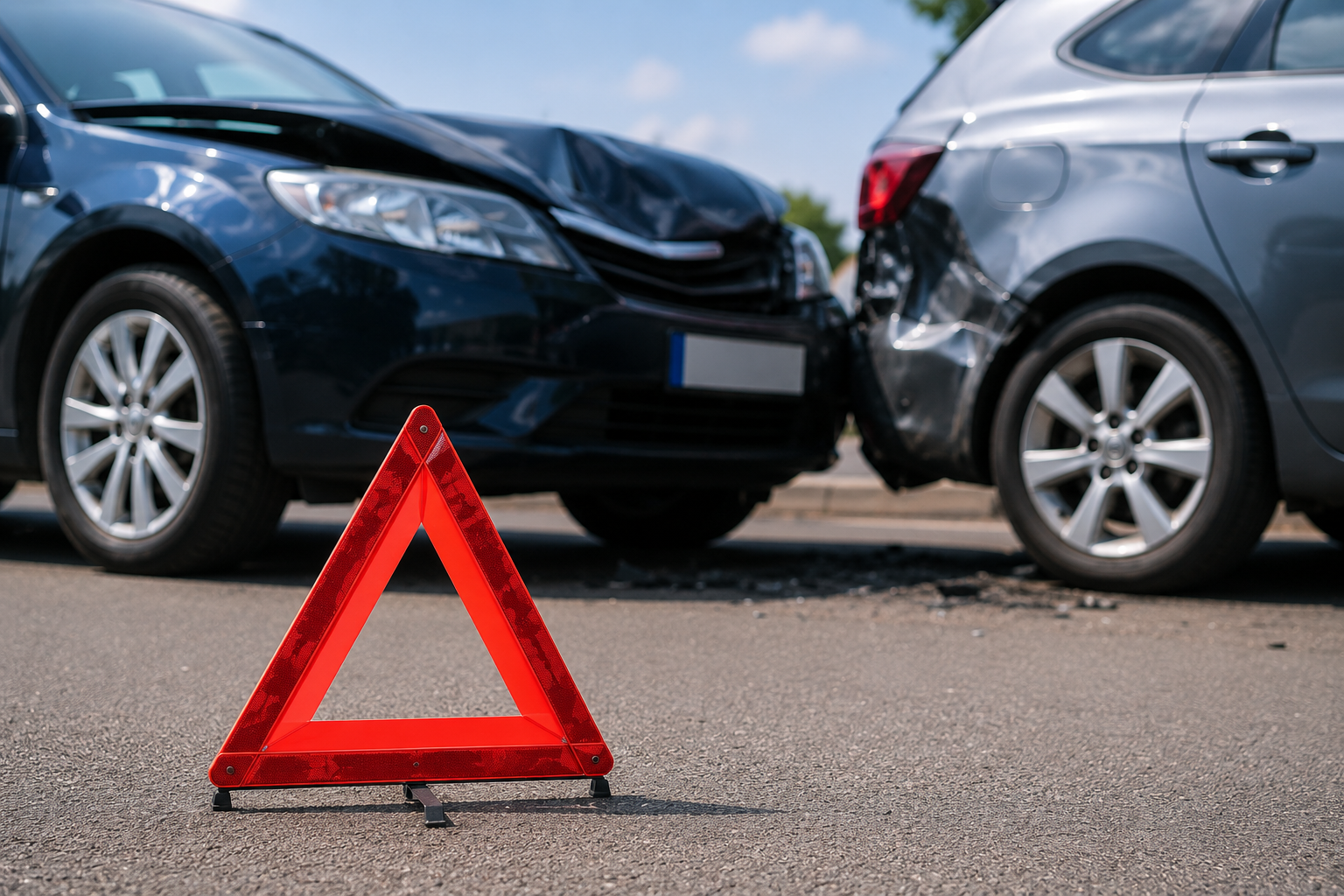
In winter months, visibility is often compromised by "ice fog" or blowing snow. If your vehicle is disabled in the roadway, use hazard lights immediately. If you carry a roadside emergency kit—which is highly recommended for all Alaskans—deploy flares or reflective triangles. However, use extreme caution when exiting the vehicle in sub-zero temperatures or high-traffic areas. If the temperature is significantly below freezing, staying inside the vehicle with the heater on (if safe) may be necessary to prevent hypothermia while waiting for first responders.
Once safety is established, you are legally required to exchange information with the other driver. Under Alaska Statute § 28.35.050, drivers must provide their name, address, and vehicle registration number to the other party. You should also exchange insurance company names and policy numbers. Avoid discussing fault at the scene. Statements like "I'm sorry" or "I didn't see you" can be used as admissions of liability later in the claims process. Instead, focus on gathering objective data: photos of vehicle positions, damage to all cars, license plates, and any relevant road signs or hazards.
Alaska State Reporting Laws and Mandatory Documentation
Alaska has specific thresholds for when a crash must be officially reported to law enforcement and the state government. Not every minor scrape requires a police dispatch, but failing to report a significant accident can lead to the suspension of your driver’s license.
The $2,000 Reporting Threshold
According to Alaska Statute § 28.35.080, a driver involved in an accident resulting in bodily injury, death, or total property damage to an apparent extent of $2,000 or more must give notice to the local police department or the Alaska State Troopers immediately. In 2026, given the rising costs of vehicle sensors, ADAS (Advanced Driver Assistance Systems) components, and bodywork, even a seemingly minor bumper impact often exceeds this $2,000 threshold.
Filing the Form 12-209
If a police officer does not attend the scene and investigate the crash, the drivers are responsible for filing a Citizen’s Report of a Traffic Collision (Form 12-209). This form must be submitted to the Department of Administration within 10 days of the accident if the $2,000 damage threshold was met or if any person was injured. This document serves as the official state record of the event and is often a prerequisite for insurance companies to process a claim efficiently. You can typically find these forms on the Alaska Department of Transportation & Public Facilities website or at local law enforcement precincts.

Understanding Alaska’s Insurance Requirements
Alaska operates under a "Tort" or "At-Fault" insurance system. This means that the person found responsible for causing the accident is liable for the resulting damages, including medical expenses, lost wages, and property repairs. Unlike "no-fault" states, where your own insurance pays for your minor injuries regardless of who caused the crash, in Alaska, you generally seek compensation from the at-fault driver’s insurance provider.
Mandatory Minimum Coverage
To legally operate a motor vehicle in Alaska, you must carry liability insurance. The state’s minimum requirements are significantly higher than many other U.S. jurisdictions, reflecting the high cost of medical care and vehicle repair in the North. The current mandatory minimums are:
- $50,000 for bodily injury or death of one person.
- $100,000 for bodily injury or death per accident (multiple people).
- $25,000 for property damage.
While these are the minimums, many Alaskans opt for higher limits. If you are hit by a driver who does not have insurance, or whose insurance is insufficient to cover your $200,000 medical bill, you will rely on your own Uninsured/Underinsured Motorist (UM/UIM) coverage. In Alaska, insurance companies are required to offer this coverage, and it is highly recommended given that Alaska consistently has a notable percentage of uninsured drivers on its remote road systems.
| Coverage Type | Alaska Minimum Requirement | Purpose |
|---|---|---|
| Bodily Injury (Per Person) | $50,000 | Pays for the other party's medical bills and pain/suffering. |
| Bodily Injury (Per Accident) | $100,000 | Total cap for all injuries caused to others in one crash. |
| Property Damage | $25,000 | Covers repairs to the other party's vehicle or structures. |
| UM/UIM | Optional (must be offered) | Protects you if the at-fault driver has no or little insurance. |
| MedPay | Optional | Covers your own medical bills regardless of fault. |
The Rule of Pure Comparative Negligence
One of the most critical legal concepts to understand about Alaska car crashes is Pure Comparative Negligence. This rule determines how much compensation you can recover if you were partially at fault for the accident.
Under a "pure" system, a driver can recover damages even if they were 99% responsible for the crash, though their recovery is reduced by their percentage of fault. For example, if a jury determines your total damages (medical bills and lost wages) are $100,000, but finds that you were 20% at fault because you were speeding, you would receive $80,000 (the total minus your 20% share of blame).
This legal standard makes the collection of evidence at the scene paramount. Insurance adjusters will fight to increase your percentage of fault to minimize their payout. This is why obtaining dashcam footage, witness statements, and photos of road conditions is vital. In Alaska, "road conditions" are frequently cited as a contributing factor, but the law generally holds that drivers must maintain a speed that is "reasonable and prudent" for the conditions, regardless of the posted limit.
Environmental and Geographic Factors Unique to Alaska
Alaska's environment introduces variables that are rarely seen in the Lower 48. These factors can complicate both the physical recovery from a crash and the legal determination of liability.
Wildlife Collisions (Moose and Bear)
Moose-vehicle collisions are a significant concern in Alaska, particularly during the dark winter months. If you hit a moose, the legal landscape changes. Because a moose is not a person, "at-fault" liability does not apply in the same way. These incidents are typically covered under the Comprehensive portion of your insurance policy, rather than Collision. It is important to report these to the Alaska State Troopers, especially if the animal is injured or blocking the road. Note that in Alaska, it is often illegal to keep roadkill without a specific permit, though the state does have a roadkill salvage program for charities.
Remote Recovery and Towing
If you crash on a remote road like the Denali Highway or the Top of the World Highway, the cost of recovery can be astronomical. Standard insurance policies may have "towing and labor" limits that are easily exceeded when a tow truck has to travel 100 miles from the nearest hub. Drivers should review their policies to see if they have "extended towing" or "off-road recovery" coverage if they frequently travel outside of the Anchorage, Fairbanks, or Juneau metropolitan areas.
The "Black Ice" Defense
Drivers often attempt to blame "black ice" for accidents. However, Alaska courts and insurance adjusters typically view ice as a foreseeable hazard. The "Sudden Emergency Doctrine" rarely applies to winter road conditions in Alaska because ice and snow are considered standard seasonal expectations. Generally, if you slide into another vehicle on ice, you will still be found at fault for failing to adjust your speed to the surface conditions.
Statute of Limitations: The Two-Year Clock
In Alaska, you do not have an indefinite amount of time to seek legal recourse. The Statute of Limitations for personal injury claims resulting from a car crash is two years from the date of the accident (Alaska Statute § 09.10.070).
If you fail to file a lawsuit within this two-year window, you lose your right to sue the at-fault party forever. While two years may seem like a long time, it passes quickly when dealing with long-term medical treatments, surgeries, and negotiations with insurance companies. It is important to note that the statute of limitations for property damage is also generally two years when it arises from the same incident of personal injury. Because of these strict deadlines, it is advisable to consult with a legal professional well before the two-year mark if your injuries are severe or if the insurance company is denying your claim.
Common Mistakes to Avoid After an Alaska Crash
Many drivers inadvertently jeopardize their claims by making common errors in the days following a collision. Avoiding these pitfalls is essential for a smooth recovery process.
- Delaying Medical Care: Even if you feel "fine" due to the adrenaline, internal injuries or whiplash often manifest 24 to 48 hours later. Insurance companies will argue that if you didn't seek immediate care, your injuries weren't caused by the crash.
- Giving a Recorded Statement Too Early: You are required to cooperate with your insurance company, but you are under no legal obligation to provide a recorded statement to the other driver's insurance adjuster immediately. Consult with a professional before providing statements that could be used to assign you a higher percentage of fault.
- Accepting a "Quick Settlement": Insurance companies may offer a check within days of the crash. This is often a "full and final" settlement. If you discover later that you need a $50,000 spinal surgery, you cannot go back for more money once you have signed the release.
- Neglecting the Police Report: Even for minor crashes, a police report provides an objective third-party account of the scene, weather, and traffic violations. This is often the strongest piece of evidence in a disputed claim.
Disclaimer: The information provided in this article is for educational purposes only and does not constitute legal, medical, or financial advice. Laws regarding motor vehicle accidents and insurance vary by jurisdiction and are subject to change. For specific guidance regarding a car crash in Alaska, consult with a qualified attorney licensed in the state of Alaska or contact the Alaska Division of Insurance.
Frequently Asked Questions
What happens if I am involved in a crash with a government vehicle in Alaska?
Crashes involving state or municipal vehicles are subject to the Alaska Government Claims Act. This process is much more complex than a standard insurance claim and often requires a formal "Notice of Claim" to be filed with the specific government entity within a very short timeframe (often much shorter than the two-year statute of limitations). If you are hit by a city bus or a state snowplow, seeking legal counsel immediately is critical.
Do I have to report a crash if it happened on private property?
While Alaska’s mandatory reporting laws (AS 28.35.080) primarily focus on "highways" and "publicly maintained" roads, you are still civilly liable for damage caused on private property (like a shopping center parking lot). Most insurance policies require you to report any accident to the insurer regardless of where it occurred. If the damage exceeds $2,000, it is safer to file the state report to ensure compliance with DMV requirements.
Can I still recover damages if I wasn't wearing a seatbelt?
Yes, you can still recover damages, but Alaska’s comparative negligence rules may apply. The defense may argue that your injuries would have been less severe if you had been wearing a seatbelt. This is known as the "seatbelt defense." While it doesn't bar you from recovery, it can significantly reduce the amount of money you receive for medical bills related to injuries that a seatbelt would have prevented.
What should I do if the other driver flees the scene (Hit and Run)?
In Alaska, a hit-and-run is a serious criminal offense. You should immediately call 911 and provide any details you have: the make, model, color, and license plate of the vehicle, as well as a description of the driver. If the driver is not found, you will need to file a claim under your own Uninsured Motorist (UM) coverage. This is why having UM coverage is essential for Alaska drivers.
How are "Diminished Value" claims handled in Alaska?
If your vehicle is repaired but its resale value is now lower because it has an accident history (often tracked by services like CARFAX), you may be eligible for a "diminished value" claim. In Alaska, you can generally pursue this from the at-fault driver's insurance. This covers the difference between the car's pre-accident market value and its value after being repaired.
Practical Recommendations
If you have been involved in a car crash in Alaska, your next action should be to verify your reporting status. Check if the total damage to all vehicles appears to be over $2,000. If so, and if no police officer was at the scene, download and complete the Form 12-209 from the Alaska Department of Administration. Simultaneously, schedule a medical evaluation even for minor discomfort to document the onset of any injuries. Finally, organize all your scene photos, witness contacts, and repair estimates into a single file to provide to your insurance adjuster or legal representative, ensuring you don't miss the two-year filing window.
Image Gallery
Select an image to open it in a new tab.


Simon Caldwell
Enterprise Technology and Systems Editor
