
In medical terminology, the suffix -ism denotes a state, condition, disease process, symptom, or practice. Derived from the Greek suffix -ismos, it forms nouns that frequently describe abnormal physiological conditions (such as hyperthyroidism), toxicities and poisonings (such as plumbism), or specific structural characteristics of the body (such as astigmatism).
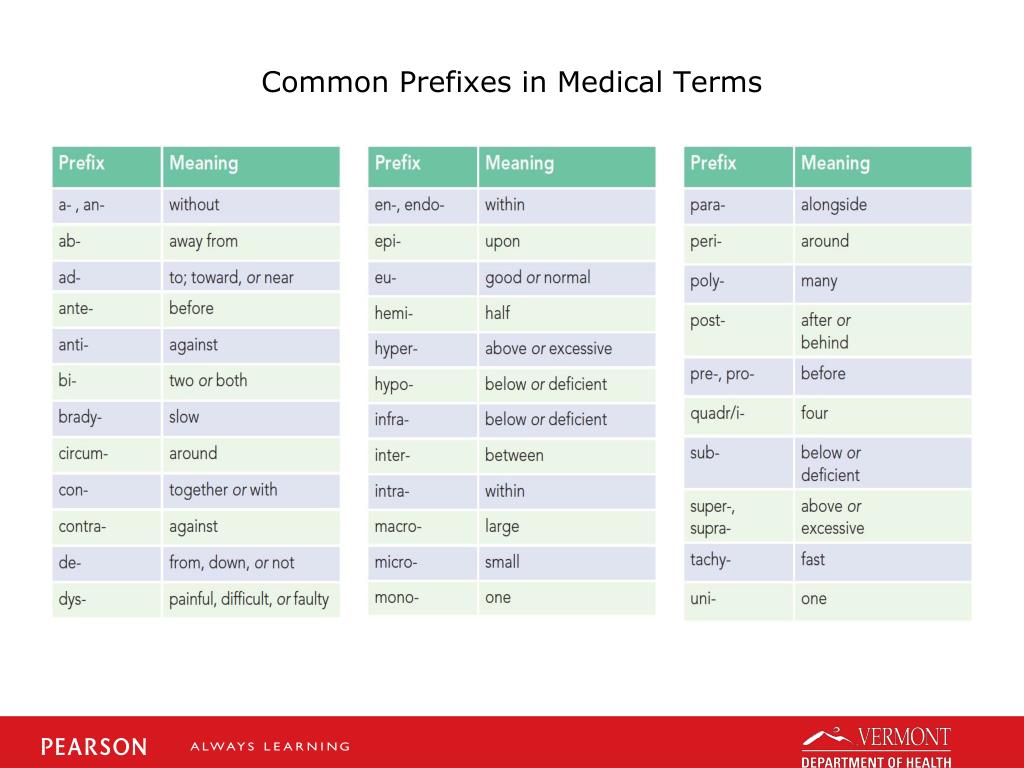
Understanding medical language can feel like learning a foreign tongue. Healthcare providers, medical coders, and researchers rely on a structured naming system built primarily on Ancient Greek and Latin word roots. Prefixes establish location, timing, or quantity; roots designate organs, tissues, or functions; and suffixes describe the nature of the condition or procedure. Among the most versatile and frequently encountered suffixes in clinical medicine is -ism.
Whether reviewing personal laboratory results, studying health information management, or preparing for clinical rotations, knowing how -ism alters a medical root word provides immediate clarity regarding a patient's diagnosis or clinical state.
The Etymology and Linguistic Function of "-ism"
The suffix -ism entered English through Old French (-isme), Latin (-ismus), and ultimately Ancient Greek (-ismos or -ισμός). In classical Greek grammar, this suffix was attached to verbs to form abstract nouns of action, state, or result. When modern clinical medicine codified its vocabulary during the 18th and 19th centuries, scholars retained this linguistic template to standardize medical classifications across languages.
In modern healthcare contexts, -ism serves as a noun-forming suffix. It transforms an underlying root word—which usually identifies an organ, tissue, element, or chemical—into a noun describing an overall condition or phenomenon.
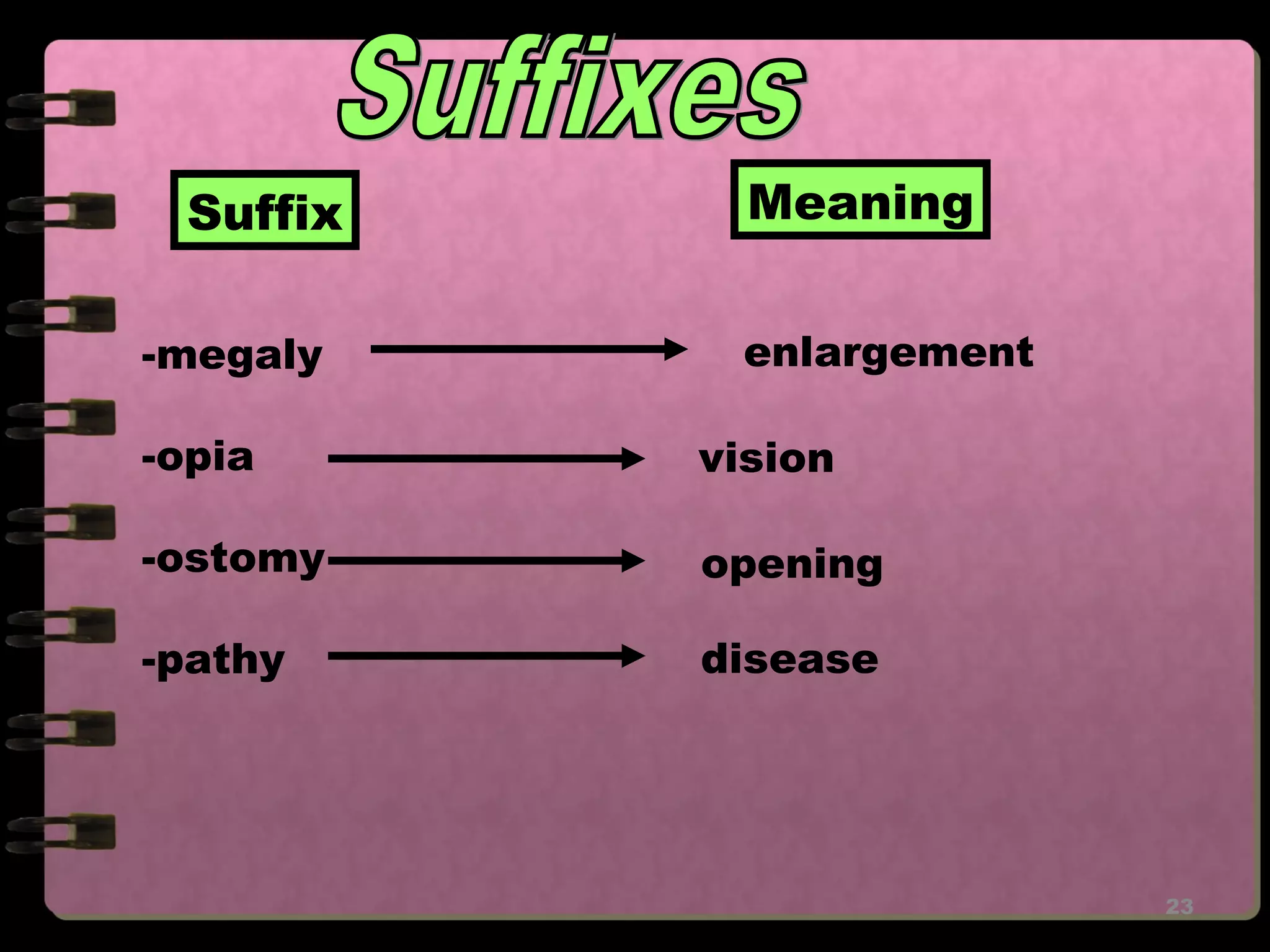
Unlike procedural suffixes such as -ectomy (surgical removal) or -scopy (visual examination), -ism does not signify a medical action performed by a doctor. Instead, it describes a static or dynamic physiological state within the patient's body.
Medical words containing -ism generally fall into one of four distinct categories:
- Pathological and Endocrine States: Describing an excess, deficiency, or dysregulation of organs or hormones.
- Toxicities, Poisonings, and Dependencies: Indicating systemic illness caused by external agents or chronic substance exposure.
- Structural and Anatomical Characteristics: Referring to morphological variations, congenital defects, or specific physiological traits.
- Therapeutic Doctrines and Behavioral Concepts: Referring to historical medical theories, psychological phenomena, or clinical philosophies.
Category 1: Pathological and Endocrine Conditions
The most common application of -ism in modern clinical diagnostics relates to systemic diseases, metabolic disorders, and endocrine dysfunction. In these terms, the suffix means "the state of" or "a condition characterized by" the root word, often modified by a prefix indicating excess (hyper-) or deficit (hypo-).
Prefix (Quantity/Direction) + Root (Organ/Hormone) + Suffix (-ism = Condition) Example: Hyper- + thyroid + -ism = State of excessive thyroid activity
Endocrine Dysregulation
The endocrine system relies on precise hormonal balances. When an organ produces too much or too little of a hormone, the resulting clinical syndrome is named using -ism:
- Hyperthyroidism: The state of overactive thyroid function, leading to excessive production of thyroid hormones ($T_3$ and $T_4$). Patients often experience tachycardia, weight loss, heat intolerance, and anxiety.
- Hypothyroidism: The condition resulting from underactive thyroid function, causing deficient hormone production, weight gain, fatigue, and cold intolerance.
- Hypercortisolism (Cushing's Syndrome): A state marked by abnormally high levels of cortisol in the blood, leading to central obesity, facial rounding, and skin fragility.
- Hypogonadism: A condition where the sex glands (testes or ovaries) produce little to no sex hormones, impairing development or reproductive function.
Metabolic and Cellular Abnormalities
When metabolic processes deviate from baseline homeostasis, -ism forms the diagnostic descriptor:
- Albinism: A genetic condition characterized by the partial or complete absence of melanin pigment in the skin, hair, and eyes due to an enzymatic defect in tyrosinase production.
- Metabolism: The sum of all chemical processes occurring within a living organism to maintain life (combining metabole, meaning change, with -ism).
- Catabolism and Anabolism: The structural breakdown (catabolism) or synthesis (anabolism) of complex molecules within living organisms.

Category 2: Toxicities, Poisonings, and Dependencies
Another critical use of -ism in medicine designates poisonings, environmental exposures, or chronic substance dependency disorders. In toxicological contexts, the suffix attaches to the name of a element, drug, or toxin to mean "a pathological condition caused by exposure to or accumulation of" that substance.
Environmental and Chemical Toxicities
Historically and clinically, environmental toxicologists use -ism to specify heavy metal and mineral poisonings:
- Plumbism (Lead Poisoning): Derived from the Latin word for lead (plumbum), plumbism describes chronic or acute lead toxicity, which leads to neurological impairment, anemia, and abdominal colic.
- Saturnism: An alternative historical term for lead poisoning, named after the alchemical association between the planet Saturn and lead.
- Argyrism (or Argyria): A condition caused by chronic exposure to silver salts, leading to irreversible blue-gray discoloration of the skin and mucous membranes.
- Hydrargyrism (Mercury Poisoning): Toxic physiological state resulting from mercury exposure, derived from hydrargyrum (liquid silver/mercury), characterized by tremors, memory loss, and emotional instability.
- Botulism: A severe, potentially fatal paralytic illness caused by the neurotoxin produced by the bacterium Clostridium botulinum.
Substance Dependence and Overuse
When individuals experience chronic physiological reliance on or damage from a chemical compound, -ism identifies the resulting disease state:
- Alcoholism: The medical term for alcohol use disorder (AUD), characterized by chronic, compulsive alcohol consumption despite negative physical, social, and occupational consequences.
- Caffeinism: A state of central nervous system toxicity resulting from excessive caffeine intake, presenting with agitation, insomnia, cardiac arrhythmias, and muscle tremors.
- Salicylism: Acute or chronic toxicity caused by excessive ingestion of salicylates (such as aspirin), manifesting as tinnitus, hyperventilation, metabolic acidosis, and altered mental status.
- Ergotism: Toxicity resulting from ingesting ergot alkaloids (fungal contamination of grains), historically known as "St. Anthony's Fire," which causes severe vasoconstriction, gangrene, and hallucinations.
Category 3: Anatomical and Structural Characteristics
Medical professionals also use -ism to classify structural variations, congenital anomalies, or physical signs observed during clinical examination. In these instances, the suffix means "the presence of a specific physical trait, structure, or anomaly."
Root Word (Structure/Trait) + Suffix (-ism) = Physical Condition or Structural Trait
Ophthalmic and Neuromuscular Characteristics
Ophthalmologists and neurologists frequently encounter terms ending in -ism to describe functional or structural defects in optics and movement:
- Astigmatism: An optical defect in which the cornea or lens of the eye lacks a spherical curvature, preventing light rays from focusing to a single sharp point on the retina (a- meaning without, stigma meaning point).
- Strabismus: A condition in which the visual axes of the eyes fail to align correctly under normal conditions (commonly referred to as cross-eyed or wall-eyed), preventing normal binocular vision.
- Nystagmus: Involuntary, rapid, rhythmic oscillation of the eyes, which can be horizontal, vertical, or rotary, often stemming from vestibular or neurological dysfunction.
- Priapism: A persistent, often painful penile erection lasting longer than four hours, unrelated to sexual stimulation, requiring urgent medical intervention to prevent ischemic tissue damage.
Congenital and Developmental Variations
Anatomists and pediatric specialists use -ism when documenting developmental or genetic traits:
- Micrognathism (or Micrognathia): A condition characterized by an abnormally small lower jaw (mandible), which may interfere with infant feeding or upper airway stability.
- Cryptorchidism: A developmental defect in which one or both testicles fail to descend from the abdomen into the scrotum before birth (kryptos meaning hidden, orchis meaning testis).
- Gigantism: Excessive growth and height significantly above average due to hypersecretion of growth hormone (GH) during childhood before the epiphyseal plates fuse.
- Infantilism: A rare clinical condition characterized by the retention of infantile physical or psychological traits into adulthood.
Category 4: Clinical Doctrines, Theories, and Practices
Beyond direct pathology and anatomy, -ism serves a historical and theoretical purpose in medical literature. It identifies distinct schools of thought, therapeutic practices, or psychological concepts:
- Magnetism (Animal Magnetism / Mesmerism): A historical 18th-century medical theory proposed by Franz Mesmer, postulating an invisible natural force possessed by living beings, which paved the way for modern hypnosis.
- Hypnotism: The practice or study of inducing a trance-like state of heightened focus and suggestibility, utilized in clinical psychology and pain management.
- Empiricism: A philosophy of medicine holding that clinical knowledge must derive directly from observed phenomena and patient outcomes rather than theoretical models alone.
- Malingering vs. Somatism: Psychological frameworks categorizing how symptoms are produced or experienced by individuals.
Comprehensive Breakdown of "-ism" Medical Terms
The following table provides a quick-reference guide to common medical terms ending in -ism, illustrating how root words combine with the suffix to form precise clinical definitions.
| Medical Term | Word Root Breakdown | Root Meaning | Clinical Definition |
|---|---|---|---|
| Hyperthyroidism | Hyper- (excess) + thyroid (gland) + -ism | Shield-shaped gland | State of excessive thyroid hormone secretion causing accelerated metabolism. |
| Hypothyroidism | Hypo- (deficient) + thyroid (gland) + -ism | Shield-shaped gland | State of insufficient thyroid hormone production causing metabolic slowing. |
| Astigmatism | A- (without) + stigma (point) + -ism | Point or spot | Refractive defect where light rays fail to converge at a single focal point on the retina. |
| Plumbism | Plumbum (lead) + -ism | Lead metal | Pathological toxic state caused by chronic or acute lead exposure and absorption. |
| Cryptorchidism | Kryptos (hidden) + orchis (testis) + -ism | Hidden testicle | Congenital condition where one or both testes fail to descend into the scrotum. |
| Strabismus | Strabismos (squinting) + -ism | Looking obliquely | Ocular mis alignment where both eyes fail to focus on the same image simultaneously. |
| Botulism | Botulus (sausage) + -ism | Sausage-toxin | Neuroparalytic illness resulting from absorption of Clostridium botulinum toxin. |
| Priapism | Priapos (deity) + -ism | Prolonged state | Pathological, sustained, and painful erection unlinked to sexual arousal. |
| Micrognathism | Micro- (small) + gnathos (jaw) + -ism | Jaw bone | Developmental abnormality characterized by an unusually small mandible. |
| Salicylism | Salix (willow tree) + -ism | Salicylate source | Toxic state produced by an overdose of acetylsalicylic acid (aspirin). |
| Gigantism | Gigas (giant) + -ism | Abnormally large | Growth disorder resulting from pituitary growth hormone excess prior to epiphyseal closure. |
| Albinism | Albus (white) + -ism | White pigment | Hereditary inability to synthesize melanin pigment in cutaneous, ocular, and hair tissues. |
Structural Deconstruction: How to Analyze Words Ending in "-ism"
When encountering an unfamiliar medical term ending in -ism, breaking down its component parts enables accurate interpretation without immediate dictionary access. Use this three-step analysis framework:
Step 1: Identify Suffix (-ism) ➔ Establishes: "State, condition, or disease of..." Step 2: Isolate Root Word ➔ Identifies: Target organ, tissue, element, or trait. Step 3: Check Prefix (If any) ➔ Modifies: Direction, quantity, or negation (e.g., hyper-, hypo-, a-).
Case Study: Deconstructing Hyperparathyroidism
- Suffix: -ism $\rightarrow$ "A condition or pathological state."
- Prefix: Hyper- $\rightarrow$ "Excessive or elevated."
- Root 1: Para- $\rightarrow$ "Adjacent to or alongside."
- Root 2: Thyroid $\rightarrow$ "The thyroid gland."
- Combined Meaning: A pathological state caused by excessive hormone secretion from the parathyroid glands (located adjacent to the thyroid).
Case Study: Deconstructing Dicrotism
- Suffix: -ism $\rightarrow$ "State or phenomenon."
- Root: Dicrot- (from dikrotos, meaning double-beating).
- Combined Meaning: A cardiovascular phenomenon characterized by a double pulse wave per heart beat (a dicrotic notch on arterial tracings).
Differentiation: "-ism" vs. Related Medical Suffixes
Medical terminology includes several suffixes that sound similar or convey related concepts. Distinguishing -ism from these structural relatives prevents diagnostic errors in clinical documentation.
1. "-ism" vs. "-itis"
- -ism: Refers broadly to a condition, state, toxicity, or functional state (e.g., thyroidism = state of thyroid function).
- -itis: Specifically denotes inflammation of a tissue or organ (e.g., thyroiditis = inflammation of the thyroid gland).
2. "-ism" vs. "-osis"
- -osis: Typically designates a chronic disease, process, or abnormal increase in non-inflammatory cells (e.g., leukocytosis = elevated white blood cells; nephrosis = kidney disease).
- -ism: Focuses more broadly on systemic states, metabolic syndromes, or poisoning, though there is occasional overlap (e.g., dermatosis vs. albinism).
3. "-ism" vs. "-oma"
- -oma: Refers specifically to a tumor, mass, or neoplasm (e.g., adenoma, carcinoma).
- -ism: Refers to the functional state that a tumor might produce (e.g., a pituitary adenoma causes hyperpituitarism).
Clinical and Legal Considerations in Medical Coding
In clinical administration, electronic health record (EHR) management, and diagnostic coding (such as ICD-10-CM), terms ending in -ism demand precise documentation. Because -ism indicates a distinct disease entity or functional state rather than a temporary symptom, coding errors can impact clinical care pathways and reimbursement.
For example, documenting a patient with "toxic lead exposure" differs from assigning a formal diagnosis of plumbism. The latter implies systemic organ involvement, requiring specific toxicological management, chelation therapy protocols, and mandatory public health reporting in many jurisdictions.
Similarly, distinguishing between hyperthyroidism (excess hormone production) and simple thyrotoxicosis (the clinical syndrome of excess hormone, regardless of source) relies heavily on understanding how suffixes define disease mechanisms.
Patient Guidance: What to Do When a Diagnosis Ends in "-ism"
If your doctor or healthcare provider diagnoses you with a condition ending in -ism, take the following practical steps to better understand your care plan:
- Clarify the Underlying Root: Ask your provider which organ, hormone, or substance the diagnosis involves. For example, if diagnosed with salicylism, ask about all medication sources containing salicylates.
- Determine Cause (Primary vs. Secondary): Ask whether the condition originates directly from organ failure (such as primary hypogonadism) or from an external influence (such as medication-induced hypercortisolism).
- Inquire About Reversibility: Some conditions ending in -ism (like caffeinism or salicylism) resolve completely once the offending agent is removed. Others (like albinism or astigmatism) are permanent genetic or structural traits managed through long-term care or corrective devices.
- Review Laboratory Requirements: Because many -ism conditions represent hormonal or chemical imbalances, ongoing monitoring via blood tests, urinalysis, or imaging is often necessary to track disease progression.
Frequently Asked Questions
Does the suffix "-ism" always mean a disease or illness?
Not always. While -ism frequently designates pathological states (like botulism) or toxicities (like plumbism), it can also describe normal metabolic processes (like metabolism), anatomical characteristics (like micrognathism), or clinical methods (like hypnotism).
What is the difference between hypothyroidism and hyperthyroidism?
Both terms use the suffix -ism to indicate a state of thyroid gland activity. The prefix hyper- means high or excessive, so hyperthyroidism is an overactive thyroid. The prefix hypo- means low or deficient, so hypothyroidism is an underactive thyroid.
Why do some toxicities end in "-ism" while others end in "-intoxication"?
In toxicological literature, -ism is traditionally applied to chronic exposure or elemental/plant poisonings named after the causative substance (e.g., plumbism from lead, ergotism from ergot). Terms ending in poisoning or intoxication are often broader or used for acute clinical events.
Is "astigmatism" related to a disease state?
No. Astigmatism is not an eye disease or infection. It is a structural refractive error resulting from an irregularly shaped cornea or lens, causing blurred vision that can be corrected with glasses, contact lenses, or refractive surgery.
Are "-ism" and "-iasis" the same thing in medical terminology?
No. While both are suffixes indicating a condition, -iasis specifically denotes a pathological state produced by a parasite or infection (e.g., giardiasis, amebiasis) or the presence of stones (e.g., nephrolithiasis).
Summary and Key Takeaways
Understanding the suffix -ism transforms complex medical jargon into accessible information. Whether reading lab results or studying clinical terminology, remember these foundational principles:
- Core Meaning: The suffix -ism creates nouns meaning "a condition, state, disease process, toxicity, or structural trait."
- Etymology: Derived from Greek -ismos, adapted into modern clinical Latin and English.
- Context Matters: It spans endocrine conditions (hyperthyroidism), heavy metal poisonings (plumbism), structural defects (astigmatism), and medical doctrines (hypnotism).
- Deconstruction: Analyze words by isolating the suffix (-ism), identifying the root word, and checking for modifying prefixes (such as hyper- or hypo-).
By mastering this key suffix, patients and medical professionals alike can easily decode diagnostic reports, improve clinical communication, and gain deeper insight into health conditions.
Disclaimer: This article is for educational purposes only and does not constitute formal medical advice, diagnosis, or treatment. Always consult a qualified healthcare professional regarding any medical diagnosis or treatment plan.
EDITORIAL CATEGORY METADATA:
TOPIC METADATA:
Image Gallery
Select an image to open it in a new tab.

Zara El-Hashem
Sociocultural Dynamics and Academics Writer
