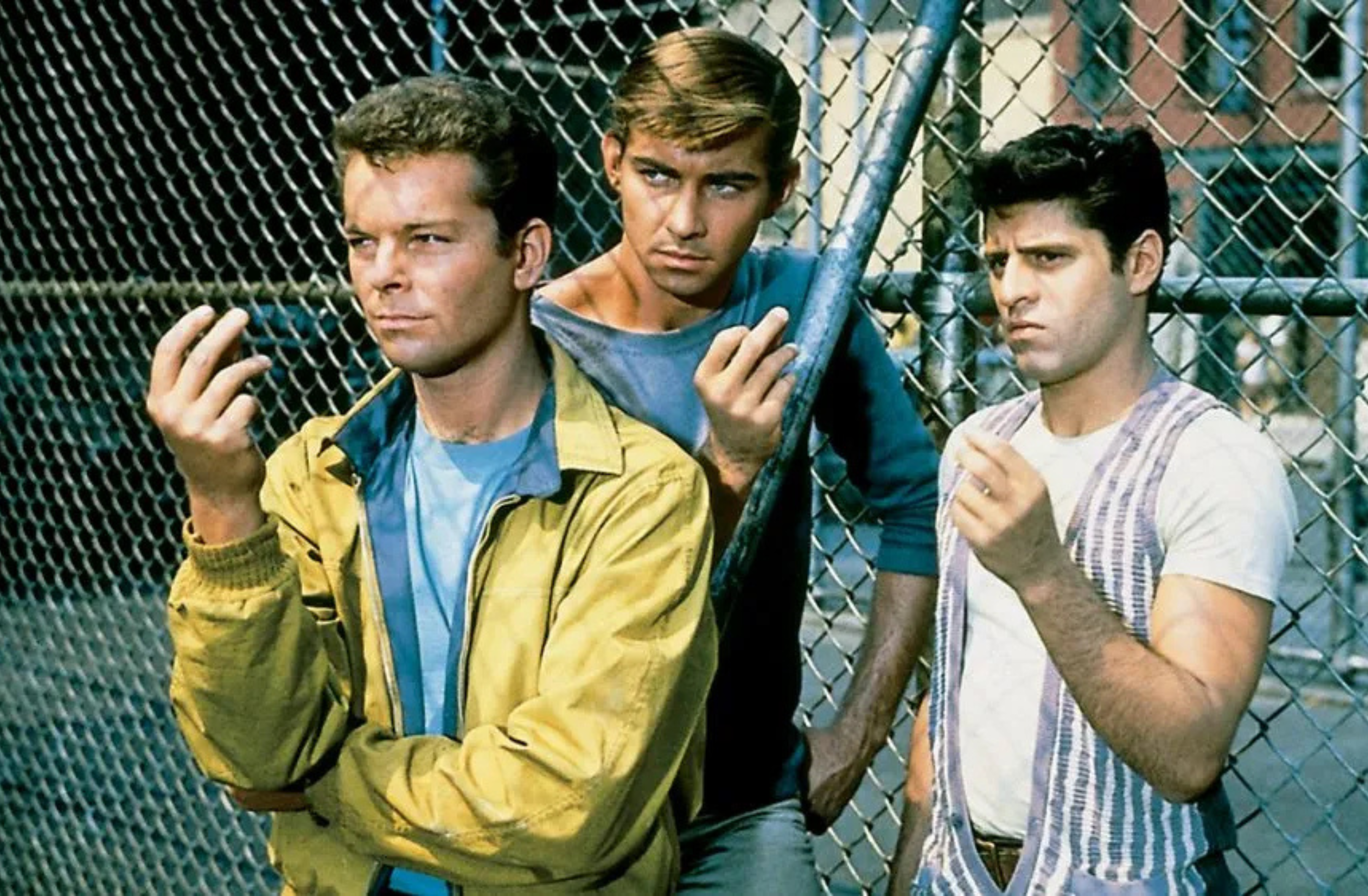
The casting and characterization of West Side Story roles have undergone a massive evolution since the musical first debuted on Broadway in 1957. While many audiences believe the original productions were models of authentic representation, the historical reality is far more complex, involving "brownface" makeup, dubbing scandals, and significant script revisions. In 2026, as we look back on nearly seven decades of this cultural touchstone, distinguishing the myths from the facts is essential to understanding the legacy of Maria, Tony, Anita, and the rival gangs that defined a genre.
The Evolution of Authenticity in Casting West Side Story Roles
A common misconception among modern viewers is that the casting of West Side Story has always prioritized ethnic accuracy. In reality, the journey toward authentic representation was long and fraught with industry biases. When Leonard Bernstein, Jerome Robbins, and Arthur Laurents first conceived the show, it was originally titled East Side Story and focused on a conflict between Jewish and Catholic families. The shift to a Puerto Rican versus "American" (Polish-Irish) conflict was a creative decision driven by contemporary headlines of the 1950s, but the casting did not immediately follow this cultural specificity.
The 1961 Film: Star Power vs. Heritage
The most enduring myth of the 1961 film is that the cast reflected the community they portrayed. While Rita Moreno, a native Puerto Rican, won an Academy Award for her portrayal of Anita, she was a rare exception. Natalie Wood, who played Maria, was of Russian descent. To make the cast appear more "Latin," makeup artists applied a dark, uniform "pancake" makeup to almost everyone playing a member of the Sharks. Rita Moreno has famously recounted her frustration with this, noting that the makeup was so dark it didn't reflect the actual diversity of skin tones found in Puerto Rico.
The 2021 Shift: A Correction of History
By the time Steven Spielberg’s 2021 adaptation was released, the industry’s approach had shifted entirely. A major fact often overlooked is the rigorous "no-exceptions" policy for the 2021 film: every actor playing a Puerto Rican character had to have Latinx heritage. This led to the discovery of Rachel Zegler, a high school student of Colombian and Polish descent, who was selected from over 30,000 applicants for the role of Maria. This version also removed the "brownface" makeup entirely, allowing for a realistic spectrum of Afro-Latino and lighter-skinned Puerto Rican actors, which more accurately reflects the demographic reality of the Caribbean.
Myth vs. Fact: Identifying the Main Characters
Many casual fans of the musical hold misconceptions about the relationships and backgrounds of the central characters. These roles are often simplified in memory, but their original stage directions and script nuances tell a different story.
Myth: Maria and Anita are Sisters
One of the most frequent errors is the belief that Maria and Anita are sisters. Fact: Anita is the girlfriend of Maria’s brother, Bernardo. While they share a bond that is sisterly in nature—sharing secrets and living in close proximity—there is no biological relation. This distinction is vital for the plot, as it complicates Anita's loyalty when she is forced to choose between her love for Bernardo and her protective instinct for Maria, particularly after the "Rumble."
Myth: Tony is the Leader of the Jets
In both the 1961 and 2021 films, Tony is presented as a co-founder of the Jets, but by the time the story begins, he is no longer a member. A common myth is that Tony is actively seeking conflict. Fact: Tony has "grown out" of the gang life. He is working at Doc’s drugstore and is actively trying to build a life outside of the street violence. His tragedy is not that he is a "thug," but that he is pulled back into the violence by his loyalty to Riff, his best friend and the actual current leader of the Jets.
Myth: Anybodys is Simply a "Tomboy"
For decades, the character of Anybodys—the person who desperately wants to join the Jets—was described in scripts and playbills as a "tomboy." However, modern analysis and the 2021 film have corrected this interpretation. Fact: The original stage directions by Arthur Laurents describe Anybodys as a character who is "in transition" or who lives between worlds. In the 2021 version, Anybodys was explicitly portrayed as a transgender man (played by non-binary actor Iris Menas). This wasn't a "woke" addition to the story but rather a realization of the character’s original subtext that had been suppressed by the social norms of the 1950s and 60s.

The Controversy of "America": Lyrics and Political Messaging
The song "America" is perhaps the most famous number in the show, but it is also the source of significant myth-making regarding its political stance.
The Stage vs. The Screen
A major fact that many fans miss is that the lyrics to "America" were drastically changed between the 1957 stage debut and the 1961 film. In the original Broadway version, the song was a back-and-forth between Anita (who loved America) and Rosalia (who missed Puerto Rico). Anita’s lyrics were harshly critical of Puerto Rico, calling it an "island of tropic diseases."
Because of the backlash from the Puerto Rican community, Stephen Sondheim changed the lyrics for the 1961 film. The argument was moved from being between two women to being between the Shark men and the Shark women. This changed the dynamic from a criticism of the homeland to a debate about the immigrant experience—comparing the racism and "knives in the back" found in Manhattan to the poverty found back home.
| Aspect | 1957 Broadway Original | 1961 Film Version | 2021 Film Version |
|---|---|---|---|
| Participants | Anita vs. Rosalia | Shark Men vs. Shark Women | Anita vs. Bernardo (w/ community) |
| Tone | Heavily critical of Puerto Rico | Balanced debate on immigrant life | Celebration of community despite struggle |
| Key Myth | It is an "anti-Latino" song. | It was always a male vs. female song. | It was filmed in a studio. (Fact: Filmed on NYC streets) |
| Location | On a rooftop | On a rooftop | On the streets of San Juan Hill/Harlem |
Behind the Scenes: The "Big Four" and Creative Conflicts
A persistent myth is that West Side Story was the singular vision of Leonard Bernstein. While his score is iconic, the show was a high-tension collaboration between four of the most influential figures in American theater: Leonard Bernstein (Music), Jerome Robbins (Choreography/Direction), Arthur Laurents (Book), and Stephen Sondheim (Lyrics).
The Dismissal of Jerome Robbins
It is a documented fact that Jerome Robbins was fired from the 1961 film production. Despite winning a co-director credit with Robert Wise, Robbins’ perfectionism and demand for endless retakes put the film significantly over budget and behind schedule. He was banned from the set after filming only a few of the major dance sequences (including the "Prologue" and "America"). However, his influence was so profound that the dancers remained loyal to his style, and he still shared the Academy Award for Best Director.
Stephen Sondheim’s "Regret"
A lesser-known fact is that Stephen Sondheim, who was only 25 when he was hired, originally didn't want the job. He wanted to write music as well as lyrics. He spent much of his later life being self-critical of his work on West Side Story, particularly the lyrics for "I Feel Pretty," which he felt were too sophisticated and "rhymey" for a young girl who hadn't been in the country long. The myth that he viewed this as his "perfect" work is contradicted by his own memoirs and interviews.
Technical Facts of the 1961 and 2021 Productions
When discussing the roles and their execution, we must look at the technical requirements that made these performances possible.
- Vocal Dubbing: It is a fact that Natalie Wood did not sing her own songs in the 1961 film. She recorded them, but they were almost entirely replaced by the voice of Marni Nixon. Similarly, Richard Beymer’s (Tony) singing was dubbed by Jimmy Bryant. In contrast, the 2021 cast performed all their own vocals, a shift toward technical authenticity that has become the standard in 2026.
- The "San Juan Hill" Context: A historical fact often ignored in the original film but highlighted in the 2021 version is that the gangs weren't just fighting over "turf"—they were fighting over a neighborhood that was being actively demolished. The Lincoln Center now sits where the "West Side" of the story once was. This adds a layer of "tragic irony" to the roles: the Jets and Sharks are fighting for territory that the city is literally tearing down around them.
- The "Rumble" Choreography: Jerome Robbins famously kept the actors playing the Jets and the Sharks separated during rehearsals. They were not allowed to eat lunch together or socialize. This was a deliberate tactic to build real-world tension that would translate into their roles on screen and stage.
Frequently Asked Questions
Was Chita Rivera in the original West Side Story movie?
No. While Chita Rivera originated the role of Anita on Broadway in 1957 and is inextricably linked to the character, she did not appear in the 1961 film. The role went to Rita Moreno. However, Chita Rivera’s performance set the template for the character’s physicality and "fire" that every subsequent actress has followed.
Is West Side Story a true story?
The plot is a fictionalized adaptation of William Shakespeare’s Romeo and Juliet. However, the "roles" of the gang members were based on real-life news reports of the 1950s. Arthur Laurents specifically researched Manhattan street gangs and the social tensions in "San Juan Hill" (the West Side neighborhood) to ground the Shakespearean plot in a gritty, mid-century reality.
Why did they change the order of the songs in the movies?
The song order in the stage musical differs from the films. For example, in the stage version, "Gee, Officer Krupke" is sung after the Rumble to provide comic relief during a dark moment. In the 1961 film, it was moved earlier because the producers felt it was too jarring to have a comedy song immediately following the deaths of Riff and Bernardo. These changes affect how the "roles" are perceived—making the Jets seem more or less sympathetic depending on the sequence of events.
Was Rachel Zegler really discovered on Twitter?
Partially. In January 2018, Steven Spielberg posted an open casting call on Twitter for Latinx actors. Rachel Zegler, then 16 years old, sent in a video of herself singing "I Feel Pretty." Out of 30,000 applicants, she was eventually chosen for the role of Maria. This remains one of the most famous modern "star is born" facts in musical theater history.
Did the 2021 movie use subtitles for the Spanish dialogue?
A significant creative choice in the 2021 film was the decision not to use subtitles for the Spanish dialogue. Steven Spielberg and screenwriter Tony Kushner did this to show respect to the language and to avoid "othering" the Puerto Rican characters. The goal was to make the Spanish and English roles feel equally weighted in the narrative.
Final Recommendation for Students and Performers
When researching or preparing for West Side Story roles in 2026, it is vital to look beyond the 1961 film’s surface. Performers should study the 2021 screenplay for its historical context regarding the destruction of San Juan Hill and the authentic use of language. Understanding that these characters are not "archetypes" but individuals caught in a cycle of poverty and urban renewal will lead to a more nuanced and respectful portrayal. Always prioritize the 1957 stage notes for character motivation, but look to modern adaptations for the standard of cultural authenticity required today.
Image Gallery
Select an image to open it in a new tab.

Vivian Cho
Executive IT and Emerging Technologies Reporter
