How Solar Panel Install Tracks Work: Mechanics, Components, and Installation Frameworks
Solar panel install tracks—more commonly referred to in the industry as mounting systems, rails, or racking frameworks—form the structural backbone of any photovoltaic (PV) array. These specialized aluminum or steel profiles secure solar modules to roofs or ground surfaces, withstanding wind loads, snow accumulations, and thermal expansion while maintaining precise tilt angles to maximize energy harvest.
Understanding the Role of Solar Racking Systems
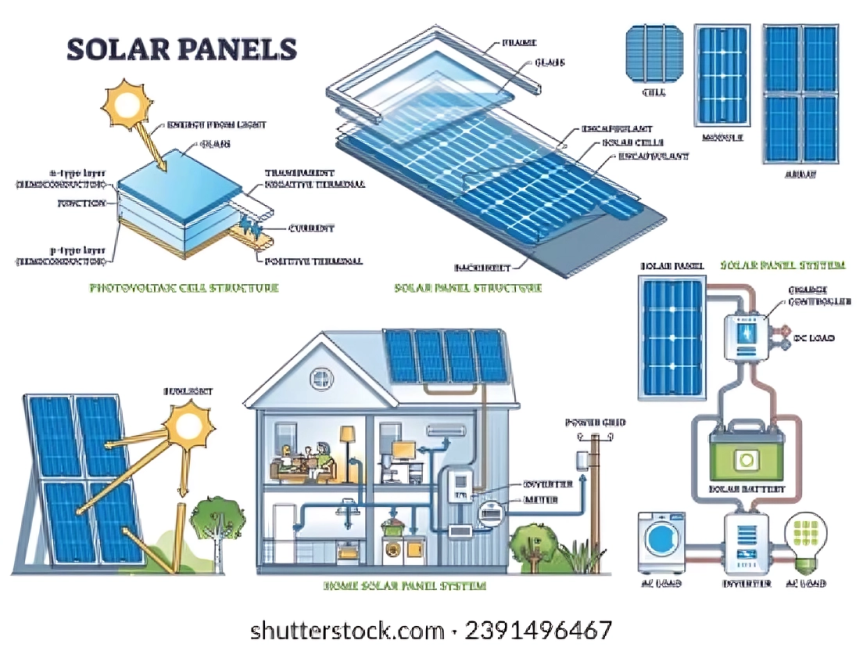
When property owners invest in photovoltaic technology, attention naturally gravitates toward the solar panels themselves and the string or micro-inverters converting sunlight into usable electricity. Yet, the physical infrastructure supporting those modules is just as vital. Solar panel install tracks provide the mechanical interface between the building architecture or earth and the high-voltage electrical generators mounted upon them.
Without a robust racking system, modules would shift, sustain wind damage, or experience micro-cracking in their silicon wafers due to uneven stress distribution. Install tracks act as a rigid yet adaptable framework. They distribute the dead load of the panels and the dynamic loads of weather safely across rafters, trusses, or ground foundations. Understanding how these systems operate involves examining their metallurgical composition, structural profiles, attachment methodologies, and the engineering principles that keep multi-thousand-dollar arrays secure for decades.
Core Components of an Install Track Assembly
A complete solar mounting system is not a single extruded piece of metal, but rather an integrated assembly of specialized hardware engineered to work in harmony. Every component plays a distinct mechanical role in securing the array.
- Roof Rafter / Ground Pier
- Lag Bolt / Structural Anchor
- Flashing & L-Foot / Stand-Off
- Install Track / Mounting Rail
- Mid Clamps & End Clamps -> Solar Panels
- Install Track / Mounting Rail
- Flashing & L-Foot / Stand-Off
- Lag Bolt / Structural Anchor
Rails (The Tracks)
The tracks themselves are typically extruded from 6000-series structural aluminum, most commonly alloy 6005-T5, chosen for its exceptional strength-to-weight ratio and corrosion resistance. These rails feature hollow, multi-chambered cross-sections that resist bending and twisting under heavy loads. The top and bottom channels often feature slots designed to accept T-bolts, hex bolts, or specialized clamping hardware, allowing installers to slide and secure modules at exact intervals.
Attachments and Flashings
The connection point between the roof and the track requires meticulous engineering to prevent water infiltration. On pitched shingle roofs, installers use lag bolts driven directly into structural rafters. These bolts pass through a metal flashing—a specialized sheet of aluminum or galvanized steel slipped under the courses of shingles above the penetration. A waterproof collar or rubber gasket sits between the flashing and the L-foot bracket, sealing the hole against rain and snowmelt.
Clamps (Mid and End Clamps)
Panels are secured to the tracks using aluminum clamps. Mid-clamps sit between two adjacent panels, using a wedge-like design and a central bolt to lock both modules firmly against the rail while maintaining a consistent expansion gap (usually around 1 inch) to accommodate thermal movement. End-clamps anchor the outer edges of the terminal panels in a row, featuring a vertical lip that grips the frame of the solar module.
Splice Bars
When arrays exceed the stock length of a single rail (typically 12 to 14 feet), installers connect multiple tracks using internal or external splice bars. These connectors maintain structural continuity and electrical bonding across the entire rail length, which is a mandatory requirement for system grounding.

Types of Solar Track Configurations by Mounting Surface
The mechanical behavior of install tracks changes significantly depending on where and how the array is deployed. Engineering teams calculate wind uplift and snow dead loads based on the specific mounting architecture.
Pitched Roof Mounts (Rail-Based vs. Rail-Less)
- Traditional Rail Systems: The standard approach utilizes two parallel tracks running underneath each row of panels. This method offers high adjustability, making it easy to true up uneven roofs and accommodate slight framing errors.
- Rail-Less Systems: Newer configurations eliminate long horizontal tracks entirely. Instead, small mounting bases attach directly to the roof anchors, and the modules themselves act as the structural bridge. While this reduces metal weight and visual clutter, it requires extreme installation precision, as module frames cannot tolerate high framing discrepancies.
Flat Roof Ballasted Mounts
On commercial flat roofs, piercing the waterproof membrane is often avoided to prevent leaks. Here, install tracks form part of a ballasted system. Heavy concrete blocks or pavers are loaded into trays integrated into the racking framework. The entire assembly relies on gravity, friction, and aerodynamic wind-deflector shields to keep the array anchored without roof penetrations.
Ground-Mount Racks
Ground installations require heavy-duty vertical posts—either driven directly into the earth via pile-driving machines or anchored in poured concrete piers. Long, heavy structural tracks mount to these posts, often positioned at a steeper, fixed tilt angle optimized for latitude, or integrated into single-axis trackers that rotate following the sun's daily arc.
Mechanical Forces and Structural Engineering
Solar install tracks are subjected to intense environmental forces that must be calculated by professional engineers before installation. Building codes mandate that racking systems withstand specific wind speeds (often 90 to 180 mph depending on the region) and ground snow loads.
- Wind Uplift: Wind passing over a pitched roof creates a low-pressure zone (aerodynamic lift) that attempts to pull solar panels and their tracks upward off the building. The tracks must transfer this tensile load safely through the L-feet and lag bolts into the wooden framing members of the roof.
- Thermal Expansion and Contraction: Metal expands when heated by the sun and contracts in freezing temperatures. A 14-foot aluminum rail can shift noticeably over a 100-degree Fahrenheit temperature swing. Install tracks rely on thermal expansion gaps and specialized sliding joints to prevent buckling, warping, or tearing out roof attachments.
- Electrical Grounding and Bonding: Install tracks serve a dual mechanical and electrical purpose. Because solar frames are metallic, any fault in the wiring could electrify the frame. Specially designed bonding pins on mid-clamps pierce through the anodized aluminum coating of the rails and panel frames, creating a continuous electrical path to ground through the racking system, eliminating the need for cumbersome copper grounding wires on every single module.
Comparison of Common Solar Mounting Methodologies
| Mounting System Type | Primary Application | Load Transfer Mechanism | Waterproofing Method | Cost & Complexity |
|---|---|---|---|---|
| Pitched Roof (Rail) | Residential / Commercial | L-feet to rafters via lag bolts | Metal flashing and rubber gaskets | Moderate cost, standard complexity |
| Flat Roof (Ballast) | Commercial / Industrial | Dead weight (concrete blocks) & friction | None (penetration-free membrane) | Higher material cost, fast labor |
| Ground Mount (Fixed) | Rural / Utility Scale | Driven steel piles or concrete piers | Not applicable (earth installation) | Variable cost, heavy machinery required |
| Solar Tracker | Utility Scale / Agricultural | Motorized slew drives and torque tubes | Not applicable (earth installation) | Highest capital cost, maximum energy yield |
Step-by-Step Overview of How Tracks Are Installed
To fully understand how install tracks operate, examining the field workflow reveals how raw engineering translates into a finished array.
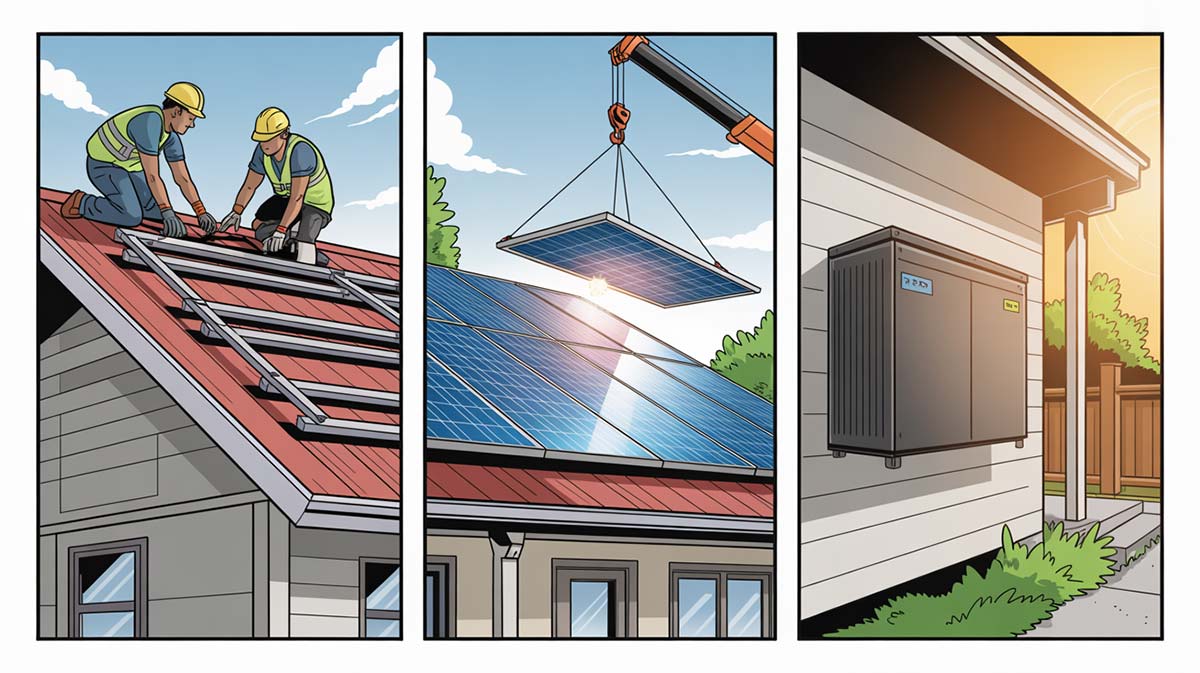
- Layout and Stringer Location: Installers use a stud finder or drill exploratory holes to map out underlying roof rafters or trusses. Precise chalk lines are snapped to ensure the tracks will be perfectly parallel and square.
- Penetration and Flashing Placement: Holes are drilled into the marked rafter centers. Sealant is applied, flashings are slid under the upper shingle courses, and L-feet are bolted down through the flashing into the rafter using stainless steel lag screws.
- Rail Alignment and Torquing: Tracks are laid across the L-feet. Installers adjust the vertical slotting on the L-feet to level the rails, compensating for dips or crowns in the roof deck. All bolts are torqued to manufacturer specifications using calibrated tools.
- Wiring and Optimizer/Microinverter Integration: Before or during panel placement, module-level power electronics (MLPEs) or wiring harnesses are clipped directly onto the channels of the install tracks, keeping cables neatly off the roof surface.
- Final Module Clamping: Solar panels are set onto the tracks. Installers slide mid-clamps between modules, tightening them down to lock the array into a rigid, unified plane.
Frequently Asked Questions
Can solar tracks damage my roof?
When installed correctly by certified professionals, solar tracks do not damage roofs. Every roof penetration is protected by a multi-layered flashing system designed to shed water safely over the shingle courses, matching the lifespan of the roofing material itself. However, improper installation or failure to hit structural rafters can cause leaks or structural fatigue.
Do install tracks need maintenance?
Solar tracks require very little maintenance. Because they are made of corrosion-resistant anodized aluminum and stainless steel, they withstand decades of weathering. Annual visual inspections are recommended to check for loose hardware, shifting debris, or compromised grounding connections, especially after severe storm events.
Are all solar tracks universal?
No. Install tracks vary by manufacturer (such as Unirac, IronRidge, or SnapNrack) and are engineered specifically to match certain module frame thicknesses, wind-load zones, and roof types. Mixing components from different manufacturers without engineering approval can void warranties and compromise structural integrity.
How do tracks handle thermal expansion?
Installers use thermal expansion joints or split rails at designated intervals (typically every 30 to 40 feet of continuous rail). These gaps allow the metal tracks to expand and contract freely during extreme temperature shifts without placing undue stress on the roof attachments or panel frames.
Why is grounding integrated into the racking system?
Modern solar tracks use specialized grounding lugs and bonding mid-clamps that bite through anodized protective coatings. This creates a continuous, UL-listed electrical pathway through the entire rail network, ensuring that any stray current safely trips the system breaker rather than creating a shock hazard.
Conclusion and Next Actions
Solar panel install tracks are much more than simple metal bars; they are precision-engineered structural systems that safeguard your investment against extreme weather, thermal stress, and electrical hazards. Whether planning a residential roof installation or evaluating a commercial ground-mount array, ensure your contractor uses high-grade, code-compliant racking components installed in strict accordance with local building regulations. Review engineering blueprints carefully, verify that all roof attachments are structurally anchored to framing members, and confirm that proper grounding and flashing methods are employed to guarantee decades of safe, reliable renewable energy production.
Image Gallery
Select an image to open it in a new tab.



Akira Tanaka
International Academic Trends Correspondent
