
Oswald Chesterfield Cobblepot is known as "The Penguin" in Batman lore due to a combination of childhood bullying over his bird-like physical traits, his signature high-society formal attire, and his deliberate decision to reclaim a cruel nickname as a criminal moniker. Created in 1941, the character stands as one of Batman's most enduring antagonists.
The Origin of the Moniker: How Oswald Cobblepot Became The Penguin
The villain moniker "The Penguin" is deeply rooted in both the psychological background of Oswald Chesterfield Cobblepot and the established narrative history of Gotham City. Unlike many comic book characters whose alias derives from a freak accident, chemical exposure, or meta-human mutation, Cobblepot’s alias originated as an unwanted childhood insult that he systematically transformed into a symbol of fear and authority.
In-Universe Psychological and Physical Roots
In DC Comics canonical history, Oswald Cobblepot was born into the wealthy, aristocratic Cobblepot family—one of the founding dynasties of Gotham City alongside the Waynes, the Kanes, and the Elliotts. However, Oswald was born with physical traits that set him apart from his high-society peers: a short, heavy-set frame, a shortened gait that resembled a waddle, and a long, hooked nose resembling a bird’s beak.
During his youth, children from elite Gotham prep schools subjected Oswald to relentless mockery, branding him "Penguin" to ridicule his physical appearance and awkward posture. His upbringing was further isolated by his overprotective mother. Following the death of Oswald’s father, who succumbed to severe bronchial pneumonia after being caught in a torrential rainstorm without rain gear, his mother forced Oswald to carry an umbrella at all times, regardless of the weather.
This mandatory accessory, combined with his formal clothing and distinct stature, solidified his bird-like image. Rather than remaining a passive victim of social ostracization, Oswald grew bitter, vengeful, and intensely ambitious.
Reclaiming the Insult as a Criminal Brand
As Oswald reached adulthood, he recognized that in the ruthless criminal underworld of Gotham City, perception is power. Instead of shedding the nickname that caused him childhood anguish, he weaponized it.
By embracing the name "The Penguin," Cobblepot accomplished three distinct goals:
- Psychological Ownership: Reclaiming the derogatory label allowed him to strip his childhood bullies of their emotional leverage over him.
- Subversion of Class Expectations: He retained the formal dress code of Gotham’s aristocracy—specifically black tailcoats, top hats, white gloves, and monocles—to mock the elite society that rejected him while simultaneously demanding their respect through criminal force.
- Brand Identity: He adopted an avian motif across his entire criminal enterprise, from bird-themed crimes and rare specimen trafficking to engineered trick umbrellas that became his lethal signature arms.
Real-World Creators and Visual Inspiration behind The Penguin
Outside the fictional boundary of Gotham City, the creation of The Penguin was a deliberate artistic decision by comic book creators Bob Kane and Bill Finger. The character made his debut in Detective Comics #58 in December 1941, quickly establishing himself as a staple of Batman’s rogues gallery.
- 1941: Debut in Detective Comics #58
- Inspired by Tuxedos & Kool Cigarettes
- Evolved from Mobster to High-Society Broker
The Dual Artistic Inspirations
The creation of The Penguin came from two distinct real-world inspirations shared between Kane and Finger:
- The Kool Cigarettes Mascot: Bob Kane frequently noted in interviews that he drew visual inspiration from the advertising mascot of Kool cigarettes—a cartoon penguin wearing a top hat and carrying a cane. Kane was fascinated by the contrast between an animal associated with cold environments and the refined, gentlemanly attire of Victorian-era upper management.
- Emperor Penguins in Formalwear: Co-creator Bill Finger was inspired by the natural appearance of emperor penguins. Finger observed that the black-and-white plumage of emperor penguins naturally mirrored the formal tailcoats and white shirts worn by wealthy gentlemen attending high-society galas.
Finger wanted to craft a Batman villain who possessed criminal intellect and high-society aspirations, standing in stark contrast to pure thugs or visually monstrous adversaries.
| Influencing Element | Architectural & Design Impact on Character |
|---|---|
| Kool Cigarettes Logo | Adopted top hat, formal cane, and refined smoking habit |
| Emperor Penguin | Inspired black-and-white tuxedo palette & bird imagery |
| Gotham Elite Lore | Formed aristocratic background rivaling the Wayne family |
| Classic Gangsters | Established pragmatic mob boss dynamic over psychotic chaos |
The Penguin vs. Batman: A Study in Contrasts
The relationship between Batman (Bruce Wayne) and The Penguin (Oswald Cobblepot) is one of the most compelling dynamics in comic book history. While many of Batman's enemies mirror his internal psychological trauma, The Penguin represents a dark reflection of Bruce Wayne's social class and economic privilege.
High-Society Aristocracy: Wayne vs. Cobblepot
Both Bruce Wayne and Oswald Cobblepot inherited immense generational wealth derived from Gotham’s founding families. However, their trajectories diverged completely:
- Bruce Wayne used his privilege and family tragedy to forge a crusade against crime, maintaining a public persona of a frivolous playboy while secretly acting as Gotham's dark protector.
- Oswald Cobblepot used his family lineage to justify his superiority complex, turning to organized crime to force Gotham's high society to accept him as a power broker.
When Batman confronts The Penguin, he is not fighting a maniacal force of nature like the Joker or an unhinged ideologue like Ra's al Ghul. He is fighting a cold, calculating businessman who operates within the shadowy margins of Gotham's corrupt financial and political institutions.
- BRUCE WAYNE / BATMAN
- Old Gotham Wealth
- Uses shadow for justice
- Conceals true identity
- Fights organized crime
- OSWALD COBBLEPOT / THE PENGUIN
- Old Gotham Wealth
- Uses shadow for extortion
- Operates openly in public
- Commands organized crime
Sanity and Pragmatism in a City of Madness
Unlike the majority of Batman's enemies, who are regularly incarcerated in Arkham Asylum due to severe psychological illness or psychosis, The Penguin is sane. He is typically remanded to Blackgate Penitentiary when convicted of federal or state crimes.
Cobblepot understands market economics, risk management, and political leverage. His primary operational base, The Iceberg Lounge, functions simultaneously as a legitimate, high-end nightclub for Gotham's wealthy elite and a secret black-market exchange where criminal transactions, intelligence trading, and mob summits take place.
Batman often tolerates the existence of the Iceberg Lounge because it provides a centralized, predictable hub for criminal intelligence. In exchange for avoiding total destruction at Batman's hands, Cobblepot frequently acts as an informant, trading information about volatile threats like the Joker or Bane to protect his own commercial interests. For official archives on Gotham City's rogues, readers can explore the DC Official Character Hub.
Key Characteristics and Signature Gear That Define The Penguin Moniker
The identity of The Penguin is reinforced by specific visual motifs, behavioral traits, and specialized weaponry that have remained consistent across eight decades of comic book publishing.
1. The Weaponized Trick Umbrellas
The umbrella is The Penguin’s most recognizable apparatus. Originating from his mother’s insistence that he always carry rain protection, Cobblepot transformed standard umbrellas into dangerous technological weapons. Engineered by elite armorers or built by Cobblepot himself, these umbrellas feature an array of hidden mechanisms:
- Offensive Weaponry: Concealed blades, high-caliber gun barrels, flame throwers, knock-out gas dispensers, and acid sprayers.
- Defensive Utility: Bulletproof Kevlar canopies, smoke screens, and dazzler flash systems.
- Transportation: Rotating helicopter-style blades built into the handle structure that allow short-distance descent or flight, as well as hidden grappling hooks.
- Umbrella Handle: Trigger Mechanism & Rotors
- Canopy Layer: Bulletproof Kevlar Weave
- Tip Assembly: Hidden Blade / Gas Nozzle / Firearm
2. High-Society Dress Code
Even when conducting brutal mob executions, Cobblepot maintains strict adherence to black-tie formalwear. His attire typically includes:
- A tailored black silk tailcoat with matching trousers.
- A crisp white dress shirt with a silk bow tie or cravat.
- A glass monocle over his left eye (historically worn to correct vision, but retained as a symbol of aristocratic pretension).
- A silk top hat, often used to conceal small gadgets or stolen gems.
3. Avian Obsession and Smuggling Networks
The Penguin’s criminal portfolio centers heavily on high-end smuggling, extortion, and black-market trading. His obsession with birds extends to collecting rare, endangered avian species from across the globe, using exotic animal import channels to disguise the trafficking of illegal firearms, narcotics, and stolen artwork.
Evolution of The Penguin Across Batman Media Adaptations
The character of The Penguin has undergone significant transformations across live-action television, cinematic blockbusters, and animated series. Each adaptation has reinterpreted why he carries the name and how his persona interacts with Batman.
| Era / Production | Actor | Key Characterization & Moniker Framing |
|---|---|---|
| Batman (1966 Series) | Burgess Meredith | High-camp gentleman thief with signature squawking laugh |
| Batman Returns (1992) | Danny DeVito | Tragic, feral mutant abandoned in Gotham sewers |
| Gotham (2014–2019) | Robin Lord Taylor | Ambitious, ruthless mob strategist rising through ranks |
| The Batman (2022) | Colin Farrell | Gritty, realistic Oz Cobb operating as mob lieutenant |
Burgess Meredith (Batman, 1966)
Burgess Meredith established the public's early perception of the character in the 1966 Batman television series. Meredith introduced the famous "quack-quack" squawking laugh—a physical device the actor created to clear his throat from the smoke produced by the character's signature cigarette holder. Meredith played Cobblepot as a flamboyant, eccentric master thief who weaponized sophisticated bird traps and high-tech trick umbrellas.
Danny DeVito (Batman Returns, 1992)
Director Tim Burton significantly altered the character's origin for the 1992 film Batman Returns. In this version, Oswald Cobblepot was born with severe physical deformities, including webbed hands resembling flippers, a hunchback, and a feral disposition.
Disgusted by his appearance, his wealthy parents threw him into the Gotham River on Christmas Eve, where he floated into the sewers and was raised by a colony of penguins in the abandoned Gotham Zoo. DeVito’s portrayal emphasized physical monster elements, presenting a tragic, vengeful creature who embraced the "Penguin" identity out of literal kinship with aquatic birds rather than aristocratic vanity.
Robin Lord Taylor (Gotham, 2014–2019)
The television series Gotham explored the early life of Oswald Cobblepot, played by Robin Lord Taylor. This iteration focused heavily on his psychological development from a low-level umbrella boy for mob boss Fish Mooney to the undisputed kingpin of Gotham City.
The series highlighted how the moniker "Penguin" began as a hateful nickname spat at him by fellow gangsters due to his limp and pale appearance, and detailed his bloody campaign to force the city's mob bosses to speak the name with fear.
Colin Farrell (The Batman, 2022)
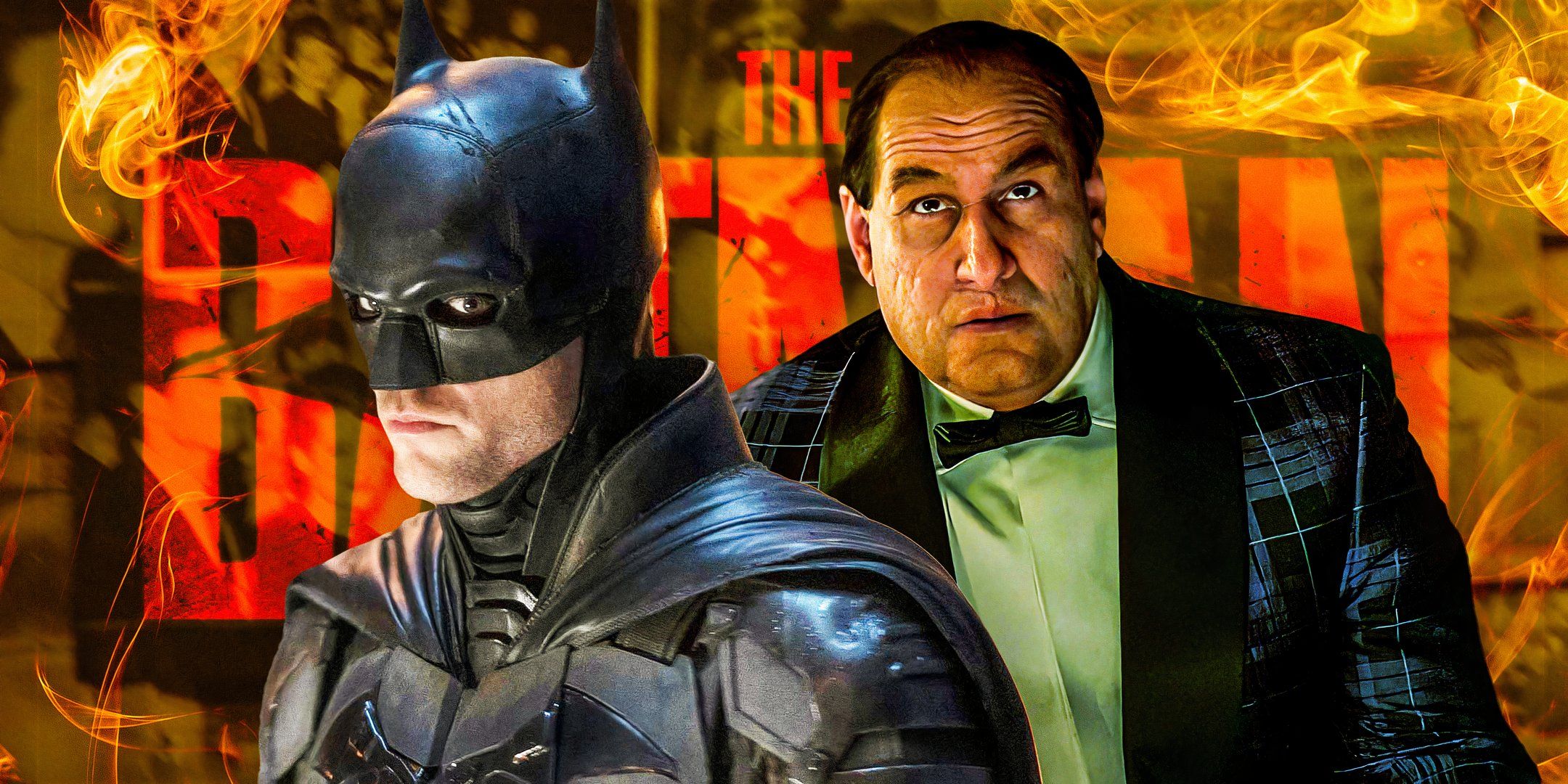
In Matt Reeves’ gritty film The Batman (and the dedicated HBO television expansion), Colin Farrell portrays Oswald "Oz" Cobb. This adaptation strips away comic-book camp in favor of grounded crime realism. Oz is depicted as a mid-level mob enforcer and nightclub manager with facial scarring, a heavy body, and a severe foot deformity that causes him to walk with a distinct limp.
While Oz despises being called "Penguin" behind his back by rival mobsters, he utilizes his sharp intelligence, street cunning, and ruthless ambition to climb to the top of Gotham's criminal empire.
Clarifying Common Misconceptions About "Penguin Batman"
Given the vast scope of Batman media, casual readers and searchers occasionally confuse character naming conventions or storylines regarding "Penguin Batman."
Is "Penguin Batman" a Hybrid Hero or Villain?
The phrase "Penguin Batman" does not refer to a fused hybrid superhero. Rather, it is a common search term used by audiences seeking information on The Penguin, the core Batman antagonist.
However, in alternate-reality comic storylines (such as DC's Elseworlds titles or Dark Multiverse concepts), comic book creators have occasionally explored inverted realities where Oswald Cobblepot took up the mantle of Batman, or where Bruce Wayne became a bird-themed vigilante.
Additionally, popular merchandise lines, such as LEGO Batman video games and toy sets, feature collectible costume variants where characters swap iconic outfits for comedic effect.
- Common Search Intent: "Penguin Batman"
- Primary Intent: The Penguin Villain Lore
- Secondary Intent: LEGO / Elseworlds Variants
Meta-Human Power vs. Human Intellect
Another common point of confusion is whether The Penguin possesses meta-human abilities, such as controlling birds telepathically or resisting sub-zero temperatures.
In standard DC Comics continuity, Oswald Cobblepot has no superhuman powers. He is an ordinary human who relies entirely on:
- High-level strategic intellect and criminal planning.
- Extensive financial resources and money-laundering networks.
- Mastery over firearms, martial umbrella combat, and concealed weaponry.
- Expert knowledge of ornithology and zoological management.
Frequently Asked Questions
Why does Oswald Cobblepot always carry an umbrella?
In canonical DC Comics history, Cobblepot’s father died of severe bronchial pneumonia after getting caught in a rainstorm without an umbrella. Traumatized by the loss, his mother forced young Oswald to carry an umbrella at all times. As an adult, Cobblepot weaponized these everyday items into lethal devices equipped with guns, blades, poison gas, and hidden rotors.
What is the origin of The Penguin's character creation?
The Penguin was created by Bob Kane and Bill Finger, making his first appearance in Detective Comics #58 in December 1941. Kane was inspired by the top-hatted penguin mascot used in Kool cigarette advertisements, while Finger drew inspiration from the tuxedo-like appearance of emperor penguins.
Does The Penguin have any meta-human superpowers?
No. In main DC Comics continuity, Oswald Cobblepot has no meta-human powers. He is a fully human criminal mastermind who relies on intellect, mob organization, political corruption, wealth, and weaponized gadgets to challenge Batman and control Gotham's underworld.
Why is The Penguin sane compared to other Batman villains?
Unlike chaotic adversaries like the Joker, Two-Face, or the Mad Hatter, Oswald Cobblepot does not suffer from psychotic delusions or compulsive crime mentalities. He is a pragmatic, greedy mobster who treats crime as a business. Because he is legally sane, he is typically imprisoned in Blackgate Penitentiary rather than Arkham Asylum.
How did the name "Penguin" change from an insult into a title?
Oswald was severely bullied in his youth due to his physical traits, short stature, and limp. His peers dubbed him "Penguin" to mock him. Upon entering Gotham's criminal underworld, Oswald adopted formal black-tie attire and formally took the moniker "The Penguin," stripping his former tormentors of their power by transforming the insult into an emblem of criminal authority.
Key Takeaways and Next Actions
Understanding why Oswald Cobblepot is known as The Penguin reveals the core themes of the Batman franchise: class conflict, trauma, and identity projection. Cobblepot took the physical mockery of his childhood and converted it into a high-society criminal empire that commands respect across Gotham City.
For readers looking to explore the most important comic book storylines featuring The Penguin, consider checking out the following recommended graphic novels:
- Batman: Pain and Prejudice (2012): A deep psychological dive into Cobblepot's childhood trauma, his relationship with his mother, and his brutal rise in Gotham.
- Detective Comics #58 (1941): The historic first appearance of The Penguin by Bob Kane and Bill Finger.
- Batman: Earth One - Volume 1 (2012): An alternate-universe take by Geoff Johns presenting Mayor Oswald Cobblepot as a ruthlessly grounded political antagonist.
- The Joker's Asylum: Penguin (2008): A standalone story showcasing the tragic romance and cold pragmatism that define Cobblepot's character.
Image Gallery
Select an image to open it in a new tab.




Vivian Cho
Executive IT and Emerging Technologies Reporter
