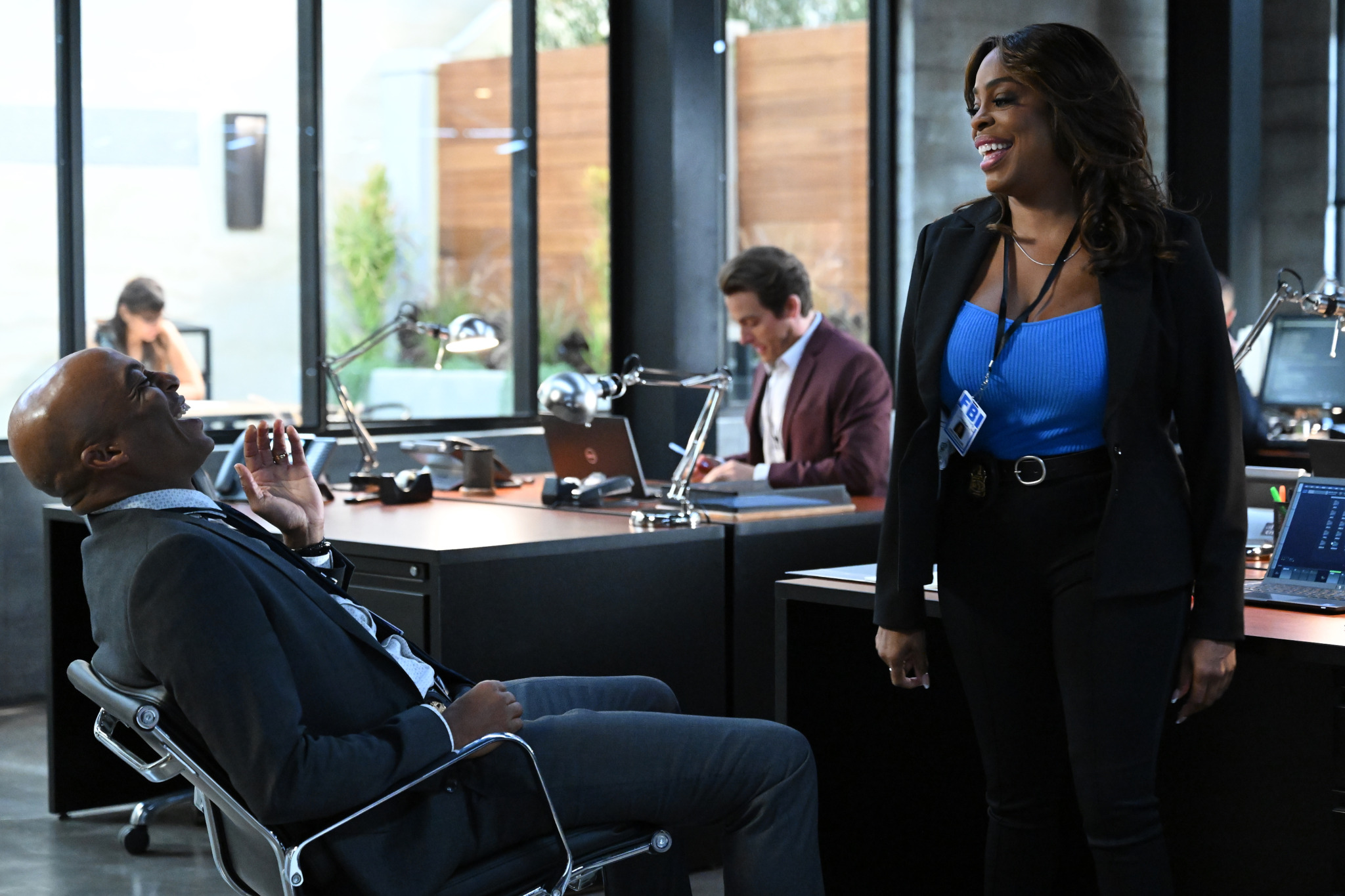
Niecy Nash-Betts has navigated one of the most successful career transformations in modern television history, evolving from a high-energy comedic host and character actress into a prestigious, Emmy-winning dramatic lead. By consistently challenging industry typecasting, she has redefined her professional identity through complex roles in social justice dramas and psychological thrillers.
The Foundation of a Versatile Career
The trajectory of Niecy Nash-Betts is a case study in strategic career pivoting. Before becoming a fixture in prestige drama, she established herself as a master of timing and physical comedy. Her early work provided a foundation of technical skill—specifically the ability to command a camera and connect with an audience—that would later serve her in more subdued, dramatic environments.
The Style Network and Reno 911!
In the early 2000s, Nash-Betts became a household name through two vastly different but equally influential programs. On Clean House, she served as the host and "voice of reason," a role that required high charisma and an approachable, authoritative persona. This established her as a relatable figure to a broad demographic. Simultaneously, her role as Deputy Raineesha Williams on Reno 911! showcased her improvisational genius. Raineesha was a character built on bravado and comedic timing, proving that Nash-Betts could hold her own in the chaotic, fast-paced world of sketch-style comedy.
During this era, Nash-Betts was often pigeonholed by the industry as a "comedic actress" or a "lifestyle personality." However, the seeds of her future success were sown here; her ability to find the humanity in a caricature like Raineesha Williams hinted at a depth that many casting directors had yet to fully explore.
The HBO Turning Point: Getting On
The most significant shift in the perception of Niecy Nash-Betts occurred with the HBO series Getting On (2013–2015). In this dark, clinical comedy-drama set in a geriatric extended-care wing of a hospital, Nash-Betts played Didi Ortley, a nurse who often served as the moral compass in a dysfunctional system.
This role was a radical departure from her previous work. It required her to be "small"—to act with her eyes and subtle gestures rather than big movements and punchlines. Didi was understated, exhausted, and profoundly empathetic. Critics began to notice that Nash-Betts possessed a rare "groundedness" that could anchor a scene. This performance earned her two Primetime Emmy nominations for Outstanding Supporting Actress in a Comedy Series, signaling to the industry that she was ready for more rigorous, character-driven material.

Transitioning into High-Stakes Drama
The mid-to-late 2010s saw Nash-Betts deliberately moving away from the safety of comedy to tackle roles that addressed systemic injustice and historical trauma. This period solidified her status as a dramatic heavyweight.
When They See Us and Social Justice
In 2019, Nash-Betts delivered a searing performance in Ava DuVernay’s limited series When They See Us. Playing Delores Wise, the mother of Korey Wise (one of the Central Park Five), she portrayed the agonizing toll of the American legal system on families of color. This role was devoid of the "glamour" often associated with her earlier work; it was raw, painful, and deeply respectful of the real-life figure she portrayed. This performance was a definitive statement: Nash-Betts could not only handle drama but could carry the emotional weight of a national tragedy.
Claws: The Intersection of Camp and Crime
While When They See Us showcased her dramatic range, the TNT series Claws (2017–2022) allowed her to blend her comedic roots with a gritty, "breaking bad" style narrative. As Desna Simms, the owner of a Florida nail salon who becomes involved in money laundering and organized crime, Nash-Betts led an ensemble cast with a performance that was both flamboyant and fiercely protective. Claws was a pivotal vehicle because it placed her at the top of the call sheet as an anti-heroine, a space traditionally reserved for white male actors.
The Definitive Breakthrough: Dahmer – Monster: The Jeffrey Dahmer Story
As of 2026, many still point to her role in the 2022 Netflix series Dahmer – Monster: The Jeffrey Dahmer Story as the pinnacle of her dramatic evolution. Playing Glenda Cleveland, the neighbor of the notorious serial killer, Nash-Betts was tasked with representing the "voice of conscience" and the victimhood of a community ignored by the police.
Her performance was characterized by a simmering, quiet desperation and a righteous fury that eventually boiled over. This role earned her the Primetime Emmy Award for Outstanding Supporting Actress in a Limited or Anthology Series or Movie in 2024. More importantly, it dismantled any remaining doubts about her ability to lead a prestige production. The industry-wide recognition for this role transformed her from a "surprising talent" into an established industry leader.
Current Roles and Executive Production in 2026
Entering 2026, Niecy Nash-Betts has moved beyond being "just" an actress. She has leveraged her visibility to become a prolific producer, ensuring that stories featuring Black women in complex, non-stereotypical roles are greenlit.
The Rookie: Feds and Genre Leadership
With The Rookie: Feds, Nash-Betts stepped into the shoes of Simone Clark, the oldest rookie in the FBI Academy. While the show maintained the procedural format, Nash-Betts infused the character with a level of personal agency and lived experience that pushed back against the standard "cop show" tropes. The role demonstrated her ability to anchor a network franchise, proving her commercial viability as a lead in prime-time television.
Collaboration with Ryan Murphy
Her ongoing collaboration with Ryan Murphy—extending from Scream Queens to Dahmer and the more recent 2024/2025 psychological horror series Grotesquerie—has allowed her to explore the avant-garde. In Grotesquerie, she plays Detective Lois Tryon, a character grappling with personal demons and a series of heinous crimes. This role, which has continued to garner praise into 2026, represents the furthest point in her evolution: a complex, flawed, and aging protagonist in a high-concept genre piece.
Comparative Overview of Career Milestones
The following table highlights the diversity of characters and the thematic shift throughout her television career.
| Era | Show Title | Character Name | Primary Genre | Cultural/Industry Impact |
|---|---|---|---|---|
| Early 2000s | Reno 911! | Raineesha Williams | Improvisational Comedy | Established her as a comedic force and master of character acting. |
| Mid 2010s | Getting On | Didi Ortley | Dark Comedy/Drama | Proved her ability to handle grounded, subtle, and empathetic realism. |
| Late 2010s | Claws | Desna Simms | Crime Dramedy | Demonstrated her capacity to lead a major ensemble as a complex anti-hero. |
| Early 2020s | When They See Us | Delores Wise | Historical Drama | Validated her dramatic range in serious, social justice-oriented narratives. |
| Mid 2020s | Dahmer | Glenda Cleveland | True Crime/Thriller | Won the Emmy; solidified her status as an A-list dramatic powerhouse. |
| 2025-2026 | Grotesquerie | Lois Tryon | Psychological Horror | Explored the intersection of genre horror and character-driven detective work. |
The "Betts" Era: Personal Identity and Professional Branding
The addition of "Betts" to her name following her 2020 marriage to musician Jessica Betts marked more than just a change in marital status; it coincided with a period of radical authenticity in her career. Nash-Betts has been vocal about living her truth and how that clarity has improved her craft.
As of 2026, her brand is built on the concept of "unapologetic evolution." She has successfully transitioned from the "funny lady with the flower in her hair" to a sophisticated artist who can jump from a lighthearted talk show guest to a harrowing portrayal of grief without missing a beat. This versatility is her greatest asset in a television landscape that increasingly values "chameleon" actors who can bridge the gap between streaming prestige and network accessibility.
Analysis of Technical Performance Style
Critics and acting coaches often point to several technical reasons why the evolution of Nash-Betts has been so effective:
- Reactive Acting: Unlike many comedic actors who wait for their turn to speak, Nash-Betts is a "reactor." In Getting On and Dahmer, her most powerful moments occur when she is simply listening and processing information.
- Voice Modulation: She has mastered the art of lowering her register for dramatic roles. While Raineesha Williams had a high, performative pitch, characters like Glenda Cleveland use a lower, more resonant tone that conveys gravity.
- Physical Economy: In her comedic years, her humor was often physical. In her dramatic era, she has learned the power of stillness. In the courtroom scenes of When They See Us, her lack of movement makes her eventual emotional outbursts much more impactful.
- Empathy-First Approach: Regardless of the genre, she approaches every character with a sense of "protecting" them. She treats even the most flawed characters, like Desna in Claws, with a level of dignity that makes the audience root for them.
Looking Ahead: The Future of Niecy Nash-Betts
By 2026, the industry expectations for Niecy Nash-Betts have shifted entirely. She is no longer the "underdog" fighting for a dramatic seat at the table; she is the one setting the table. Her production company, Chocolate Chick, is actively developing projects that focus on the "unseen" woman, mirroring the themes of her most successful roles.
Future projects rumored for the 2027 season include a potential move into directing, a natural progression for someone who has spent over two decades observing the mechanics of television from every possible angle. Her evolution serves as a blueprint for other actors seeking to break out of specific genres, proving that with strategic role selection and a commitment to craft, a "second act" can be even more influential than the first.
Frequently Asked Questions
When did Niecy Nash-Betts win her first Emmy?
Niecy Nash-Betts won her first Primetime Emmy Award in January 2024 (for the 2023 Emmy cycle) for her role as Glenda Cleveland in Dahmer – Monster: The Jeffrey Dahmer Story. She won in the category of Outstanding Supporting Actress in a Limited or Anthology Series or Movie.
Is Niecy Nash-Betts still doing comedy?
While she has focused heavily on drama and psychological thrillers in recent years (such as Grotesquerie), she has not abandoned comedy. She frequently returns to her roots through guest appearances, voice acting, and projects like the Reno 911! revivals and movies, demonstrating her ability to balance both genres simultaneously.
What was the specific role that changed her career trajectory?
Most industry analysts point to the HBO series Getting On as the "pivot point." Before this show, she was primarily known as a host and comedic actress. Playing the understated nurse Didi Ortley proved to critics and casting directors that she possessed the range for subtle, dramatic storytelling.
How has her name change affected her professional brand?
Adding "Betts" to her professional name in 2020 coincided with a significant surge in her career's "prestige" era. It has become a symbol of her personal and professional evolution, representing a period of authenticity that many fans and critics believe has deepened the emotional quality of her performances.
What is her role in the series Grotesquerie?
In the Ryan Murphy-produced series Grotesquerie, Nash-Betts plays the lead character, Detective Lois Tryon. The role is a gritty, psychological dive into a detective's life as she balances a strained home life with a series of unsettling, occult-like crimes in her community.
Final Recommendation for Viewers
To truly appreciate the evolution of Niecy Nash-Betts, viewers should conduct a "comparative viewing" of her work. Start with an episode of Reno 911! to witness her comedic timing, then watch the final season of Getting On to see her transition into realism. Finally, watch her performance in When They See Us or Dahmer. This progression reveals not just a change in roles, but a profound growth in artistic maturity. As of 2026, her filmography stands as a testament to the power of persistence and the importance of demanding more from the industry than what is initially offered.
Image Gallery
Select an image to open it in a new tab.

Omar Farooq
EdTech Innovation and Virtual Pedagogy Journalist
