How the Las Vegas Sphere Works: Inside the Engineering, Audio, and Visual Marvel

The Las Vegas Sphere operates through an intricate integration of massive architectural scale, custom LED display technology, directional beamforming audio systems, and high-performance environmental effects that transform the 516-foot-wide spherical venue into an immersive multi-sensory environment.
Architectural Engineering and Structural Design of the Sphere
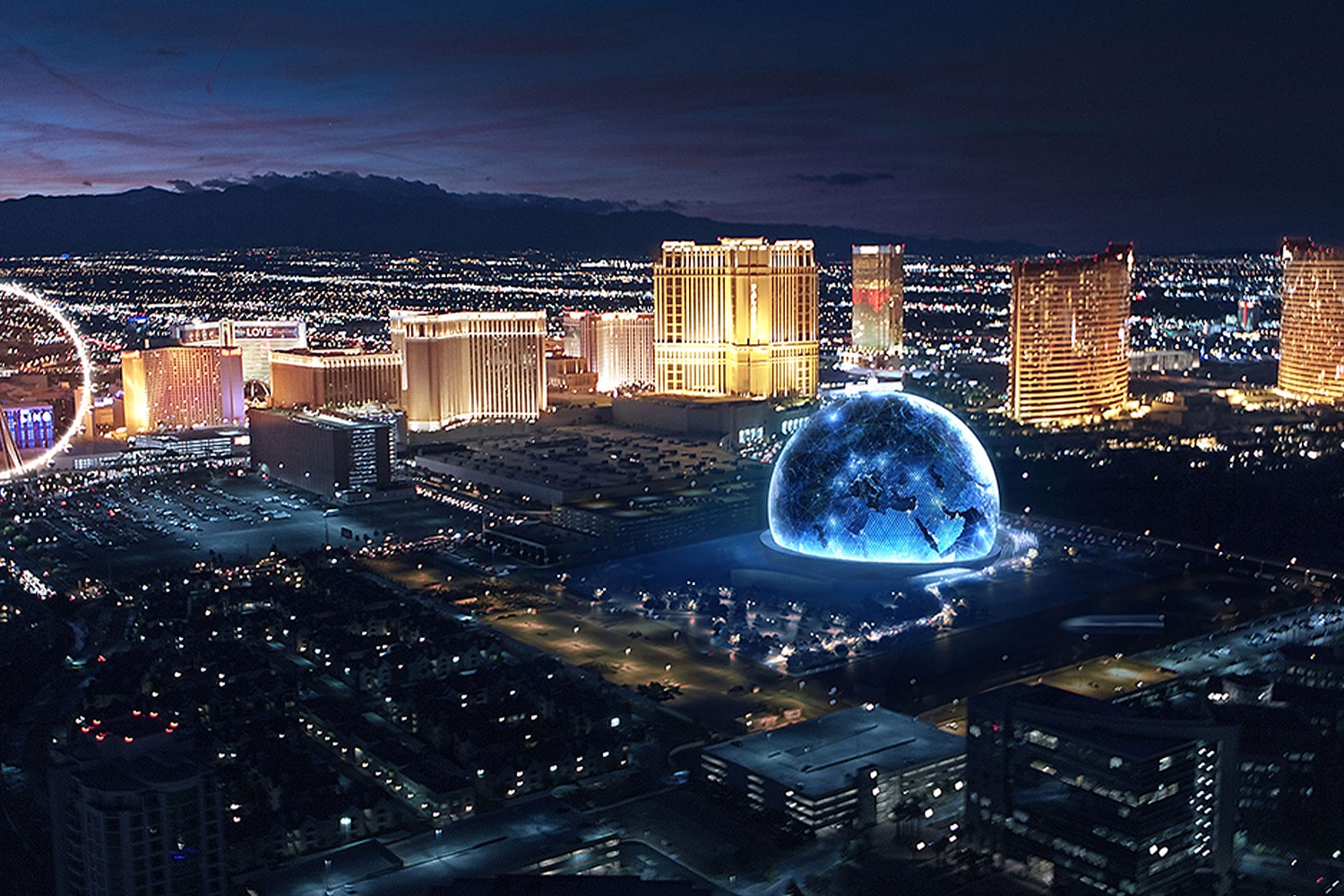
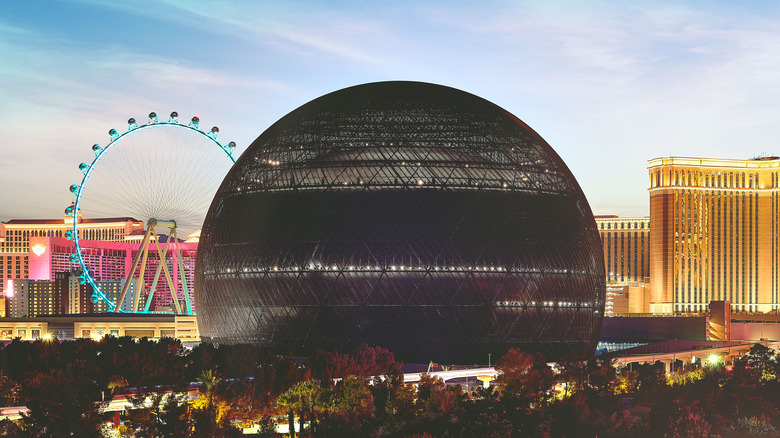
Understanding how the Las Vegas Sphere works requires examining its colossal physical shell. Designed by the architectural firm Populous, the structure stands 366 feet high and 516 feet wide at its broadest point, making it the largest spherical building in the world. Built adjacent to The Venetian Resort, the venue’s steel frame alone required thousands of tons of structural steel to maintain its self-supporting geodetic form.
The building is divided into several primary layers. The innermost layer is the massive performance bowl, surrounded by a steel exosphere that supports the exterior screen. Between the outer shell and the inner auditorium lies a cavernous interstitial space that houses routing for miles of fiber-optic cables, heavy-duty ventilation ducts, structural access catacombs, and computer server racks. This structural decoupling ensures that vibrations from heavy bass inside the auditorium do not compromise the integrity of the exterior skin, while wind loads on the outside are distributed evenly across the spherical geodetic grid.
Furthermore, the foundation had to be engineered to withstand the extreme desert heat of Nevada, utilizing specialized thermal expansion joints. These joints allow the massive steel and concrete components to expand and contract safely throughout extreme diurnal temperature swings without causing structural stress fractures or misaligning the precision electronics mounted to the exterior.
The Exosphere: Exterior LED Technology and Control Systems
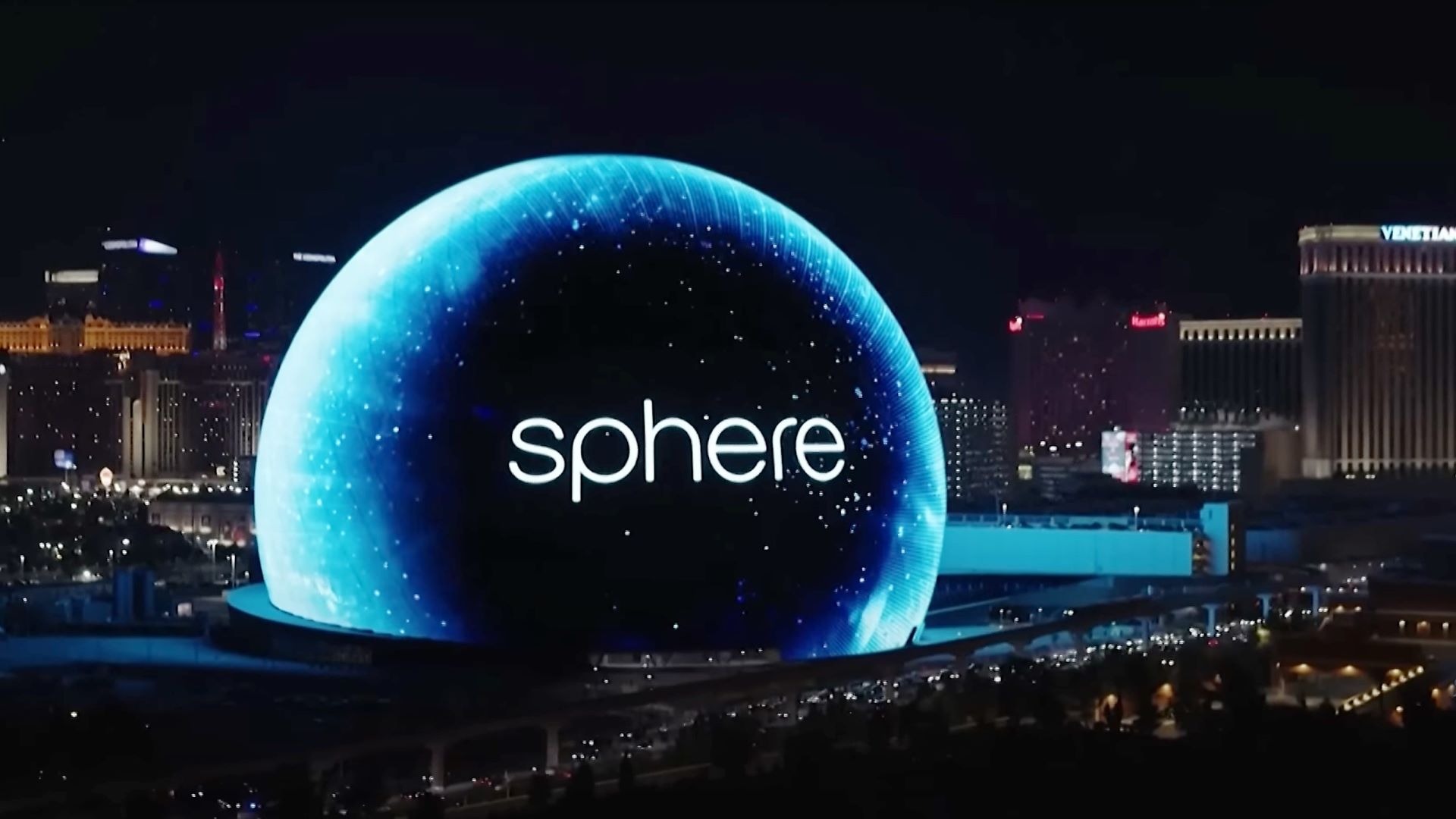
The outer surface of the Sphere—known as the Exosphere—is the world's largest LED screen, spanning approximately 580,000 square feet. It is covered by roughly 1.2 million individual LED pucks spaced about eight inches apart. Each puck contains 48 individual diodes, capable of displaying a palette of 256 million different colors.
Controlling a canvas of this magnitude requires a massive computing infrastructure. The system utilizes high-throughput media servers running specialized software that maps digital video files onto a spherical coordinate system. Because the screen wraps entirely around the building and arches over the top, standard rectangular video formats must be unwrapped, remapped, and rendered in real-time to avoid geometric distortion when viewed from ground level or from aircraft.
The exterior LEDs are engineered to withstand harsh weather conditions, including intense UV radiation, desert dust storms, and heavy rain. Each LED puck is housed in an independent weather-sealed module. If a single puck fails, maintenance crews can replace it without disrupting the surrounding display grid. The entire exosphere is managed by an automated brightness control system that adjusts luminance levels relative to ambient sunlight, ensuring the display remains vibrant during midday while dimming automatically at night to prevent light pollution across the Las Vegas skyline.

The Interior Display: The World's Largest High-Resolution Screen
Inside the auditorium, the visual experience centers on a custom wrap-around LED screen measuring 160,000 square feet. Spanning a resolution of 16K by 16K, it curves up, over, and behind the audience, occupying the entirety of the viewer's peripheral vision. This design eliminates traditional proscenium arches or flat projection screens, placing every seat inside the digital environment.
| Technical Specification | Exterior Exosphere | Interior Auditorum Screen |
|---|---|---|
| Surface Area | ~580,000 square feet | 160,000 square feet |
| Display Technology | Surface-mounted diode (SMD) LED pucks | Custom high-resolution modular LED panels |
| Resolution Scale | Optimized for viewing from miles away | 16K x 16K ultra-high definition |
| Viewing Angle | 360-degree exterior wrap | 270-degree horizontal, vertical overhead wrap |
| Primary Purpose | Ambient art, advertising, branding | Immersive cinematic and concert backdrops |
Manufacturing and installing the interior screen required unprecedented precision. The panels are custom-designed to match the curvature of the steel bowl. To prevent heat buildup—which is a major enemy of dense LED arrays—the interior screen utilizes an advanced passive and active ventilation system. Cool air is forced through micro-perforations and specialized channels behind the display modules, dissipating heat generated by millions of active diodes operating simultaneously.
Advanced Spatial Audio: HOLOPLOT Wave Field Synthesis
Perhaps the most technologically groundbreaking aspect of how the Las Vegas Sphere works is its audio system, powered by HOLOPLOT technology. Traditional concert venues use massive speaker arrays that blast sound uniformly across a room, leading to acoustic reflections, echoes, and muddy mixes. The Sphere utilizes Wave Field Synthesis (WFS) to deliver pristine, highly directional sound to every single seat in the 18,000-capacity auditorium.
The audio system consists of approximately 167,000 speaker drivers housed within 1,600 permanent HOLOPLOT modules, hidden completely behind the interior LED screen (which is acoustically transparent, featuring millions of tiny holes that allow sound to pass through unhindered).
- Beamforming Technology: Instead of radiating sound waves outward in a broad cone, the HOLOPLOT system uses digital signal processing (DSP) to shape sound waves into precise beams.
- Virtual Acoustic Positioning: Engineers can pinpoint a sound—such as a whisper, a flying bird, or a specific instrument—so that it appears to originate from an exact spatial coordinate in the room. A listener in the upper balcony hears the sound with the exact same clarity and arrival time as someone in the front row.
- Multi-Language Delivery: The system can even beam different languages to different sections of the audience simultaneously without the use of headphones, though standard operational events typically focus on unified spatial mixing.
Environmental and 4D Haptic Infrastructure
To complete the immersive experience, the Sphere integrates environmental effects that engage multiple human senses beyond sight and sound. These 4D systems are embedded directly into the architecture and seating infrastructure of the auditorium.
- Infrasound Haptic Seats: The seating rows are equipped with low-frequency tactile transducers. When an onscreen explosion, a heavy bass drop, or a rocket launch occurs, the seats vibrate physically, transferring low-end kinetic energy directly into the bodies of the audience members.
- Environmental Wind and Temperature: Concealed HVAC systems hidden within the venue framework can generate sweeping gusts of wind that match atmospheric scenes on screen.
- Scents and Aromas: Scent-dispensing technology synchronized with the visual narrative can release specific fragrances—such as pine forests, ocean salt, or burning earth—enhancing the psychological realism of the presentation.
- Dynamic Air Handling: The massive volume of the bowl requires advanced air turnover systems that can rapidly condition the space, clearing scents or adjusting ambient temperatures between distinct segments of a production.
Content Production Pipeline: How 16K Media is Created
Building the hardware is only half the challenge; operating the Sphere requires entirely new standards of media production. Standard 4K or 8K cameras and editing software cannot natively process or render the ultra-high-resolution, uncompressed 16K video required for the interior screen.
Production teams must utilize specialized camera rigs equipped with ultra-wide-angle lenses capable of capturing footage at massive resolutions and high frame rates. Once captured, the media undergoes heavy post-production processing using custom software pipelines. Artists must warp, stitch, and rasterize footage so that when it is projected onto a curved surface, it does not look warped or stretched from the perspective of the seated audience.
Furthermore, audio engineers working for the Sphere must mix music and sound effects using spatial audio authoring tools. Every single instrument, vocal track, and sound effect is assigned a 3D coordinate in virtual space, allowing the HOLOPLOT system to steer those audio beams dynamically in sync with the visual action unfolding on the giant screen.
Frequently Asked Questions
How many LED lights are on the outside of the Las Vegas Sphere?
The exterior Exosphere features approximately 1.2 million individual LED pucks. Each puck contains 48 separate diode lights, giving the exterior shell the capability to display hundreds of millions of color variations across its massive 580,000-square-foot surface.
Can people inside the Sphere see the exterior display?
No. The interior of the Sphere is entirely walled off from the exterior. Inside, audiences view a 160,000-square-foot interior LED screen that wraps around and over the auditorium. The exterior exosphere is designed strictly for viewing from outside the building, by pedestrians, motorists, and aircraft surrounding the Las Vegas Strip.
How does the sound system work without traditional speakers?
The audio system relies on HOLOPLOT Wave Field Synthesis and beamforming technology. Rather than using conventional speakers that scatter sound, the system utilizes 1,600 hidden modules containing 167,000 individual speaker drivers. These drivers use advanced digital signal processing to steer sound waves directly to specific seats, ensuring identical audio clarity and volume across all levels of the venue.
What is the seating capacity of the Las Vegas Sphere?
The venue has a maximum capacity of approximately 18,000 people for concerts and events, including both seated and standing room configurations. For immersive film screenings—such as Darren Aronofsky's Postcard from Earth—the capacity is optimized around seated ticket holders to ensure unobstructed viewing of the overhead screen.
How much did it cost to build the Las Vegas Sphere?
The construction of the Las Vegas Sphere cost approximately $2.3 billion, making it one of the most expensive entertainment venues ever built. This cost encompasses the complex structural engineering, custom LED manufacturing, advanced spatial audio development, and acquisition of the prime real estate adjacent to The Venetian Resort.
Conclusion and Operational Summary
The Las Vegas Sphere represents a paradigm shift in large-scale entertainment engineering. By fusing structural geodetic architecture with the world's largest high-resolution LED canvases, beamforming spatial audio, and synchronized 4D environmental effects, the venue moves beyond traditional passive viewing. Understanding how it works reveals a complex orchestration of high-throughput computing, acoustic physics, and custom industrial manufacturing designed to trick human perception and deliver fully immersive multi-sensory experiences.
Image Gallery
Select an image to open it in a new tab.


Zara El-Hashem
Sociocultural Dynamics and Academics Writer
