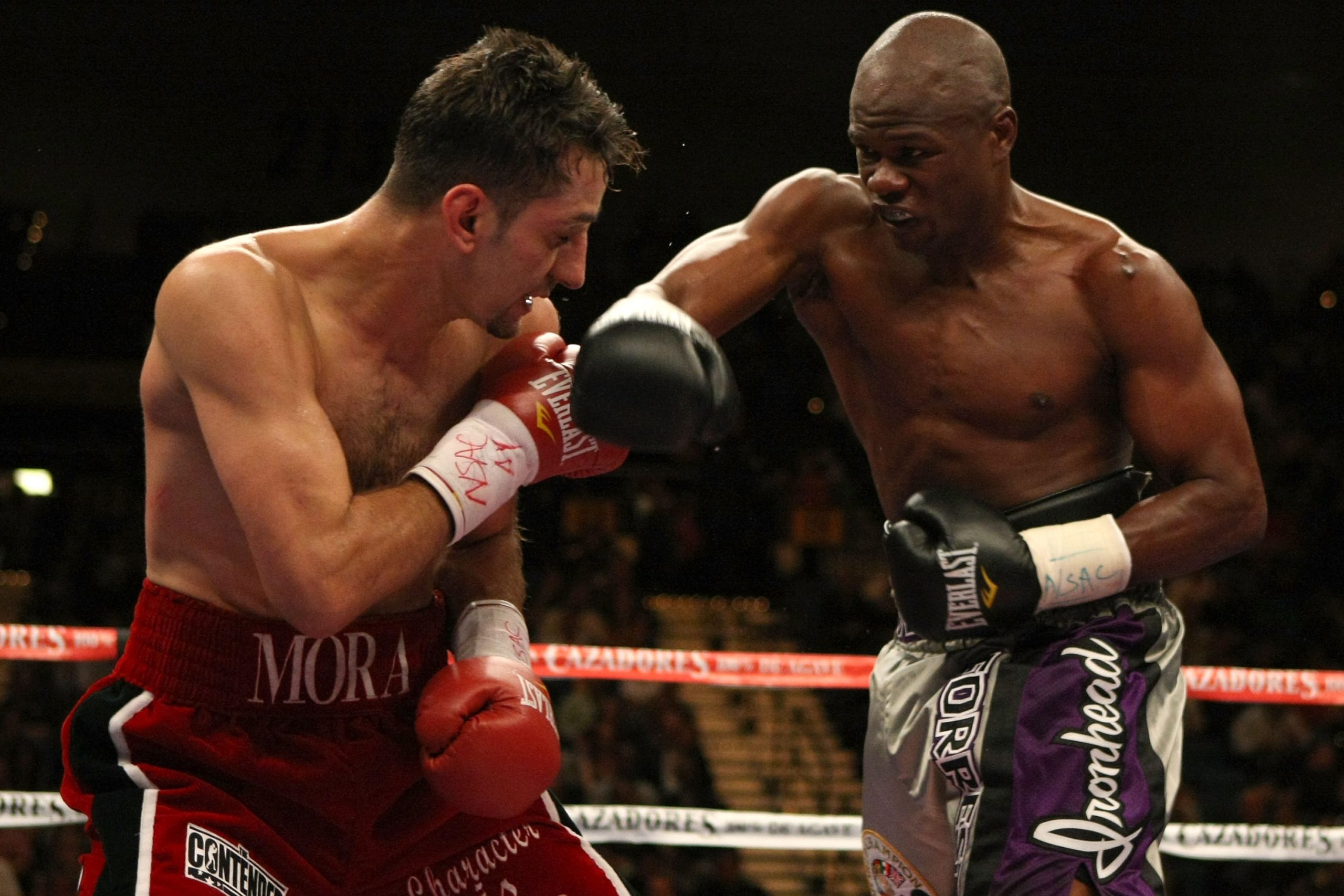
Vernon Forrest (1971–2009) was a premier American professional boxer who captured world championships in two weight classes, including the welterweight and light middleweight divisions. Widely respected for his exceptional technical skills and humanitarian efforts, he is best remembered for his two victories over the legendary Shane Mosley and his tragic, untimely death in 2009.
The Formative Years: From Georgia to the 1992 Olympics
Vernon Forrest was born on February 12, 1971, in Augusta, Georgia. Growing up in a household with eight siblings, Forrest discovered boxing at the age of nine. His journey into the sport was not merely a hobby; it quickly became a disciplined pursuit of excellence. Unlike many fighters who turn professional at the earliest opportunity, Forrest dedicated a significant portion of his youth to the amateur ranks, where he developed the foundational skills that would later define his professional style.
As an amateur, Forrest was nothing short of a prodigy. He compiled a staggering record of 225 wins and only 16 losses. His amateur peak occurred in the early 1990s when he became the 1992 United States light welterweight champion and won a silver medal at the 1991 World Championships in Sydney.
One of the most significant moments of his amateur career was his victory over "Sugar" Shane Mosley in the 1992 Olympic Trials. This win secured his spot on the U.S. Olympic team heading to Barcelona. However, the Olympics proved to be a source of great personal disappointment. Just days before his opening bout, Forrest suffered a severe case of food poisoning. Weakened and unable to perform at his peak, he lost in the first round to Peter Richardson. Despite this setback, the experience solidified his resolve to make a mark in the professional ranks.
Professional Ascent and the Welterweight Championship
Vernon Forrest turned professional in late 1992, making his debut with a first-round knockout of Charles Wade. He earned the nickname "The Viper" due to his lightning-fast, snapping jab and his ability to strike with lethal precision from a distance. For much of the 1990s, Forrest was considered the "most avoided" fighter in the welterweight division. His combination of height (6'0"), reach (73 inches), and technical mastery made him a stylistic nightmare for the era’s superstars.
Forrest spent years climbing the rankings, often fighting on undercards and building an undefeated record. It wasn't until 2000 that he finally received a shot at a world title. He faced Raul Frank for the vacant IBF welterweight championship. The first fight ended in a no-contest due to an accidental headbutt, but Forrest left no doubt in the 2001 rematch, winning a wide unanimous decision to finally become a world champion.
Breaking the Invincibility of Shane Mosley
The defining chapter of Vernon Forrest’s career began in 2002. At the time, Shane Mosley was considered the best pound-for-pound fighter in the world, having moved up from lightweight to defeat Oscar De La Hoya. Mosley was 38-0 and appeared invincible. Because Forrest had beaten Mosley in the amateurs, a narrative of a "stylistic hex" began to circulate.
On January 26, 2002, at the Theater at Madison Square Garden, Forrest proved that his amateur win was no fluke. He used his superior reach and a devastating right hand to floor Mosley twice in the second round. Forrest dominated the fight, winning a unanimous decision and the WBC welterweight title.
The boxing world was stunned, leading to an immediate rematch in July 2002. In the second encounter, Forrest once again utilized his "Viper" jab to neutralize Mosley’s speed. By winning the rematch via unanimous decision, Forrest didn't just take Mosley's titles; he took his status as the king of the division. For his efforts in 2002, Forrest was named Fighter of the Year by The Ring magazine and the Boxing Writers Association of America.

The Ricardo Mayorga Rivalry and Career Adversity
At the height of his fame, Forrest faced a mandatory defense against the eccentric and heavy-handed Nicaraguan, Ricardo "El Matador" Mayorga. This matchup in January 2003 remains one of the biggest upsets in boxing history. Mayorga’s wild, brawling style and psychological warfare seemed to disrupt Forrest’s technical rhythm.
In a shocking turn of events, Mayorga knocked Forrest out in the third round. Forrest, ever the warrior, sought an immediate rematch in July 2003. While the second fight was much more competitive, Forrest lost a close majority decision. These losses were devastating to Forrest’s career momentum and were followed by a series of debilitating shoulder injuries that required multiple surgeries, keeping him out of the ring for two full years.
Resurgence in the Light Middleweight Division
Many critics believed Vernon Forrest’s career was over by 2005. However, "The Viper" staged a remarkable comeback by moving up to the 154-pound (light middleweight) division. His physical frame, which had been large for a welterweight, was perfectly suited for the heavier weight class.
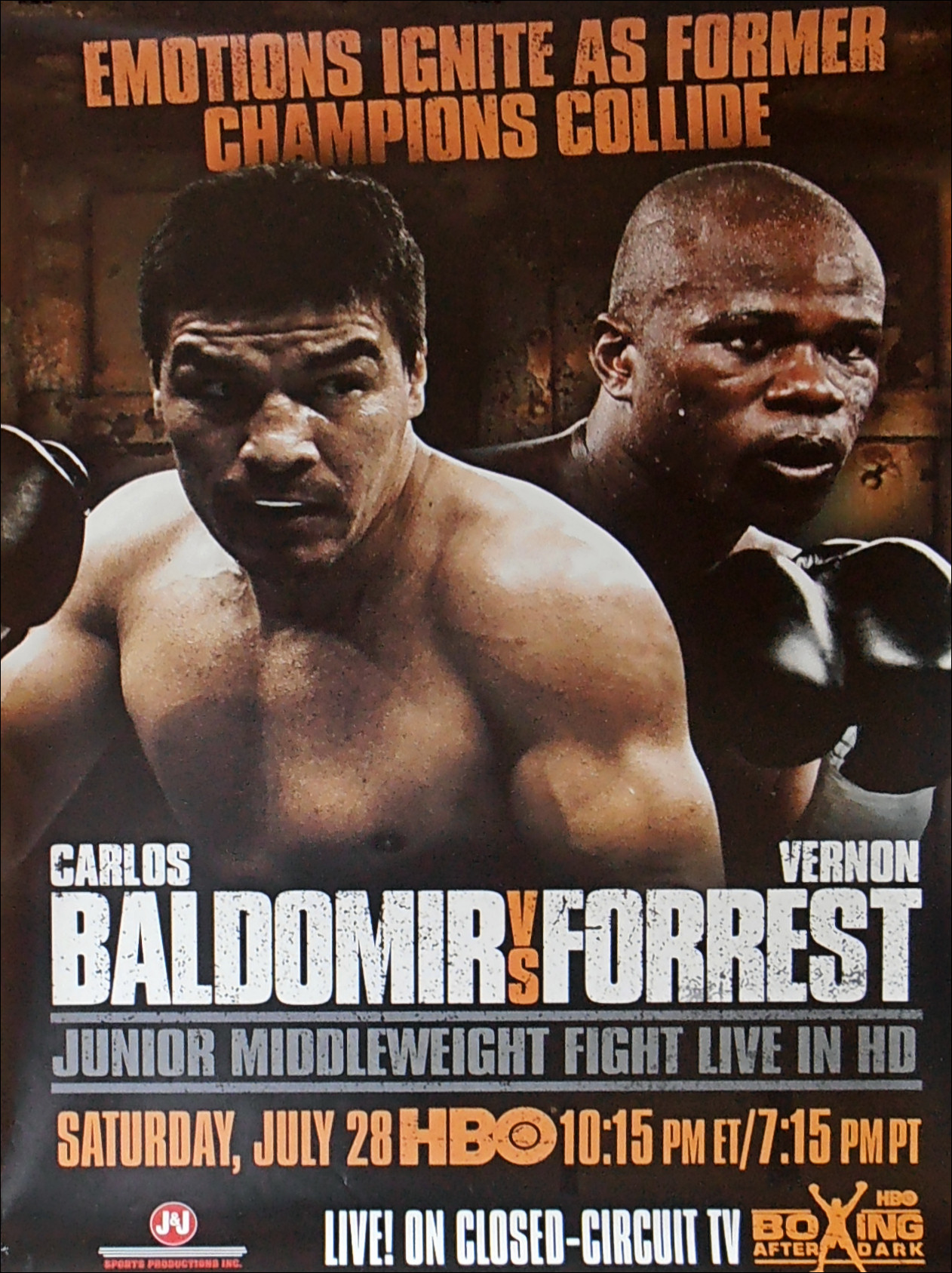
In 2007, Forrest faced Carlos Baldomir for the vacant WBC light middleweight title. Forrest put on a vintage performance, using his ring intelligence to outpoint the rugged Argentinian. This victory made him a three-time world champion and a two-weight titleholder.
His final major rivalry occurred against the younger, elusive Sergio Mora. Forrest lost his title to Mora in June 2008 in a close decision but reclaimed it in an immediate rematch two months later. In the rematch, Forrest showed the world that his veteran savvy could still overcome youth and speed. This victory in September 2008 would ultimately be the final fight of his professional career.
Technical Analysis: Why "The Viper" Was So Effective
To understand who Vernon Forrest was as a boxer, one must look at the technical nuances of his style. He was a classic "boxer-puncher" who prioritized the fundamentals of distance and timing.
- The Stiff Jab: Forrest possessed arguably the best jab of his era. It wasn't just a range-finder; it was a power punch. He used it to snap his opponent's head back, disrupting their rhythm and setting up his straight right hand.
- Ring Generalship: He was a master at controlling the center of the ring. He used subtle footwork to ensure his opponents stayed at the end of his punches, making it difficult for shorter fighters to get "inside."
- The Overhand Right: While his jab was his primary weapon, his right hand was his finisher. In the first Mosley fight, it was a perfectly timed right hand that changed the trajectory of the bout.
- Psychological Resilience: Forrest was known for his calm demeanor. Even under intense pressure from brawlers like Mayorga, he rarely panicked, always looking for a technical opening to exploit.
Career Statistics and Achievements
The following table summarizes the professional career of Vernon Forrest:
| Category | Statistic/Detail |
|---|---|
| Total Fights | 45 |
| Professional Record | 41 Wins, 3 Losses, 0 Draws, 1 No Contest |
| Wins by Knockout | 29 |
| Weight Classes | Welterweight, Light Middleweight |
| Major Titles Held | IBF Welterweight, WBC Welterweight, WBC Light Middleweight |
| Height / Reach | 6'0" (183 cm) / 73" (185 cm) |
| Stance | Orthodox |
| Hometown | Augusta, Georgia, USA |
Life Outside the Ring: Destiny’s Child and Philanthropy
While his boxing accolades were numerous, Vernon Forrest’s greatest pride lay in his charitable work. Long before it was common for athletes to have their own foundations, Forrest founded Destiny’s Child (unrelated to the music group).
Destiny's Child was a non-profit organization dedicated to providing group homes and support services for individuals with intellectual and developmental disabilities. Forrest didn't just fund the organization; he was actively involved in the lives of the residents. He was known to spend his holidays at the group homes, often bringing gifts and spending time with people who had been marginalized by society.
His peers in the boxing world frequently noted that Forrest was a "gentleman" outside the ropes. He carried himself with a quiet dignity that contrasted sharply with the loud, brash personas often found in professional sports. His commitment to his community in Atlanta made him a local hero and a role model for aspiring athletes.
The Tragic Night in July 2009
The life of Vernon Forrest was cut short on the night of July 25, 2009, in Atlanta, Georgia. The circumstances of his death shocked the international sports community. Forrest was at a gas station with his godson when he was approached by men attempting a robbery.
After the suspects robbed him of his championship ring and a gold chain, Forrest—who was armed—pursued the suspects. During the chase, Forrest lost sight of the primary robber but encountered another man involved in the crime, J’Mery Moore. As Forrest turned to walk back to his car, another accomplice, Charmon Sinkfield, shot him several times in the back.
Forrest was 38 years old at the time of his death. The subsequent investigation led to the arrest and conviction of three men. In the years following his passing, the city of Atlanta and the boxing world held numerous memorials to honor a man who had given so much to his sport and his community.
Historical Legacy and 2026 Perspective
As of 2026, the legacy of Vernon Forrest remains firmly intact within the annals of boxing history. In 2023, he was posthumously inducted into the International Boxing Hall of Fame (IBHOF) in Canastota, New York. This induction served as a final validation of his status as one of the elite fighters of the late 1990s and early 2000s.
Historians often debate where Forrest stands in the pantheon of great welterweights. While his losses to Mayorga are sometimes cited as a blemish, his two victories over a prime Shane Mosley are considered among the greatest tactical performances in the history of the 147-pound division. Furthermore, his ability to return from career-threatening injuries to win a third world title solidified his reputation for mental and physical toughness.
Today, Forrest is remembered not just as a champion, but as a "fighter’s fighter." He was a man who sought out the toughest challenges and conducted himself with integrity. His impact on the Atlanta community through Destiny’s Child continues to be felt, as the organization served as a blueprint for athlete-led social enterprises.
Frequently Asked Questions
Who was the only boxer to beat Shane Mosley twice in his prime?
Vernon Forrest was the first boxer to defeat Shane Mosley professionally, and he did so in back-to-back fights in 2002. Before meeting Forrest, Mosley was undefeated and ranked as the number one pound-for-pound fighter in the world.
What was Vernon Forrest's nickname?
He was known as "The Viper." The nickname was a tribute to his exceptionally fast and accurate jab, which he used to "sting" his opponents from a distance before delivering a knockout blow.
How many world titles did Vernon Forrest win?
Forrest was a three-time world champion. He held the IBF welterweight title, the WBC welterweight title, and the WBC light middleweight title twice.
What happened to Vernon Forrest?
Tragically, Vernon Forrest was murdered on July 25, 2009, during a robbery attempt at a gas station in Atlanta. He was shot in the back while pursuing the individuals who had robbed him.
What was Vernon Forrest's charity?
He founded Destiny’s Child, a non-profit organization that provided housing and support for people with developmental disabilities. He was highly regarded for his hands-on approach to philanthropy.
Recommendation for Further Exploration
To truly appreciate the skill of Vernon Forrest, it is highly recommended to watch the full broadcast of his first fight against Shane Mosley (January 2002). This bout is a masterclass in how to use reach and a stiff jab to dismantle a faster opponent. For those interested in the humanitarian side of sports, researching the history of the Destiny’s Child organization provides a profound look at how Forrest used his platform for social good. His life serves as a powerful reminder of the impact an athlete can have both inside and outside the arena of competition.
Image Gallery
Select an image to open it in a new tab.


Akira Tanaka
International Academic Trends Correspondent
