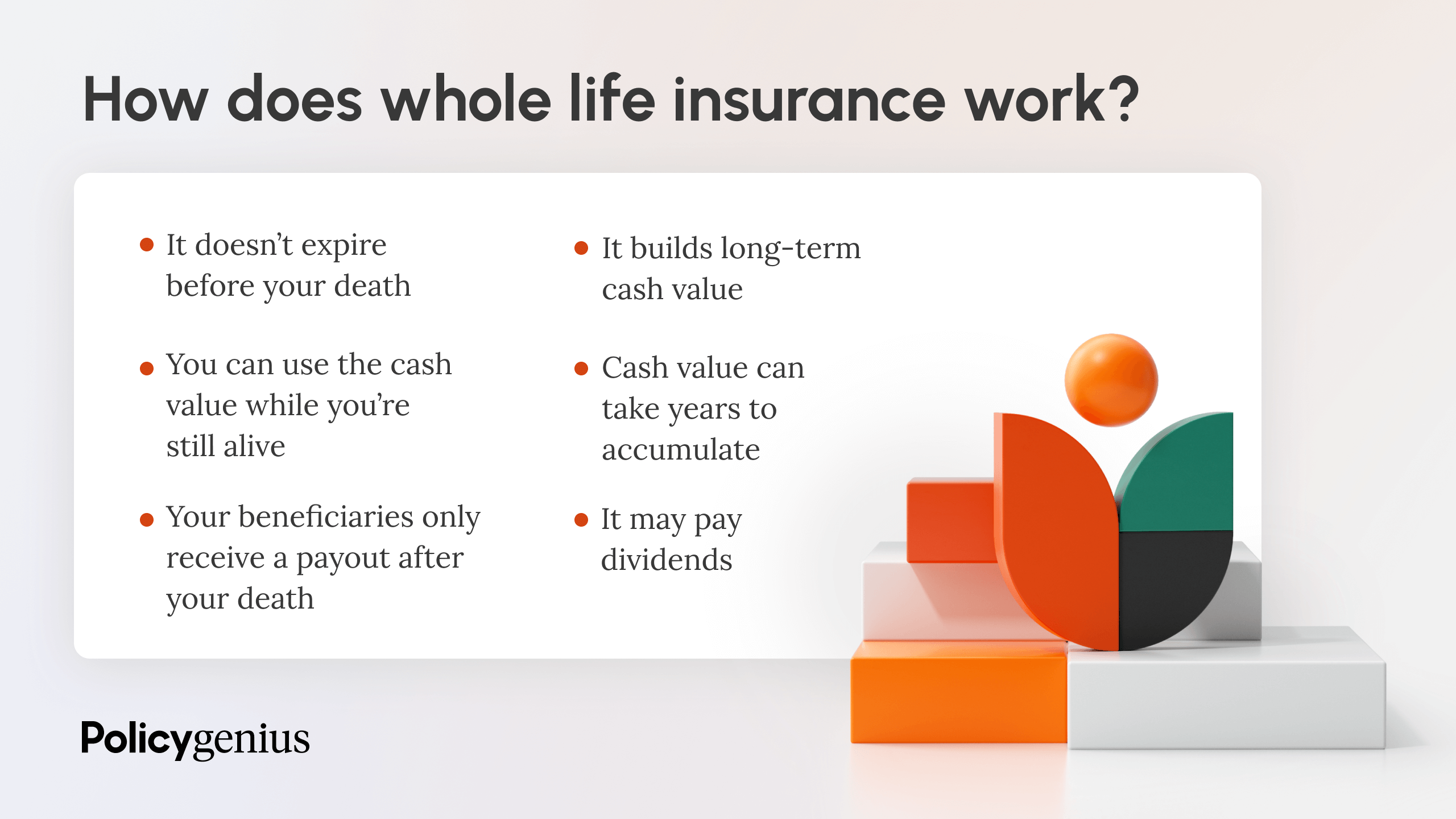
A blended whole life insurance policy integrates a base permanent insurance contract with term insurance riders to lower initial costs while maintaining long-term protection. This strategy allows families to secure higher death benefits during high-expense years, such as raising children or paying a mortgage, while gradually shifting to a purely permanent cash-value accumulation model as the term components expire.
Understanding the Mechanics of Blended Policies
The structure of a "blended" policy is rooted in the combination of two distinct types of coverage within a single life insurance contract. A traditional whole life insurance policy is permanent, carries fixed premiums, and builds cash value over time. However, the premium costs for high face amounts of traditional whole life insurance can be prohibitive for young or middle-class families.
A blended policy solves this by using a "base" whole life component, which provides a foundational amount of permanent coverage, and supplementing it with a "term rider"—a temporary layer of life insurance. Because term insurance does not build cash value and covers the insurer for a limited window, it is significantly cheaper than whole life coverage. By layering these, families can achieve a desired total death benefit at a much lower premium cost than they would pay for an equivalent amount of pure whole life insurance.
The Financial Utility of Cash Value for Families
For many families, the primary appeal of a blended policy is the ability to access liquidity. The cash value component of a whole life policy serves as a financial safety net. Unlike a standard savings account, the cash value in a policy grows on a tax-deferred basis. Policyholders can often access these funds through policy loans or withdrawals, provided the policy remains in force and has sufficient value.
In a blended policy, the initial focus is often on the base component’s ability to generate this cash value. As the years progress and the term riders expire, the premiums that were once allocated toward those riders can often be redirected toward "paid-up additions" (PUAs). These are incremental units of whole life insurance purchased with after-tax dollars that increase both the death benefit and the cash value of the policy. This transition ensures that the policy evolves from a protection-heavy instrument into a wealth-accumulation vehicle.
Strategic Advantages for High-Expense Life Stages
Families often face a "protection gap"—a period where financial obligations like childcare, education funding, and mortgage debt are at their peak, but disposable income is limited. A blended policy is inherently suited for this stage of life.
- Immediate High Death Benefit: Young parents need significant coverage to replace their income if a primary earner passes away. Blended policies provide this immediate coverage at an affordable price point.
- Budget Flexibility: By reducing the cost of permanent insurance, families can maintain adequate coverage without compromising their ability to save for college or contribute to retirement accounts.
- Flexibility in Coverage Decay: As children move out and mortgages are paid off, the term insurance portion of the blended policy naturally becomes less necessary. The expiration of these riders allows the family to consolidate their insurance costs just as their other financial liabilities begin to decrease.
Comparing Traditional Whole Life and Blended Whole Life
To evaluate whether a blended policy is the right choice, it is helpful to compare the core characteristics of pure whole life against the blended variation.
| Feature | Traditional Whole Life | Blended Whole Life |
|---|---|---|
| Premium Structure | Higher; entirely permanent | Lower; base + term riders |
| Cash Value Growth | Steady and consistent | Initially slower; accelerates with PUAs |
| Death Benefit | Fixed and permanent | High initially; tapers if riders drop |
| Primary Goal | Estate planning / Max cash | High coverage + long-term utility |
| Complexity | Low; straightforward | Higher; requires careful planning |
Navigating the Risks and Limitations
While blended policies offer substantial benefits, they are not without complexity. The most significant risk is "underfunding" the policy. Because the policy relies on dividends or internal mechanisms to keep the permanent component robust after term riders expire, a failure to pay premiums or a downturn in the insurance company's dividend performance can lead to policy lapse or reduced coverage.
Additionally, prospective buyers must understand that the term rider is not permanent. If a family experiences unforeseen financial hardship later in life and cannot afford to convert those term riders into permanent paid-up additions, they may find their total death benefit significantly reduced exactly when they might have preferred it to remain high. It is essential to work with a licensed financial advisor to conduct a "ledger analysis," which projects how the policy will perform under various interest rate and dividend environments.
Implementation: Steps to Secure a Policy
If you are considering a blended whole life insurance policy for your family, follow these systematic steps to ensure the policy aligns with your long-term goals:
- Determine Your Protection Need: Calculate your total debt, future college costs, and income replacement needs. This provides the "target" death benefit.
- Assess Your Budget: Determine how much you can comfortably pay toward premiums annually without impacting other critical investments like a 401(k) or IRA.
- Consult a Licensed Professional: Work with an independent insurance broker who has access to multiple carriers. Not all insurance companies offer competitive blended products; some specialize in high-cash-value designs, while others focus on death-benefit protection.
- Review the Illustration: Always request a formal policy illustration. This document shows exactly how the term riders function, when they expire, and how the projected cash value is expected to grow.
- Underwriting: Submit your health information. Remember that your health status will influence the premium, as life insurance is a risk-based product.
Frequently Asked Questions
Are the premiums for blended whole life insurance guaranteed? The base whole life component typically has guaranteed premiums. However, the term rider portions are often subject to contract terms, and the overall performance—especially regarding cash value—depends on the insurer's dividend declarations, which are not guaranteed.
Can I convert the term rider to whole life later? Most blended policies allow for the conversion of term riders into permanent coverage, often through the purchase of paid-up additions. You should verify the specific conversion options in your policy contract before signing.
Is a blended policy the same as Universal Life insurance? No. Universal life is a different product that offers flexible premiums and an interest-sensitive cash value account. Blended whole life retains the contractual structure of whole life but uses term components for cost-efficiency.
What happens if I stop paying premiums? Like any permanent life insurance, if you stop paying premiums, the policy may lapse. Depending on the cash value accumulated, the policy might be converted to "extended term" insurance or "reduced paid-up" status, but these will significantly lower your total coverage.
Who should avoid blended whole life insurance? If your primary goal is the simplest possible policy with no moving parts, or if you have a high budget and want to maximize cash value from day one, a non-blended, high-premium whole life policy may be more appropriate for your needs.
Professional Advice Limitation
This article is provided for informational purposes only and does not constitute financial, legal, or tax advice. Life insurance contracts are complex legal documents, and individual financial situations vary significantly. Before purchasing any life insurance product, you should consult with a qualified financial planner or insurance professional to evaluate your specific needs, jurisdictional regulations, and the long-term tax implications of your policy.
Recommendation
For most families, the most effective path is to request a "ledger illustration" from at least three highly rated mutual insurance companies. Compare the "net" cash value projections after 10, 20, and 30 years. Ensure that you prioritize companies with a long history of paying dividends to policyholders, as the "blended" nature of your coverage will rely heavily on these dividends to maximize the value of your policy over the coming decades.

Image Gallery
Select an image to open it in a new tab.

Lars Thomsen
Global Labor Markets and Economic Strategy Editor
