
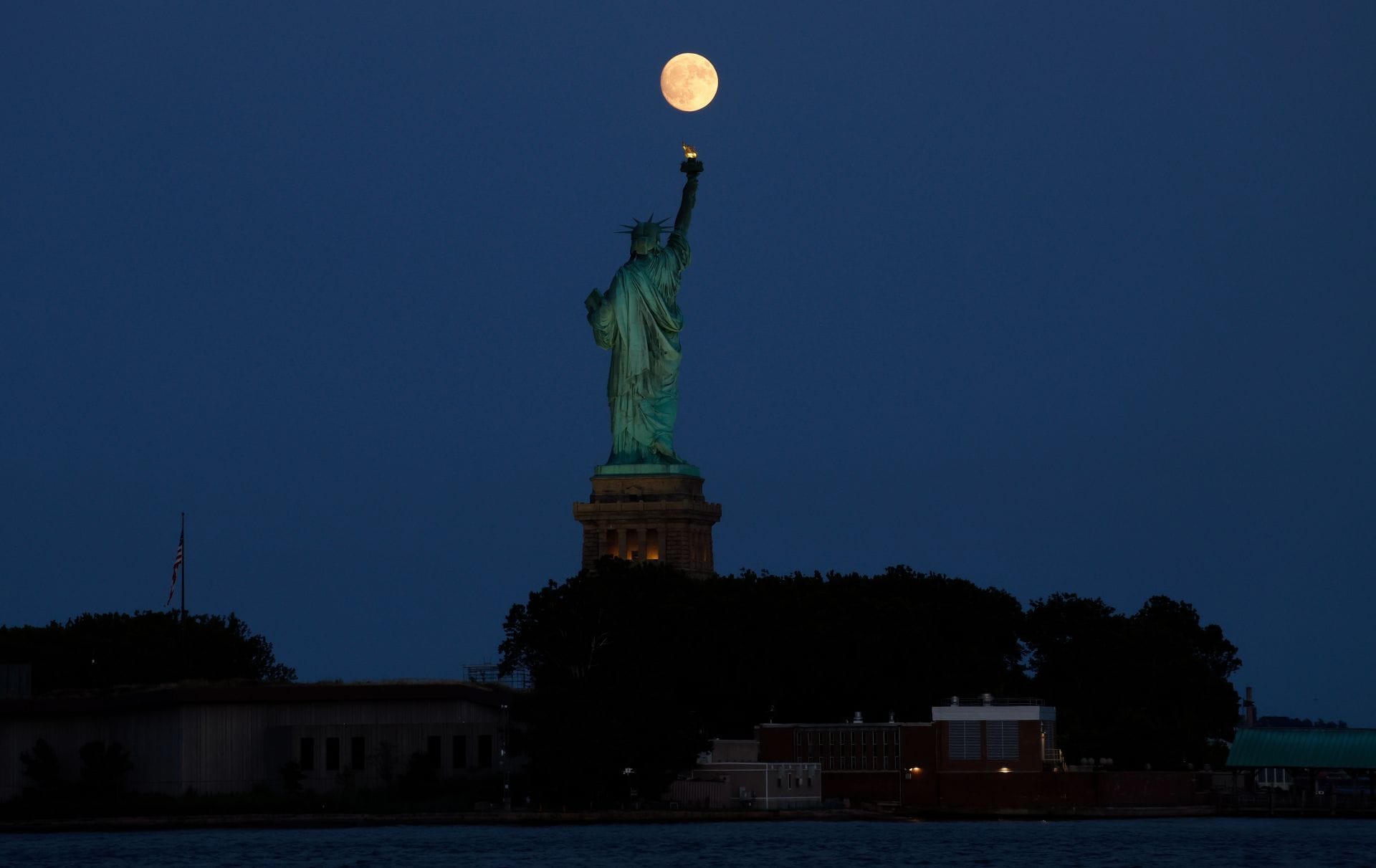
The Statue of Liberty has not fallen down. Since its dedication on October 28, 1886, the monument has remained standing on Liberty Island in New York Harbor. While it has survived explosions, hurricanes, and earthquakes, any imagery of it collapsing is limited to fictional films, special effects, or artistic renderings.
As one of the most recognizable symbols of freedom in the world, the Statue of Liberty (officially titled "Liberty Enlightening the World") is a marvel of late 19th-century engineering. Despite its height and the harsh maritime environment it inhabits, the structure is designed to withstand significant environmental stress. However, the question "did the Statue of Liberty fall down" continues to circulate due to a combination of historical near-misses, cinematic destruction, and the psychological phenomenon known as the Mandela Effect.
The Engineering Behind the Statue’s Resilience
To understand why the statue has never fallen, one must look at the revolutionary engineering provided by Alexandre-Gustave Eiffel, who designed the internal support system before building his famous tower in Paris. The statue is not a solid mass; it is a "curtain wall" structure, where the exterior copper skin is hung on a flexible iron (later replaced by stainless steel) skeleton.
The Flexible Iron Framework
Eiffel’s design allowed the statue to move without cracking. The copper skin is only 2.4 millimeters thick—roughly the thickness of two pennies. If the statue were rigid, the high winds of New York Harbor would have caused the metal to fatigue and eventually fail. Instead, Eiffel designed a central pylon and a secondary framework of "flat bars" that act like springs. This allows the statue to sway up to three inches in high winds, while the torch can sway up to five or six inches.
The Copper Patina and Protection
The green color of the statue, known as a patina, is the result of natural oxidation. Far from being a sign of decay, this layer actually protects the underlying copper from further corrosion by the salty sea air. In the 1980s, a massive restoration project was undertaken to ensure the internal structure remained sound. During this time, the original iron armature bars, which had begun to corrode due to galvanic action, were replaced with high-quality stainless steel.
Historical Events That Threatened the Statue
While the statue has never collapsed, there have been specific historical events where its structural integrity was genuinely at risk. These events often form the basis of the misconception that the statue fell or was destroyed.
The Black Tom Explosion (1916)
The most significant threat to the statue occurred on July 30, 1916. During World War I, German saboteurs set fire to a munitions depot on Black Tom Island, a pier in Jersey City. The resulting explosion was one of the largest non-nuclear explosions in history, equivalent to a magnitude 5.0 earthquake.
The blast caused $100,000 in damage to the statue (a massive sum at the time). Shrapnel embedded itself in the copper skin, and the internal framework of the torch arm was compromised. While the statue remained standing, the damage was so severe that the arm and torch have been closed to the public ever since. Many people mistakenly believe the torch is closed due to modern safety or "falling" risks, but it is actually a permanent consequence of this 1916 act of sabotage.
Hurricane Sandy (2012)
In October 2012, Hurricane Sandy devastated the New York and New Jersey coastlines. Liberty Island was almost entirely submerged, with roughly 75% of its surface under water. While the island’s infrastructure—including the docks, electrical systems, and pathways—was destroyed, the statue itself remained unharmed. Because the pedestal is built upon the massive stone walls of Fort Wood, the statue was elevated enough to avoid the storm surge, and its internal frame easily handled the hurricane-force winds.
The 2024 New York Earthquake
In April 2024, a 4.8 magnitude earthquake struck the New Jersey/New York area. Residents and tourists reported feeling the ground shake, and video footage from the "Liberty Cam" showed the statue trembling. However, consistent with its design, the statue flexed with the movement. Post-seismic inspections by the National Park Service confirmed that there was no structural damage and no risk of the monument falling.
Pop Culture and the "Cinematic Destruction" Factor
A primary reason many people ask if the statue has fallen is its frequent destruction in Hollywood movies. For decades, filmmakers have used the Statue of Liberty as a visual shorthand for the collapse of civilization or a catastrophic event.
- Planet of the Apes (1968): Perhaps the most famous cinematic use of the statue is the final scene, where the protagonist finds the half-buried remains of the statue on a beach, realizing he has been on Earth all along.
- Cloverfield (2008): The film’s marketing centered on the iconic image of the statue’s head being ripped off and thrown into the streets of Manhattan.
- The Day After Tomorrow (2004): The statue is shown being overwhelmed by a massive tidal wave and eventually frozen in ice.
- Independence Day (1996): The statue is depicted lying face-down in the harbor after an alien attack.
These powerful visual images often embed themselves in the collective memory, leading to "false memories" where individuals recall seeing the statue damaged or fallen in real life, when they are actually recalling a movie scene.
The Mandela Effect and the "Torch Memory"
The question of the statue falling is often linked to the Mandela Effect—a phenomenon where a large group of people remembers something differently than how it occurred.
Many people swear they remember visiting the torch or seeing photos of tourists inside the torch in the 1980s or 90s. In reality, the torch has been closed since the 1916 explosion. This disconnect leads some to assume that the statue "fell" or was partially dismantled because they can no longer access parts of it they mistakenly believe were open recently. This confusion contributes to the narrative that the statue is in a state of ruin or has suffered a catastrophic failure.
Maintenance and Modern Stability
Today, the Statue of Liberty is one of the most monitored structures in the United States. The National Park Service (NPS) employs a team of engineers and preservationists who use laser scanning and structural sensors to monitor the monument's "health."
| Feature | Specification / Status | Purpose |
|---|---|---|
| Total Height | 305 feet, 1 inch | From ground to torch tip. |
| Wind Tolerance | Up to 100+ mph | Design allows for swaying without failure. |
| Material | Copper (Skin), Stainless Steel (Frame) | Prevents corrosion and provides support. |
| Armature Bars | 1,350 total | Replaced in 1986 to ensure structural integrity. |
| Last Major Inspection | Ongoing (Annual cycles) | NPS structural integrity checks. |
| Public Access | Pedestal and Crown open | The torch remains permanently closed. |
The 1980s restoration was the most critical update in the statue's history. Workers replaced the internal "ribs" that connect the copper to the pylon. The original iron bars had expanded due to rust, causing "jacking," which pushed against the copper skin. By replacing these with teflon-coated stainless steel, engineers ensured that the statue could continue to expand and contract with temperature changes without the risk of the skin tearing or the structure buckling.
Common Misconceptions About the Statue's Status
There are several persistent myths that lead people to believe the statue is falling or in danger:
- "The Statue is Leaning": While the statue sways, it does not have a permanent lean like the Leaning Tower of Pisa. Any perceived tilt is usually an optical illusion caused by the "contrapposto" pose (the way the statue's weight is shifted onto one leg).
- "The Statue was Moved": Some believe the statue was moved from its original location, causing it to become unstable. The statue has never been moved; it was assembled on Liberty Island (formerly Bedloe's Island) and has stayed there.
- "It's Sinking": Because Liberty Island is in the harbor, there are rumors that the weight of the statue is causing the island to sink. Geological surveys show that the bedrock beneath the pedestal is extremely stable.
How the Statue is Protected Today
Security and physical preservation are the two pillars of the statue's current management. Following the events of September 11, 2001, security around the statue was significantly increased. While these measures protect against external threats, the NPS Focuses on "preventative conservation" to protect against the elements.
This includes monitoring the "weep holes" in the structure. These are small holes designed to let condensation and any rainwater that enters through the joints drain out. If these holes clog, water can pool and cause internal corrosion. The meticulous cleaning and maintenance of these drainage systems are why the statue remains as stable today as it was in 1886.
Frequently Asked Questions
Has the Statue of Liberty ever been knocked down by a storm?
No, the Statue of Liberty has never been knocked down by a storm. It was built with a flexible internal skeleton designed by Gustave Eiffel specifically to withstand the high winds and heavy storms common in New York Harbor. Even during Hurricane Sandy in 2012, which caused massive flooding on the island, the statue itself remained structurally sound.
Why is the torch of the Statue of Liberty closed?
The torch has been closed to the public since 1916. This was not because the statue fell, but because of the Black Tom explosion, an act of sabotage by German agents during World War I. The blast damaged the arm and torch, making it unsafe for public access. During the 1980s restoration, the original torch was replaced with a new one covered in 24k gold leaf, but the arm remains closed for safety and security reasons.
Is the Statue of Liberty at risk of falling due to rising sea levels?
While the statue itself is high enough on its pedestal to avoid immediate danger from rising sea levels, Liberty Island is at risk. Increased flooding can damage the island's infrastructure, docks, and the pedestal's foundation over long periods. However, there is currently no evidence that the statue is at risk of falling or collapsing due to climate change in the immediate future.
Did the Statue of Liberty lose its head during a storm?
No. The image of the Statue of Liberty losing its head is a popular trope in movies like Cloverfield, but it has never happened in reality. The head is securely attached to the central pylon of the internal framework. During the 1980s restoration, engineers did discover that the head had been mounted slightly off-center by the original builders, which was causing some wear on a support beam, but this was corrected during the repairs.
Was the Statue of Liberty damaged in the 2024 earthquake?
No damage was reported. Following the 4.8 magnitude earthquake in April 2024, the National Park Service conducted a thorough inspection of the monument. The statue’s design allows it to absorb seismic energy by swaying, which prevented any cracking or structural failure.
Summary of Facts
The Statue of Liberty remains a permanent and stable fixture of the United States. Despite being a frequent target for destruction in fictional media, the real-world monument is protected by cutting-edge engineering and constant maintenance. It has survived 140 years of history, including a major explosion and several "storms of the century," without ever falling or suffering a collapse.
For those planning a visit, the monument remains open to the public, though it is always recommended to check the official National Park Service website for the latest information on weather closures or ferry schedules.
Image Gallery
Select an image to open it in a new tab.


Akira Tanaka
International Academic Trends Correspondent
