The Cinematic Legacy of Joel Schumacher: From Fashion to Blockbuster Directing

Joel Schumacher was an influential American filmmaker and stylist, best known for directing diverse hits such as The Lost Boys, Falling Down, and Batman Forever. Beginning his career in fashion, he brought a distinctive visual signature to Hollywood, discovering numerous A-list stars and navigating genres ranging from gritty thrillers to high-camp blockbusters.
The Formative Years: From Window Dressing to Wardrobe Design
Before he ever sat in a director's chair, Joel Schumacher was a titan of the New York fashion scene. Born in 1939 in New York City, his upbringing was marked by early loss—his father died when he was only four—which he often cited as a catalyst for his vivid imagination and escapism. He studied at the Parsons School of Design and the Fashion Institute of Technology, eventually becoming a window dresser for the prestigious Henri Bendel.
Schumacher’s transition into film was a natural extension of his visual storytelling. He began as a costume designer, most notably working on Woody Allen’s Sleeper (1973) and Interiors (1978). This period was crucial because it taught him how physical environments and attire could dictate a character's internal psychology. By the time he moved into screenwriting (penning The Wiz in 1978) and eventually directing, he possessed a "total vision" approach that few of his contemporaries could match. In 2026, film historians frequently point to this fashion-forward background as the reason his films, even the critically divisive ones, maintain such a potent and recognizable aesthetic.
The 1980s: Defining the "Brat Pack" and Cult Horror
The 1980s served as Schumacher’s breakout decade, where he successfully captured the zeitgeist of American youth culture. His 1985 film, St. Elmo's Fire, became a foundational text for the "Brat Pack" era. By focusing on the post-collegiate anxieties of a group of friends in Georgetown, Schumacher tapped into a specific brand of earnest melodrama that resonated with audiences. While critics sometimes found the characters shallow, the film’s commercial success proved Schumacher knew exactly how to market young, attractive talent.
However, it was 1987’s The Lost Boys that cemented his status as a visual auteur. The film reimagined vampires not as crumbling aristocrats in capes, but as leather-clad, MTV-generation rebels. By blending horror, comedy, and a rock-and-roll soundtrack, Schumacher created a cultural touchstone. The film’s use of neon lighting, fog machines, and tight-angled cinematography became a blueprint for 1980s genre cinema. Even four decades later, the influence of The Lost Boys is visible in modern supernatural dramas that prioritize style and "coolness" alongside traditional scares.

The 1990s: Versatility and Social Commentary
In the 1990s, Schumacher transitioned away from teen-centric stories toward more mature, often darker subject matter. This decade showcased his range, proving he could handle high-tension thrillers and complex character studies just as well as stylized genre pieces.
Falling Down (1993)
Falling Down remains perhaps Schumacher’s most intellectually discussed work. Starring Michael Douglas as William "D-Fens" Foster, the film explores a man’s violent breakdown amidst the frustrations of modern urban life in Los Angeles. At the time of its release, it sparked intense debate regarding its depiction of race, class, and "angry white male" tropes. In the perspective of 2026, the film is often analyzed as a precursor to contemporary discussions about social alienation and the fragility of the American Dream. Schumacher’s direction was praised for its claustrophobic heat and the relentless, episodic nature of the protagonist’s journey.
The Grisham Era
Schumacher also became the go-to director for high-profile legal thrillers, specifically those based on the novels of John Grisham. The Client (1994) and A Time to Kill (1996) were massive box-office successes. These films demonstrated his ability to manage massive ensembles and extract career-defining performances. A Time to Kill, in particular, is credited with launching Matthew McConaughey into superstardom. Schumacher had a legendary "eye" for talent, often fighting studio executives to cast relatively unknown actors he believed had the "it" factor.
The Batman Controversy: Neon, Camp, and Criticism
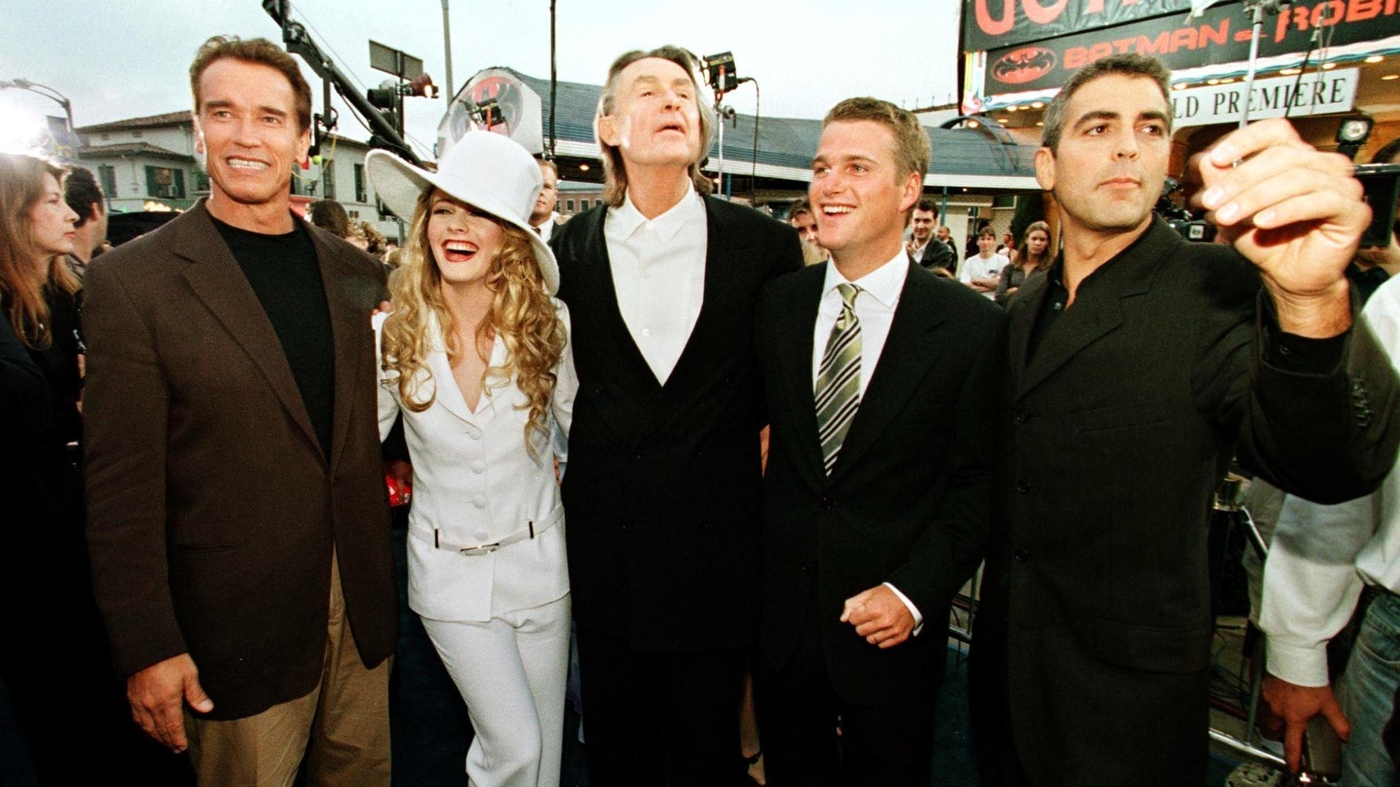
No discussion of Joel Schumacher is complete without addressing his tenure on the Batman franchise. Following Tim Burton’s darkly gothic Batman Returns, Warner Bros. wanted a more "toy-friendly" and vibrant direction for the caped crusader. Schumacher delivered Batman Forever (1995) and Batman & Robin (1997).
- Batman Forever: This film was a massive financial success, successfully pivoting the franchise toward a more colorful, comic-book aesthetic. It introduced Jim Carrey’s Riddler and Tommy Lee Jones’s Two-Face, leaning heavily into the "maximalist" style Schumacher loved.
- Batman & Robin: This sequel became one of the most polarizing films in superhero history. Criticized for its campy tone, pun-heavy dialogue, and the infamous "bat-nipples" on the costumes, the film nearly derailed the genre.
However, in recent years leading up to 2026, a critical re-evaluation has occurred. Many scholars now appreciate Batman & Robin as a deliberate homage to the 1960s Adam West television series—a piece of "pop art" rather than a serious noir. While it was a departure from the source material’s darker roots, Schumacher’s Batman films are now recognized for their ambitious production design and their willingness to embrace the inherent absurdity of the medium.
Post-Batman: Gritty Realism and Experimental Thrillers
Following the backlash to Batman & Robin, Schumacher pivoted sharply. He spent the late 90s and early 2000s working on smaller, more intense projects that seemed designed to strip away the artifice of his blockbuster years.
Tigerland (2000) was a pivotal moment in this era. Shot on 16mm film with handheld cameras and a low budget, the movie followed soldiers in advanced infantry training during the Vietnam War. It was devoid of the neon lights and polished sets of his previous work, focusing instead on raw performance and gritty realism. This film also famously introduced the world to Colin Farrell.
Schumacher continued this lean approach with Phone Booth (2002), a high-concept thriller that takes place almost entirely within a single telecommunication kiosk. The film was a masterclass in pacing and suspense, proving that Schumacher didn't need $100 million budgets to keep an audience on the edge of their seats.
The Schumacher Aesthetic: Key Directorial Trademarks
Schumacher’s work is characterized by several recurring elements that define his "directorial DNA." Understanding these helps explain why his films remain visually distinct even decades after their release.
| Trademark Element | Description | Notable Examples |
|---|---|---|
| High-Contrast Lighting | The use of bold colors (teals, oranges, purples) and sharp shadows. | The Lost Boys, Batman Forever |
| Star-Maker Casting | A knack for identifying and casting young actors just before they hit the A-list. | Colin Farrell, Matthew McConaughey, Kiefer Sutherland |
| Urban Decay | Depicting cities as vibrant but decaying labyrinths. | Falling Down, 8mm |
| Theatrical Production | Sets that feel like stage plays, emphasizing artificial beauty over realism. | The Phantom of the Opera, Batman & Robin |
| Empathetic Villains | Antagonists who are often motivated by trauma or social rejection. | Falling Down, Batman Forever |
Final Years and Legacy in 2026
Joel Schumacher passed away in June 2020 at the age of 80. By 2026, his legacy has been solidified as that of a "brave" filmmaker—someone who was unafraid to fail spectacularly in pursuit of a specific vision. He was one of the few openly gay directors working at the highest levels of Hollywood during the 80s and 90s, navigating a conservative industry while maintaining his unique voice.
His influence is most felt in the "Vibe Cinema" of the 2020s, where directors prioritize mood and aesthetic texture over strict narrative logic. He taught the industry that a director could be a craftsman, a stylist, and a provocateur all at once. Whether he was exploring the darkness of the human soul in 8mm or the shimmering surface of celebrity in Flawless, Schumacher remained consistently, unapologetically himself.
Frequently Asked Questions
Why did Joel Schumacher add nipples to the Batman suit?
Schumacher, coming from a background in fashion and costume design, based the suits on Greco-Roman statues and anatomical illustrations. He wanted the suits to look like "perfected" human forms. While it became a point of ridicule, Schumacher maintained that it was a purely aesthetic choice inspired by classical art rather than a joke.
Which movie is considered Joel Schumacher's best work?
Critically, Falling Down and Tigerland are often cited as his most accomplished films due to their tight scripts and powerful lead performances. However, The Lost Boys remains his most beloved cult classic and is frequently cited as his most influential contribution to pop culture.
Did Joel Schumacher discover many famous actors?
Yes, he was legendary for his casting instincts. He gave Matthew McConaughey his first major lead in A Time to Kill, helped launch the careers of the "Brat Pack" in St. Elmo's Fire, and discovered Colin Farrell for Tigerland. He also cast a young Julia Roberts in Flatliners just as she was becoming a household name.
Was Joel Schumacher a "stylist" more than a "storyteller"?
This was a common criticism during his career. However, as of 2026, many film critics argue that for Schumacher, style was the story. His use of color, lighting, and costume wasn't just "decoration"; it was used to convey the emotional state of his characters and the atmosphere of the worlds they inhabited.
How did Schumacher handle the failure of Batman & Robin?
He was remarkably humble and candid about it. In numerous interviews later in life, he apologized to fans who felt let down, explaining that he was trying to provide the "fun" movie the studio requested but perhaps took the campiness too far. This honesty earned him a great deal of respect in his later years.
Practical Recommendation for Viewers
If you are new to the filmography of Joel Schumacher, the best way to understand his range is to watch his "Dynamic Trio": start with The Lost Boys to see his visual mastery, follow it with Falling Down to see his capability for social drama, and finish with Phone Booth to appreciate his technical skill in building tension. This progression provides a complete picture of a director who refused to be pigeonholed into a single genre. For those interested in the technical aspects of filmmaking, pay close attention to the production design and lighting in his mid-90s work, as these elements served as the bridge between traditional Hollywood lighting and the digital aesthetics common today.
Image Gallery
Select an image to open it in a new tab.




Declan O'Connor
Higher Education and Campus Culture Reporter
