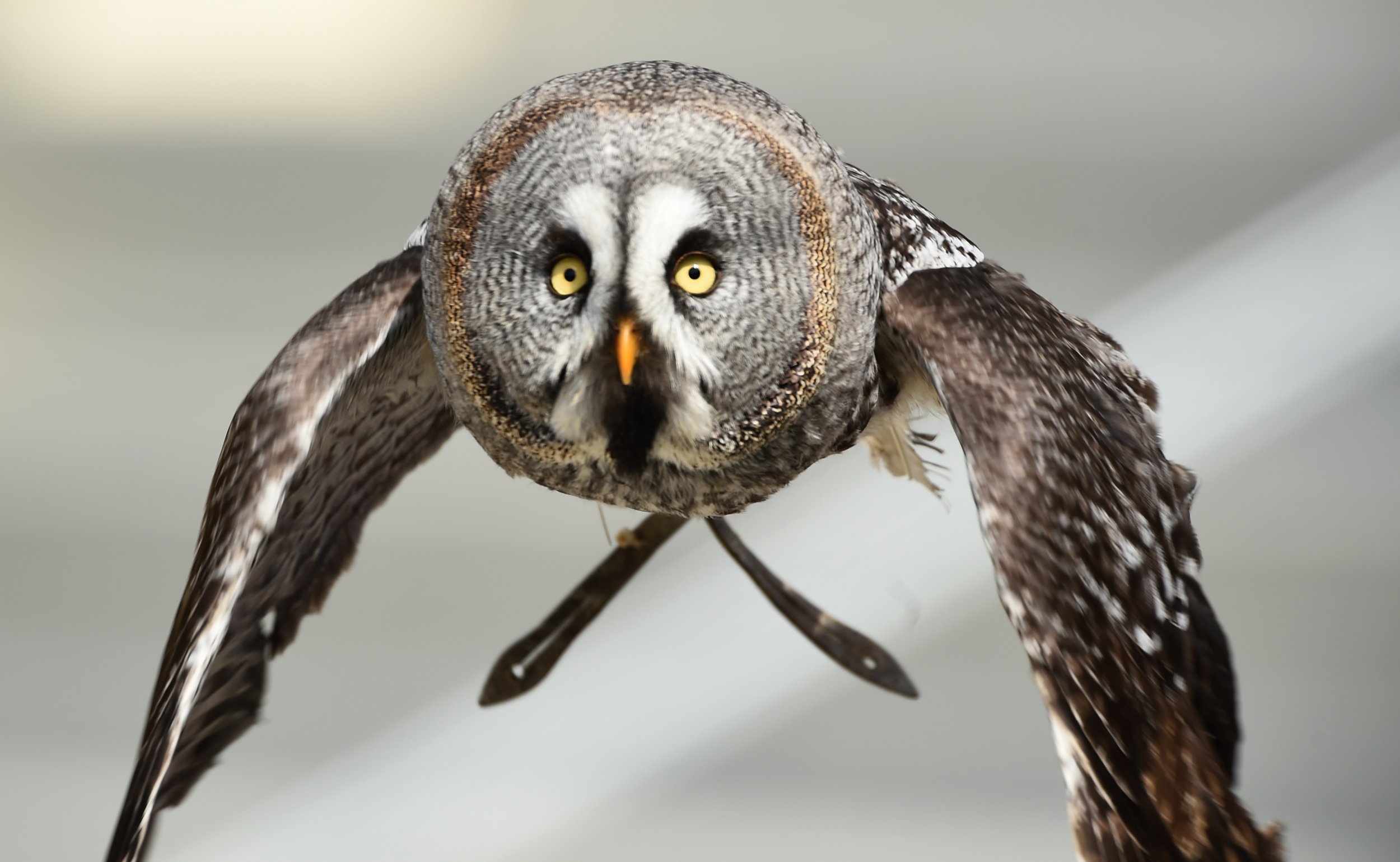
Birds are instinctively terrified of owls because these raptors are specialized "silent killers" that hunt primarily at night when most other bird species are blind and vulnerable. Owls possess unique physiological adaptations—such as serrated flight feathers for near-silent movement and devastatingly powerful talons—that allow them to ambush prey without warning, making them one of the most effective predators in the avian world.
For most birds, the sight of an owl represents an existential threat that triggers immediate defensive behaviors, ranging from frantic flight to aggressive "mobbing" displays. This fear is not merely learned; it is a deeply ingrained evolutionary response designed to maximize survival against a predator that has mastered the art of the nocturnal ambush. As of 2026, ornithological research continues to reveal that the "landscape of fear" created by owls significantly influences where other birds nest, forage, and sleep.
The Evolutionary Anatomy of a Silent Predator
To understand why birds are so deeply afraid of owls, one must first examine the biological "weapons" that owls possess. Unlike hawks or falcons, which often rely on speed and high-visibility pursuit, owls are built for stealth. This stealth creates a psychological disadvantage for their prey; a bird cannot defend itself against a threat it cannot hear or see coming.
Acoustic Stealth Through Feather Morphology
The primary reason birds fear owls is their ability to fly in near-total silence. Most birds produce a distinct "whirring" or "flapping" sound when they fly, caused by air turbulence moving over the surface of their wings. Owls have evolved three specific structures to negate this noise:
- The Leading-Edge Comb: The primary flight feathers of an owl feature a stiff, comb-like fringe. This structure breaks up the air into smaller micro-turbulences, muffling the sound of the air hitting the wing.
- The Trailing-Edge Fringe: The back of the wing feathers has a soft, hair-like fringe that further smooths out the airflow as it leaves the wing, preventing the "gulping" sound typical of other large birds.
- Downy Surface: The entire surface of an owl’s wing is covered in a soft, velvet-like down that absorbs any remaining sound frequencies.
When a songbird is roosting at night, it relies on its hearing to detect approaching predators. Because an owl produces almost no acoustic signature, it can descend upon a sleeping bird and strike before the victim even realizes it is in danger.
Superior Sensory Perception
Owls possess tubular-shaped eyes packed with rod cells, granting them exceptional low-light vision. While a crow or a sparrow is essentially blind in the dark, an owl can see movement with startling clarity. Furthermore, many owls have asymmetrical ear openings—one higher than the other—allowing them to triangulate the exact location of a sound in three-dimensional space. This means an owl doesn't even need to see a bird to kill it; it can hear the faint rustle of feathers or the heartbeat of a bird hiding in thick brush.
The Nocturnal Vulnerability Gap
Most bird species are diurnal, meaning they are active during the day and sleep at night. During the nocturnal hours, their metabolic rate drops, and their sensory awareness is significantly diminished. This creates a "vulnerability gap" that owls are perfectly evolved to exploit.
The "Tiger of the Air"
The Great Horned Owl (Bubo virginianus) is perhaps the most feared bird in North America. Often called the "Tiger of the Air," this species is a generalist predator that does not discriminate. It will readily hunt other birds of prey, including Red-tailed Hawks, Peregrine Falcons, and even smaller owl species.
Because Great Horned Owls hunt at night when hawks are asleep, they often snatch adult hawks right off their roosts. This creates a hierarchy of fear where even the most dominant daytime predators become terrified victims once the sun sets. The realization that no bird is "safe" from an owl reinforces the intense fear response seen across different species.

Mobbing: The Counter-Intuitive Response to Fear
One of the most fascinating behaviors in the avian world is "mobbing." If you have ever seen a group of small songbirds, such as Chickadees or Crows, screaming and diving at a stationary owl during the day, you are witnessing an active fear response.
Why Birds Attack What They Fear
While it may seem counterproductive for a small bird to approach a predator, mobbing serves several critical survival functions:
- Eliminating the Element of Surprise: An owl’s greatest advantage is stealth. By mobbing the owl and making a significant amount of noise, the smaller birds "blow the owl's cover." A predator that has been spotted is far less dangerous than one that is hidden.
- Education of the Young: Mobbing teaches juvenile birds which creatures in the forest are dangerous. By observing the adults, young birds learn to associate the silhouette of an owl with a life-threatening predator.
- Driving the Predator Away: Owls are generally sensitive to being harassed. If enough birds join the mob, the owl will eventually fly away to a quieter location where it can rest undisturbed, effectively removing the threat from the immediate nesting or foraging territory.
Research from the Cornell Lab of Ornithology indicates that the complexity of a bird's mobbing call can actually communicate the level of threat. For example, Black-capped Chickadees add more "dee" notes to their alarm call when the predator is smaller and more agile (and thus more dangerous to them) than when the predator is a large, slow-moving owl.
Comparing Avian Reactions to Different Predators
The fear of owls is distinct from the fear of other predators like snakes, cats, or hawks. The following table illustrates how birds perceive and react to various threats as observed in field studies through 2026.
| Predator Type | Primary Threat Time | Hunting Style | Bird Reaction |
|---|---|---|---|
| Owl (Great Horned/Barred) | Nocturnal / Twilight | Stealth Ambush | Intense Mobbing, High-Alert Alarm Calls, Territory Abandonment |
| Hawk (Cooper's/Sharp-shinned) | Diurnal | High-Speed Pursuit | Instant Cover-Seeking, Complete Silence, "Freeze" Response |
| Feral Cat | Cathemeral (Anytime) | Ground Stalking | Low-Level Mobbing, Ground-Level Alarm Chirps |
| Snake | Diurnal | Nest Raiding | Wing-Dragging (Distraction), Close-Proximity Hissing |
| Corvid (Crow/Jay) | Diurnal | Nest Predation | Defensive Diving, Group Aggression |
The Use of Owl Decoys in Human Environments
Because the fear of owls is so universal among birds, humans have long used plastic owl decoys to protect gardens, docks, and buildings. However, the effectiveness of these decoys is a subject of much debate and provides further insight into the nature of avian fear.
The Problem of Habituation
Birds are not unintelligent. While the initial sight of an owl decoy will trigger a fear response, birds eventually realize that a plastic statue does not move, breathe, or hunt. This process is known as habituation. In the "landscape of fear," a predator that never moves is eventually classified as a non-threat.
To make owl decoys effective in 2026, manufacturers have turned to "moving" decoys with wind-activated wings or rotating heads. Even so, the most effective way to leverage a bird's fear of owls is to move the decoy every few days. If the "owl" stays on the same fence post for a week, the local songbirds will eventually begin to land on its head, proving that their fear is based on the owl's potential for action, not just its shape.
Nested Threats: Why Smaller Owls Fear Larger Ones
The fear of owls isn't limited to non-raptors. The "owl-on-owl" predation cycle is a significant factor in forest ecology. Smaller species like the Eastern Screech-Owl or the Northern Saw-whet Owl live in constant terror of larger species like the Barred Owl or the Great Horned Owl.
This intra-guild predation means that smaller owls have evolved their own sets of "fear-based" behaviors. They often nest in deeper cavities with smaller entrances that larger owls cannot squeeze through. They also time their vocalizations carefully; a Screech-Owl that hoots too loudly or too often may inadvertently signal its location to a Great Horned Owl looking for an easy meal.
Psychological Impact: The "Landscape of Fear"
Ecologists use the term "landscape of fear" to describe how the presence of a predator changes the entire behavior of an ecosystem. For birds, the presence of an owl doesn't just mean they might get eaten; it changes how they live.
- Foraging Efficiency: Birds in areas with high owl populations spend more time scanning their surroundings and less time eating. This can lead to lower body weights and decreased reproductive success.
- Nesting Site Selection: Many birds will abandon perfectly viable nesting sites if they detect an owl nearby. The "cost" of the fear is so high that it outweighs the benefits of a high-quality nesting cavity.
- Nocturnal Restlessness: Studies have shown that when owl calls are played in a forest, diurnal birds experience "micro-wakings" throughout the night, leading to sleep deprivation and reduced cognitive function the following day.
Frequently Asked Questions
Do all birds fear owls?
While the vast majority of birds fear owls, the intensity of the fear varies by size. Large raptors like Golden Eagles have very few natural predators and may not fear an owl as much as a small sparrow would. However, almost all birds under a certain size threshold treat owls as a primary threat.
Can owls see in total darkness?
No, owls cannot see in "total" darkness (zero light). They require a tiny amount of ambient light, such as starlight or moonlight, which their eyes amplify. However, their ability to navigate and hunt in near-darkness is vastly superior to that of the birds they prey upon.
Why do crows hate owls so much?
Crows are highly social and intelligent. They recognize owls as their primary nocturnal threat. Since crows are large and aggressive, they are the most frequent "mobbers." They will often travel long distances to harass an owl they have spotted during the day, attempting to drive it out of their territory entirely.
Does a plastic owl really keep birds away?
Only temporarily. Without movement or the actual threat of predation, birds quickly habituate to decoys. To maintain the fear response, decoys must be moved frequently or feature realistic movement.
Why don't owls hunt during the day to avoid being mobbed?
Owls are physiologically specialized for night hunting. Their eyes are sensitive to bright sunlight, and their silent flight is less of an advantage during the day when visual detection is easier. By hunting at night, they occupy a "niche" where they have very little competition and a massive tactical advantage over sleeping prey.
Recommendations for Bird Owners and Gardeners
If you are looking to utilize the natural fear birds have of owls for property management, or if you are a bird lover looking to protect your local songbirds, consider the following:
- For Pest Control: If using an owl decoy, choose one with moving parts (like a bobblehead or fabric wings) and move its location at least once every 48 hours. This prevents habituation and maintains the "landscape of fear."
- For Songbird Protection: If you have bird feeders, place them near dense, thorny shrubs. This gives songbirds a "safe zone" where they can quickly dive if an owl or hawk is spotted. Avoid placing feeders in the middle of wide-open lawns where birds are exposed.
- Limit Night Lighting: Artificial light can sometimes "blind" birds or make them easier for owls to spot. Keeping your yard dark at night allows roosting birds to stay better hidden in the shadows of the foliage.
The fear birds feel toward owls is a testament to the owl's perfection as a predator. As we move through 2026, our understanding of these interactions continues to highlight the delicate balance between stealth and survival in the natural world.
Image Gallery
Select an image to open it in a new tab.


Zara El-Hashem
Sociocultural Dynamics and Academics Writer
