Antoine Walker: A Look at the Basketball Player’s Legacy
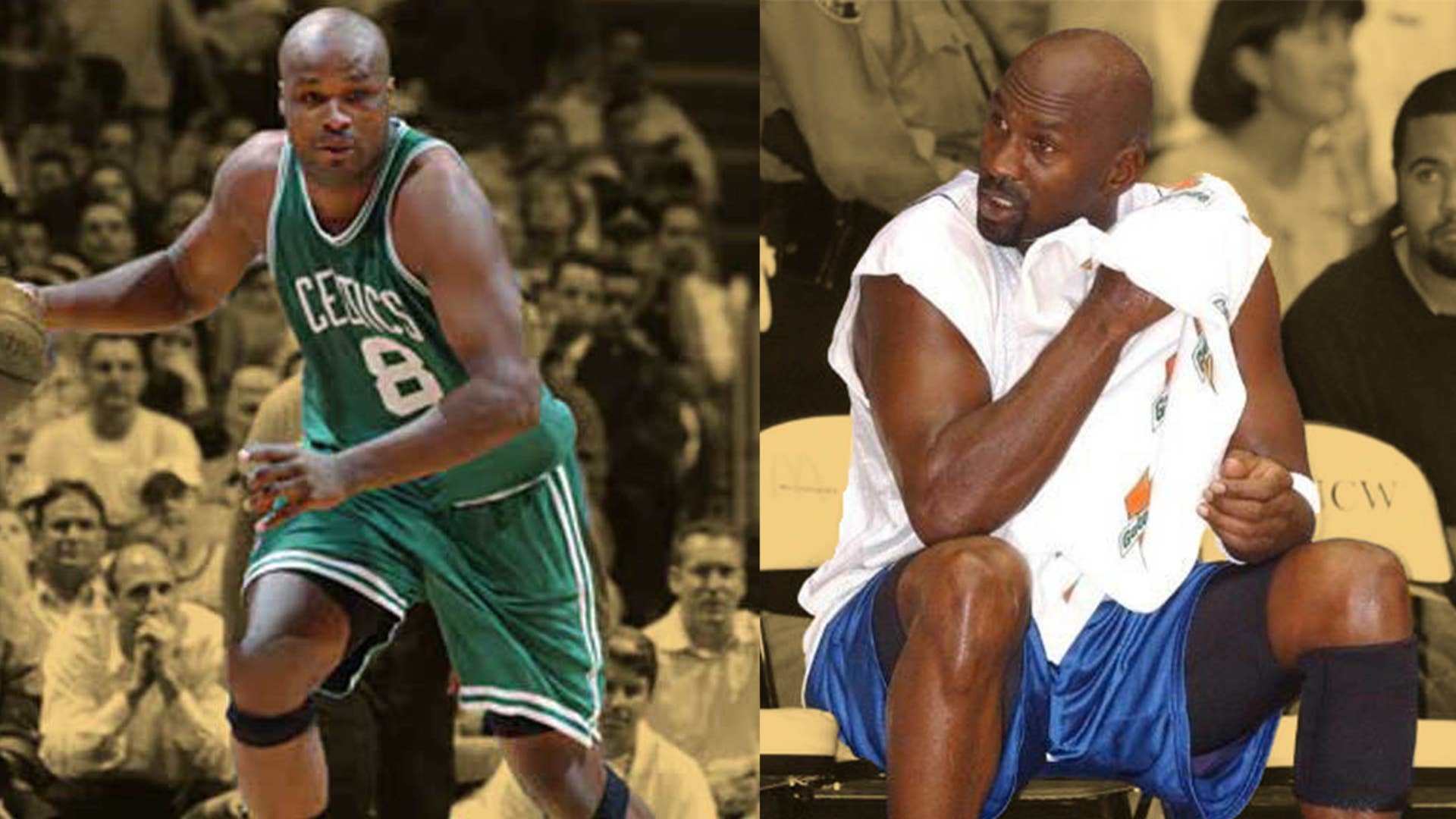
Antoine Walker’s basketball legacy is a complex narrative of offensive innovation, championship glory, and high-profile financial hardship that serves as a cautionary tale and a testament to talent. As an NBA All-Star, an NCAA champion, and a pioneer of the modern stretch-four archetype, Walker influenced how the game of basketball is played today, even if his post-playing financial struggles initially overshadowed his on-court achievements.
Introduction: The Dual Narrative of Antoine Walker
When basketball historians and analysts evaluate the career of Antoine Walker, they are often met with a duality that defines modern sports discourse. On one hand, Walker was an exceptionally skilled, versatile forward who earned three NBA All-Star selections, won an NBA championship with the Miami Heat in 2006, and captured an NCAA national title with the University of Kentucky in 1996. He was a foundational piece for the Boston Celtics during the late 1990s and early 2000s, forming a dynamic tandem with Paul Pierce that carried the franchise through a transitional era.
On the other hand, Walker’s name is frequently invoked in discussions regarding professional athlete financial literacy. Having earned over $100 million during his 12-season NBA career, Walker filed for Chapter 7 bankruptcy in 2010. His journey from high-rolling superstar to financial restructuring, and subsequent emergence as a financial educator for incoming rookies, transformed his personal narrative into a powerful redemption arc. Understanding Walker's complete legacy requires examining his collegiate dominance, his unique playing style, his impact on NBA tactics, and his post-career financial rehabilitation.
Collegiate Brilliance at the University of Kentucky
Long before he entered the NBA, Antoine Walker cemented his basketball pedigree under legendary coach Rick Pitino at the University of Kentucky. Recruited as part of a loaded roster, Walker quickly established himself as a physical and vocal leader for the Wildcats. His time in Lexington was defined by relentless energy, high-IQ passing, and a competitive fire that propelled Kentucky to the pinnacle of college basketball.
The 1996 National Championship Run
The crown jewel of Walker’s collegiate career was the 1995-96 Kentucky Wildcats team, widely regarded as one of the most dominant squads in college basketball history. Known as "The Untouchables," that team featured nine future NBA players, including Walker, Tony Delk, Ron Mercer, Derek Anderson, and Walter McCarty.
Walker averaged 15.2 percentage points and 8.4 rebounds per game during that sophomore season, earning consensus All-SEC honors and the SEC Tournament MVP award. In the 1996 NCAA Tournament, Walker’s interior toughness, defensive versatility, and ability to push the break as a forward overwhelmed opponents. His leadership culminated in a 76-67 victory over Syracuse in the national championship game. This performance validated his decision to declare for the 1996 NBA Draft, where he was selected sixth overall by the Boston Celtics.

NBA Career and the Boston Celtics Era
Walker entered the NBA at a time when the league was transitioning away from the traditional, plodding center-dominated offenses of the early 1990s toward a more perimeter-oriented, athletic style of play. Standing six feet, eight inches tall and weighing around 225 pounds, Walker possessed a unique blend of size, ball-handling skills, and court vision that made him difficult for traditional defenders to check.
The Dynamic Duo with Paul Pierce
In his second professional season, Walker averaged 22.4 percentage points, 10.2 rebounds, and 3.3 assists per game, earning his first NBA All-Star nod. His high-octane production solidified him as a franchise cornerstone. However, the Boston Celtics struggled to build a consistent supporting cast around him during the late 1990s.
The trajectory of the franchise shifted when the Celtics drafted Paul Pierce with the 10th overall pick in the 1998 NBA Draft. Walker and Pierce formed one of the most potent scoring tandems in the Eastern Conference. Their peak together came during the 2001-02 NBA season, when they led the Celtics to the Eastern Conference Finals for the first time since 1988. During that magical playoff run, Walker showcased his trademark offensive flair, highlighted by his signature "shimmy" celebration after hitting crucial three-pointers.
| Metric / Attribute | Antoine Walker's Profile |
|---|---|
| Position | Power Forward / Small Forward |
| Draft Position | 6th Overall (1996 NBA Draft by Boston Celtics) |
| College | University of Kentucky (1995–1996 NCAA Champion) |
| NBA All-Star Selections | 3 (1998, 2002, 2003) |
| NBA Championship | 1 (2006 with Miami Heat) |
| Career Earnings | Estimated over $108 million in NBA salary |
Tactical Legacy: The Original Stretch-Four
One of the most significant aspects of Walker’s legacy is how his playing style anticipated modern basketball strategy. In an era where power forwards were expected to operate almost exclusively in the low post, set bone-crushing screens, and battle for offensive rebounds, Walker regularly drifted to the perimeter, handled the ball in transition, and launched three-pointers with high frequency.
His famous quote when asked why he shot so many three-pointers—"Because there's no four-pointer"—was met with skepticism and criticism from traditional coaches at the time. Analysts and purists frequently labeled him a "chucker" due to his low shooting efficiency from beyond the arc, where he shot a career 32.5 percent.
However, viewed through the lens of today's pace-and-space NBA, Walker was simply playing a decade or two ahead of his time. Modern offenses rely heavily on positionless players who can stretch the floor, initiate the fast break from the defensive glass, and shoot off the dribble. Players like Draymond Green, Kevin Love, and Luka Dončić—who operate as point-forwards or playmaking bigs—trace their tactical lineage directly back to the space Walker carved out for hybrid forwards in the late 1990s and 2000s.
Championship Glory with the Miami Heat
Following his initial tenure with the Celtics, Walker experienced stints with the Dallas Mavericks and Atlanta Hawks before landing with the Miami Heat prior to the 2005-06 season. Traded to Miami in a massive five-team deal, Walker accepted a supporting role behind superstars Dwyane Wade and Shaquille O'Neal.
Moving from a primary offensive option to a specialized stretch-four required a significant adjustment for Walker. He shed weight, embraced a bench role under head coach Pat Riley, and focused on spacing the floor and hitting clutch perimeter shots. That tactical sacrifice paid off during the 2006 NBA Finals, where the Heat overcame a 2-0 deficit against the Dallas Mavericks to win the franchise's first championship. Walker averaged 13.8 percentage points per game during that postseason run, cementing his legacy as a winner who could adapt his game to secure a title.
Financial Adversity and Redemption
While Walker’s on-court achievements are a matter of public record, his post-retirement financial crisis became a defining chapter of his legacy. Having earned over $108 million in salary during his playing career, Walker found himself facing severe financial ruin due to a combination of extravagant lifestyle choices, real estate investments that collapsed during the 2008 financial crisis, gambling debts, and a lack of early financial literacy.
In 2010, Walker filed for Chapter 7 bankruptcy, auctioning off his 1996 NCAA championship ring and 2006 NBA championship ring to satisfy creditors. Rather than hiding from the failure, Walker chose to confront it transparently. He partnered with Morgan Stanley and the National Basketball Players Association (NBPA) to educate incoming rookies and younger athletes on financial management, budgeting, and the dangers of predatory investing. His willingness to share the harsh realities of his financial collapse turned him into an advocate for athlete financial health.
Frequently Asked Questions
What teams did Antoine Walker play for in the NBA?
Antoine Walker played for the Boston Celtics, Dallas Mavericks, Atlanta Hawks, Miami Heat, and Minnesota Timberwolves during his 12-season NBA career. He spent the majority of his prime with the Celtics and won his lone championship with the Miami Heat in 2006.
Why is Antoine Walker considered a pioneer of the modern NBA?
Walker popularized the stretch-four position by routinely handling the ball, initiating fast breaks, and shooting three-pointers at a high volume. While criticized during his playing era for low perimeter efficiency, this hybrid skill set mirrors how modern power forwards and playmaking bigs operate in contemporary pace-and-space offenses.
How much money did Antoine Walker make in the NBA?
Over his 12-season career, Walker earned approximately $108 million in baseline salary alone, not including lucrative endorsement deals with brands like Adidas.
What led to Antoine Walker's financial bankruptcy?
Walker’s bankruptcy was driven by over-leveraged real estate investments during the 2008 economic crash, extensive gambling losses, maintaining a high-overhead lifestyle for an extensive entourage, and poor advisory support early in his career.
How did Antoine Walker recover from his financial struggles?
Walker restructured his debts, liquidated remaining assets, and dedicated himself to financial education. He began working closely with the NBPA and financial institutions to teach young athletes how to manage wealth, avoid bad investments, and protect their earnings.
Conclusion and Next Actions
Antoine Walker’s legacy transcends traditional box scores and championship rings. He was an elite collegiate champion, an All-Star offensive engine, and a tactical trailblazer whose playing style anticipated the positionless revolution of the modern NBA. Furthermore, his transparency regarding his financial struggles provides an enduring educational resource for professional athletes navigating sudden wealth. For observers of basketball history, Walker remains a fascinating figure: a player who combined immense talent with a modern approach to the game, and a person who found redemption through accountability and public service.
Image Gallery
Select an image to open it in a new tab.
Omar Farooq
EdTech Innovation and Virtual Pedagogy Journalist
