What Order Do Rhinoceros Beetles Belong To?

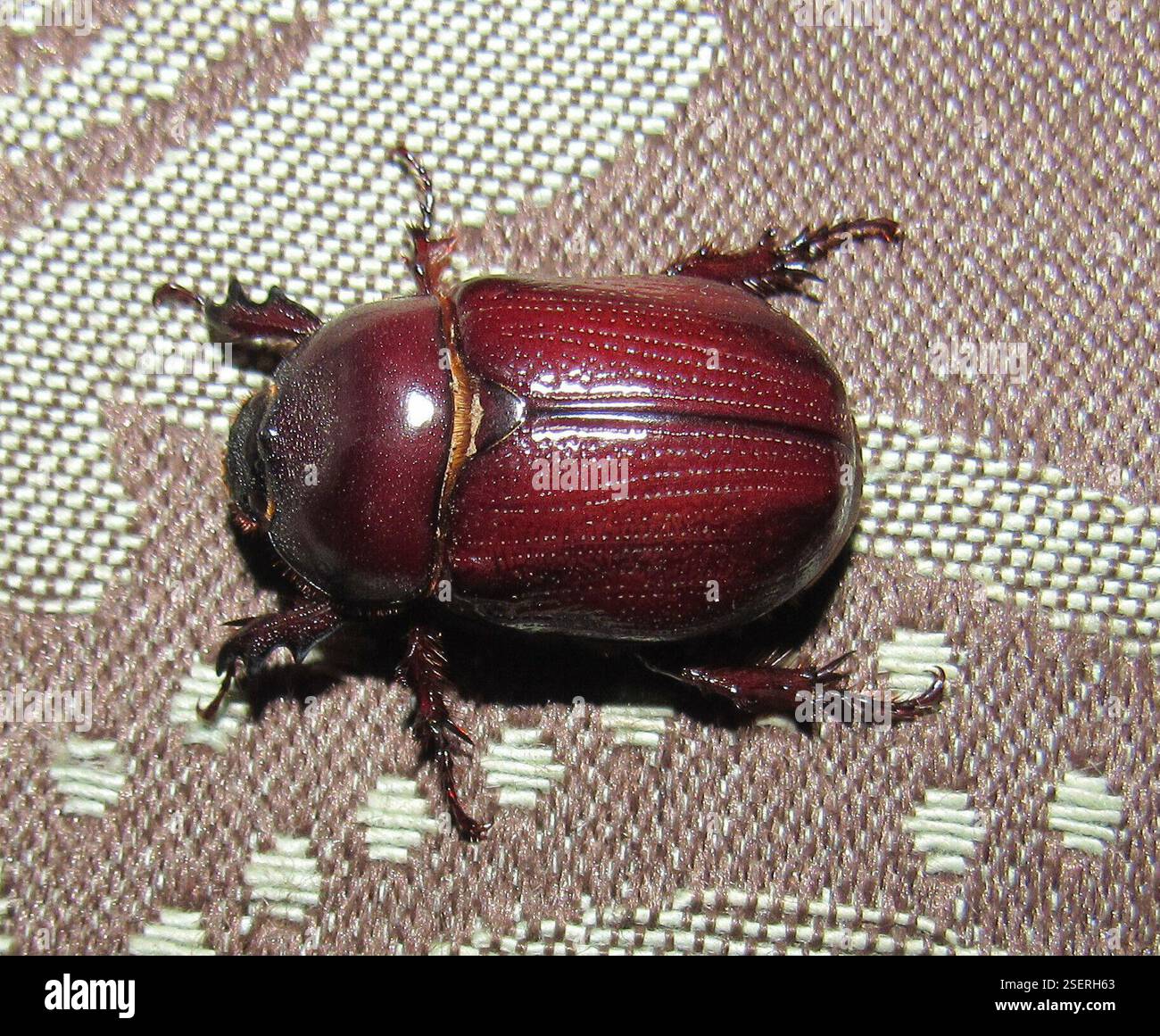
Rhinoceros beetles belong to the insect order Coleoptera, which comprises all beetles. Within this massive order, they are further classified under the family Scarabaeidae and the subfamily Dynastinae. This taxonomic placement places them among some of the largest, strongest, and most morphologically distinct insects found anywhere on Earth.
To fully understand the place of rhinoceros beetles in the animal kingdom, one must look beyond a simple one-word answer. Entomology, the scientific study of insects, relies on a hierarchical system of classification that groups organisms based on shared evolutionary histories, anatomical structures, and genetic characteristics. By examining the order Coleoptera and the specific traits of the subfamily Dynastinae, researchers can trace how these remarkable creatures evolved their signature horns, heavy exoskeletons, and specialized ecological roles. This exploration covers taxonomy, morphology, life cycles, ecological functions, and their unique place in human culture.
The Taxonomic Hierarchy of Rhinoceros Beetles
Every living organism is categorized using Linnaean taxonomy, a system that moves from broad domains down to specific species. For the rhinoceros beetle, this taxonomic tree reveals its closest relatives and defines its fundamental biological classification.
At the broadest level, rhinoceros beetles belong to the kingdom Animalia and the phylum Arthropoda, meaning they are multi-cellular animals with jointed legs and external skeletons. Moving down, they belong to the class Insecta, characterized by a three-part body structure (head, thorax, and abdomen), three pairs of jointed legs, and, typically, wings.
The most critical step in answering the primary question is reaching the order level. Rhinoceros beetles belong to Coleoptera, the largest order of insects on the planet. Coleoptera derives from the Greek words koleos (meaning sheath) and ptera (meaning wings). This refers to the defining characteristic of all beetles: their forewings are modified into hard, protective covers called elytra. These elytra shield the delicate, membranous hindwings used for flight when the beetle is not airborne.
Within Coleoptera, rhinoceros beetles are assigned to the family Scarabaeidae, commonly known as scarab beetles. Scarabs are famous for their heavy-bodied builds, distinct lamellate antennae (which end in leaf-like plates that can fan out), and often impressive ornamentation. Finally, rhinoceros beetles make up the subfamily Dynastinae. This subfamily includes over 300 species distributed across the globe, united primarily by the prominent horns sported by the males.
Understanding Order Coleoptera: The Beetle Blueprint
Because rhinoceros beetles are part of the order Coleoptera, they share fundamental traits with more than 350,000 described beetle species. Understanding this order provides essential context for why rhinoceros beetles look and behave the way they do.
Coleoptera represents roughly 40% of all known insect species and about 25% of all known animal life forms. This evolutionary success is largely attributed to the protection provided by the hardened elytra. Unlike butterflies, which have fragile, powder-scaled wings, or flies, which rely solely on speed and agility, beetles possess a built-in suit of armor. When a rhinoceros beetle burrows into rotting wood or soil, its elytra protect its vital organs and hindwings from crushing pressure and sharp debris.
Furthermore, beetles undergo complete metamorphosis, or holometabolous development. This life cycle consists of four distinct stages:
- Egg: Deposited in organic matter, rotting logs, or rich soil by the female.
- Larva: A grub stage focused entirely on feeding and growth.
- Pupa: A transformative resting stage where adult structures form.
- Imago: The fully developed, winged adult capable of reproduction.
This four-stage life cycle allows larvae and adults to exploit completely different food sources and ecological niches, reducing competition within the same species.

Morphology and Anatomy of the Subfamily Dynastinae
Within the scarab family, the subfamily Dynastinae stands out due to massive physical adaptations. These beetles are among the heaviest and most powerful insects in the world, with some species, such as the Hercules beetle (Dynastes hercules), reaching lengths of up to 17 centimeters (nearly 7 inches) including their horns.
The most famous feature of the rhinoceros beetle is the set of horns found on males. Typically, one large horn projects forward from the head, and a second horn projects backward from the thorax. These horns are not used for predation; rather, males use them as jousting weapons during the mating season. They lock horns to pry rival males away from feeding sites or prospective mates.
| Taxonomic Rank | Taxon Name | Defining Characteristics |
|---|---|---|
| Kingdom | Animalia | Multi-cellular, heterotrophic organisms. |
| Phylum | Arthropoda | Segmented bodies, jointed appendages, chitinous exoskeletons. |
| Class | Insecta | Three body regions, three pairs of legs, antennae. |
| Order | Coleoptera | Hardened forewings (elytra) protecting membranous hindwings. |
| Family | Scarabaeidae | Heavy bodies, lamellate antennae, fossorial (digging) legs. |
| Subfamily | Dynastinae | Large size, prominent male horns, heavy chitinous armor. |
Despite their intimidating appearance, these horns are completely harmless to humans. Females of the subfamily Dynastinae lack horns entirely, possessing a smooth, rounded head and thorax designed more efficiently for tunneling through soil and laying eggs.
Life Cycle: From Soil-Dwelling Grub to Armored Adult
The life cycle of a rhinoceros beetle is a masterclass in biological transformation. While the adult stage captures human imagination due to its size and strength, the majority of a rhinoceros beetle's life is spent hidden beneath the ground or inside decaying wood as a larva.
Female rhinoceros beetles lay their eggs in decaying tree trunks, compost heaps, or rich forest soil. Once the eggs hatch, the larvae emerge as large, C-shaped grubs colloquially known as white grubs. These larvae have powerful mandibles designed for chewing through tough, lignified plant matter. Because rotting wood is nutrient-poor, the larval stage is remarkably long. Depending on the species and environmental temperature, a rhinoceros beetle can spend anywhere from one to several years as a grub, molting multiple times as it grows.
When the larva reaches its maximum size, it constructs a hard earthen cell or pupation chamber. Inside this protective cocoon, it sheds its larval skin for the final time to become a pupa. Over several weeks, the internal organs reorganize, and the distinct features of the adult beetle—including the wings, legs, and male horns—take shape.
When emergence occurs, the adult beetle leaves its chamber and focuses entirely on two tasks: feeding on sap, fruit, and nectar, and finding a mate. Adult rhinoceros beetles generally live for only a few months, bringing their multi-year developmental cycle to a brief, highly visible climax.
Ecological Role and Habitat
Rhinoceros beetles play crucial roles within their forest and woodland ecosystems. Far from being simple pests, they act as vital ecological engineers.
As larvae, their primary diet consists of dead and decaying wood. By consuming this material, they accelerate the decomposition process, breaking down tough cellulose and lignin that other organisms cannot digest. Their digestive processes and burrowing activity help turn dead timber into rich, nutrient-dense soil. This nutrient cycling supports plant growth and provides habitats for a myriad of fungi, bacteria, and smaller invertebrates.
As adults, rhinoceros beetles contribute to pollination and seed dispersal. While feeding on tree sap, flower nectar, and overripe fruit, they carry pollen on their hairy bodies from plant to plant. Their presence also serves as a key indicator of forest health. Because many species require undisturbed forests with abundant standing deadwood or fallen logs, a thriving rhinoceros beetle population usually signals a diverse, ecologically sound habitat.
Common Misconceptions and FAQs
Are rhinoceros beetles dangerous to humans?
No, rhinoceros beetles are completely harmless to humans. They lack venom, stingers, or teeth, and they do not bite or attack people. Their horns are exclusively used for competing with other males for territory and mates. Even if handled, the worst a rhinoceros beetle can do is startle you with its loud hissing sound or scratch your skin with the sharp claws on its feet as it grips your hand.
How strong are rhinoceros beetles relative to their size?
Rhinoceros beetles are among the strongest animals on Earth relative to their body weight. Certain species can lift and support objects up to 850 times their own body weight. To put this into perspective, if a human possessed the relative strength of a rhinoceros beetle, an average adult could easily lift a multi-ton truck over their head.
Why do only male rhinoceros beetles have horns?
The horns are a product of sexual selection. Males use these structures as weapons to physically wrestle rivals away from food sources and females. Because females do not fight for mates, they evolved smooth heads and thoraxes, which make it easier for them to tunnel through soil to lay eggs without getting stuck.
Can rhinoceros beetles fly?
Yes, despite their heavy armor and bulky appearance, rhinoceros beetles are capable of flight. To fly, they lift their hard outer elytra, unfold their large, membranous hindwings beneath, and take off. Their flight is often loud and clumsy, resembling a buzzing helicopter, and they are frequently attracted to artificial lights at night.
What do adult rhinoceros beetles eat?
Adult rhinoceros beetles do not eat wood. Instead, they feed on high-energy liquid food sources such as tree sap, flower nectar, fermented fruit juice, and occasionally agricultural crops like sugarcane or palm shoots.
Practical Next Actions and Conservation Awareness
For nature enthusiasts, researchers, and hobbyists interested in the order Coleoptera, observing rhinoceros beetles requires a balanced approach of respect and habitat preservation. In regions where these insects are native, such as the tropical rainforests of Southeast Asia and Central America, habitat loss due to deforestation poses the greatest threat to their populations.
If you encounter a rhinoceros beetle in the wild, the best action is to observe it quietly in its natural habitat without disturbing it. Avoid handling them roughly, as pulling a beetle from a crevice or log can damage its delicate joints. For those interested in keeping them as pets—a common practice in countries like Japan—ensure that you source captive-bred specimens from reputable breeders rather than wild populations, and provide them with flake soil and appropriate rotting wood substrates that mimic their natural forest floor environment. By understanding their place in the order Coleoptera and respecting their ecological requirements, we can ensure these gentle giants continue to thrive in the wild.
Image Gallery
Select an image to open it in a new tab.



Akira Tanaka
International Academic Trends Correspondent
