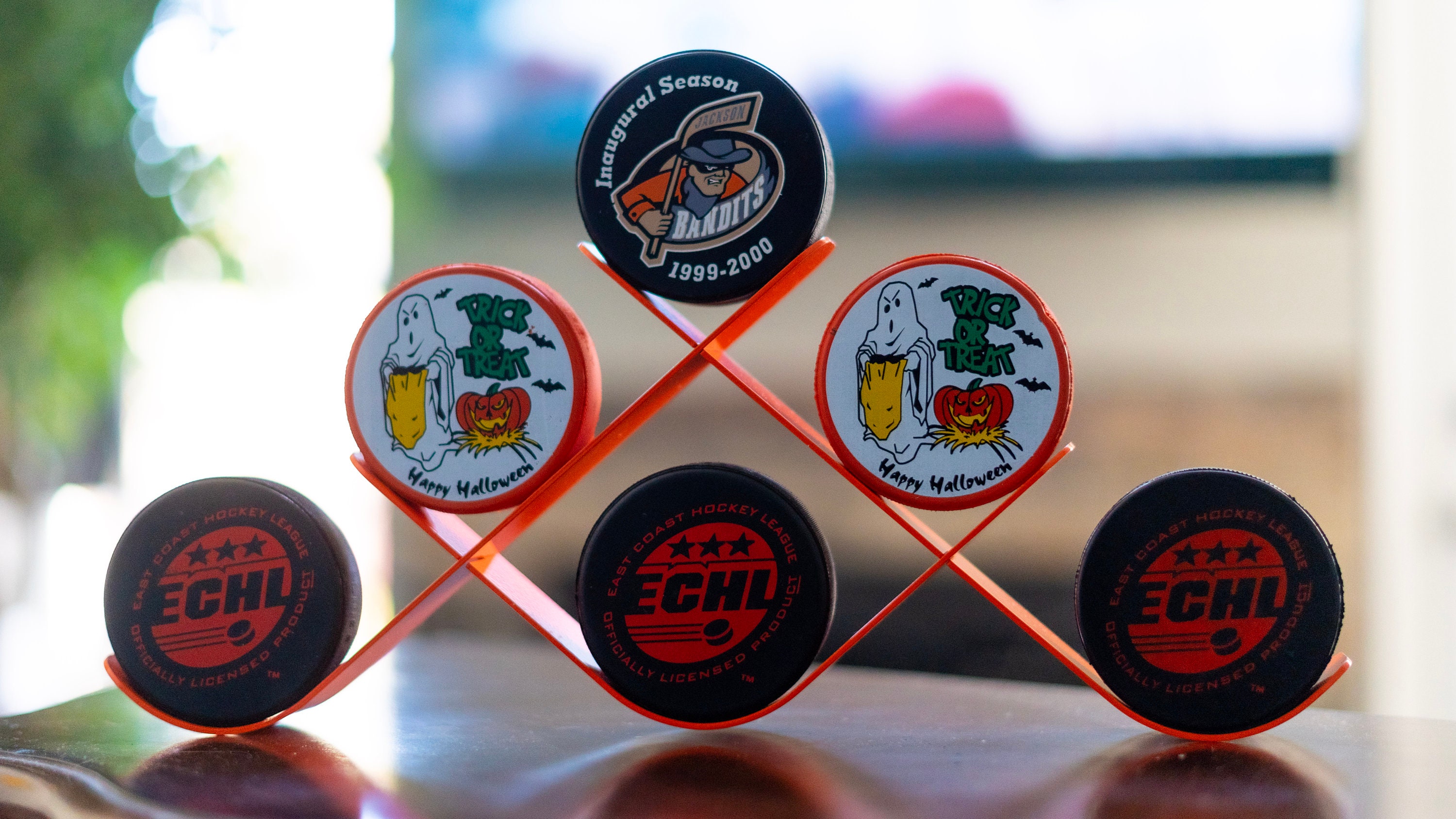
Modern ice hockey pucks are primarily made of vulcanized rubber, a durable material created by treating natural rubber with sulfur and high heat. This chemical process transforms the soft, sticky raw material into a hard, resilient disc capable of withstanding high-impact collisions and extreme temperatures while maintaining its shape on the ice.
The Foundation of the Modern Puck: Vulcanized Rubber
To understand what ice hockey pucks are made of, one must first look at the process of vulcanization. Developed by Charles Goodyear in the mid-19th century, vulcanization is the fundamental reason a puck can survive being struck by a professional player’s stick at speeds exceeding 100 miles per hour.
In its raw state, natural rubber is sensitive to temperature; it becomes brittle when cold and soft when warm. By adding sulfur and subjecting the mixture to intense heat and pressure—typically around 300 degrees Fahrenheit—the polymer chains within the rubber form cross-links. These bridges of sulfur atoms tie the molecules together, creating a material that is far more durable, less sticky, and highly resistant to chemical and physical degradation.
In 2026, while synthetic alternatives are used for specific training applications, the standard game puck remains a masterpiece of vulcanized chemistry. The specific "recipe" for a puck involves a blend of several key ingredients:
- Natural Rubber: Provides the base elasticity and structure.
- Carbon Black: This is the pigment that gives the puck its signature black color. Beyond aesthetics, carbon black reinforces the rubber, improving its tensile strength and resistance to abrasion.
- Sulfur: The essential curing agent that facilitates the cross-linking of polymers.
- Oil and Fillers: Various oils are added to ensure the mixture flows correctly during the molding process, while calcium carbonate or clays may be used as fillers to achieve the precise weight and density required by professional leagues like the NHL.
The Manufacturing Process: From Raw Materials to the Frozen Biscuit
The production of an ice hockey puck is a specialized industrial process that balances chemistry with mechanical precision. Most of the world's high-quality pucks are manufactured in countries with deep hockey roots, including Canada, the Czech Republic, and Slovakia.
Mixing and Pre-forming
The process begins with the "masterbatch." Huge industrial mixers combine the raw rubber, carbon black, and chemical additives into a thick, uniform dough. This material is then extruded into long cylinders. These cylinders are sliced into pre-forms, often called "slugs" or "biscuits." These slugs are slightly larger than the final puck to ensure that the mold is completely filled during the compression stage.
Compression Molding
The slugs are placed into a multi-cavity mold. In high-volume facilities, these molds can produce dozens of pucks at once. A hydraulic press applies several tons of pressure while heating the mold to the vulcanization temperature. During this phase, the rubber flows into every corner of the mold, including the knurled (textured) edges that help the puck grip the hockey stick blade.
Finishing and Silk Screening
Once the curing time is complete—usually several minutes—the pucks are removed and allowed to cool. Excess rubber, known as "flash," is trimmed away using automated lathes. Finally, the pucks undergo silk screening. This is where team logos, league branding, or commemorative designs are applied. High-durability inks are used to ensure the logo remains visible despite the abrasive nature of the ice and the impact of the game.

Physical Specifications and Regulatory Standards
The International Ice Hockey Federation (IIHF) and the National Hockey League (NHL) maintain strict regulations regarding the physical properties of a game puck. These standards ensure consistency across different arenas and regions.
| Property | NHL Standard Specification | IIHF Standard Specification |
|---|---|---|
| Thickness | 1 inch (25.4 mm) | 1 inch (25.4 mm) |
| Diameter | 3 inches (76.2 mm) | 3 inches (76.2 mm) |
| Weight | 5.5 to 6.0 ounces (156 to 170 g) | 156 to 170 grams |
| Color | Black | Black |
| Hardness | 85-95 Shore A Durometer | 85-95 Shore A Durometer |
The "Shore A Durometer" is a critical measure of hardness. A puck that is too soft will bounce uncontrollably, acting more like a rubber ball than a sliding disc. A puck that is too hard becomes brittle, potentially shattering upon impact with a goalpost or a skate blade. The vulcanization process is calibrated specifically to land within the 85-95 range to optimize the balance between slide and durability.
The Science of Friction and Thermal Preparation
One of the most unique aspects of ice hockey pucks is how they are treated before they ever touch the ice. In professional play, pucks are kept in a freezer for several hours—and sometimes days—prior to the game.
Why Pucks are Frozen
Freezing the puck serves a vital mechanical purpose: it reduces the material's elasticity. At room temperature, vulcanized rubber has a certain amount of "rebound." If a player passes a warm puck, it is more likely to bounce over a teammate's stick. By chilling the puck to approximately 14 to 20 degrees Fahrenheit, the internal energy of the polymer chains is reduced, making the puck "dead" upon impact.
Furthermore, a frozen puck glides more smoothly. As the cold puck moves across the ice, the friction generates a microscopic layer of water. This water acts as a lubricant, allowing the puck to slide with minimal resistance. If the puck were warm, it would melt the ice too aggressively, creating a slushy drag that slows down play.
The Role of the Knurled Edge
If you look closely at the side of a hockey puck, you will see a diamond-patterned texture. This is called knurling. This texture is not just for show; it is essential for the mechanics of a "slapshot." When a player strikes the puck, the knurling allows the stick's blade to "bite" into the side of the disc. This interaction imparts spin. Similar to a quarterback throwing a football or a rifled bullet, a spinning puck stabilizes in flight, allowing for greater accuracy and speed.
Specialized Pucks for Training and Non-Ice Play
While the standard black vulcanized rubber puck is the icon of the sport, several variations exist for training and different environments.
- Weighted Pucks (Orange): These typically weigh 10 to 12 ounces. They are made of the same vulcanized rubber but with higher-density fillers. They are used by players to develop forearm strength and faster hands.
- Lightweight Pucks (Blue): Weighing roughly 4 ounces, these are used for junior players who are still learning the mechanics of shooting.
- Steel Pucks: Extremely heavy (up to 2 lbs), these are strictly for stationary stick-handling drills and are never meant to be shot, as they would destroy the boards and the stick.
- Roller Hockey Pucks: Often made of high-density polyethylene (plastic) with small nylon "nubs" or pins on the surface. These nubs reduce the surface area contact with concrete or plastic tiles, allowing the puck to slide without the presence of ice.
- Sponge or Foam Pucks: Used for indoor "knee hockey" or for very young children to prevent injury and damage to household items.
A Brief History: From Wood to Rubber
The evolution of what pucks are made of reflects the history of the game itself. In the early days of organized hockey in the 1800s, players often used whatever was available. This included:
- Wooden Discs: Carved from hardwoods, these were light but prone to splitting.
- Frozen Cow Dung: A common substitute in rural pond hockey, though far from ideal for consistent play.
- Square Rubber: Early rubber pucks were actually sliced from rubber balls. Legend suggests that the "puck" as we know it was born when Victoria Hockey Club members in Montreal sliced the top and bottom off a rubber ball to prevent it from bouncing out of the rink.
By the early 20th century, the standardization of vulcanized rubber became the norm. The manufacturing process has been refined over the decades, but the core material science has remained remarkably stable because vulcanized rubber provides the perfect intersection of mass, hardness, and friction.
Frequently Asked Questions
Why is the puck black?
The puck is black primarily because it provides the highest possible contrast against the white ice, making it visible to players, officials, and spectators. The color is achieved by adding carbon black to the rubber mixture, which also serves to strengthen the puck.
Can a hockey puck break?
Yes, though it is rare. Under extreme cold or after repeated high-velocity impacts against steel goalposts, the internal cross-links of the vulcanized rubber can fail, causing the puck to chip or split. In professional games, officials regularly cycle in fresh pucks to prevent this.
Are NHL pucks different from the ones I buy at the store?
Generally, no. Official game pucks must meet the same weight and size specifications. However, "souvenir" pucks are often made of slightly different rubber blends or even hard plastic, as they are intended for display rather than the rigors of a 100-mph slapshot.
Why do officials change the puck so often during a game?
Pucks are changed frequently to ensure that a frozen puck is always in play. Once a puck has been on the ice for a few minutes, it begins to warm up, increasing its bounciness. Most NHL games use between 20 and 30 pucks per game to maintain consistent playing conditions.
Is there any technology inside a standard puck?
Standard pucks are solid rubber. However, there have been historical exceptions, such as the "FoxTrax" puck of the 1990s which contained a battery and infrared emitters to create a broadcast glow. Today, some leagues use "Smart Pucks" containing small chips that track speed and location data for advanced analytics, but the core material remains vulcanized rubber.
Expert Recommendation for Selection
When purchasing pucks for personal use, always verify the source of manufacture. Pucks manufactured in Canada, Slovakia, or the Czech Republic are widely considered the gold standard for durability and consistent weight. For serious training, avoid "souvenir" or "lightweight" plastic pucks unless they are specifically labeled for street or floor hockey. If you are practicing on ice, always look for the "Official Weight" designation to ensure you are developing the correct muscle memory for the sport.
Image Gallery
Select an image to open it in a new tab.


Declan O'Connor
Higher Education and Campus Culture Reporter
