
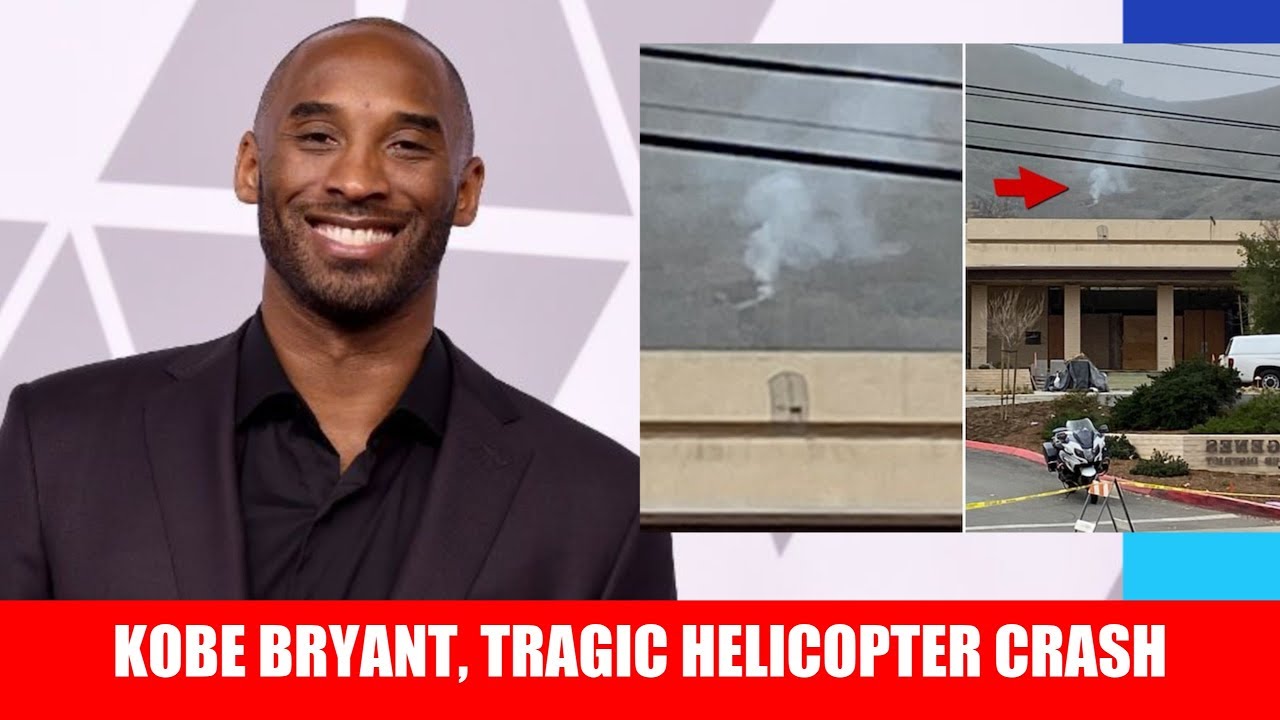
On January 26, 2020, a Sikorsky S-76B helicopter carrying NBA legend Kobe Bryant, his daughter Gianna, and seven others crashed into a hillside in Calabasas, California, during heavy fog. The National Transportation Safety Board (NTSB) investigation concluded that the pilot’s decision to continue flying under visual flight rules into instrument meteorological conditions led to spatial disorientation and loss of control, resulting in a fatal controlled flight into terrain.
The Flight Path and Environmental Conditions
The flight originated at John Wayne Airport in Santa Ana, California, intended for Camarillo Airport. The group was traveling to the Mamba Sports Academy in Thousand Oaks for a basketball tournament. As the helicopter progressed toward the northwest, it encountered dense marine layer clouds, a common weather phenomenon in the Los Angeles basin where moist ocean air cools and traps low-level visibility.
As the pilot, Ara Zobayan, navigated through the Burbank area, he requested and received "Special Visual Flight Rules" (SVFR) clearance to transit the airspace. This clearance allows pilots to operate in controlled airspace when weather conditions are below standard visual minimums, provided the pilot remains clear of clouds and maintains reference to the ground. However, as the aircraft moved toward the hilly terrain of Calabasas, the cloud cover thickened significantly. Data from the flight path indicates that the pilot attempted to climb above the cloud layer to reach better visibility.
Understanding Spatial Disorientation
The NTSB report highlighted a critical physiological phenomenon known as spatial disorientation. When a pilot enters clouds or low-visibility conditions, they lose the natural visual references—the horizon and the ground—necessary to maintain balance and orientation. In such instances, the human vestibular system (the inner ear) can provide misleading signals, making the pilot believe the aircraft is climbing or turning when it is actually level or descending.
The investigation revealed that the pilot likely experienced this "somatogravic illusion." While attempting to climb out of the clouds to achieve VFR flight, the pilot entered a steep left bank. The lack of visual cues prevented the pilot from realizing the helicopter had turned and was accelerating toward the rising terrain of the Calabasas hills. This state of confusion is often cited in aviation accidents where qualified pilots become overwhelmed by rapidly changing weather conditions, leading to the loss of situational awareness.
Technical Analysis of the Sikorsky S-76B
The aircraft involved was a Sikorsky S-76B, a twin-engine helicopter widely regarded for its reliability and use in corporate and medical transport. While questions were raised following the accident regarding the lack of a Terrain Awareness and Warning System (TAWS), it is important to understand the regulatory context of this requirement.
At the time of the accident, TAWS was not mandatory for this specific class of helicopter operation under the Federal Aviation Administration (FAA) rules. TAWS is designed to provide pilots with auditory and visual alerts if the aircraft is at risk of colliding with the ground or obstacles. Although the NTSB noted that TAWS could have potentially provided the pilot with the necessary warning to pull up before the impact, the equipment would not have automatically corrected the pilot's spatial disorientation. The fundamental issue remained the decision to maintain flight in weather conditions that made safe visual navigation impossible.
Chronology of the Final Minutes
The transition from a controlled flight to a catastrophic accident occurred over a matter of seconds. According to the NTSB’s recorded data:
- Encountering Weather: The pilot reported to air traffic control that he was climbing to 4,000 feet to get above the cloud layer.
- Loss of Visibility: Radar data showed the helicopter climbing and then initiating a rapid left turn.
- Terrain Conflict: The helicopter reached an altitude of approximately 2,300 feet before descending at a high rate of speed.
- Final Impact: The aircraft struck the side of a hill in Calabasas at roughly 9:45 AM local time.
The high-speed impact against the rugged terrain left little room for pilot recovery. The NTSB report cleared the aircraft of any mechanical failures or engine malfunctions. The engines were operating at high power at the time of impact, confirming that this was a case of controlled flight into terrain (CFIT)—a scenario where an airworthy aircraft is flown into the ground under the control of a pilot who is unaware of the impending danger.
Regulatory and Safety Implications
Following the tragedy, the aviation industry engaged in a comprehensive review of safety standards for helicopter operations. The NTSB made several recommendations to the FAA, focusing on the installation of crash-resistant flight recorder systems and the broader implementation of TAWS.
The accident underscored the inherent risks of "helicopter shopping" or rapid transit in variable coastal weather. Pilots must balance the pressure to complete a flight with the strict requirement to divert or land if visibility drops below safe thresholds. This event led to increased scrutiny regarding the decision-making process of pilots flying high-profile passengers, emphasizing that even the most experienced aviators can fall victim to the psychological and physiological traps of instrument meteorological conditions.
Comparison of Flight Rules
To better understand the operational decisions made during the flight, it is helpful to look at the different categories of flight rules that govern aviation.
| Flight Rule | Definition | Visibility Requirement |
|---|---|---|
| VFR (Visual Flight Rules) | Pilot maintains orientation by looking outside the cockpit. | Minimum 3 miles visibility. |
| SVFR (Special VFR) | Permission to fly in controlled zones despite low visibility. | 1 mile visibility; remain clear of clouds. |
| IFR (Instrument Flight Rules) | Navigation relies entirely on cockpit instruments. | Requires certified instruments and pilot rating. |
The pilot was operating under VFR/SVFR, which meant he was legally prohibited from flying "blind" into clouds. The decision to enter the cloud bank fundamentally shifted the flight from a legal, visible operation into a dangerous, unmonitored instrument flight for which the pilot, while experienced, had not successfully transitioned at the moment of the turn.
Frequently Asked Questions
Why did the pilot decide to fly in such foggy conditions? The pilot was cleared for SVFR, which implies he was expected to stay clear of clouds. The fog in the Los Angeles basin can form rapidly and unexpectedly. Investigators concluded the pilot likely overestimated his ability to navigate through the pockets of clear air and overestimated the visibility ahead, ultimately losing sight of the horizon.
Was the helicopter poorly maintained? No. The investigation found no evidence of mechanical failure, engine issues, or maintenance negligence. The NTSB report confirmed that the aircraft was in an airworthy condition and that all maintenance requirements had been met prior to the flight.
Did the lack of a black box or flight recorder hinder the investigation? The helicopter was not equipped with a flight data recorder (FDR) or cockpit voice recorder (CVR), which are not mandatory for this type of private/charter helicopter. However, investigators were able to reconstruct the flight path using onboard GPS data and radar telemetry, which provided a sufficiently detailed timeline to determine the cause of the crash.
How did the "mamba mentality" impact the flight? While the culture of professional sports often emphasizes pushing through obstacles, the NTSB investigation focused strictly on aviation safety data. They concluded that while external pressure to reach the destination exists, the legal and safety responsibility rests solely with the pilot to make the decision to land or divert when weather becomes unsafe.
Could an autopilot system have saved the flight? The S-76B was equipped with an autopilot system; however, the NTSB found no evidence that the pilot was engaged in autopilot mode during the final maneuvers. Even if engaged, an autopilot cannot override a pilot's incorrect manual inputs if the pilot is suffering from severe spatial disorientation.
Final Guidance for Aviation Safety
The tragic loss of life in the Calabasas hills remains a stark reminder of the "178-second" phenomenon—a timeframe within which an inexperienced pilot or one who is disoriented in clouds will lose control of the aircraft. For those interested in general aviation safety, the primary lesson is the necessity of "go/no-go" decision-making. Pilots are trained to prioritize the "three Cs": Climb, Communicate, and Confess. In the event of encountering unforecasted weather, the safest action is to immediately reverse course or land at the nearest suitable airport, regardless of the schedule or the stature of the passengers. Safety management systems in aviation today continue to emphasize that human decision-making remains the most critical component of flight safety.

Image Gallery
Select an image to open it in a new tab.

Declan O'Connor
Higher Education and Campus Culture Reporter
