Understanding the Impact of Dilutive Funding: A Comprehensive Guide for Founders and Investors

Dilutive funding occurs when a company issues new shares to raise capital, effectively reducing the ownership percentage and per-share value for existing shareholders. While it provides the necessary liquidity to scale operations, it requires a strategic trade-off between maintaining individual control and increasing the enterprise's total market valuation.
Raising capital is a pivotal moment for any growing enterprise. In the landscape of 2026, where capital efficiency and sustainable growth have become the primary benchmarks for success, understanding the nuances of dilutive funding is more critical than ever. Whether you are a founder navigating a Series A round or an early employee watching your equity stake evolve, the mechanics of dilution determine your eventual financial outcome and your influence over the company’s future.
The Fundamental Mechanics of Equity Dilution
To understand the impact of dilutive funding, one must first grasp the basic arithmetic of share issuance. When a company decides to raise "dilutive" capital—typically through venture capital, angel investors, or equity crowdfunding—it does not sell existing shares held by the founders. Instead, the company creates and issues brand-new shares from its authorized share capital.
Consider a simplified scenario: A founder owns 1,000,000 shares, representing 100% of the company. To fund a new product line, the company issues 250,000 new shares to an investor. The total share count is now 1,250,000. The founder still owns 1,000,000 shares, but their ownership percentage has dropped from 100% to 80% (1,000,000 / 1,250,000).
This "dilution" affects several key areas:
- Ownership Percentage: The slice of the "pie" becomes smaller.
- Voting Power: Since votes are usually tied to share ownership, the founder’s ability to unilaterally pass resolutions decreases.
- Earnings Per Share (EPS): In a profitable company, the net income is distributed across a larger number of shares, reducing the value attributed to each individual share.
The Economic Trade-off: Valuation vs. Ownership
The primary justification for accepting dilutive funding is the "Bigger Pie" theory. The goal is that the capital infusion will accelerate growth so significantly that a smaller percentage of a much larger company is worth more than a larger percentage of a smaller company.
Pre-Money vs. Post-Money Valuation
Understanding the impact of dilution requires a firm grasp of valuation timing.
- Pre-Money Valuation: The agreed-upon value of the company before the new investment.
- Post-Money Valuation: The pre-money valuation plus the total amount of new capital raised.
In 2026, market standards emphasize that the "price" of dilution is set by these figures. If a company has a $10 million pre-money valuation and raises $2 million, the post-money valuation is $12 million. The new investor will own 16.67% of the company ($2M / $12M), and the existing shareholders will be diluted by that same 16.67%.
The Impact of "Up Rounds" and "Down Rounds"
The impact of dilution is most felt during valuation shifts. In an Up Round, the share price increases from the previous round. Even though the founder's percentage decreases, the dollar value of their stake increases.
Conversely, a Down Round—where the company is valued lower than in previous rounds—is significantly more damaging. In these cases, dilution is "punitive." Existing shareholders are diluted more heavily to satisfy the new investors' capital requirements, and anti-dilution clauses (discussed later) may kick in, further shrinking the founders' stakes to protect earlier investors.

Control, Governance, and the Loss of Autonomy
Dilutive funding is rarely just about money; it is about the transfer of power. Investors who take an equity stake usually demand more than just a certificate of ownership; they require a seat at the table.
Board Composition
Most dilutive rounds, starting at the Seed or Series A stage, involve the creation or expansion of a Board of Directors. Investors typically take one or more board seats. As more rounds of dilutive funding occur, the founder may eventually lose majority control of the board. By the time a company reaches Series C or D, it is common for the board to be controlled by a mix of various venture capital firms and independent directors, rather than the original founding team.
Protective Provisions and Veto Rights
Investors often negotiate "protective provisions" or "veto rights." These legal stipulations prevent the company from taking certain actions without the investor's explicit consent, regardless of the founder's remaining ownership percentage. Common restricted actions include:
- Selling the company or its assets.
- Changing the nature of the business.
- Issuing more shares (which would further dilute the investor).
- Taking on significant debt.
- Changing the company bylaws.
This shift in governance means that the impact of dilutive funding is as much psychological as it is financial. Founders must transition from being "owners" to "stewards" who are accountable to a fiduciary board.
The Option Pool Factor: Dilution Before the Check Arrives
One of the most overlooked impacts of dilutive funding is the "Option Pool Shuffle." Professional investors almost always require that a company creates or expands an Employee Stock Option Pool (ESOP) before they finalize their investment.
The catch is that investors typically insist the pool be created out of the pre-money valuation. This means the dilution caused by the new option pool falls entirely on the existing shareholders (the founders and early employees), not the new investors.
For example, if an investor requires a 15% post-money option pool, and the founder hasn't accounted for this, the founder’s ownership will drop significantly before the investor’s shares are even counted. In the competitive talent market of 2026, maintaining a robust option pool is necessary for hiring top-tier engineers and executives, but it represents a hidden "tax" on founder equity during a fundraise.
Comparative Impact: Dilutive vs. Non-Dilutive Funding
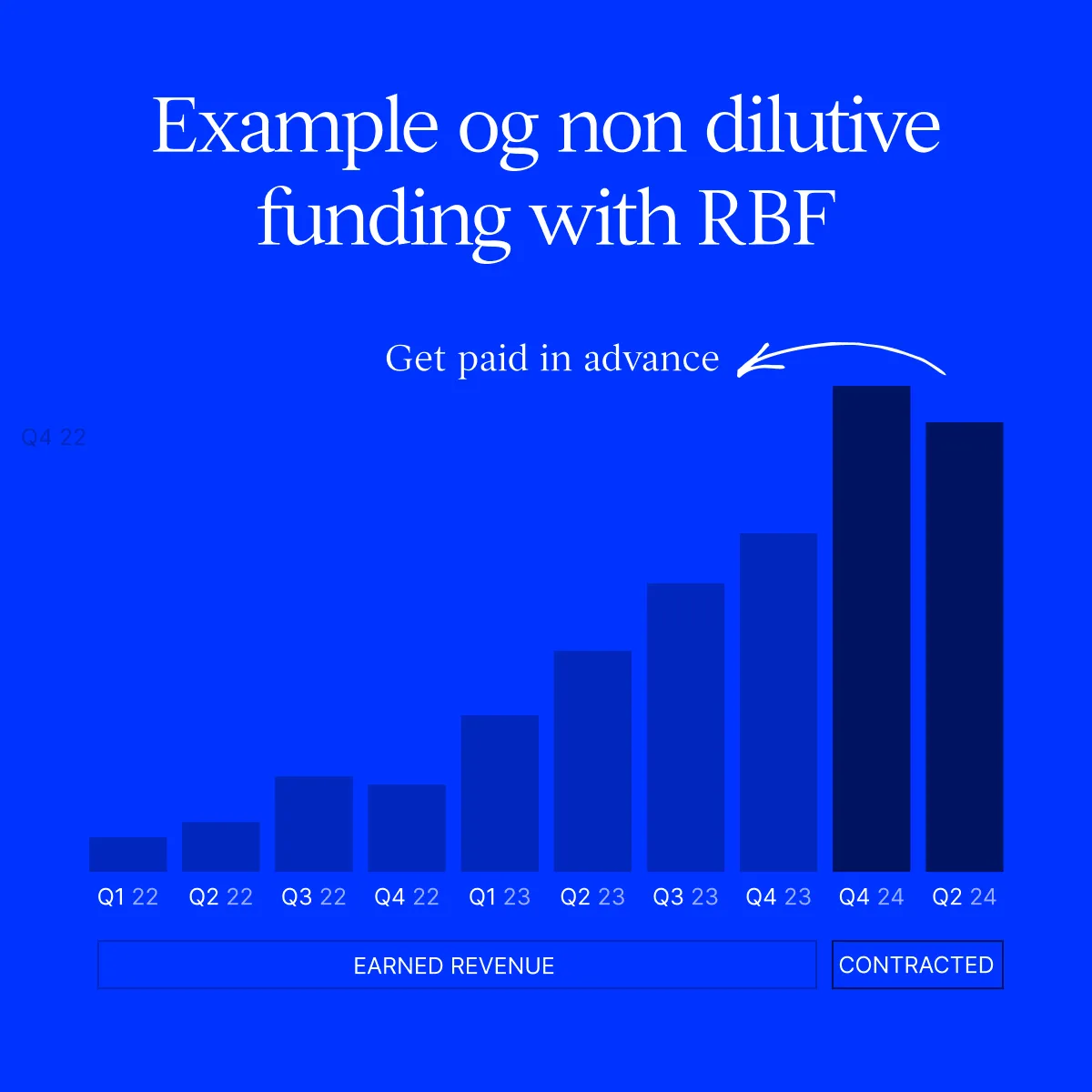
To fully understand the impact of dilutive funding, it must be compared to its alternatives. Non-dilutive funding includes debt financing, revenue-based financing, and government grants.
| Feature | Dilutive Funding (Equity) | Non-Dilutive Funding (Debt/Grants) |
|---|---|---|
| Ownership Impact | Direct reduction in percentage ownership. | No change in ownership percentage. |
| Repayment | No obligation to repay; investors profit on exit. | Mandatory repayment of principal plus interest. |
| Governance | Investors often gain board seats/veto rights. | Lenders usually have no say in operations. |
| Cost of Capital | Potentially very high (giving away future upside). | Fixed (interest rates) or variable (revenue share). |
| Risk Profile | Investor shares the risk; no personal guarantees. | High risk if cash flow fails; may require collateral. |
| Availability | Based on growth potential and team quality. | Based on creditworthiness and existing revenue. |
In the 2026 economic climate, many companies use a "Barbell Strategy"—utilizing non-dilutive debt for predictable expenses (like equipment or inventory) while saving dilutive equity for high-risk R&D and aggressive market expansion.
Anti-Dilution Provisions: Protecting the Investor
Founders must also understand how dilution affects different classes of shareholders. Most venture capitalists purchase Preferred Stock, which comes with anti-dilution protections. These protections are designed to shield investors if the company later issues shares at a lower price (a down round).
Full Ratchet Anti-Dilution
This is the most aggressive form. If the company issues even one share at a lower price than the investor paid, the investor’s conversion price is adjusted downward to that new, lower price. This results in massive additional dilution for the founders, as the investor is essentially "gifted" more shares to maintain their value.
Weighted Average Anti-Dilution
This is a more common and founder-friendly approach. It adjusts the investor’s conversion price based on a formula that accounts for the number of shares issued at the lower price and the total shares outstanding. It still dilutes the founder, but in a way that is proportional to the actual economic impact of the new, lower-priced round.
The Impact on Exit Liquidity and the "Cap Table"
The "Cap Table" (Capitalization Table) is the master ledger of who owns what. Every round of dilutive funding adds a new layer to this table. The cumulative impact of dilution is most visible during a "liquidity event," such as an IPO or acquisition.
Liquidation Preferences
Dilutive funding rounds usually come with a "liquidation preference." This dictates the order in which shareholders are paid. A "1x Non-Participating Preference" means the investor gets their money back first before common shareholders (founders/employees) get anything.
As a company takes on more dilutive funding, the "liquidation stack" grows. If a company raises $50 million in total dilutive funding across three rounds, the company must often be sold for more than $50 million before the founders see a single cent. This "preference overhang" is a direct and sometimes brutal impact of high-growth dilutive financing.
Managing the Impact: Strategic Recommendations
While dilution is often inevitable for high-growth startups, it can be managed. Founders and executives should consider the following strategies to mitigate the negative effects of equity financing:
- Maintain Capital Efficiency: The less money you need to reach your next milestone, the less equity you have to sell. In 2026, investors reward "lean" growth over "burn-at-all-costs" models.
- Negotiate the Option Pool: Try to negotiate for the option pool to be created after the investment (post-money), or argue for a smaller pool if you already have a full team.
- Use Non-Dilutive Capital for Bridges: If you are six months away from a major valuation inflection point, consider venture debt or revenue-based financing to bridge the gap rather than raising a premature dilutive round at a lower valuation.
- Watch the Board Composition: Limit the number of board seats given to investors in early rounds. Maintain "Independent" seats to balance the interests of the founders and the VCs.
- Understand Pro-Rata Rights: These rights allow existing investors to participate in future rounds to maintain their percentage. While this ensures continued support, it can leave less room for new, strategic investors without further diluting the founders.
Frequently Asked Questions
What is "Founder Dilution," and is there a "normal" amount?
Founder dilution is the reduction in a founder's ownership stake as the company raises capital. While it varies by industry, it is typical for a founding team to be diluted by 20% to 25% in each primary funding round (Seed, Series A, Series B). By the time of an IPO, many founders own between 10% and 15% of the company.
Does dilutive funding always mean I lose money?
No. Dilutive funding is designed to increase the value of your shares even if the number of shares you own as a percentage of the total decreases. If your 80% stake in a $1 million company becomes a 20% stake in a $100 million company, your personal net worth has increased from $800,000 to $20 million.
How does dilution affect employee stock options?
Employees are diluted in the same way founders are. When new shares are issued to investors, the percentage of the company represented by an employee's options decreases. However, the goal is that the strike price of their options remains much lower than the new valuation, creating "intrinsic value" or "spread."
Can I avoid dilution by using debt?
Yes, debt is non-dilutive because lenders do not take an ownership stake. However, debt requires regular interest payments and eventual repayment of the principal. For early-stage startups without consistent cash flow, debt can be much riskier than dilutive equity funding because a failure to pay can lead to bankruptcy.
What is a "Cap Table," and why is it important for understanding dilution?
A Cap Table is a spreadsheet or database that tracks the equity ownership of a company. it lists every shareholder, the number of shares they own, the type of shares (Common vs. Preferred), and the price paid. It is the essential tool for modeling how a new dilutive funding round will impact every existing stakeholder.
What happens to dilution if the company is sold?
During an acquisition, the impact of dilution is finalized. The proceeds are distributed according to the Cap Table and the liquidation preferences defined in the funding agreements. Shareholders with "preferred" status from dilutive rounds are typically paid back their initial investment first, and the remaining proceeds are distributed to common shareholders based on their percentage ownership.
Final Actionable Advice
Understanding the impact of dilutive funding is about balancing the need for speed with the desire for control. Before signing a term sheet in 2026, founders should run a "waterfall analysis"—a financial simulation that shows exactly how much each person receives at different exit valuations. Only by seeing the potential outcomes in hard numbers can you determine if the dilution you are accepting today is a fair price for the growth you hope to achieve tomorrow. Focus on the valuation per share rather than just the total capital raised; it is the most accurate metric of whether a dilutive round is truly adding value to your stake.
Image Gallery
Select an image to open it in a new tab.




Lars Thomsen
Global Labor Markets and Economic Strategy Editor
